Santa Maria al Paradiso Church: A Baroque Church in Milan
Site at a Glance
- Popularity
- Medium
- Country
- Italy
- Primary era
- Early Modern
- Eras represented
- Early Modern, Modern
- Civilizations
- Austrian Empire, Duchy of Milan, Habsburg, Italian, Spanish
- Site type
- Religious
- Remains
- Church
On this page9 sections
History
Santa Maria al Paradiso Church is a Baroque church in Milan, Italy. Construction began in 1590 for friars of the Third Order Regular of Saint Francis, a community of Franciscan religious living under a rule. Archbishop Gaspare Visconti laid the first stone on June 27 that year. Designed by Martino Bassi, the church was completed in the seventeenth century.
The Servites, a Catholic order devoted to the Virgin Mary, arrived in 1783. They brought an image of Saint Lucy, an early Christian martyr, attributed to Francesco Fabbrica, along with the stone associated with the Tredesin de Marz, Milanese for “March 13.” Local tradition says that Saint Barnabas, an early Christian missionary and companion of Paul, planted a cross in the stone on March 13, AD 51, when he came to Milan to preach Christianity. The stone gave its name to the Tredesin de Marz festival, which continues in the neighborhood.
Nineteenth-century changes
In 1811, the first telegraph installation linking Milan and Paris was placed on the church’s bell tower for the baptism of Napoleon II, son of Napoleon I. He was styled King of Rome at birth but never ruled France. In 1827, Milanese organ builder Antonio Brunelli installed an organ in the church, where it remains.
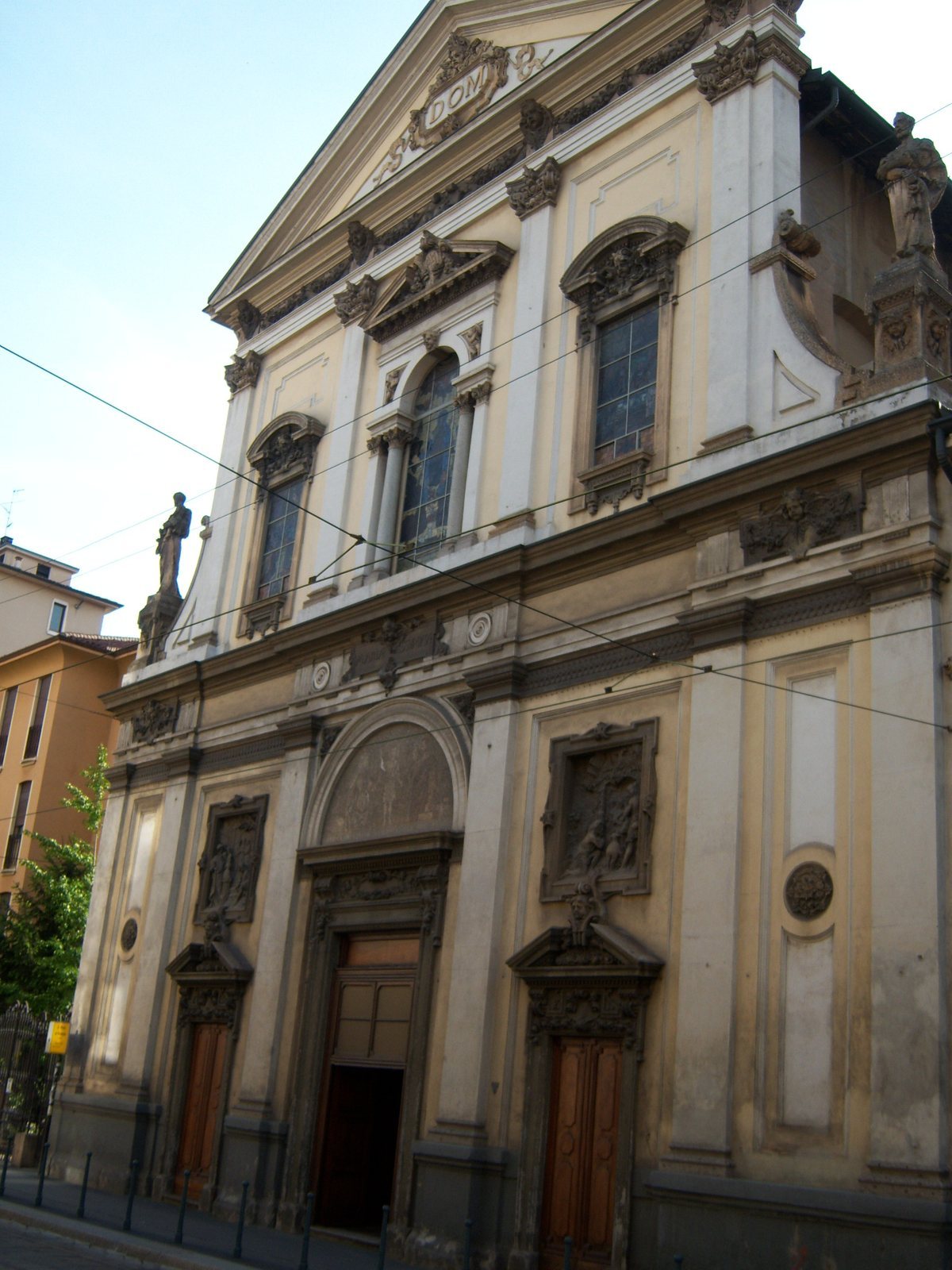
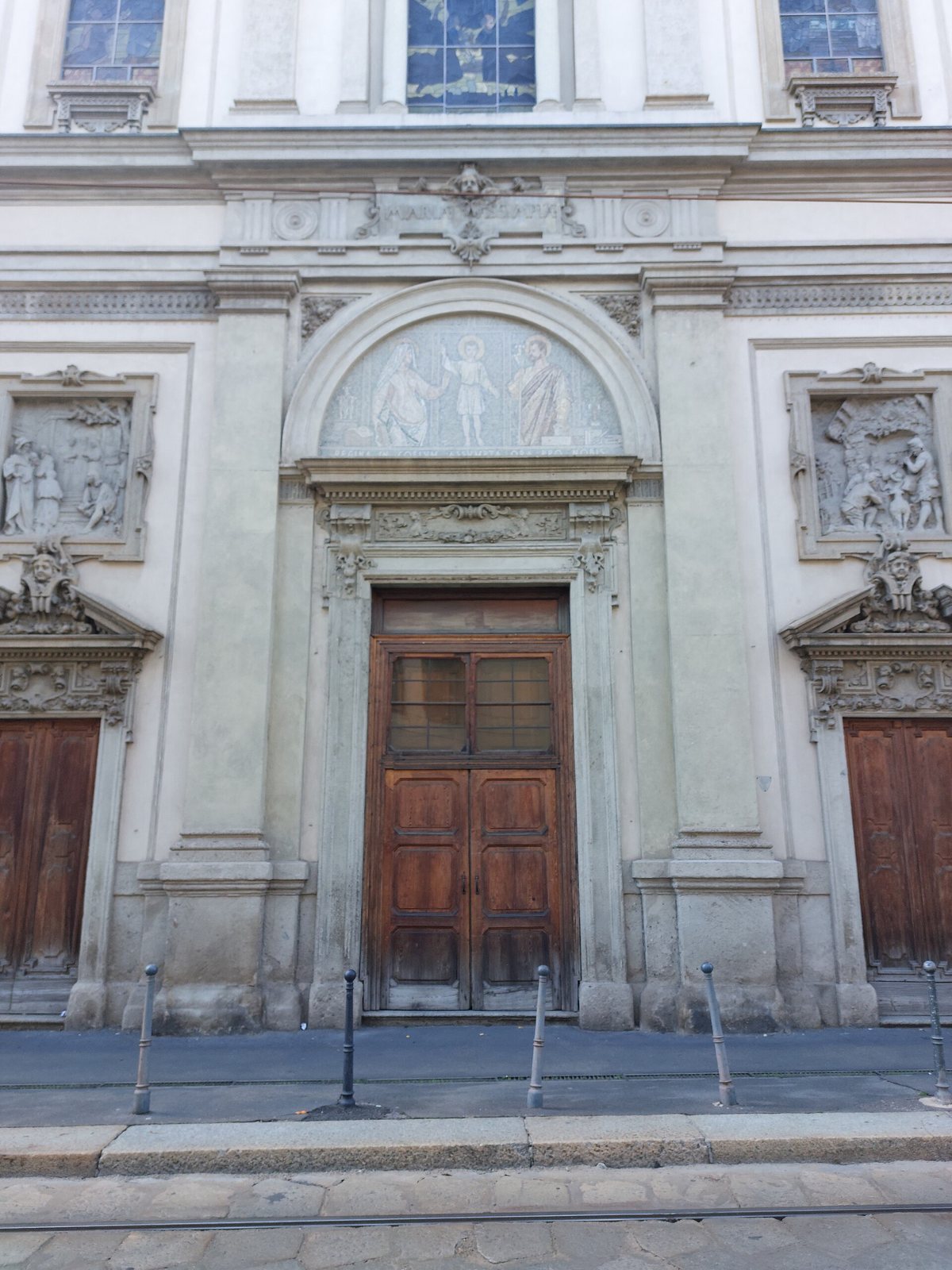
Architect Ernesto Pirovano added the façade in 1897. It may have been inspired by the late-sixteenth-century church of San Bernardo, which stood almost opposite and was partly ruined before it disappeared in 1971.
Santa Maria al Paradiso belongs to the Catholic Archdiocese of Milan and follows the Ambrosian rite, a Catholic form of worship associated chiefly with the archdiocese. It became the seat of its own parish in 1962.
Remains
Plan and exterior
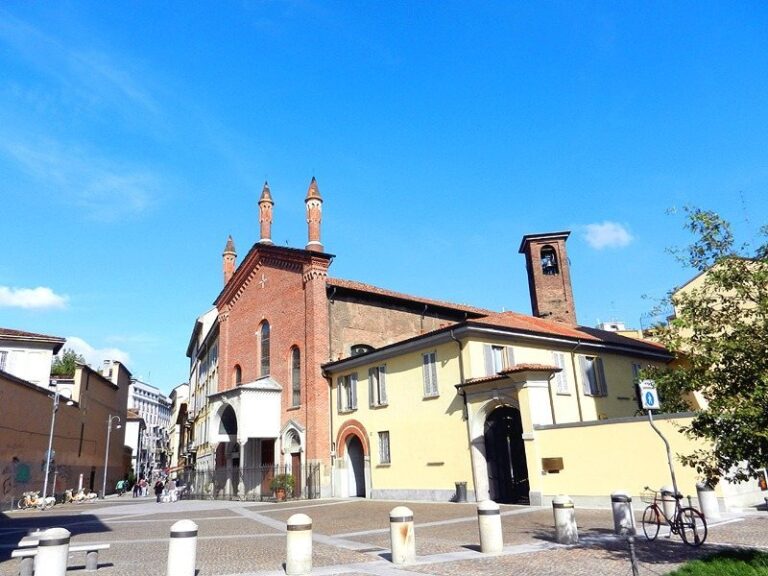
The church stands along Corso di Porta Vigentina in Milan’s historic center. Its single nave, the main body of the church, has four chapels on each side and ends in a semicircular apse, the rounded space at the altar end. The Neo-Baroque façade has two levels divided by a projecting horizontal band. Both levels feature stucco pilasters, flat strips resembling columns. The lower pilasters have Ionic capitals with scroll-shaped forms; those above have Corinthian capitals decorated with foliage. Three portals open at ground level, alongside two shallow carvings by Pirovano showing the Marriage of the Virgin and the Nativity of Jesus. The upper level has three large windows, including a central Serlian window with an arched opening between two narrower openings, and angel statues at its ends. A tall brick bell tower on the church’s left, near the apse, has a clock and a white-plastered bell chamber. Four designs by Bassi for the church and convent are preserved at the Biblioteca Ambrosiana, a historic Milanese library.
Nave and chapels
Nave and vault
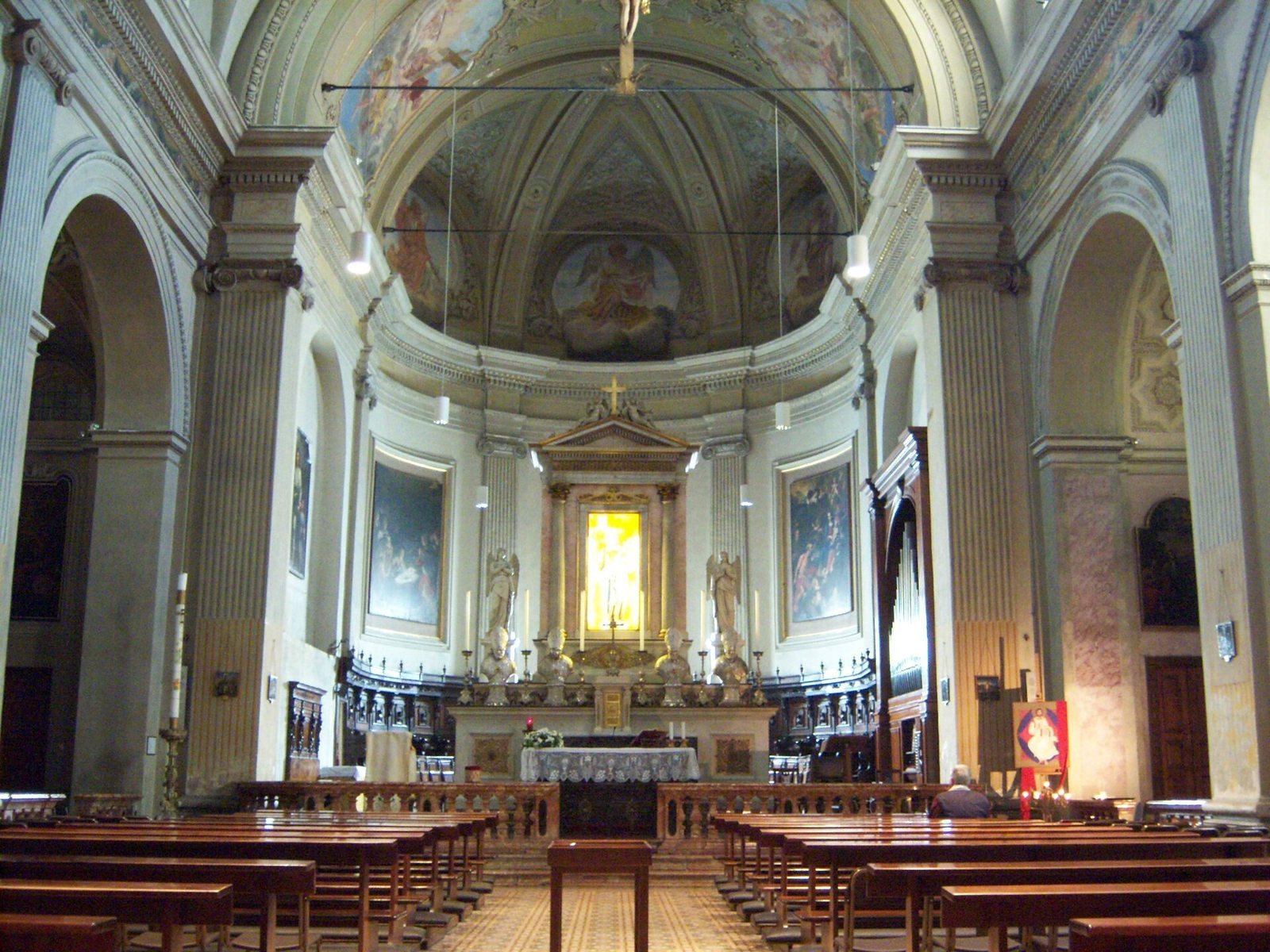
The nave is covered by a barrel vault, a continuous arched ceiling. Its painting of the Assumption of Mary was made by Ferdinando Porta in the eighteenth century over an earlier work by Andrea Pellegrini. Traces of seventeenth-century decoration include a painted band of childlike figures and garlands. On the underside of the arch in the third chapel on the left, stucco medallions painted in tempera, pigment mixed with a binding medium, show the Joyful Mysteries, episodes from the lives of Jesus and Mary contemplated in the rosary, along with other scenes from Mary’s life.
Painted chapels
Works by Girolamo Chignoli in the first two chapels on the right include a scene of angels ploughing while Saint Isidore the Farmer prays, and an image of Saint Bonaventure, a medieval Franciscan theologian. The fourth chapel on that side contains a painting of Saint Anne, traditionally regarded as Mary’s mother, attributed to Fabbrica. On the left, the first chapel has Andrea Porta’s painting of Saint Charles Borromeo, a sixteenth-century Archbishop of Milan, giving communion to plague victims. The second holds the image of Saint Lucy attributed to Fabbrica.
Crucifix chapel
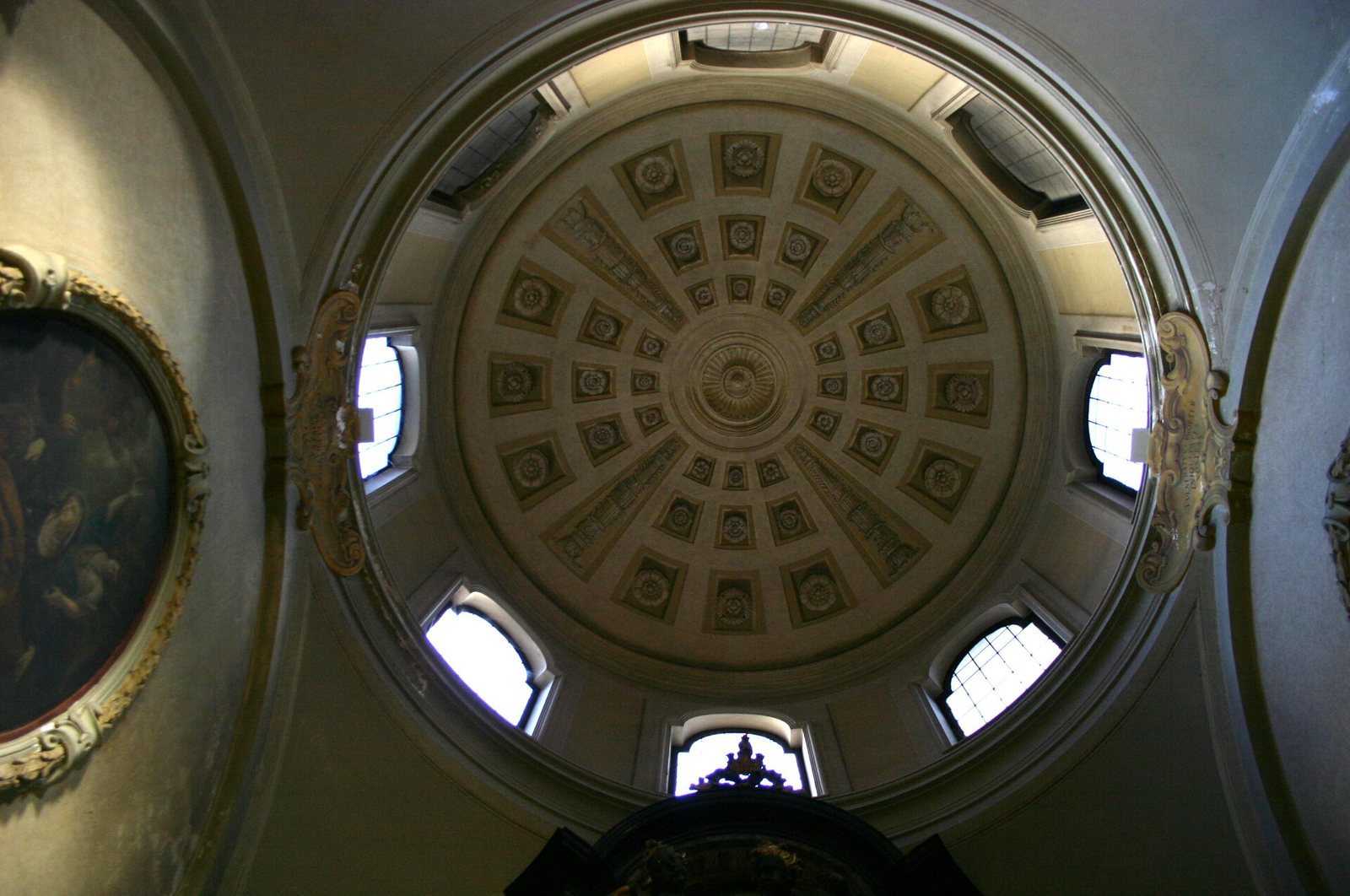
The third chapel on the right is dedicated to the Crucifix. Deeper than the other chapels, it is topped by a small dome and was built between 1733 and 1737.
Altar, choir, and organ
The marble high altar dates to the early twentieth century. Its central rectangular niche sits beneath a pediment supported by two Corinthian columns and contains a painted wooden statue of Our Lady of Sorrows, a devotional title for Mary focused on her suffering. The semicircular apse contains a carved wooden choir dating to the late sixteenth century. The stone associated with the Tredesin de Marz tradition is set in the center of the nave. It is said to be millennia old and is regarded as Milan’s oldest stone. The organ is housed in a niche in the right wall of the presbytery, the area around the main altar. Its mechanical action, in which physical linkages operate the valves, is enclosed in a wooden case with 33 displayed pipes from the principal stop, the organ’s main pipe rank. It has one 52-key keyboard with a short first octave, a layout that omits or reassigns some low notes, and a lectern-style pedalboard, a foot-operated keyboard, with 17 pedals.