San Pietro Martire Church, Rieti: A Cistercian Foundation and Confraternity Church
Site at a Glance
- Country
- Italy
- Primary era
- Medieval
- Eras represented
- Medieval, Early Modern, Modern
- Civilizations
- Papal States
- Site type
- Religious
- Remains
- Church
On this page11 sections
History
San Pietro Martire Church is a Catholic church in Rieti, Italy, built in 1266 by Cistercian monks, members of a Catholic monastic order that developed from the Benedictine tradition. It is dedicated to Saint Peter Martyr, the 13th-century Dominican friar Peter of Verona, who was venerated as a Christian martyr. The Dominicans are a Catholic order of friars. The church belongs to the Diocese of Rieti, the area overseen by a bishop.
Cistercian foundation
The church belonged to San Pastore Abbey at Greccio, another Cistercian foundation, and was originally called San Matteo all’Yscla. A guesthouse and a hospital were attached to it, serving people beyond the monastic community.
The Merchants’ Confraternity
In 1576, the Confraternity of Saint Peter Martyr, a religious association for devotion and communal activity also known as the Merchants’ Confraternity, transferred here from an oratory, or small place of worship, in the new cloister of San Domenico convent. The church then took its present name. The confraternity began a program of restoration and embellishment that continued at least into the 1630s. It was suppressed in 1739.
Devotion to Blessed Colomba
After plague struck Rieti in 1657, Bishop Odoardo Vecchiarelli authorized a confraternity dedicated to Blessed Colomba in 1661. “Blessed” is a Catholic title for a person formally beatified, and Colomba was regarded as a protector against plague. The confraternity was first based at San Donato. In 1783 it merged with the Confraternity of the Good Death, founded by Bishop Saverio Marini, becoming the Confraternity of Blessed Colomba and the Good Death. The merged confraternity moved to San Pietro Martire in 1823.
Remains
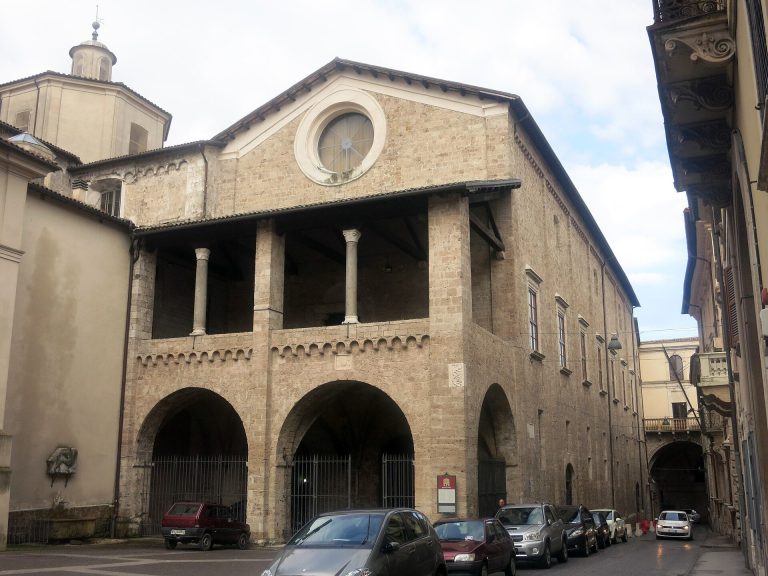
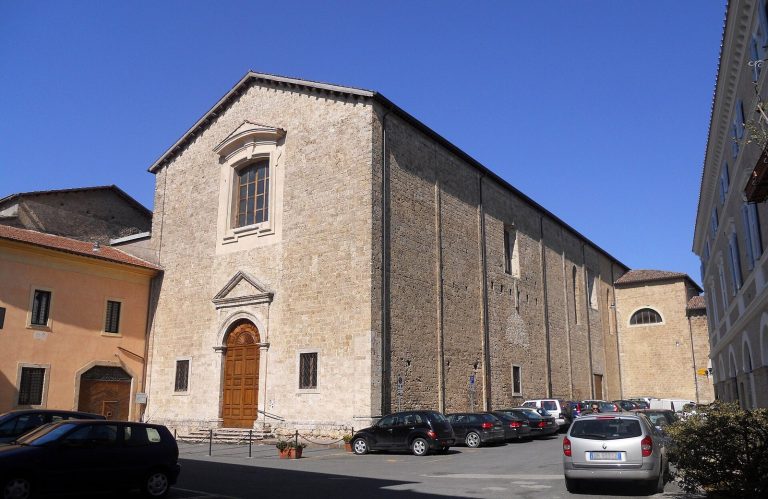
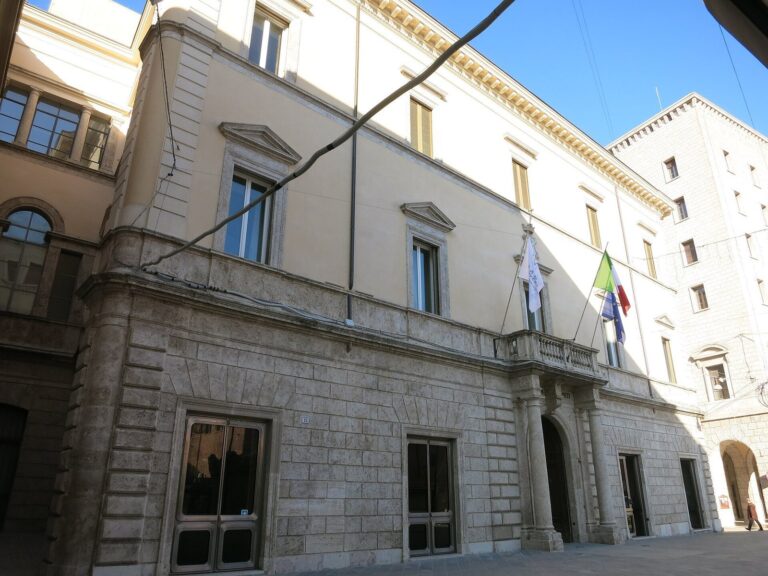
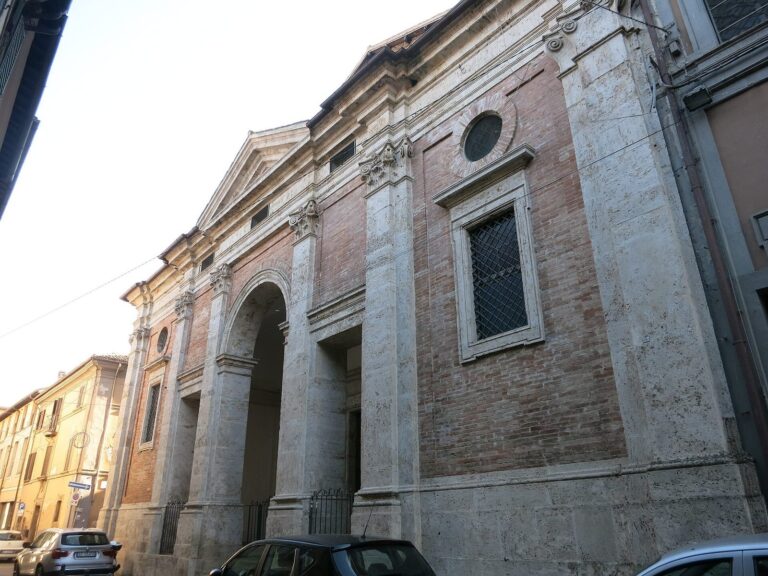
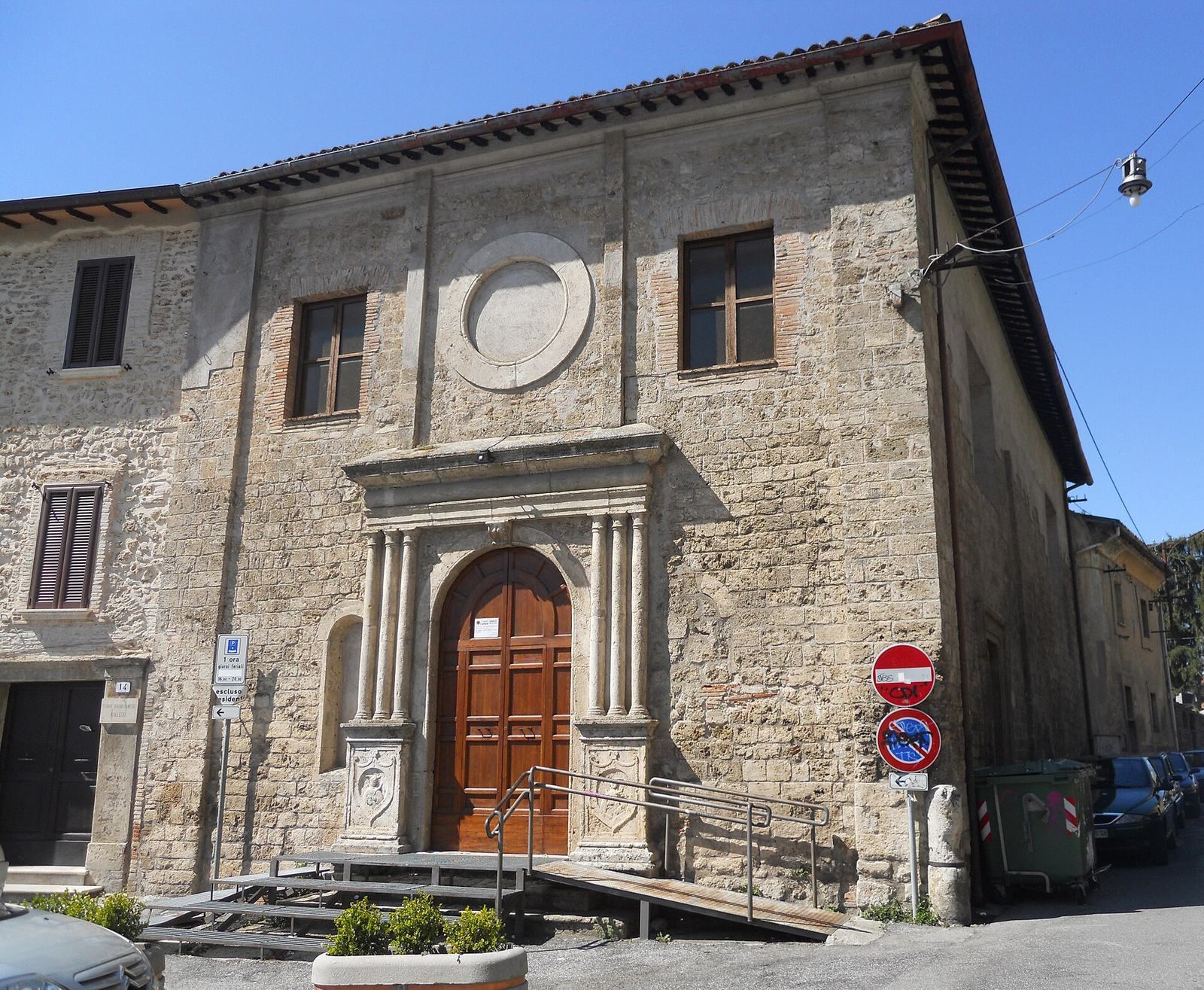
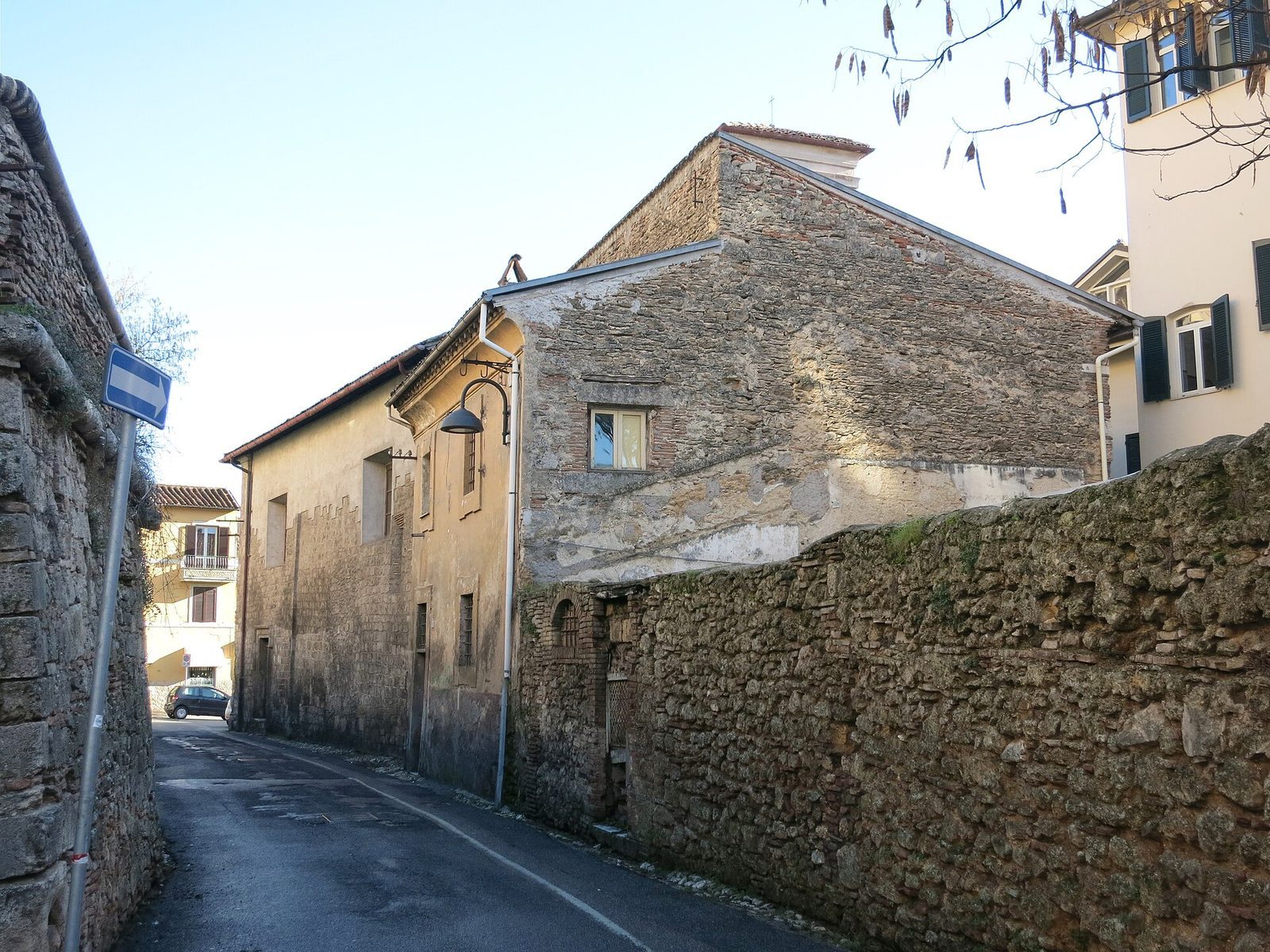
The church stands on Via San Pietro Martire, at the foot of the steps of Via dell’Episcopio. The steps climb the slope between the church and Rieti’s central historic district, meeting Via Cintia beneath the Arch of Boniface VIII. The simple travertine facade is framed by two pilasters, shallow wall projections resembling columns.
Facade and entrance
The portal, made in 1546 by Giacomo da Locarno and Stefano da Como, originally formed part of the Oratory of Saint Peter Martyr beside San Domenico church. It was moved to its present position in 1576. Six small stone columns, three on each side, rest on shields bearing busts of Saint Peter and support an architrave, a horizontal element spanning supports.
Interior furnishings
Coffered ceiling
The wooden ceiling, divided into framed panels, was made by cabinetmaker Andrea Masini in 1628. Ludovico Gonetti added its decoration in 1653. Symbols of the confraternities of Saint Peter Martyr, Blessed Colomba, and the Good Death were placed at the ceiling’s center in 1823, when the latter two confraternities moved into the church.
Altarpieces and paintings
The main altar holds Vincenzo Manenti’s canvas of the martyrdom of Peter of Verona. Two further paintings by Manenti, dated 1569, are set on the doors beside the altar that lead to the sacristy. They depict Saint Philip Neri and Blessed Colomba. Another painting by Manenti in the church shows Saint Agatha.
Sacristy and plague painting
The sacristy, a room where clergy prepare for services and keep items used in worship, dates to 1636. It contains a painting by local artist Salvatore Tarchi, commissioned after the 1657 plague epidemic. The scene shows Blessed Colomba appealing to Jesus and the Madonna during a plague.
Organ
Giovanbattista Boccanera of Leonessa made the organ installed in 1679. It had become worn by about 1737 and was rebuilt. The Piccinelli firm of Padua restored it in 1988–89 at Luigi Coleghin’s initiative, and it was inaugurated on April 28, 1990.