Tadrart Acacus: A Saharan Mountain Range and Rock-Art Landscape in Libya
Site at a Glance
- Country
- Libya
- Primary era
- Stone Age
- Eras represented
- Stone Age, Bronze Age, Iron Age, Classical
- Civilizations
- Unclassified
- Site type
- Civic
- Remains
- Rock Art
On this page8 sections
History
Tadrart Acacus is a mountain range in western Libya. Its paintings and carvings date from 12,000 BCE to 100 CE, while archaeological evidence shows continuous hunter-gatherer occupation through the Holocene, the current geological epoch. The sites help trace how people adapted their food practices and mobility as conditions changed.
Early Acacus
The Early Acacus phase, about 9,810–8,880 BP, took place in a humid environment. BP means before present, an archaeological dating scale that uses 1950 as its reference year. Small, mobile groups lived in valleys and beside lowland lakes.
Late Acacus
Conditions became drier during the Late Acacus, about 8,870–7,400 BP. Larger communities settled more often in valleys and made greater use of wild grains, processing and storing them with grinding stones and pottery. Around 7,500 BP, ceramics from Tadrart Acacus held the earliest known evidence of processed milk fats.
Pastoral Neolithic
A wetter climate accompanied renewed mobility during the Pastoral Neolithic. By around 7,000 BP, domesticated animals had reached the region. Pastoralism and foraging, rather than farming, were the main ways people obtained food, and grinding stones became less common.
Heritage protection and damage
The rock-art sites joined the United Nations Educational, Scientific and Cultural Organization (UNESCO) World Heritage List in 1985 under criterion (iii), which recognizes exceptional testimony to a cultural tradition or civilization. The Libyan Department of Antiquities was badly neglected during the rule of Muammar Gaddafi, a Libyan military officer and political leader, from 1969 to 2011.
Oil exploration placed the art at risk from 2005, when seismic hammers used to locate underground deposits sent shock waves through nearby rock. Looting also became a serious concern, prompting UNESCO to call for a public-awareness campaign about Libya’s archaeological and cultural heritage. At least ten locations suffered deliberate, substantial damage from April 2009 onward. Unclear property boundaries and management, limited local awareness of its cultural value, and conflict in the area from 2011 contributed to continuing vandalism; the conflict intensified it.
In 2012, UNESCO worked with the Libyan and Italian governments on staff training in conservation, protection, and education. A UNESCO technical mission assessed the property in May 2013 and helped develop a strategic protection and management plan. In April 2014, vandals carved names beside ancient art and used chemicals to remove drawings. An attack with sledgehammers and scrubbing brushes took place on 20 April. The property has been on the World Heritage List in Danger since 2016.
Remains
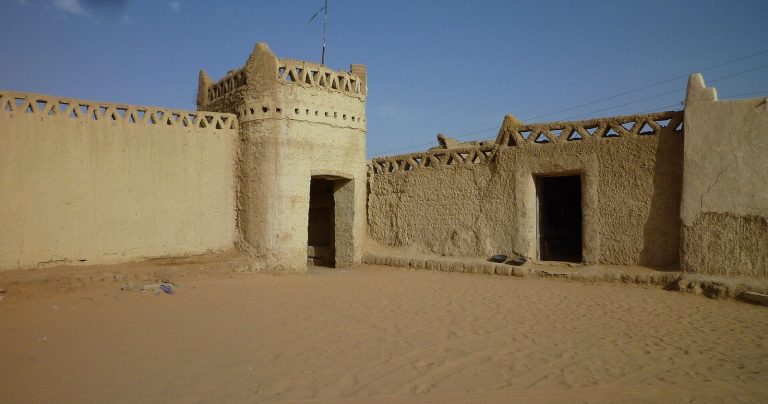
Tadrart Acacus is a mountain landscape with varied terrain and rock art. The range lies east of Ghat and extends north for about 100 km from the Algerian border.
Terrain and water
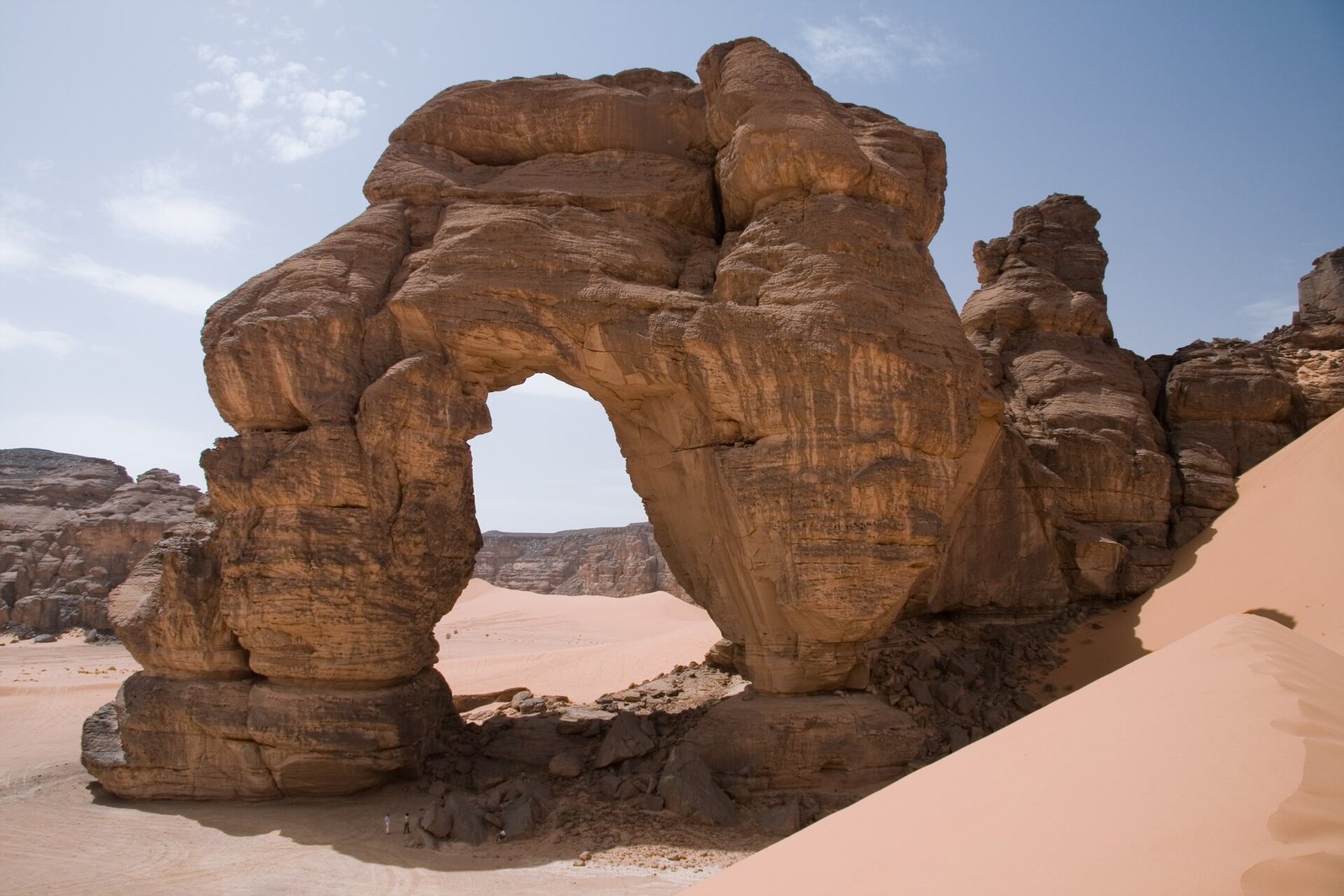
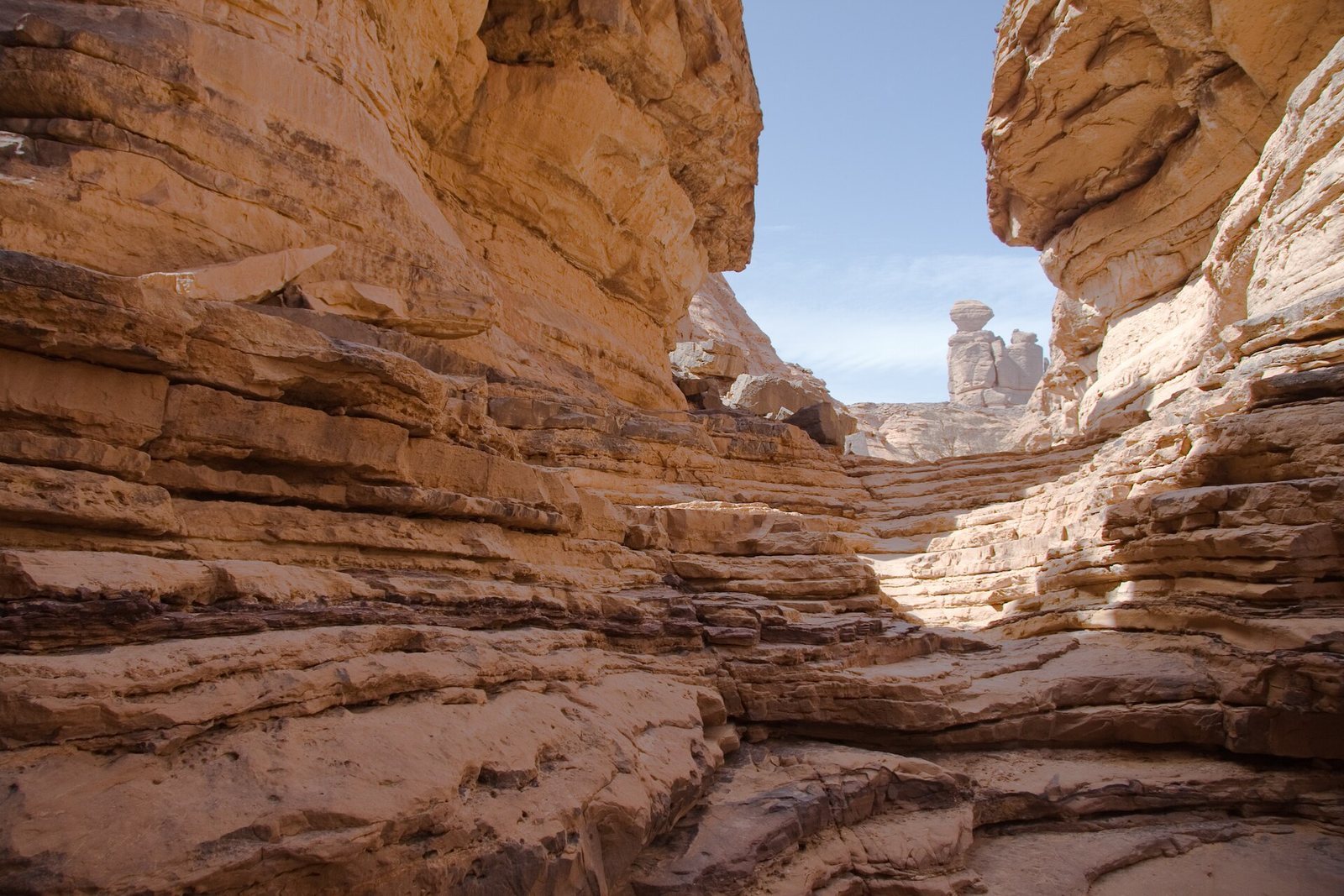
The landscape includes dunes of different colors, arches, gorges, isolated rocks, and deep valleys. The arches of Afzejare and Tin Khlega are notable features. Despite the area’s extreme aridity, springs and wells support a landscape that includes vegetation such as the medicinal plant Calotropis procera.
Paintings and carvings
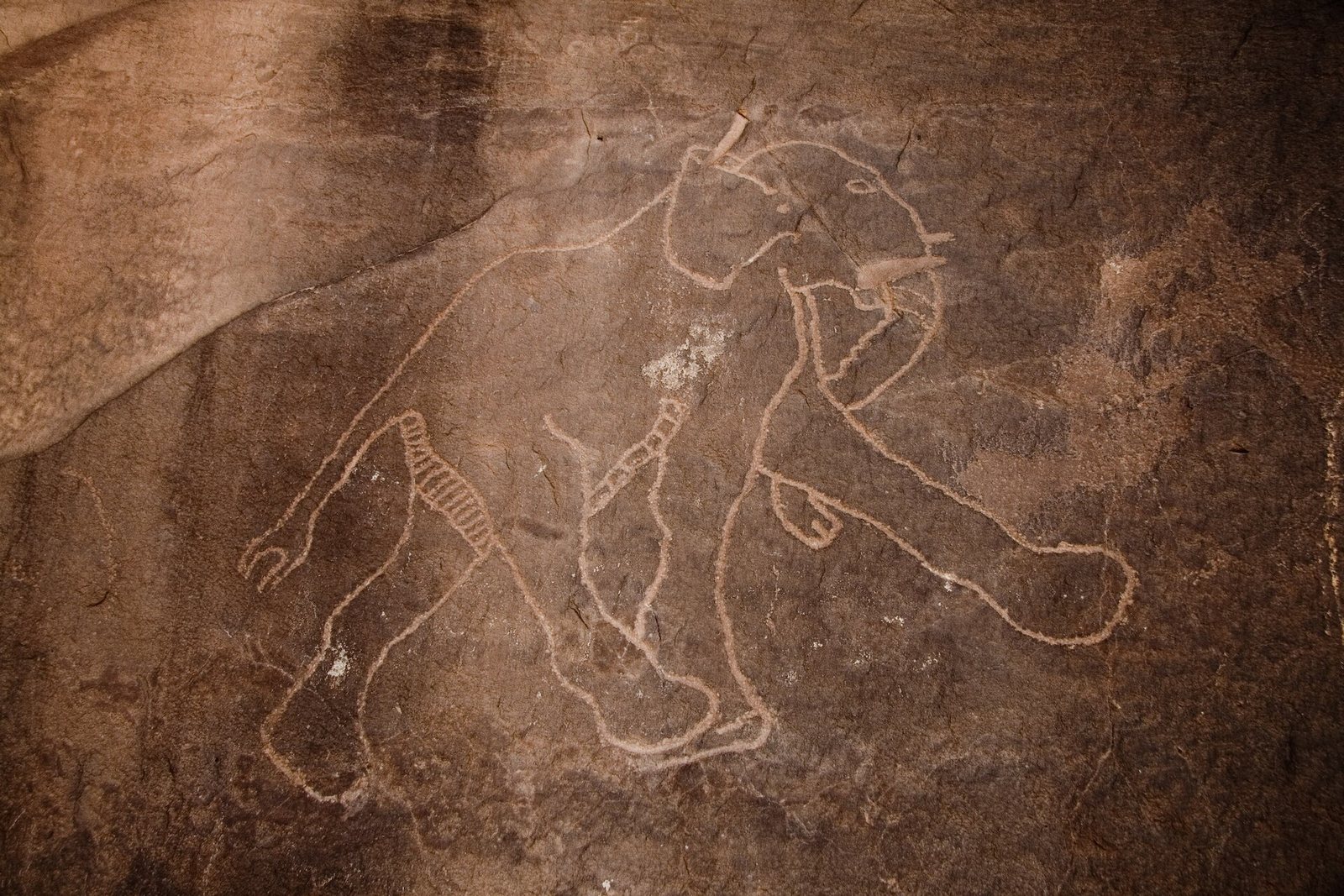
Rock paintings and carvings show giraffes, elephants, ostriches, camels, people, and horses. Human figures appear in everyday activities, including making music and dancing. The images reflect changes in both the region’s cultures and its natural environment.