San Petronio: A Roman Catholic Parish Church in Italy
Site at a Glance
- Popularity
- Very Low
- Country
- Italy
- Primary era
- Early Modern
- Eras represented
- Early Modern
- Civilizations
- Unclassified
- Site type
- Religious
- Remains
- Church
On this page15 sections
History
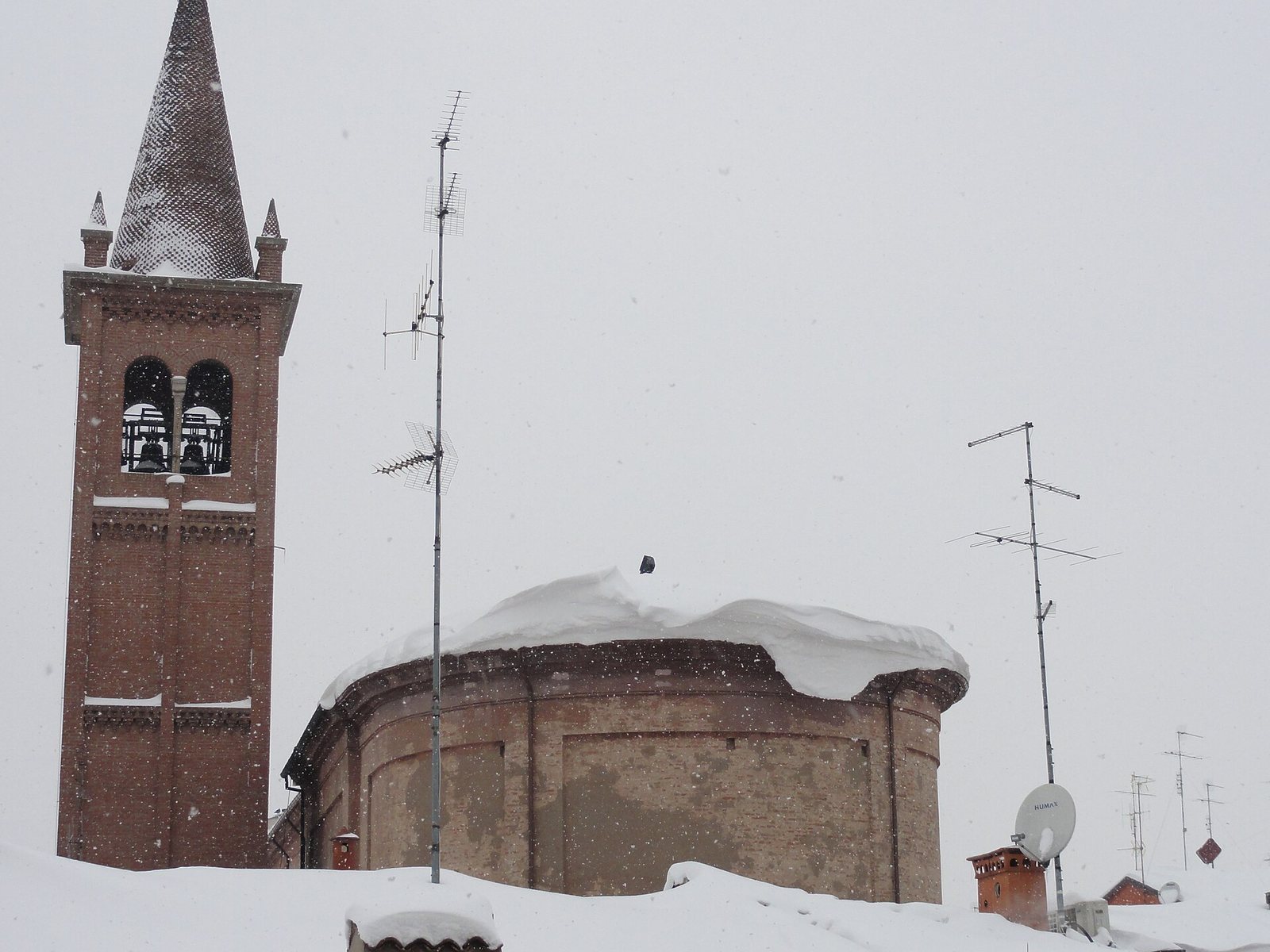
San Petronio is a Roman Catholic parish church in Italy, dedicated to St Petronio, a fifth-century bishop of Bologna venerated as that city’s patron saint. The church belongs to the Diocese of Imola, the area governed by a bishop, and the Vicariate of Media Pianura, an administrative subdivision within the diocese. A church here is recorded by 1396 and was associated with the parish of Campiano, although whether it fell directly under Imola or was subordinate to Campiano is uncertain. Its foundation by people from Bologna is considered probable because of its dedication.
The medieval church and early alterations
Rebuilding began in late 1427 or early 1428 and continued for several years. In 1438, the local commune sold land to finance construction of the bell tower.
In 1574, the main altar was moved to the centre of the main chapel, and a tabernacle took its former place. Cardinal Ginnasi’s patronage brought a column from the church of San Michele at Monte Sant’Angelo in 1592. The earlier church’s façade was repainted in 1616, and the building was restored again toward the end of the seventeenth century.
The eighteenth-century rebuilding and later damage
An earthquake on 4 April 1781 severely damaged the church and devastated much of the town. Bishop Giovanni Carlo Bandi of Imola ordered the damaged building demolished and a larger church erected in its place. The bell tower was repaired to its original design.
The cornerstone of the replacement church was laid on 29 October 1783. Designed by Cosimo Morelli and built by master builder Francesco Dalrè, it was completed in 1786. Bishop Gregorio Barnaba Chiaramonti, later Pope Pius VII, consecrated it on 2 March 1788.
The church’s 35-metre bell tower was destroyed by bombing on 24 December 1944.
Remains
Exterior and earlier plan
The present church has a three-part brick façade and a three-aisled interior. Its predecessor occupied the area now represented by the chapel dedicated to St Catherine.
Façade
Three Doric pilasters, flat supports in a classical style, divide the brick-facing into a central section and two side sections. The centre has a triangular pediment, a main doorway topped by a smaller pediment, and a semicircular window set inside a larger arch. Each side section has a secondary doorway, a semicircular pediment, and a window.
Earlier church
The earlier building had a west-facing façade and three aisles divided by six columns. Vaults covered the aisles, and eight chapels stood along the sides.
Interior and furnishings
Aisles and ceiling
The central aisle has a barrel vault, a continuous rounded ceiling. Each side aisle is divided into three bays, with three chapels and sail vaults, curved ceilings spanning the bays. The ceiling is richly decorated with carved coffers, recessed panels made by Alessandro Della Nave and Antonio Villa.
Altars
The main altar is decorated in scagliola, a decorative plaster made to resemble polished stone. The second altar on the left contains the column brought from San Michele at Monte Sant’Angelo in 1592. The first altar on the right is dedicated to St Andrew Avellino, an Italian Catholic priest, and includes a statue of St Therese of Lisieux, a French Carmelite nun. Maddalena Gottarelli donated the statue in 1925.
Paintings in the chapels
In the first chapel, Alfonso Cittadella’s Visitation is flanked by his paintings of St Jerome, a biblical scholar, and St Lawrence, an early Christian deacon and martyr. The second chapel contains an altarpiece attributed to Benedetto dal Buono, depicting Saints Dominic, founder of the Dominican Order, and Emidius, a bishop and martyr, with a Holy Martyr. Its window holds a fifteenth-century Madonna of the Rosary attributed to Giovanni da Riolo. A depiction of St Michael the Archangel in the last chapel is attributed to Francesco Longhi.
Chapel statues
The third chapel contains a statue of St Jerome by Alfonso Lombardi and one of St John the Baptist, regarded by Christians as Jesus’ forerunner, by Ottavio Toselli.
Choir and images of St Petronio
At the rear of the choir is a sixteenth-century painted terracotta group of the Crucifixion by Alfonso Lombardi. An oval image of St Petronio by Felice Giani hangs above a horizontal architectural band, while a painting of the saint by Angelo Gottarelli, dated 1786, stands beside the main altar. A wooden statue of St Petronio in the nave copies a twelfth-century statue in Bologna Cathedral and is associated with Pope Pius IX, who led the Catholic Church from 1846 to 1878.
Other devotional works
Other works include an image of the Virgin Mary embracing Jesus and fifteen panels showing the Mysteries of the Rosary, episodes from the lives of Jesus and Mary contemplated in Catholic prayer. A statue of the Sacred Heart of Jesus, a Catholic devotion expressing Jesus’ love, was sculpted by Gioacchino Meluzzi in the early twentieth century. The church also has a sixteenth-century baptismal font, paintings of St Francis of Paola, founder of the Minim order, and St John Bosco, a nineteenth-century priest and educator, and a Stations of the Cross dated 1779, depicting events leading to Jesus’ death.
Lourdes grotto and organ
A replica of the grotto at Lourdes, France, a site associated with Marian apparitions in 1858, was made in 1933 from gypsum rock taken from Casola Valsenio. The organ stands on the choir loft to the right of the presbytery, the area around the main altar. Built by the Ruffatti brothers in 1979–1980, it has mechanical action, meaning that physical linkages connect the keys to the valves admitting air to the pipes. It has 15 stops, two keyboards, and a pedalboard.