Palazzo Zucchini: A Neoclassical Palace in Faenza
Site at a Glance
- Popularity
- Low
- Country
- Italy
- Primary era
- Modern
- Eras represented
- Modern
- Civilizations
- Italian
- Site type
- Domestic
- Remains
- Elite Residence
On this page4 sections
History
Family origins and construction
Palazzo Zucchini is a 19th-century Neoclassical palace in Faenza, Italy, later associated with figures active in Catholic political life in Romagna. Neoclassicism revived forms and ornament drawn from ancient Greek and Roman architecture.
The Zucchini family, previously known as Dalfini or Delfini, moved from Bologna to Faenza in the mid-16th century. In 1865, Count Luigi Zucchini commissioned architect and engineer Antonio Zannoni to build the palace in place of two earlier family houses. It was inaugurated in 1866.
Writers and Catholic politics
The writer and patriot Giuseppe Cesare Abba lived in the palace from 1881 to 1884. Count Carlo Zucchini, who lived from 1862 to 1928, promoted Catholic associations in Romagna. In 1905 he hosted Father Romolo Murri, a Catholic priest and politician. During the period when the Italian People’s Party, a Catholic political party founded in 1919, was being established, Carlo repeatedly hosted his friend Father Luigi Sturzo, a Catholic priest and political leader. In 1945, the municipality of Faenza sought to place a plaque on the façade in recognition of Carlo’s political work. The palace remains a residence.
Remains
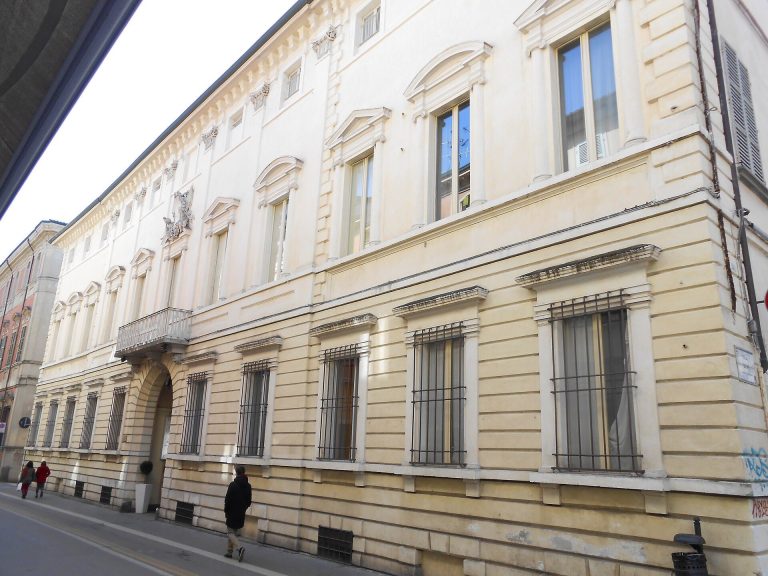
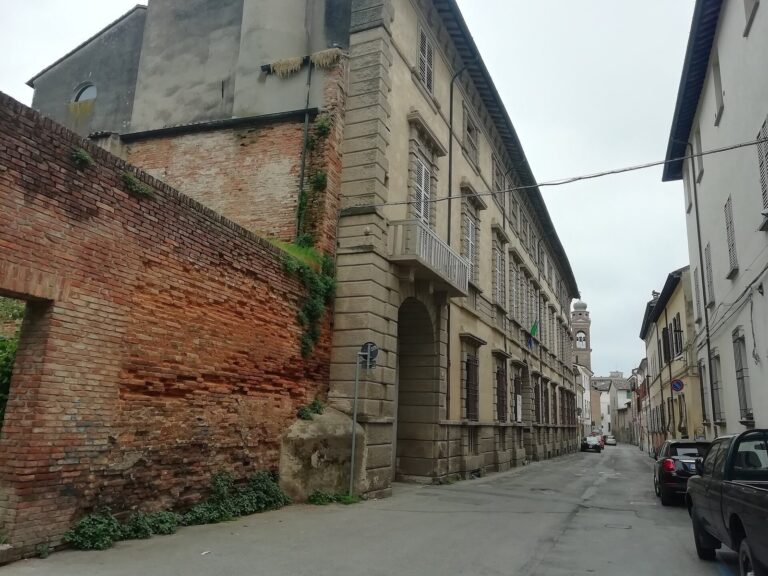
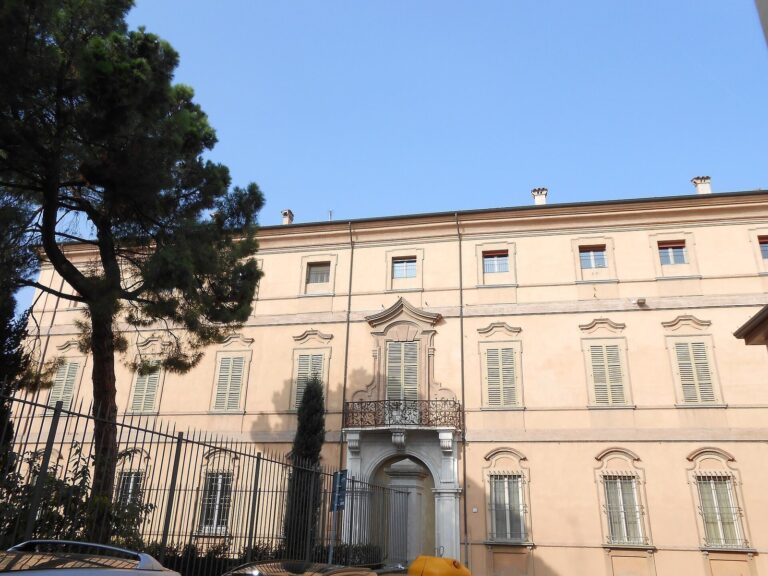
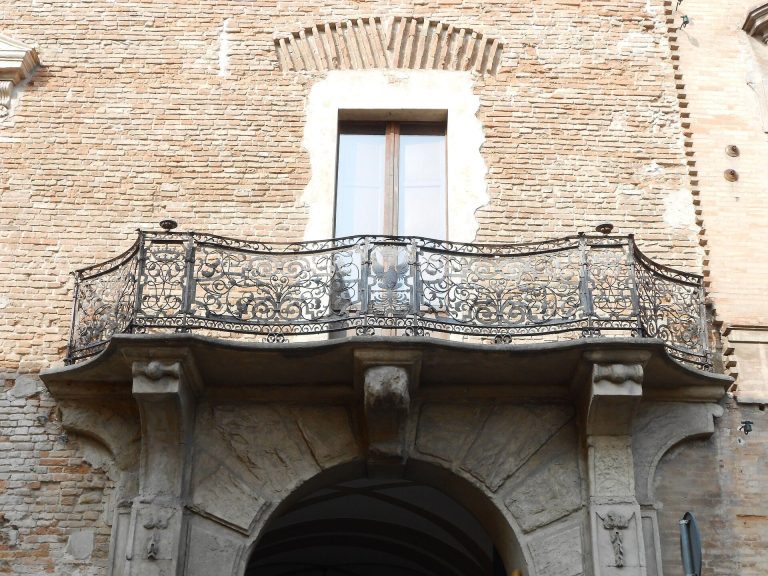
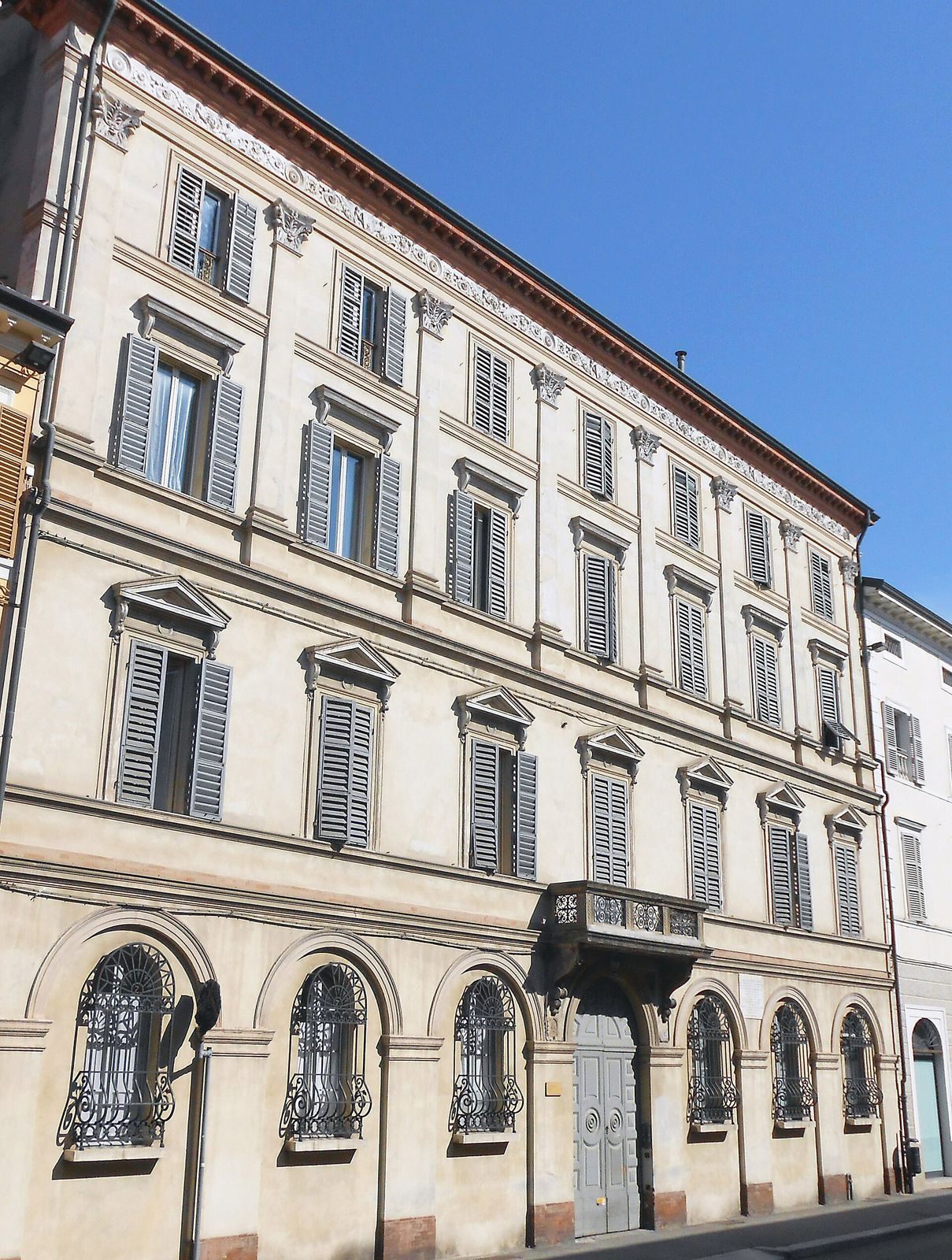
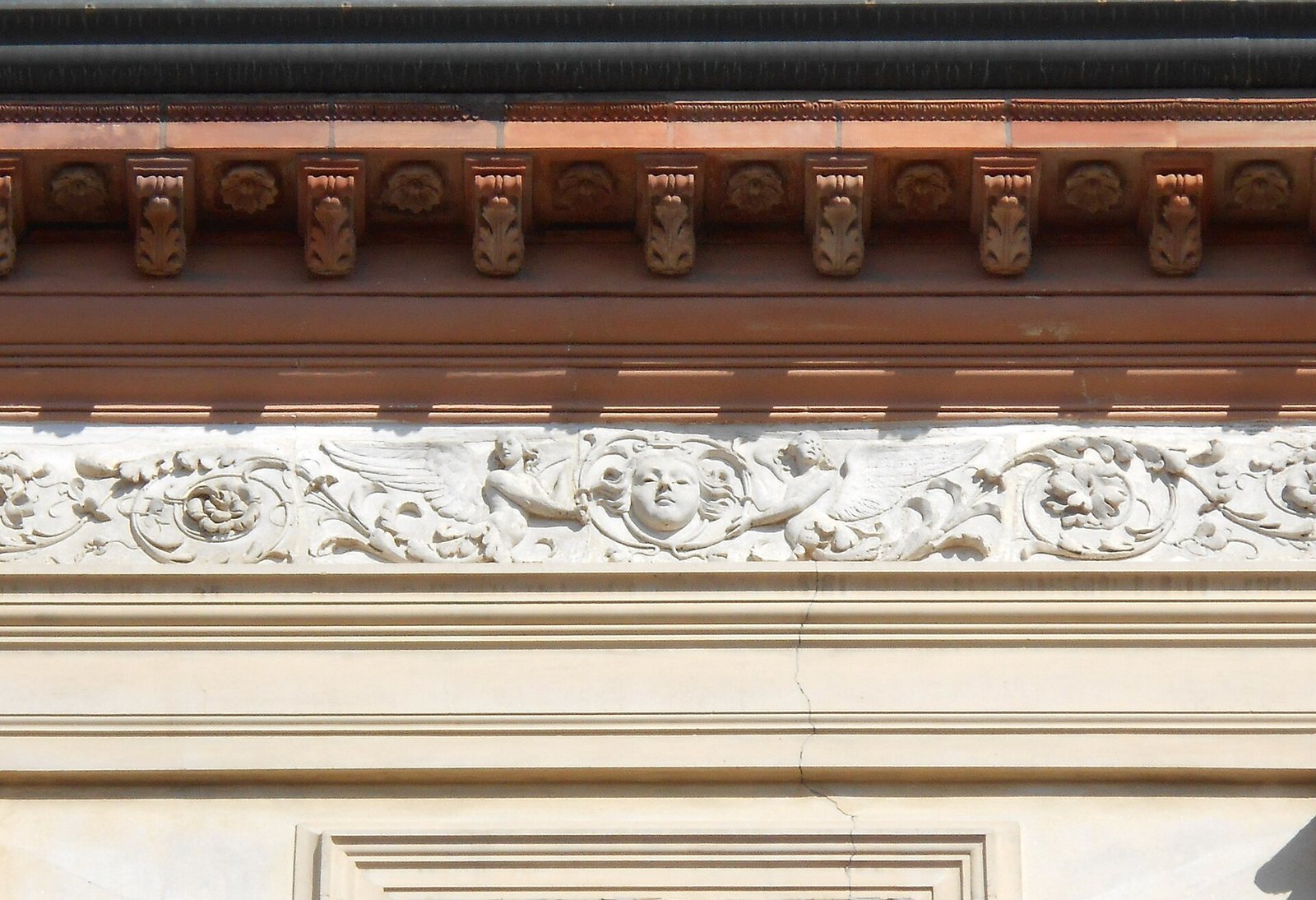
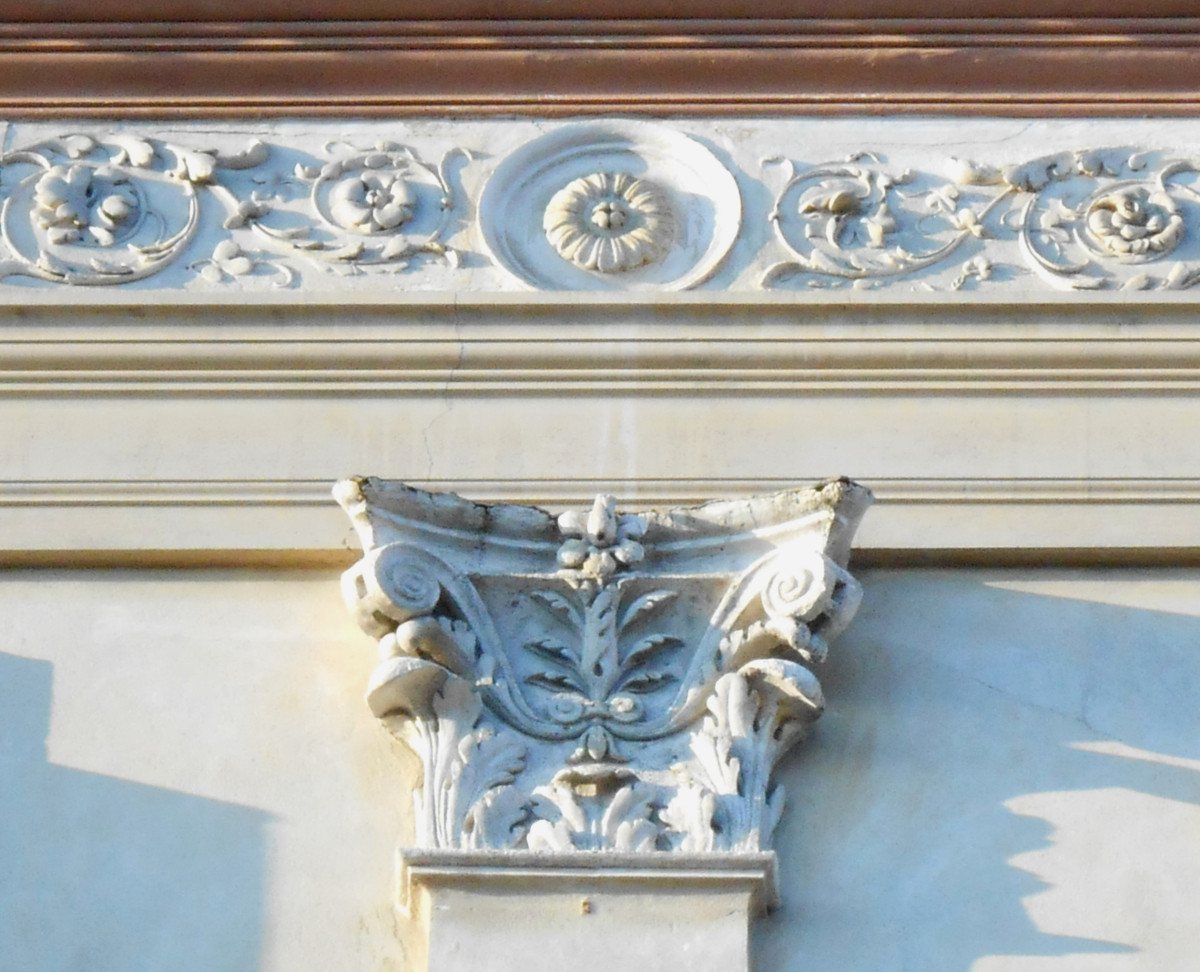
The four-storey palace has a façade divided into seven window bays. Six arched openings form the ground-floor arcade, with a central entrance topped by a balcony. Windows on the first main floor have triangular decorative panels, called tympanums. The upper two storeys are visually joined by pilasters, flat vertical supports attached to a wall, with Corinthian capitals ornamented with leaves. The pilasters support an elaborate ornamental band along the upper cornice, the projecting edge at the roofline. Winged spirit figures on the band carry the family arms, showing a dolphin on the sea with three gold stars above it. A commemorative plaque to Count Carlo Zucchini is also associated with the façade.