Saló del Tinell: Ceremonial Hall of the Palau Reial Major
Site at a Glance
- Popularity
- Medium
- Country
- Spain
- Primary era
- Medieval
- Eras represented
- Medieval
- Civilizations
- Crown of Aragon
- Site type
- Civic
On this page8 sections
History
Royal hall and traditional 1493 meeting
The Saló del Tinell is a medieval ceremonial hall in Spain, built between 1359 and 1370 for King Peter the Ceremonious, also known as Peter IV. Master builder Guillem Carbonell directed the work. The hall served the Palau Reial Major, or Royal Palace Major, the residence of the counts of Barcelona and later the kings of the Crown of Aragon, a composite monarchy formed by the union of the Kingdom of Aragon and the County of Barcelona, and later expanded to include other territories.
One tradition places Christopher Columbus before the Catholic Monarchs, Ferdinand II of Aragon and Isabella I of Castile, in the hall in 1493, after his return from the first voyage across the Atlantic to the Americas. Another tradition places their meeting at the Monastery of San Jerónimo de la Murtra in Badalona.
Later uses and restoration
In the sixteenth century, the hall became a Royal Audiencia, a royal court with judicial and administrative functions, and a seat of the Inquisition, a church institution that investigated and prosecuted perceived heresy. In 1718, nuns from the convent of Santa Clara converted it into a church. After worship there ended, the hall was restored in 1936. The hall and the adjacent Chapel of Santa Ágata now form part of the Museum of the History of Barcelona.
Remains
Hall structure
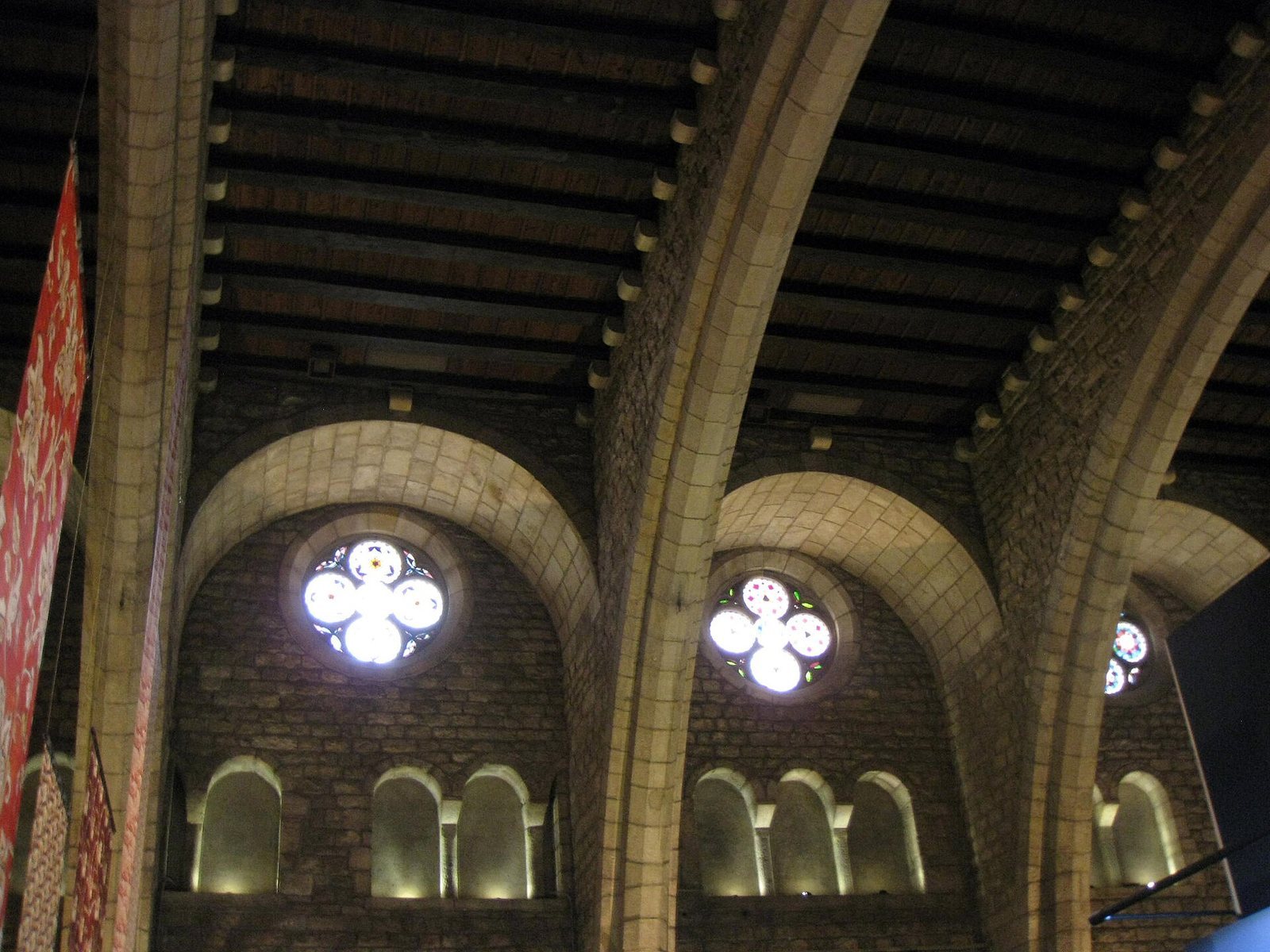
The rectangular hall measures 33 metres long, 18 metres wide, and 12 metres high. Its timber roof rests on six large semicircular diaphragm arches, which span the interior to support or divide the roof structure. The arches stand on pillars with straight, flat faces and carved capitals, the upper blocks of the pillars. Narrow, tunnel-shaped barrel vaults run across the direction of the arches beside the side walls.
Facades
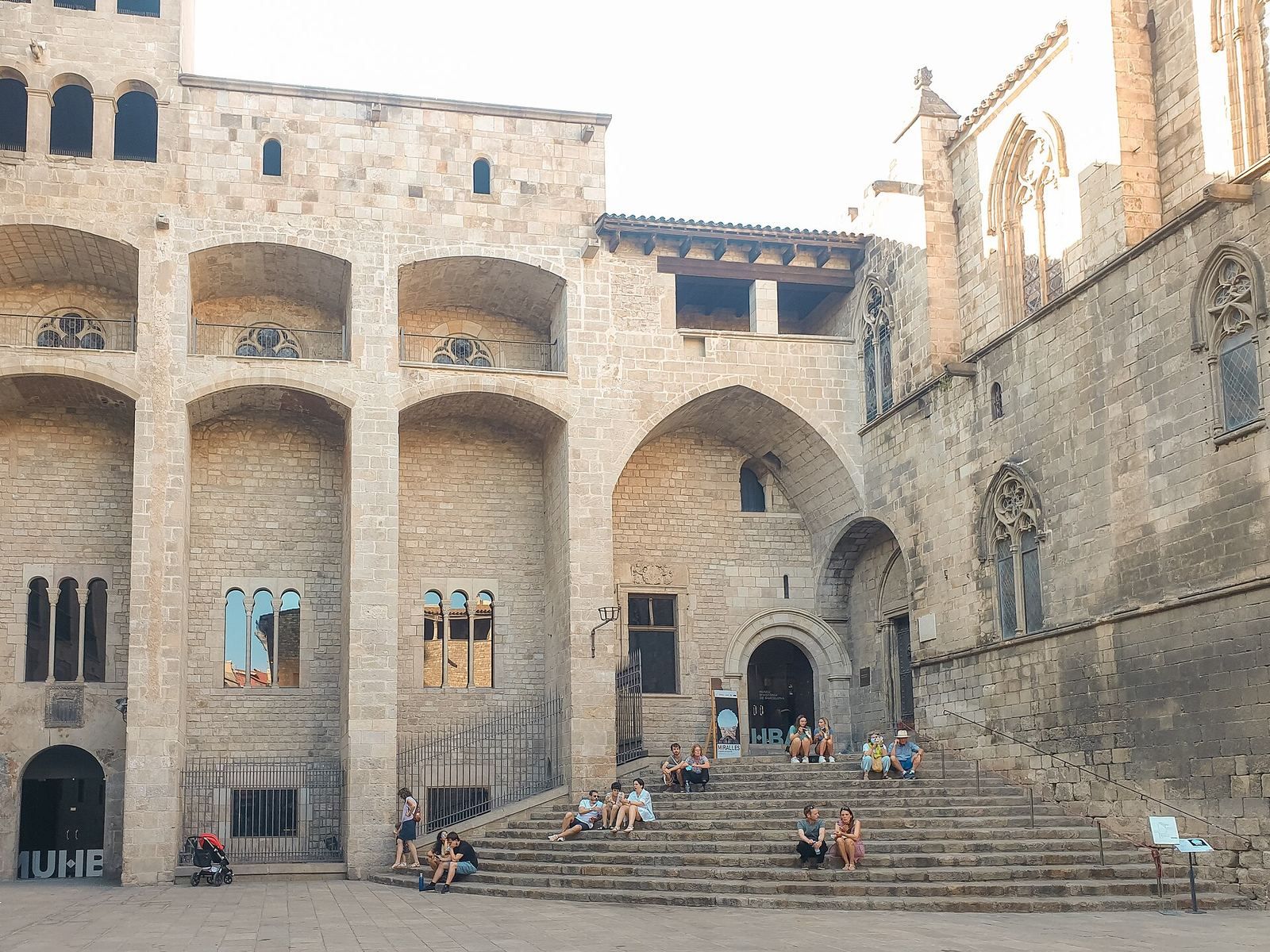
Plaça del Rei facade
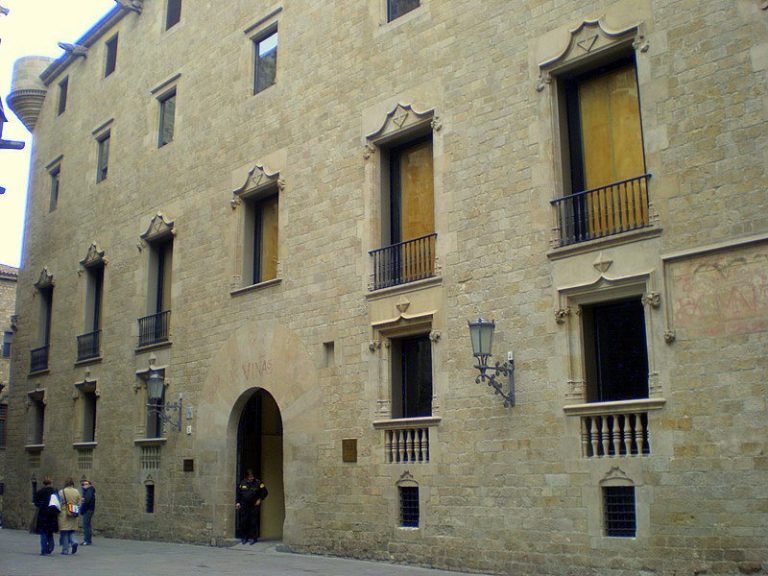
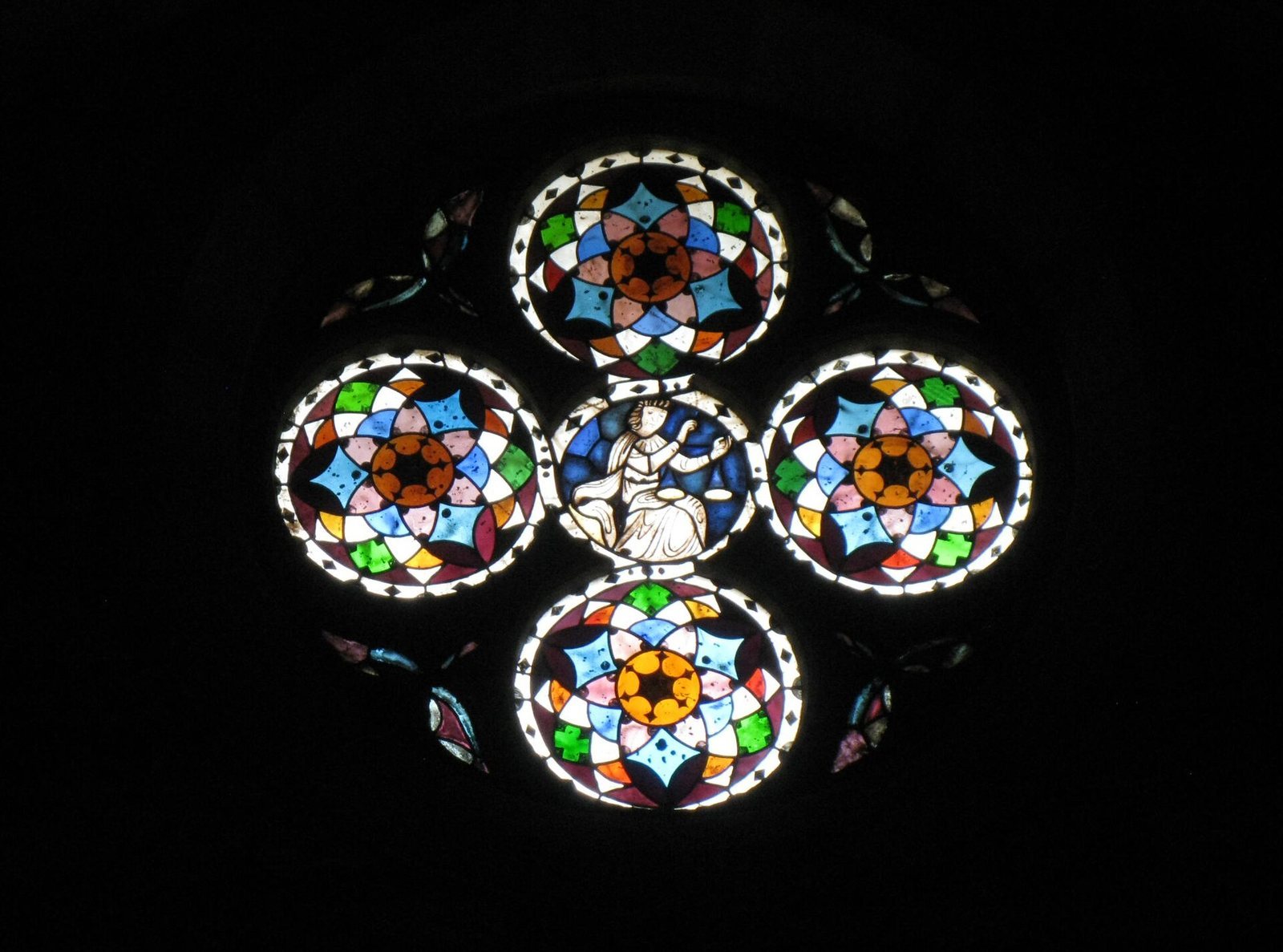
The facade facing Plaça del Rei predates the hall. Buttresses between its windows counter the outward force of the interior arches. The openings belong to different periods, including triple windows from the thirteenth century and rose windows from the fourteenth.
Rear facade
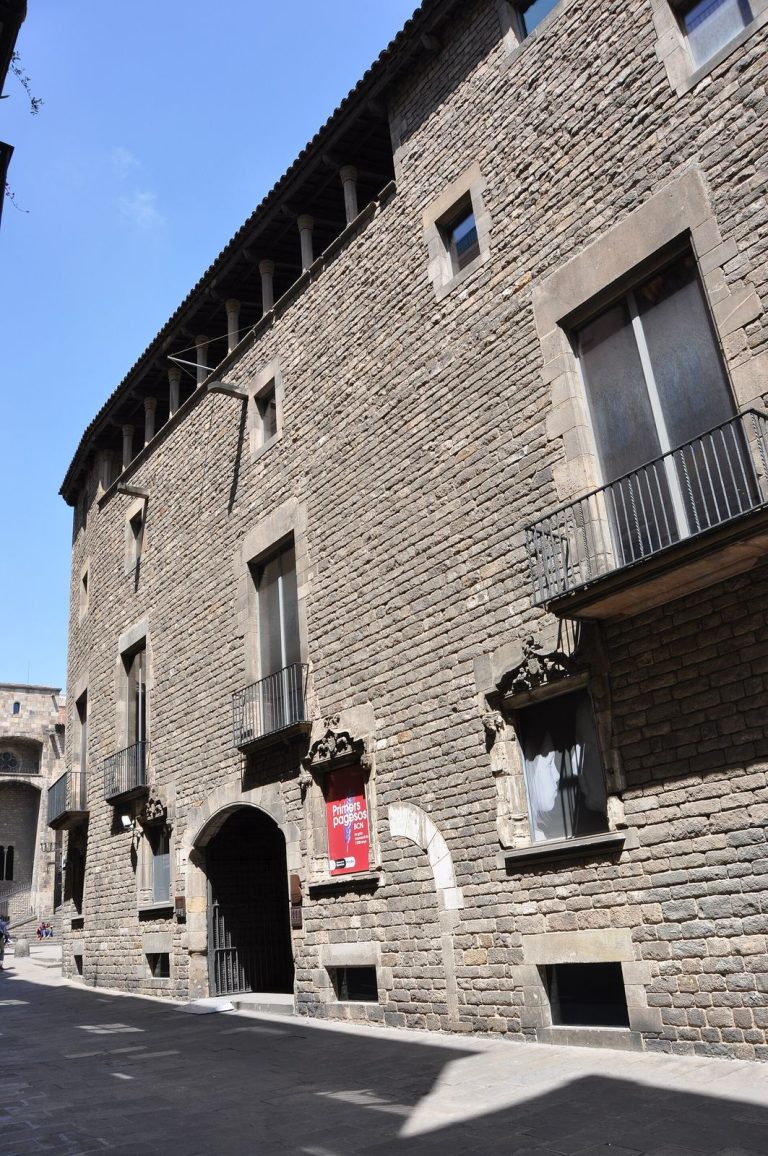
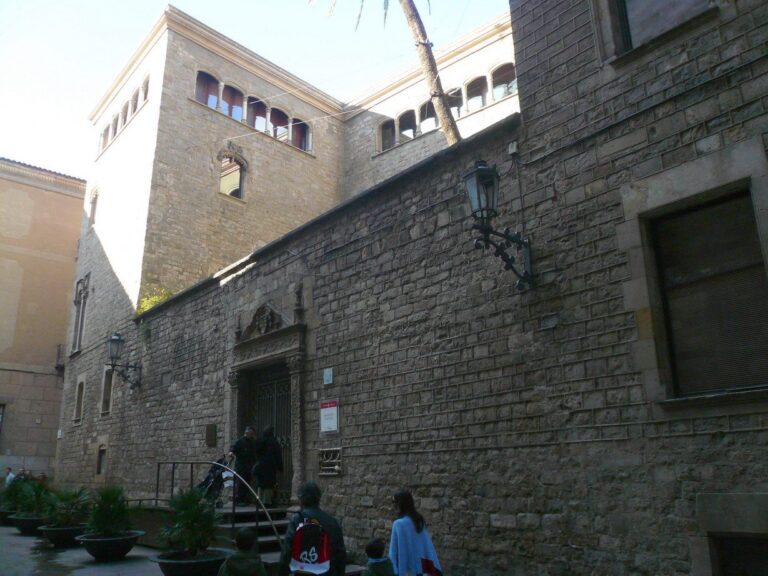
The rear facade, which faces the courtyard of the Frederic Marès Museum, is Romanesque in origin. Romanesque is a medieval architectural style characterized by features such as rounded arches. The facade has since been extensively altered.