Salimgarh Fort: A Sur Dynasty Stronghold and Historic Prison
Site at a Glance
- Rating
- 3.8
- Popularity
- Very Low
- Country
- India
- Primary era
- Early Modern
- Eras represented
- Early Modern, Modern
- Civilizations
- British
- Site type
- Military
- Remains
- Fort
On this page10 sections
History
Salimgarh Fort is a fortification in New Delhi, India, built in 1546 by Salim Shah Suri, son and successor of Sher Shah Suri. Its history spans Sur rule, Mughal government, the uprising of 1857, and British imprisonment of members of the Indian National Army.
Sur rule and Mughal return
The fort was built during the rule of the Sur dynasty, a short-lived ruling house founded by Sher Shah Suri in northern India. The dynasty held Delhi after Sher Shah defeated the Mughal emperor Humayun in 1540. Its rule ended in 1555, when Humayun defeated Sikandar Suri, the last Sur ruler, and regained the city.
On his return, Humayun renamed the fort Nurghar, recalling how Sher Shah had earlier driven him from his kingdom. He ordered his court not to use the fort’s original name. Humayun is also said to have stayed there for three days before setting out on the campaign that restored his rule in Delhi.
Mughal use and imprisonment
Salimgarh retained strategic importance under the Mughal Empire, which ruled much of the Indian subcontinent. Several emperors are believed to have camped there during construction of the Red Fort and Shahjahanabad, the city Shah Jahan completed in 1639. The bridge linking the fort to the Red Fort is attributed either to the reign of Jahangir or to Farid Khan, who held the fort as a jagir, a grant of land revenue.
Aurangzeb turned the fort into a prison. His brother Murad Baksh was held there before being transferred to Gwalior and executed. Murad was reportedly captured asleep after drinking at Mathura; the official charge against him was apostasy, or abandoning the fundamental teachings of Islam. Aurangzeb’s eldest daughter, Zebunnisa, was also said to have been confined in the fort for 21 years, until her death. Her interest in poetry and music, and her sympathy for her brother Muhammad Akbar, are both thought to have contributed to her imprisonment.
The 1857 uprising and British military rule
British forces took control of the fort during the Indian Rebellion of 1857, an uprising against British rule in India. Bahadur Shah Zafar II, the last Mughal emperor, used Salimgarh as an operations centre. In August and early September, he held meetings there to discuss strategy and watched artillery fire directed against the British Indian Army from the fort’s ramparts. When officers came to request their pay, he offered to pawn his crown jewels and give his life for the cause. The officers declined, trusting his commitment. Later proclamations said he would lead an attack on the British and urged people of every caste and faith to join the resistance.
By mid-September, British troops were advancing on Salimgarh. Bakht Khan, a commander associated with the uprising, advised Bahadur Shah Zafar II to withdraw and continue the fight with hit-and-run tactics. The emperor refused to flee, but allowed his forces to evacuate and went to Humayun’s Tomb. The British Fourth Infantry entered the fort through a single access point. After the rebellion was suppressed by 1858, the British used Salimgarh as a military camp and housed artillery units there. Bahadur Shah Zafar II, captured at Humayun’s Tomb, was briefly detained at the fort before his exile to Rangoon, now Yangon.
Prison, memorial, and conservation
From 1945 until August 1947, the British held Indian National Army prisoners at the fort. The Indian National Army was a military force formed in the struggle to end British rule in India, and many prisoners reportedly died in captivity at Salimgarh. The fort was later renamed Swatantrata Senani Smarak (Freedom Fighters’ Memorial) in recognition of those who died there.
After India became independent in 1947, the Indian Army retained control of the fort. Overlapping military and government responsibilities hindered conservation by the Archaeological Survey of India, the government body responsible for archaeological research and monument care. The army formally handed the site to the Survey in December 2003.
An initial bid to add the site to UNESCO’s World Heritage List was withdrawn in 1992 because the Survey lacked full administrative control. A renewed proposal followed in 2006, and the Red Fort Complex, including Salimgarh, received World Heritage status in 2007. The list recognizes cultural and natural places of outstanding universal value. After inscription, the Survey prepared a draft conservation plan based on a detailed assessment of the complex. It proposed restoring the historic bridge as a link between the Mughal and British periods, and work began while the plan awaited formal approval.
The Swatantra Sangram Museum (Museum of the Freedom Struggle) opened within the fort precincts on 2 October 1995. Its original location had been selected using information from Indian National Army officer Colonel Gurbaksh Singh Dhillon. Dhillon later clarified that the 1945 trials of Indian National Army members took place in a different building nearby, and in 2007 the Survey decided to move the museum to that building.
Local legends connect the fort with both Mughal and British-era prisoners. One says that Zebunnisa’s spirit, veiled in black, sings her poems on moonlit nights. Another attributes groans heard in the area to Indian National Army soldiers tortured and killed in captivity.
Remains
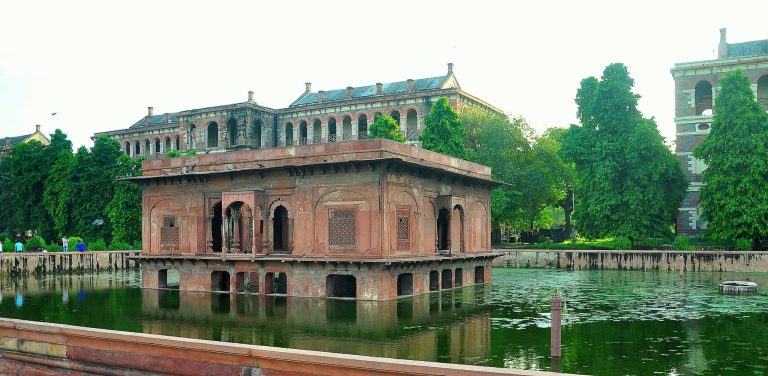
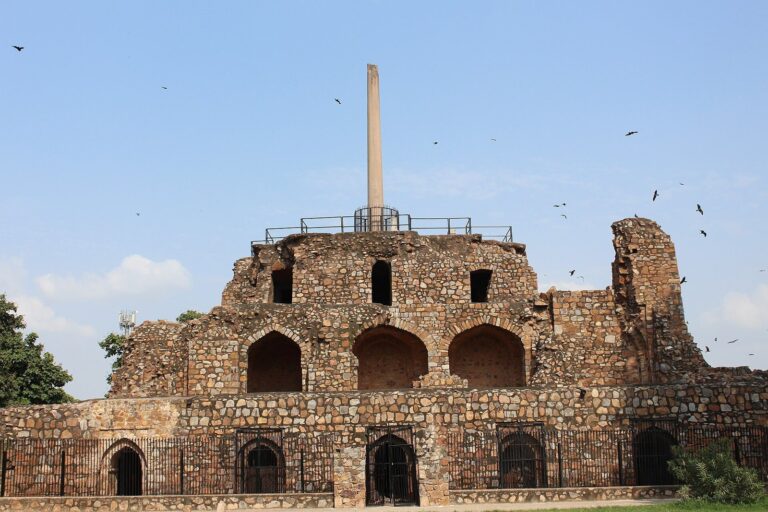
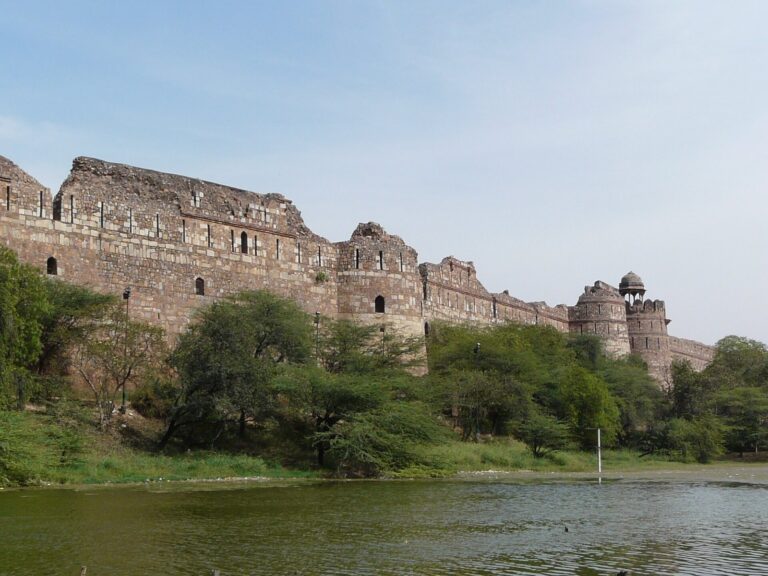
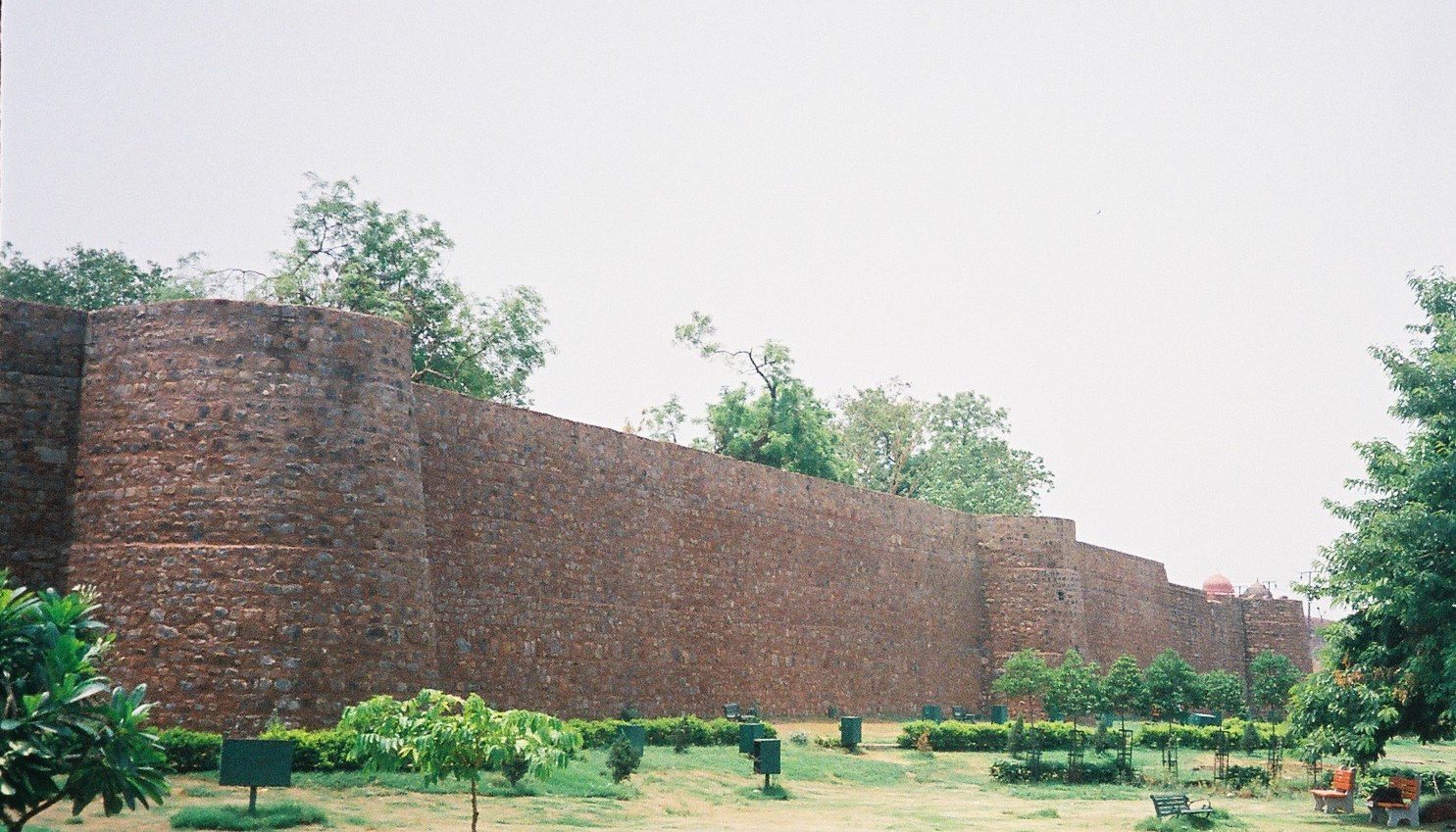
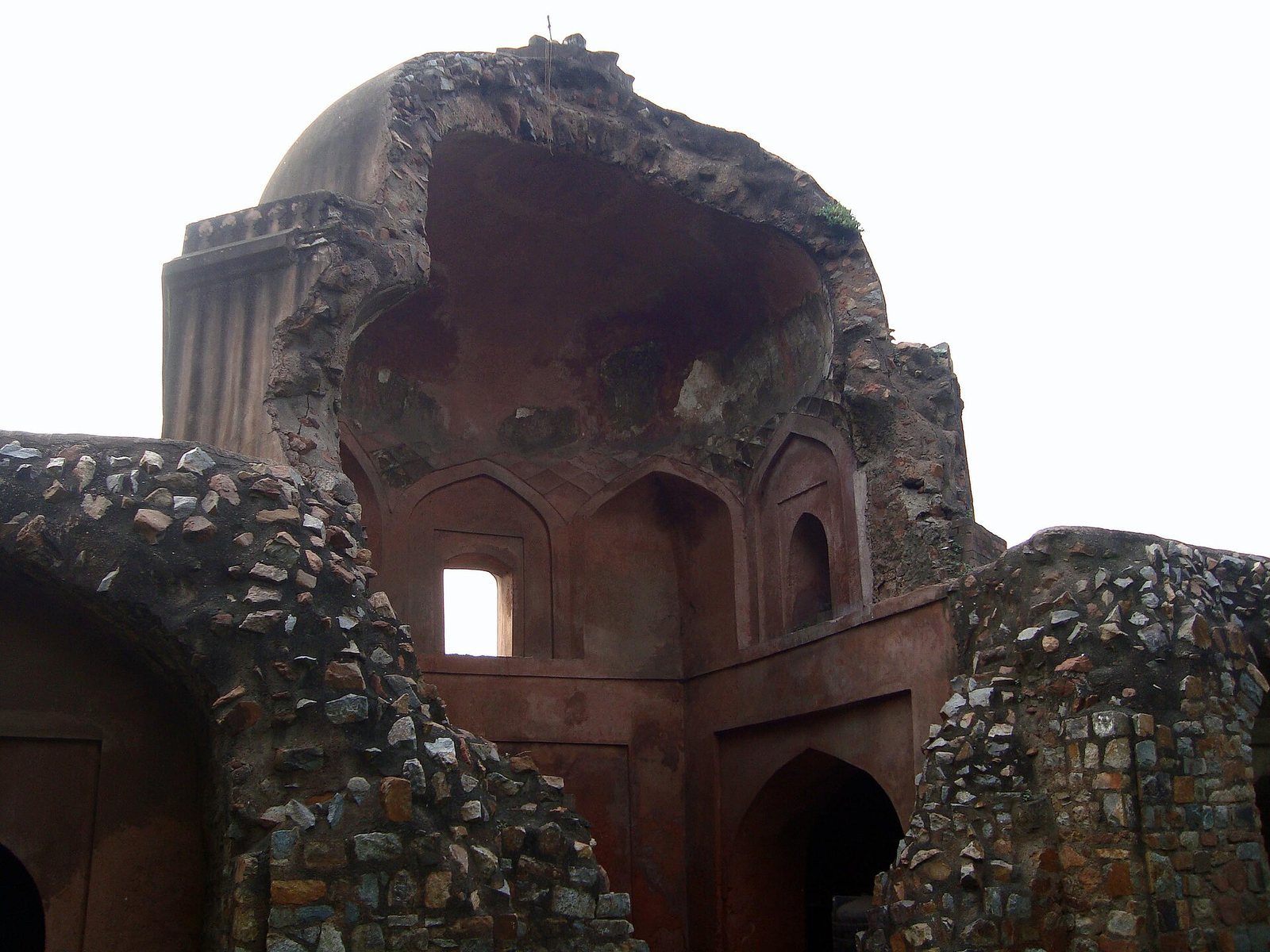
Salimgarh has a triangular plan, with thick walls of rubble masonry and circular bastions. Stone and brick are its principal building materials. The fort occupies ground in the Delhi plains at an elevation of about 80–110 feet (24–34 metres). It was built on an island in the Yamuna River; the river borders one side of the site, while the northern spur of the Aravalli range lies on the other. Exposed rock and the nearby ridge shape the setting. The river and ridge formed natural barriers that channelled an advancing force along the river, while the site’s rock formations and alignment with a congregational mosque were considered useful in limiting erosion by the Yamuna.
Bridge and railway corridor
Arched bridge and Bahadur Shah Gate
An arched bridge links Salimgarh to the Red Fort at the northeastern end of the fort. At this connection is the Bahadur Shah Gate, built mainly of brick masonry with selective use of red sandstone. The bridge has been altered repeatedly.
Railway crossing
During British rule, an earlier bridge was demolished to make way for a railway through the fort area. A railway bridge replaced it at the same location. The railway line cuts across part of Salimgarh, separating it from the Red Fort, and its construction also damaged part of the Red Fort.
Museum precinct
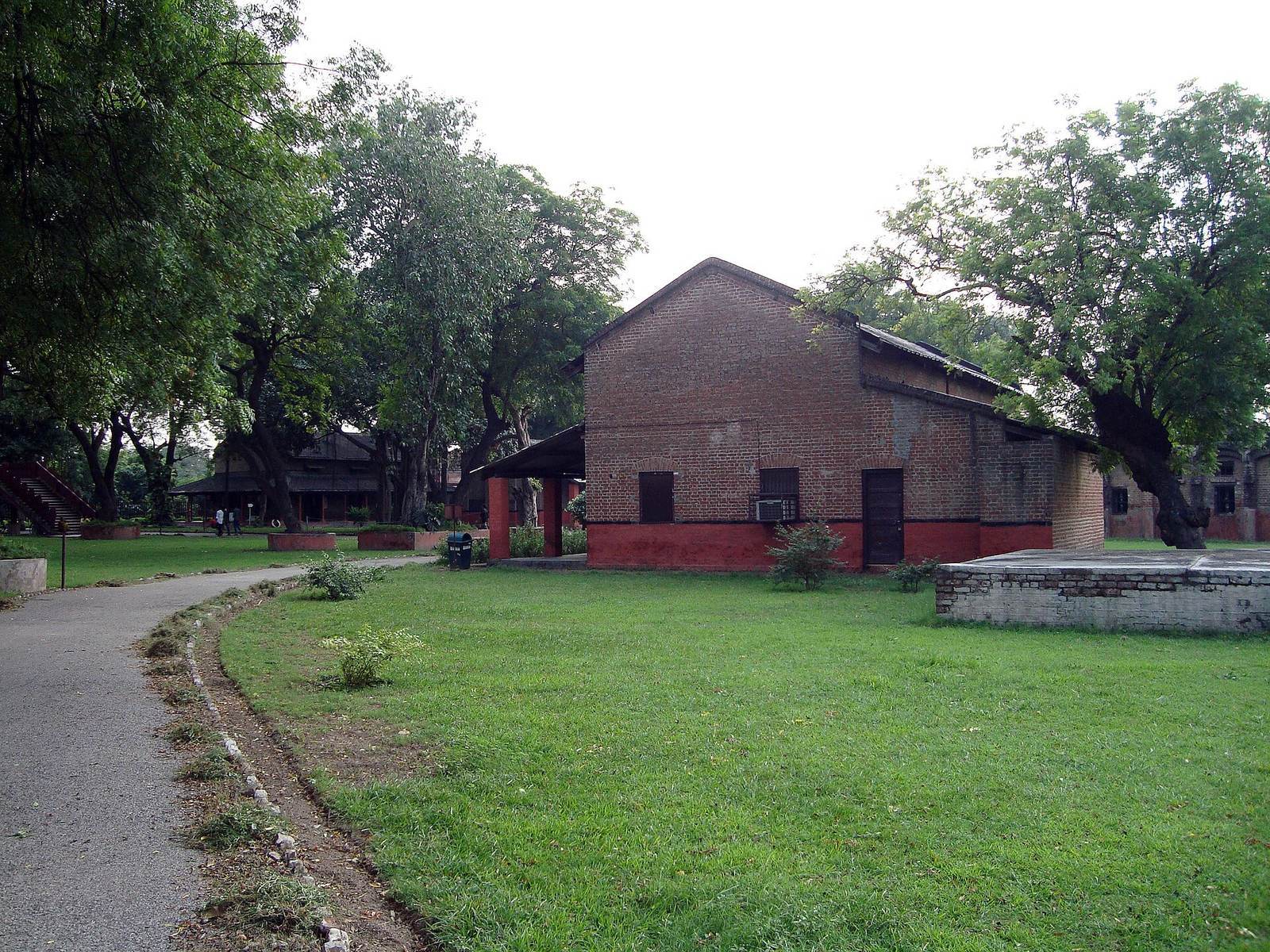
The Swatantra Sangram Museum stands within the fort precincts. The building identified as the site of the 1945 Indian National Army trials is adjacent to the museum’s original location.