Saiyad Usman Mosque and Tomb: A Sufi Shrine in Ahmedabad
Site at a Glance
- Rating
- 4.5
- Popularity
- Very Low
- Country
- India
- Primary era
- Medieval
- Eras represented
- Medieval
- Civilizations
- Unclassified
- Site type
- Religious
- Remains
- Tomb
On this page7 sections
History
Saiyad Usman Mosque and Tomb is a fifteenth-century Sunni Muslim mosque and Sufi shrine in Ahmedabad, India, built in an Indo-Islamic architectural tradition. The complex is associated with Saiyad Usman, a Sufi saint whose tomb was commissioned by Sultan Mahmud Begada in 1460, soon after Usman’s death in 1459.
Saiyad Usman and the Foundation of Usmanpura
Saiyad Usman, also known as Sham-i-Burhani, was a disciple and successor of Qutub-ul-Alam, a prominent Sufi religious figure. Usman lived with his teacher at Vatva, outside Ahmedabad, before establishing the village of Usmanpura as his following grew. His tomb became the centre of a dargah, a shrine associated with the tomb of a revered Muslim saint, while the adjoining mosque served the continuing religious life of the complex.
After Saiyad Usman died in 1459, Sultan Mahmud Begada commissioned his mausoleum in 1460. Begada was a fifteenth-century sultan of Gujarat known for architectural patronage. The resulting complex joined the saint’s burial place with a mosque and remains associated with Sunni Islam and Sufism.
Restoration and Heritage Status
During the British Raj, Major Cole financed restoration work on the mosque. The complex was severely damaged by the 2001 Gujarat earthquake and restored by the Archaeological Survey of India in 2009. It is protected as a Monument of National Importance under the official name Saiyad Usman Mosque and Tomb, with reference number N-GJ-29.
Remains
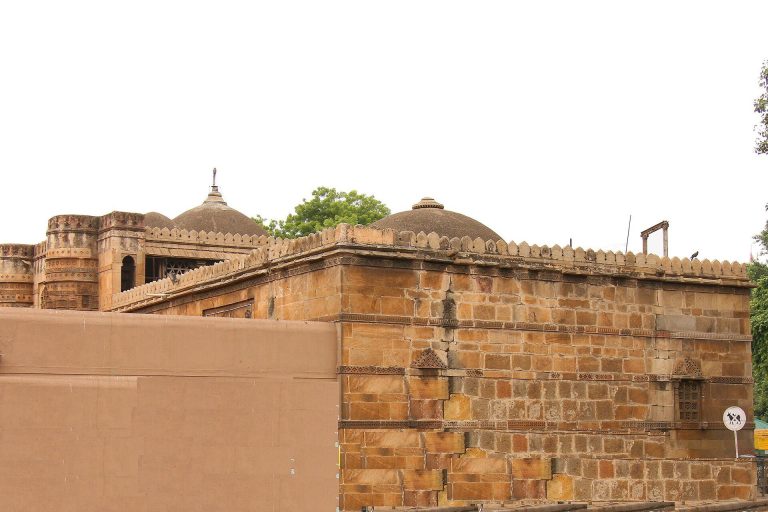
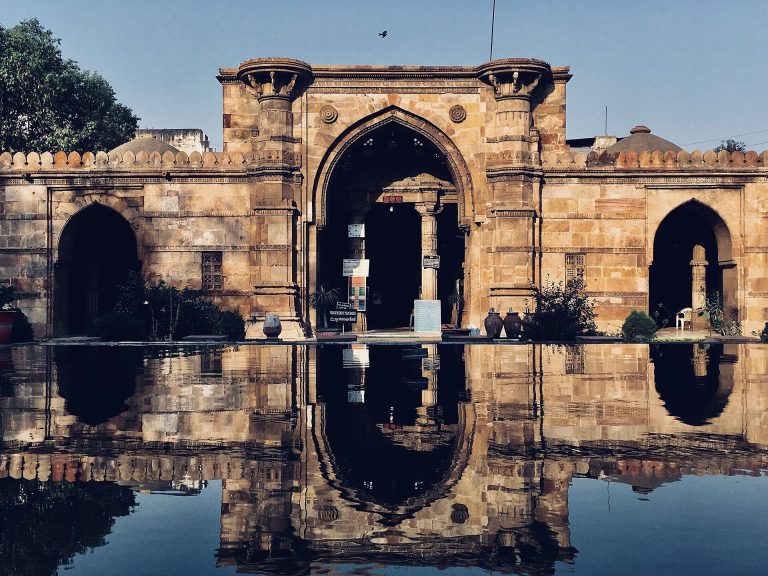
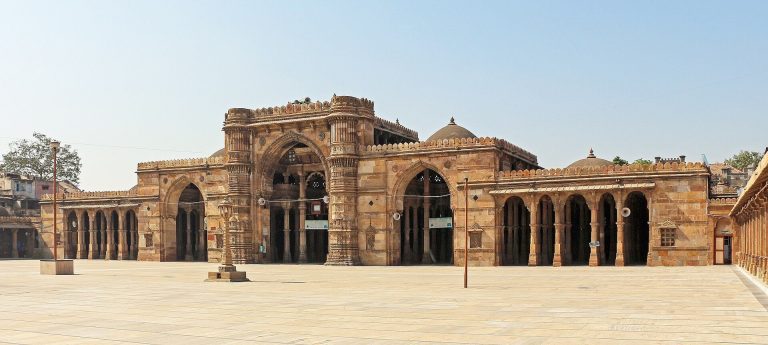
The complex combines a mosque with the domed tomb of Saiyad Usman. Its Indo-Islamic design is architecturally similar to the Ganj Baksh tomb at Sarkhej Roza, a historic Islamic complex near Ahmedabad. The mosque and mausoleum together express a pillared architectural style in which roofs or domes are supported by organized groups of columns rather than primarily by arches.
Religious Buildings
Prayer Mosque
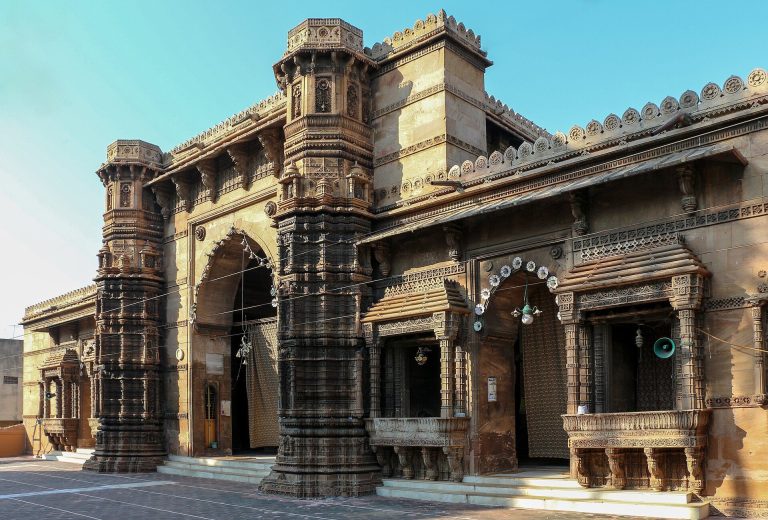
The mosque has two minarets, one at each end. Its structure draws predominantly on Hindu architectural forms and uses little or no arch construction. Inside, the pillars are arranged in a more varied and less clearly ordered manner than those at Sarkhej Roza. These supports give the prayer space its characteristic architectural organization.
Domed Tomb
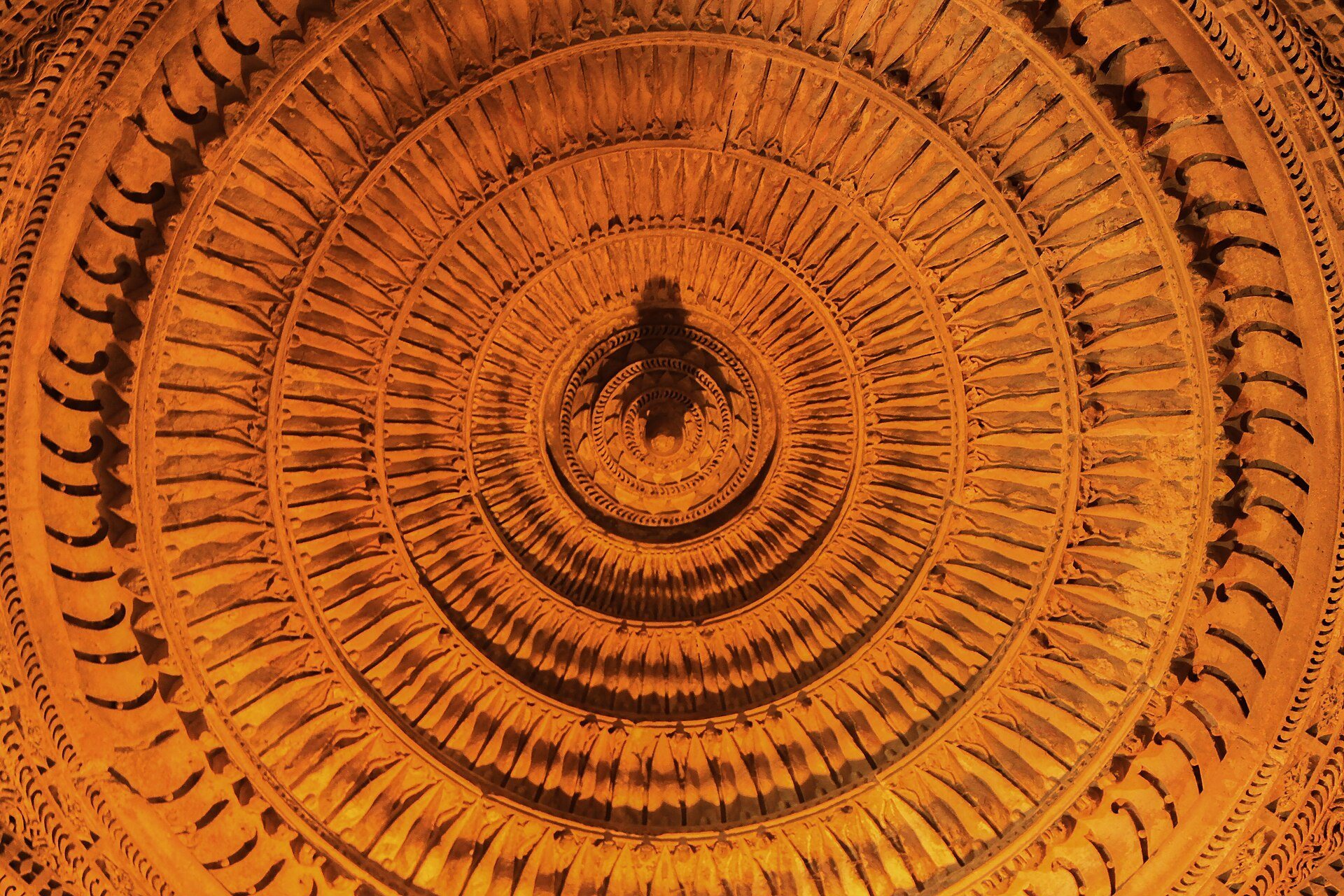
The tomb has a single dome resting on twelve pillars rather than the eight more commonly used in comparable arrangements. This larger number of supports produces greater variety within the interior. The resulting composition is regarded as one of Ahmedabad’s most successful sepulchral designs in its pillared architectural style.