Saint Peter’s Basilica in Oirschot: A Gothic Roman Catholic Church
Site at a Glance
- Popularity
- Medium
- Country
- Netherlands
- Primary era
- Medieval
- Eras represented
- Medieval, Modern
- Civilizations
- Duchy of Brabant, Dutch, Habsburg, Holy Roman Empire
- Site type
- Religious
- Remains
- Basilica
On this page13 sections
History
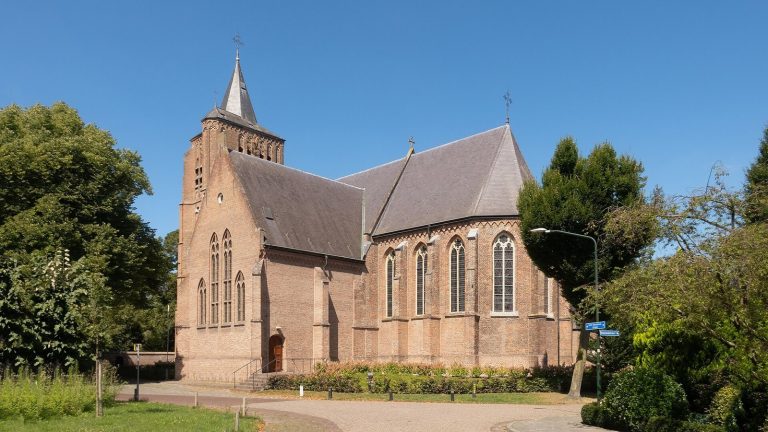
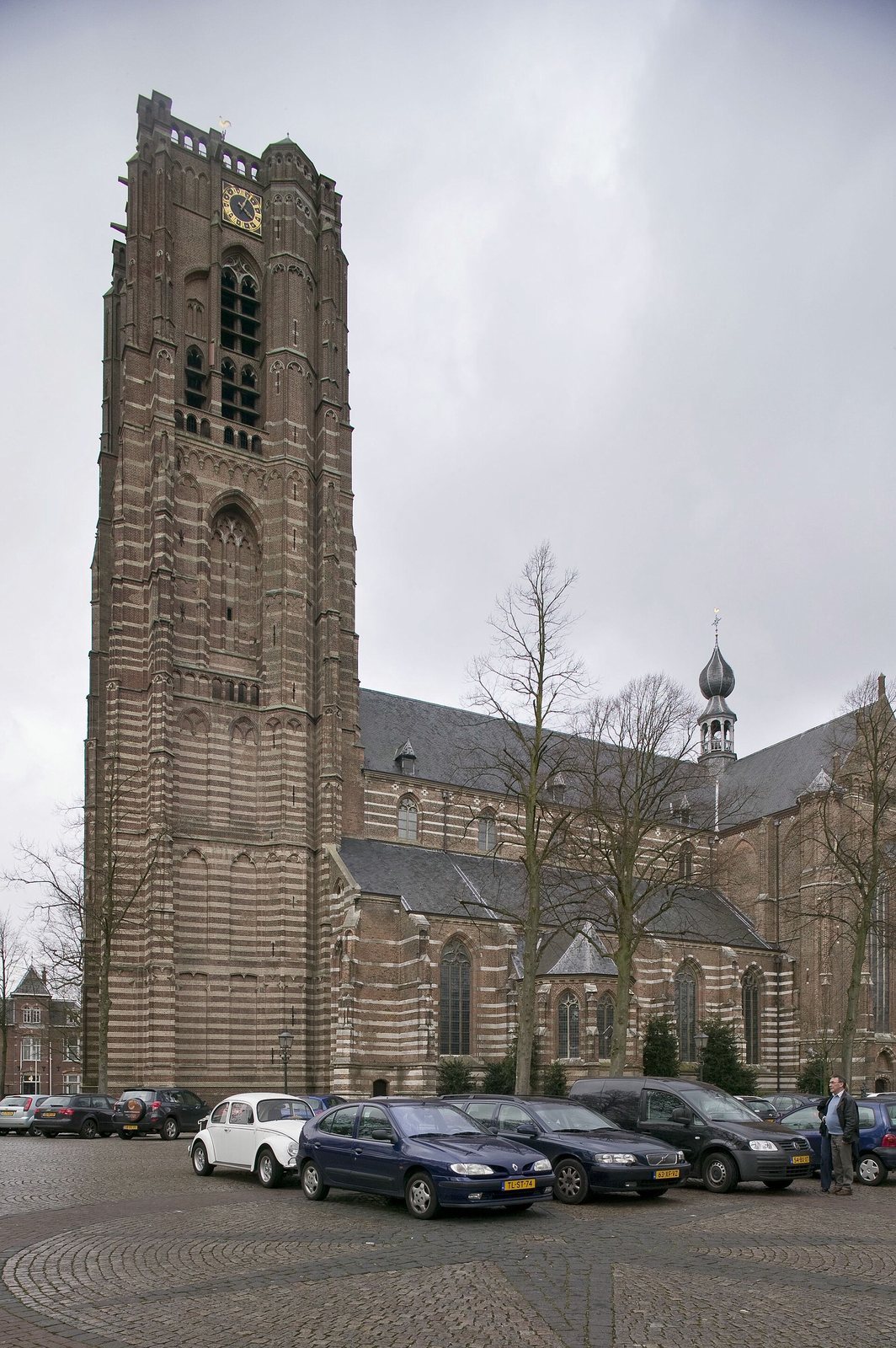
Saint Peter’s Basilica is the principal Roman Catholic church of Oirschot in North Brabant, the Netherlands. Dedicated to Saint Peter, one of Jesus’s apostles and traditionally regarded in Catholicism as the first pope, it follows the Roman rite, the principal liturgical tradition of the Latin Catholic Church, and belongs to the Diocese of ’s-Hertogenbosch, a territorial church jurisdiction overseen by a bishop. Construction of its predecessor began in 1268, and the church is an example of Campine Gothic, a regional form associated with the Campine area.
Medieval origins and rebuilding
Oirschot’s oldest church, the Mariakerk, served as a parish and collegiate church, but it had become too small and could not be enlarged. The town therefore began building a second church in 1268. After its completion, the canon chapter, a community of clergy organized as a chapter, moved there, and the new church became the collegiate church.
A fire in 1462 devastated the church, destroying valuable documents and works of art. Rebuilding followed, but lack of funds slowed the work, which was completed in 1515. Houses had stood against the church during the medieval period. A fire in Oirschot in 1566 destroyed some of them, and King Philip II, ruler of the Habsburg Netherlands, ordered that they not be rebuilt for safety. The houses that remained burned in 1623.
Religious change and restoration
Lightning destroyed the tower’s spire in 1627. From 1648 to 1799, the church was in Protestant hands. Catholics began worshipping in a barn church, a Catholic place of worship in a non-church building, on Nieuwstraat in 1672. When they regained the church, the municipality retained the tower. The neglected building received a new interior and was restored in 1887.
The tower deteriorated and partly collapsed in 1904. The parish then regained it and arranged its restoration with funds raised through a collection.
Wartime destruction and the basilica title
During the liberation of Oirschot in 1944, Allied shelling brought down the roof and tower and destroyed much of the interior. The choir stalls, carved by Jan Borchmans of Eindhoven between 1508 and 1511 and regarded as a high point of Brabantine Gothic carving, were among the losses. Reconstruction took place from 1945 to 1952. In 1962, work on the tower restored its post-1627 form. The church became a Dutch national monument in 1966.
In 2013, the church received the honorary title of minor basilica, granted by the Congregation for Divine Worship on 18 February. A minor basilica is an honorific for a Catholic church and does not make it a cathedral. Bishop Hurkmans conducted the elevation ceremony on 23 June. The church remains active.
Remains
Plan and construction
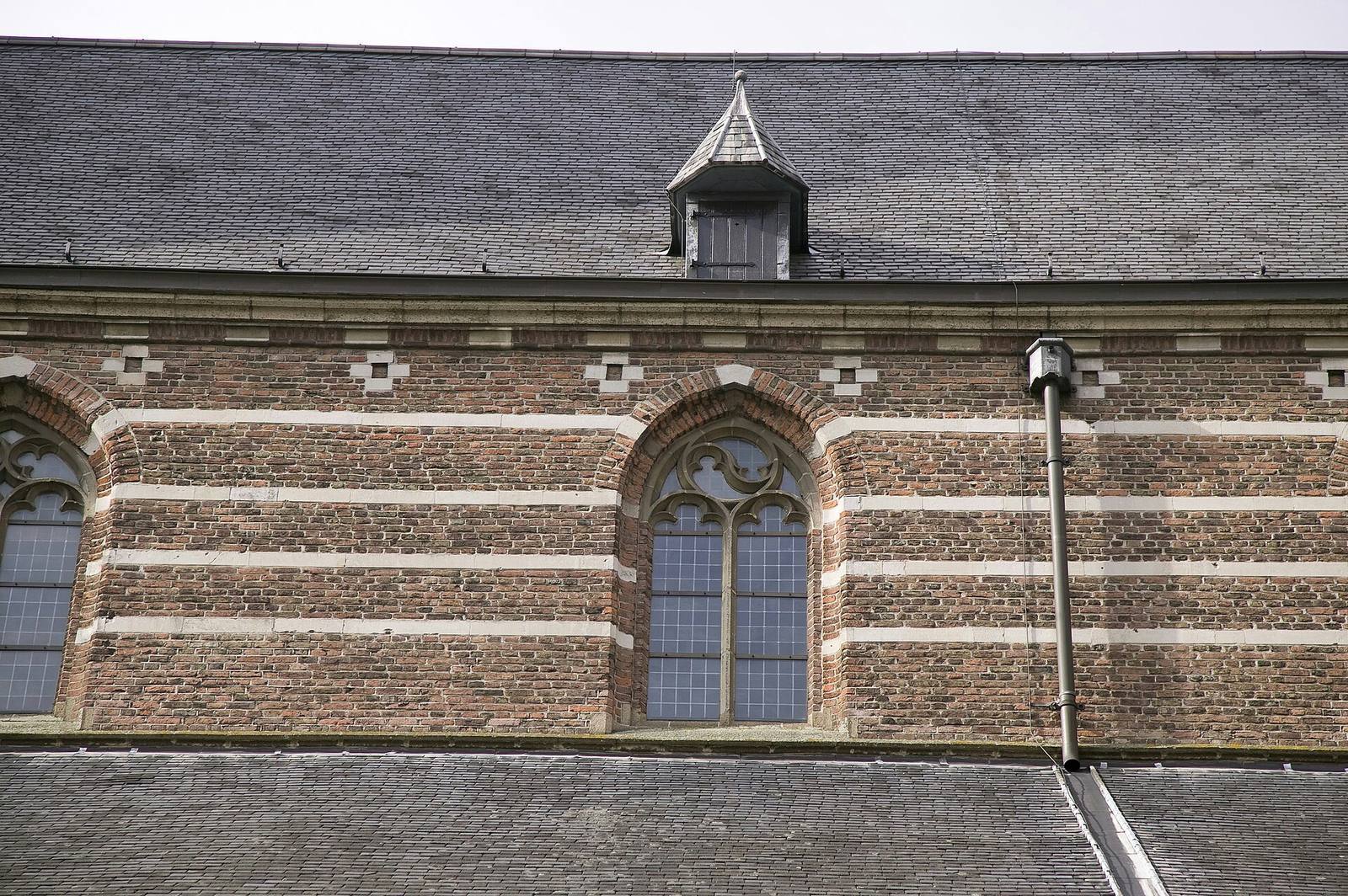
The church has a three-aisled, cross-shaped plan, an ambulatory, or passage around the choir, and chapels that extend outward from it. The chapels attach to the ambulatory, an arrangement also found at Geel, another church under the lordship of the Van Merodes, a noble family. Brick walls are marked by alternating bands of tuff, a porous volcanic stone used as building material. During the 1887 restoration, some tuff was replaced with natural stone, and the joints were cut to resemble the original blocks. At the crossing, where the nave and transepts meet, ribs form a star-shaped vault. The other parts of the church have groin vaults, ceilings formed where two barrel vaults intersect.
Tower and entrance
Tower
The tower stands 70 metres high and ends in a blunt top. Its bands of tuff stone were retained during restoration, and its third level resembles that of the church tower at Hilvarenbeek.
Tomb and baptismal font
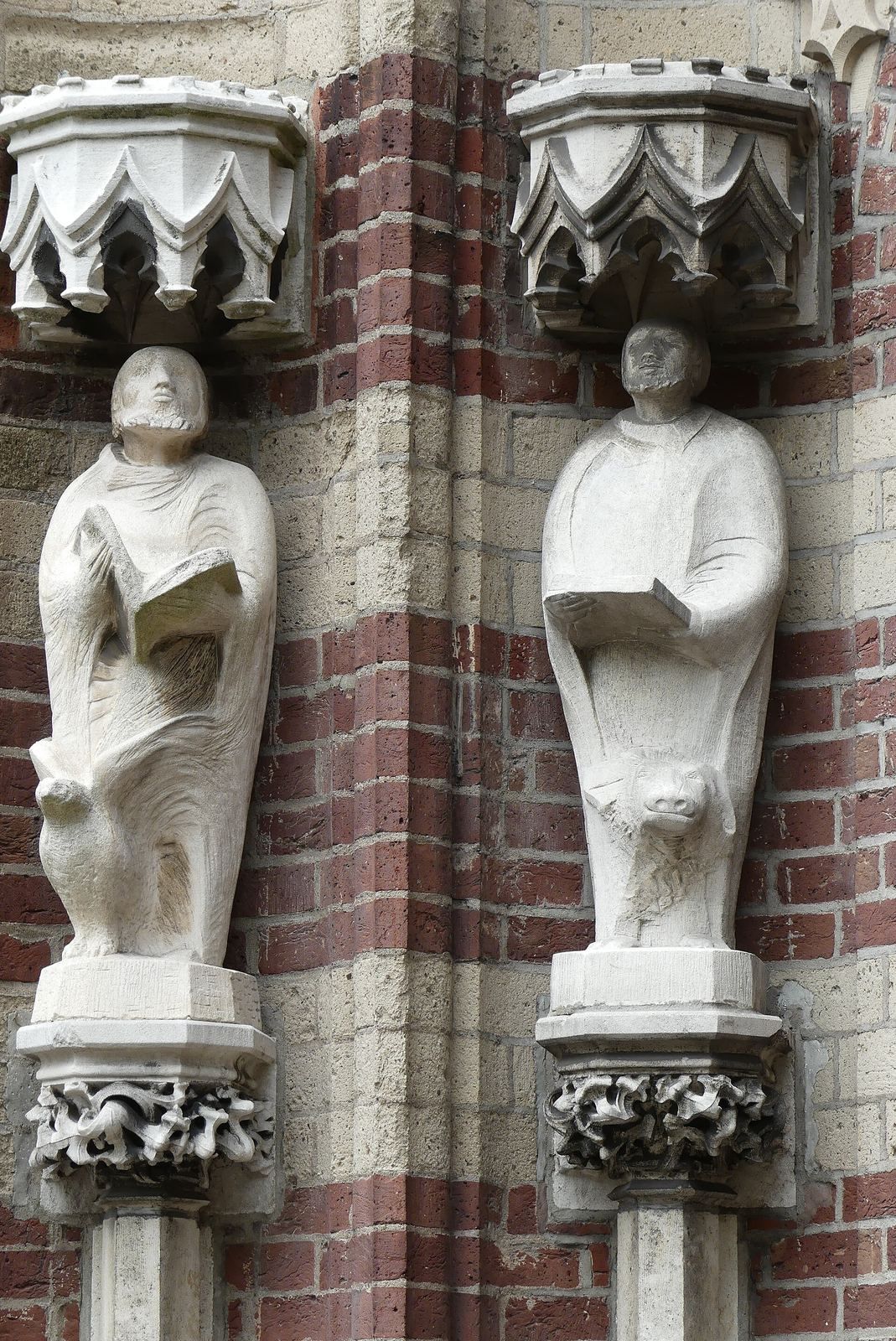
A black-marble tomb monument to Richard V of Merode, lord of Oirschot, stands at the tower entrance. Four lions that once supported the monument now serve as supports for the baptismal font, the basin used for baptism.
Furnishings and musical equipment
Altars and pulpit
The high altar, dating to about 1700, and the side altars, dated to 1766, came from the Catholic church at Panningen. The pulpit was brought from the church at Zeelst.
Organ
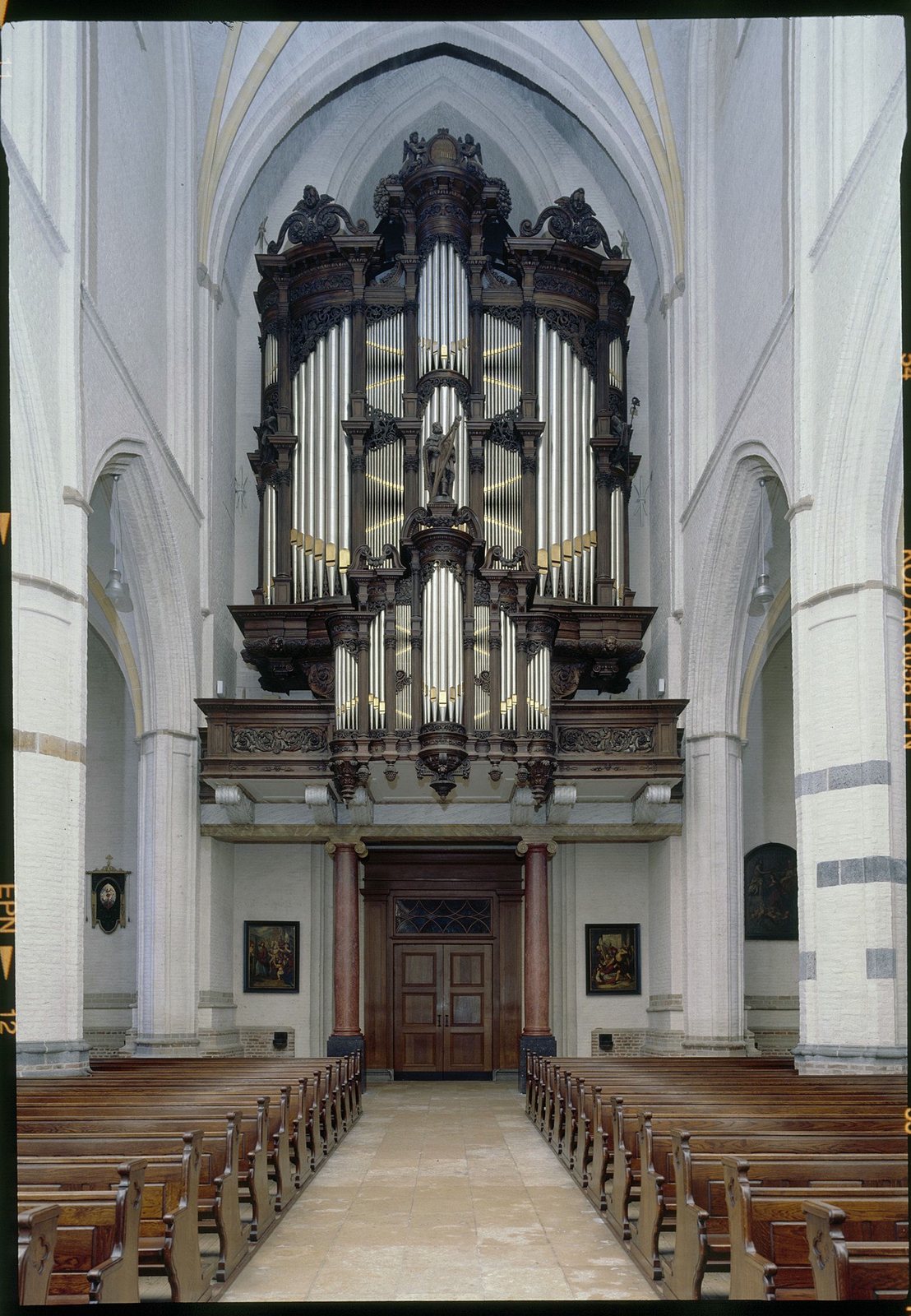
Franciscus Cornelius Smits built the organ in 1842 for St. Peter’s Church in ’s-Hertogenbosch. It was installed at Oirschot in 1846–47. The instrument has 45 stops, which select groups of pipes, three manuals, or hand keyboards, and a pedalboard operated by the feet. Two of its unusual stops are named Serpent and Ophicleïde.
Tower bells
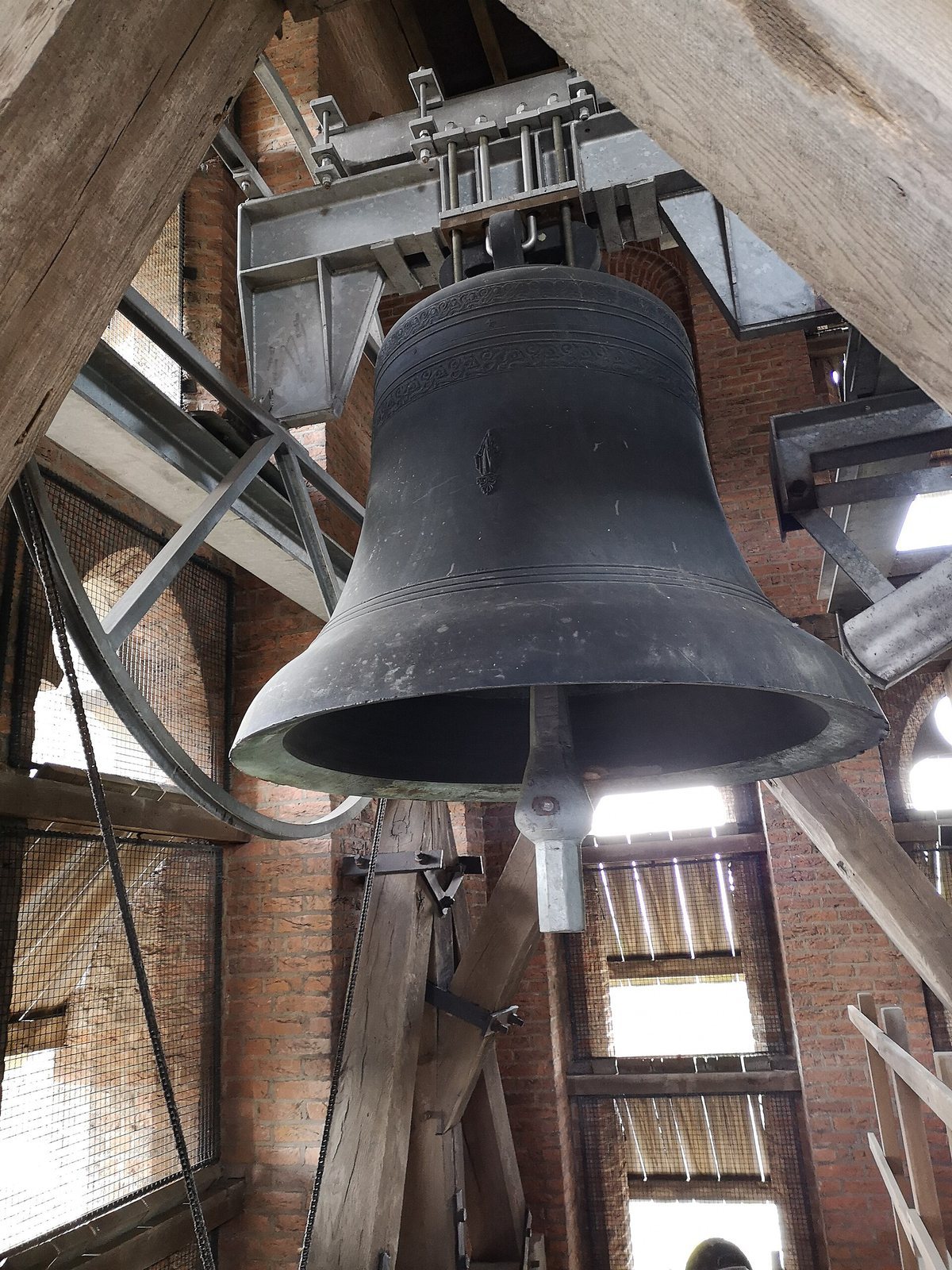
Six bells in the tower sound B-flat, C, E-flat, F, G, and B-flat. Petit & Fritsen cast the four largest in 1948, and Eijsbouts cast the two smaller bells in 1977, the year a carillon, a set of bells played from a keyboard, was installed in the tower. The six-bell group is among the largest in the Netherlands. Bells three through six ring for Eucharistic services, the Catholic liturgy centered on consecrated bread and wine; bell two is used for evening vigils and bell one for funerals.