Saint Nicholas Church in Melenki: A Russian Orthodox Church in Yaroslavl
Site at a Glance
- Popularity
- Low
- Country
- Russia
- Primary era
- Early Modern
- Eras represented
- Early Modern, Modern
- Civilizations
- Russian
- Site type
- Religious
- Remains
- Church
On this page10 sections
History
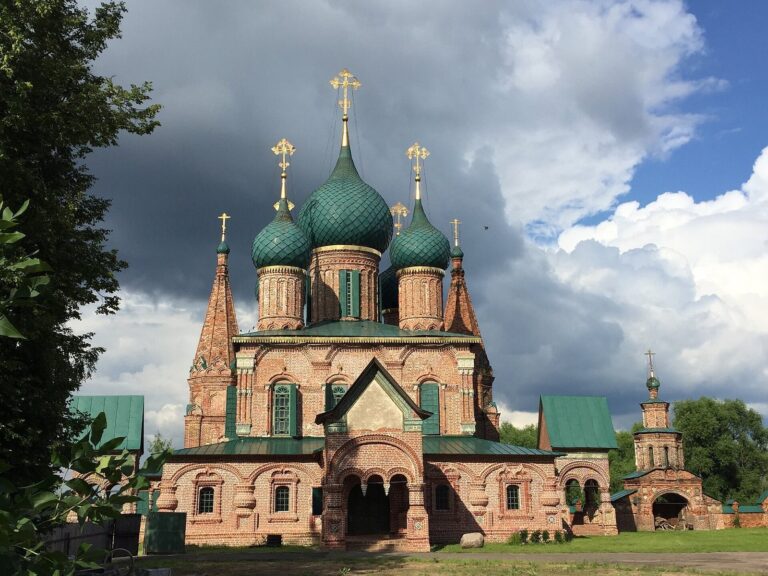
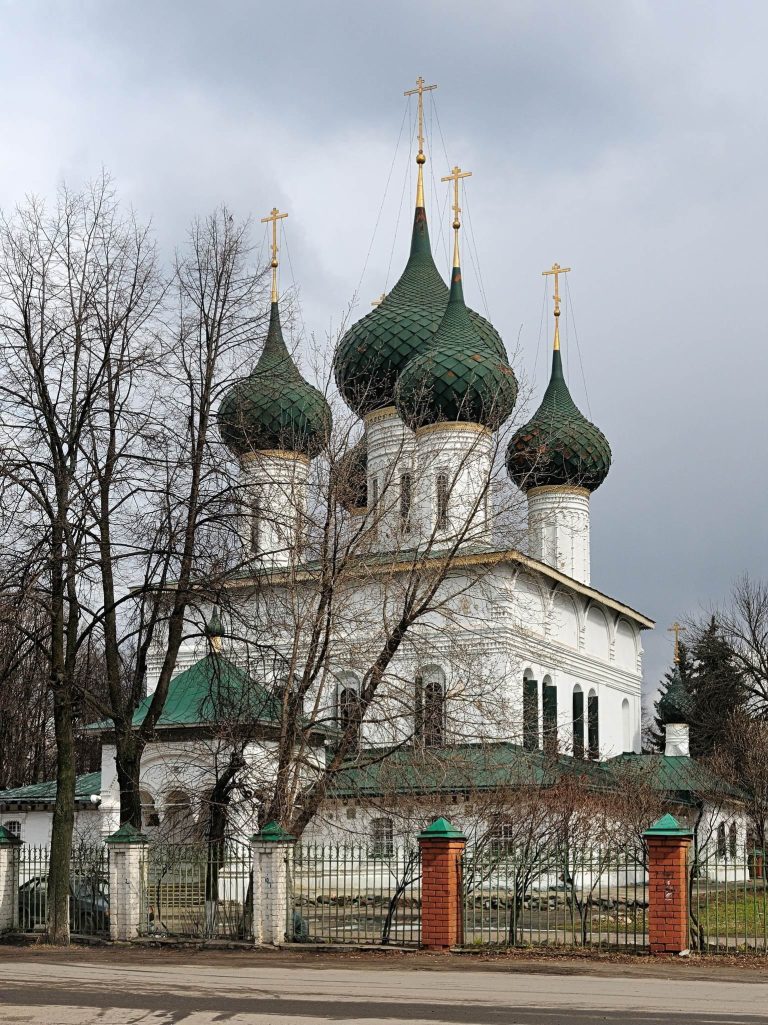
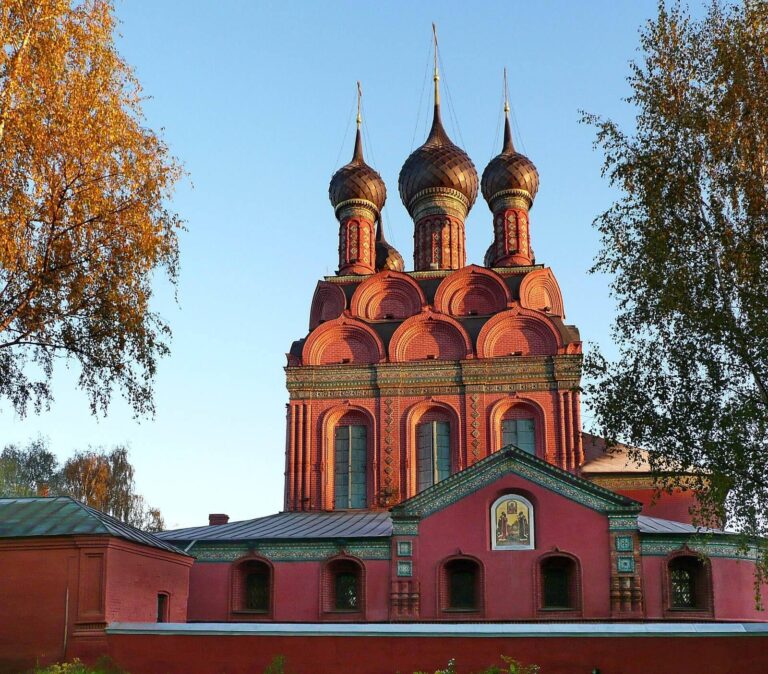
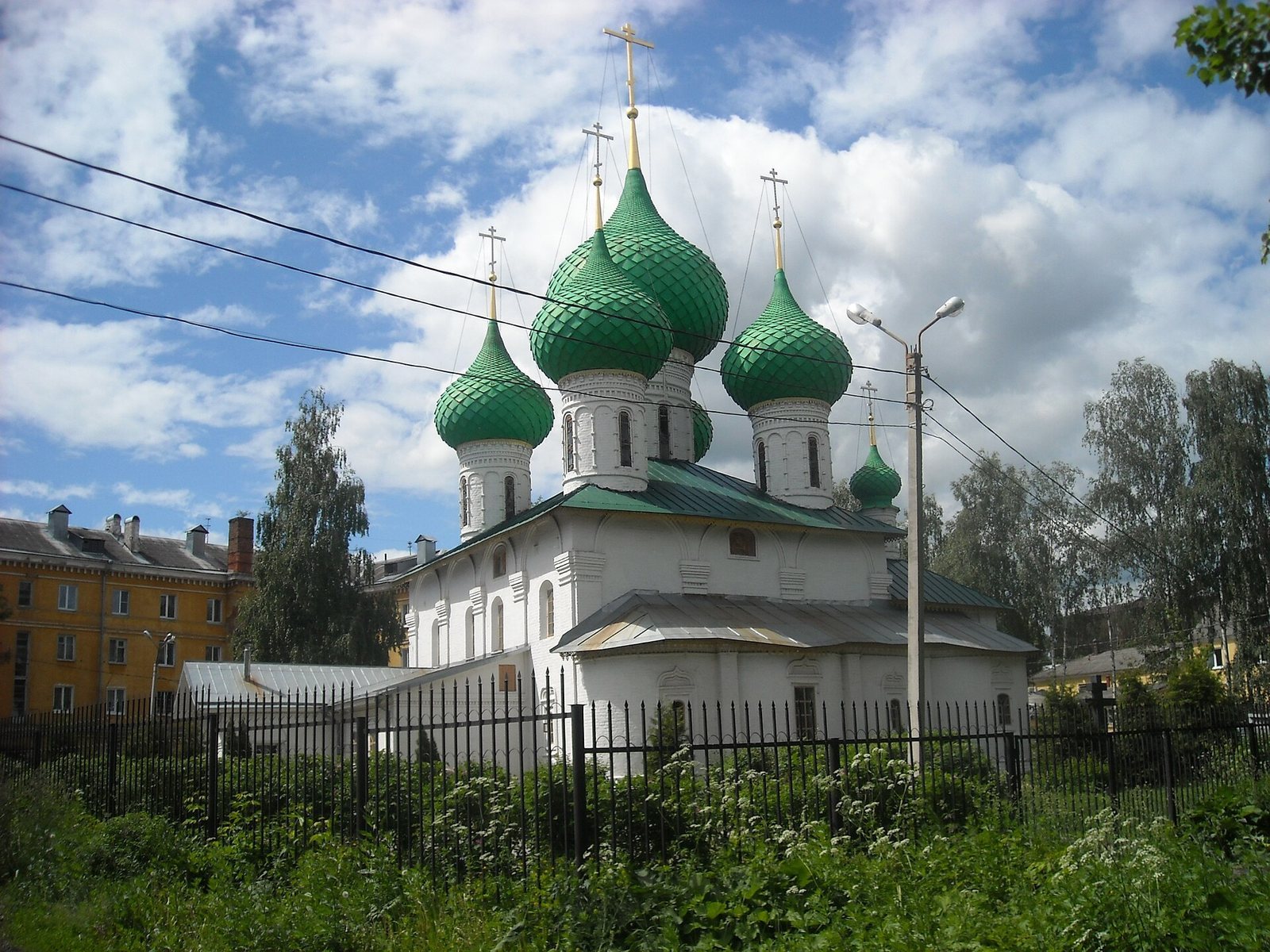
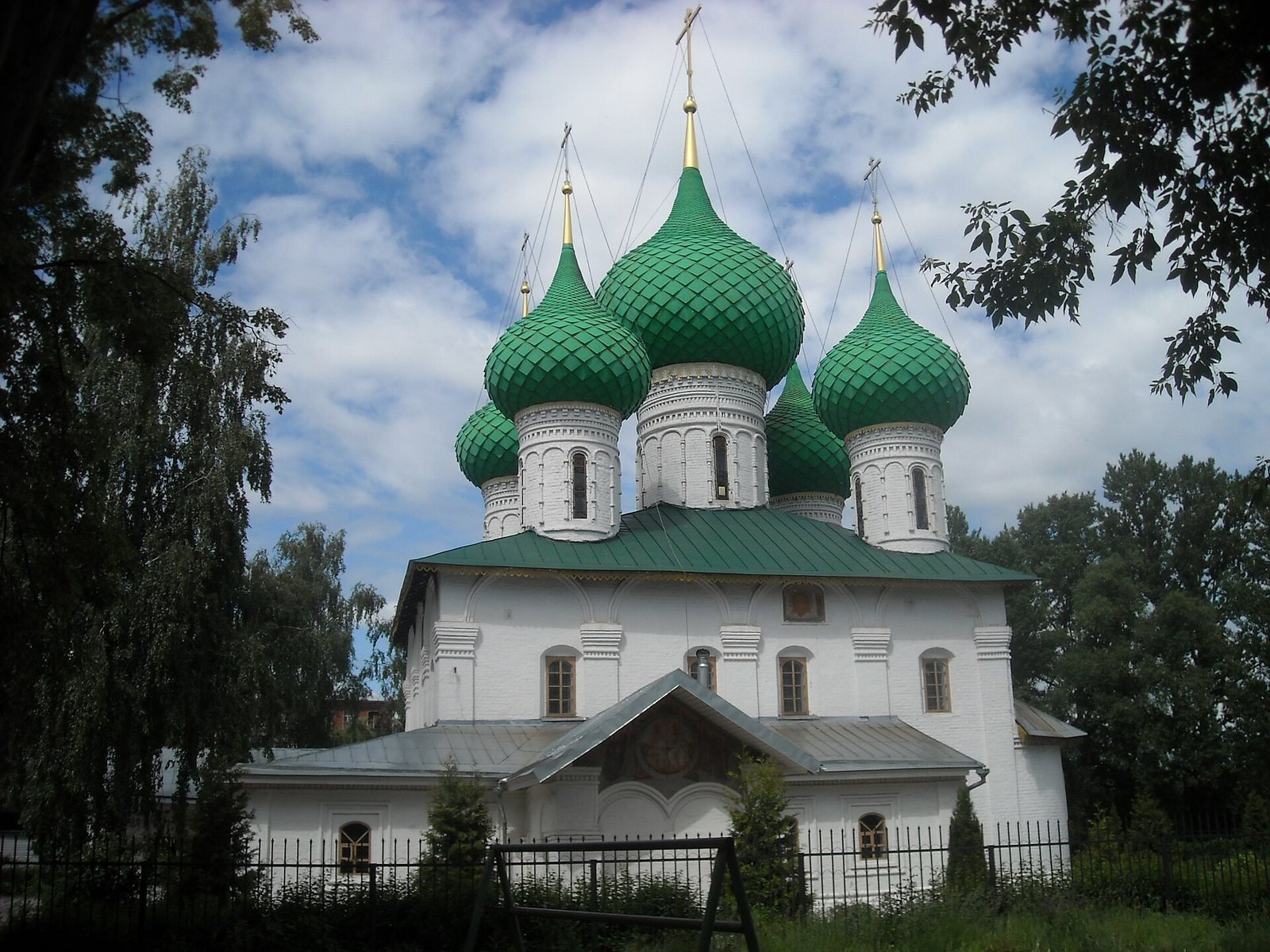
Saint Nicholas Church in Melenki is an Orthodox church in the former Mill Settlement in southern Yaroslavl, Russia. A church was established there no later than the first half of the 16th century; its stone building, erected in 1668–1672, follows the Yaroslavl school, a regional tradition of church architecture and decoration. Its institutional roots lie in a men’s monastery founded in the late 15th century.
Monastery and wooden church
People from Spassky Monastery founded the monastery on clay-rich ground near Melenki, and it remained attached to that institution. The village of Melenki, named for its windmills, appears in a 1555 charter issued by Ivan IV, tsar of Russia from 1547 to 1584. The church is first mentioned in 1609, during the siege of Yaroslavl, when Polish forces attacked the monastery and surrounding area.
Abbot Varsonufey, the brethren, and local people sought shelter inside the church. Some were killed, the church was looted, and the monastery was burned; the porch was scorched. The dead were buried in the monastery cemetery near the bell. The revered icon of St Nicholas, an early Christian bishop widely venerated in Eastern Christianity, survived almost intact despite scorch marks. It was taken to the Church of the Nativity of Christ on the Volga. For a time afterward, the monastery had no services, bell-ringing, or visitors.
A 1627 description records a wooden Church of St Nicholas supplied with icons, books, and other furnishings by the local community. By 1647, the parish church had an unheated upper church with an altar dedicated to Procopius of Ustyug, alongside a heated Church of the Dormition.
Stone church and parish life
On 9 February 1668, Jonah, Metropolitan of Rostov and Yaroslavl, a senior bishop, issued a charter blessing a new stone church and a chapel for Procopius of Ustyug. Work began on 28 March. Yaroslavl merchant Martynian Timofeevich Durandin financed the construction. He died on 10 December 1668 after taking the schema, the highest degree of monastic life, and adopting the name Macarius. The church was consecrated on 15 October 1672.
Yaroslavl painters led by F. Fedorov decorated the church walls between 11 June 1705 and 29 August 1707. In 1822, local master Elisey Stepanovich Godunov, also known as Kamenshchikov, partially restored the paintings. From the late 18th century, many parishioners worked at the Yaroslavl Great Manufactory. During the 19th century, the parish supported a factory school for 450 pupils, a parish school that served first 90 and later 120 pupils, and a Lutheran school for 250.
Closure and return to worship
Soviet authorities closed the church in 1931, and its bell tower was demolished in 1939. The building was subsequently used as a mechanical workshop with blacksmithing and pressing machinery, and as a warehouse. These industrial and storage uses badly damaged the church, especially its interior.
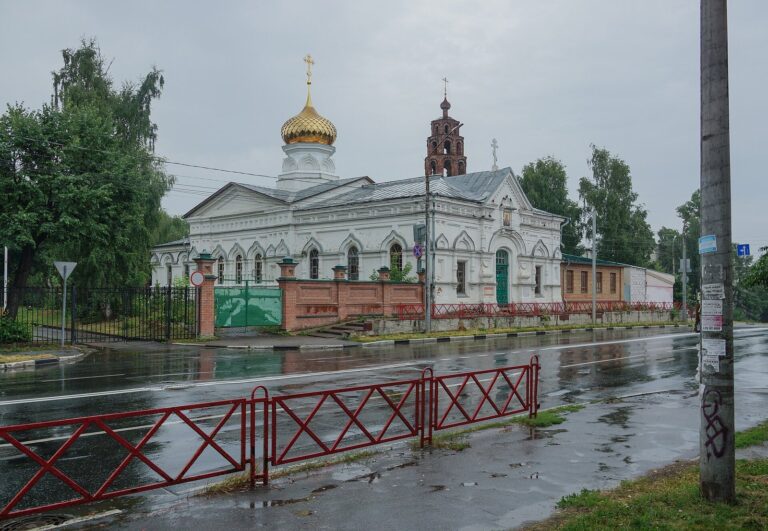
The Russian Orthodox Church received the building in 1995. In 1996, Archbishop Mikhei, a senior bishop, re-consecrated the former Procopius chapel in honor of the Great Martyr Barbara. A belfry was arranged in the vestibule. The church remains active and is designated a cultural heritage site of federal significance in Russia.
Remains
Layout and construction
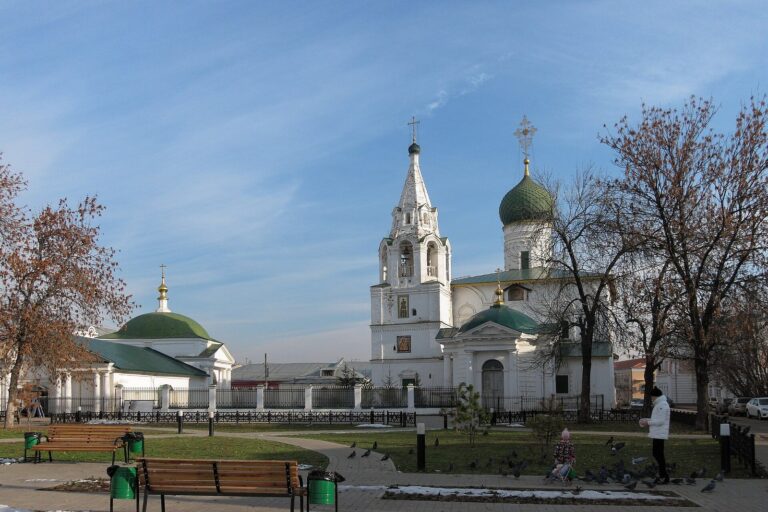
Standing on the bank of the Kotorosl River, the church occupies part of the former Mill Settlement. Its design belongs to the Yaroslavl school of church architecture. The complex comprises a main church and a side chapel, while the belfry is housed in the vestibule. The nearby square takes its name from the church.
Interior and sacred objects
Wall paintings
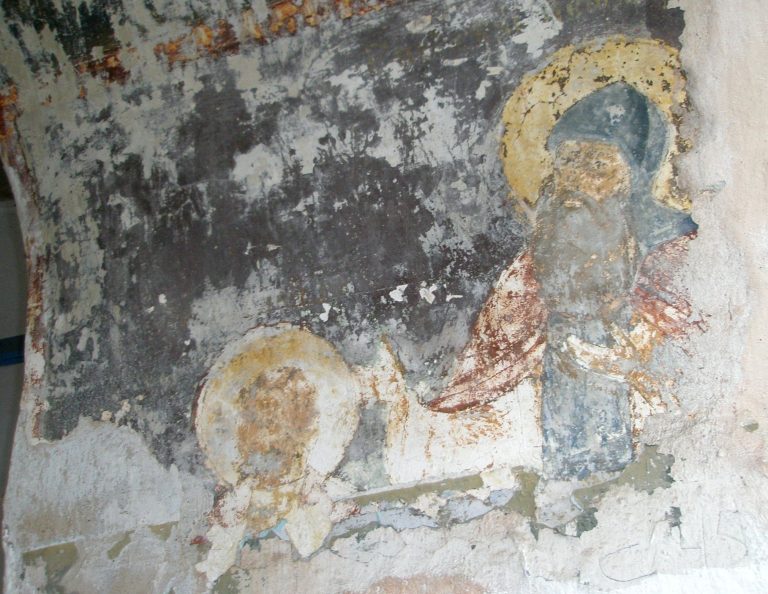
The main church’s wall paintings, made on plaster in the early 18th century, have suffered extensive losses and remain in very poor condition. The surviving painted areas are remnants of the decoration executed by F. Fedorov’s Yaroslavl team and partly restored in the 19th century.
Chapel furnishings
The side chapel contains a molded-stucco iconostasis, a screen of icons separating the sanctuary from the main body of an Orthodox church. Its sculpted surface distinguishes this furnishing within the church interior.
Icons
An ancient icon of St Nicholas, inherited from the monastery, was painted in the Novgorod style and venerated locally; many people regarded it as wonderworking. Icons of St Nicholas and the Great Martyr Barbara, painted by nuns of Tolga Monastery near Yaroslavl, were given to the church at its 1997 consecration.