Church of the Virgin Mary of the Unmercenaries, Kastoria: An Orthodox Church
Site at a Glance
- Popularity
- Very Low
- Country
- Greece
- Primary era
- Medieval
- Eras represented
- Medieval, Early Modern
- Civilizations
- Ottoman
- Site type
- Religious
- Remains
- Church
On this page8 sections
History
The Church of the Virgin Mary of the Unmercenaries is an active Eastern Orthodox church in Kastoria, Greece. Its construction is dated either to the late 14th century, followed by renovation in the 16th century, or to the early 16th century. The Unmercenary Saints are traditionally associated with healing without payment.
The church is affiliated with the Ecumenical Patriarchate, an Eastern Orthodox patriarchal institution, and the Diocese of Kastoria, a bishop-led church district. It also belongs to the Kastoria archpriestly district, a subdivision of the diocese.
Construction and painted decoration
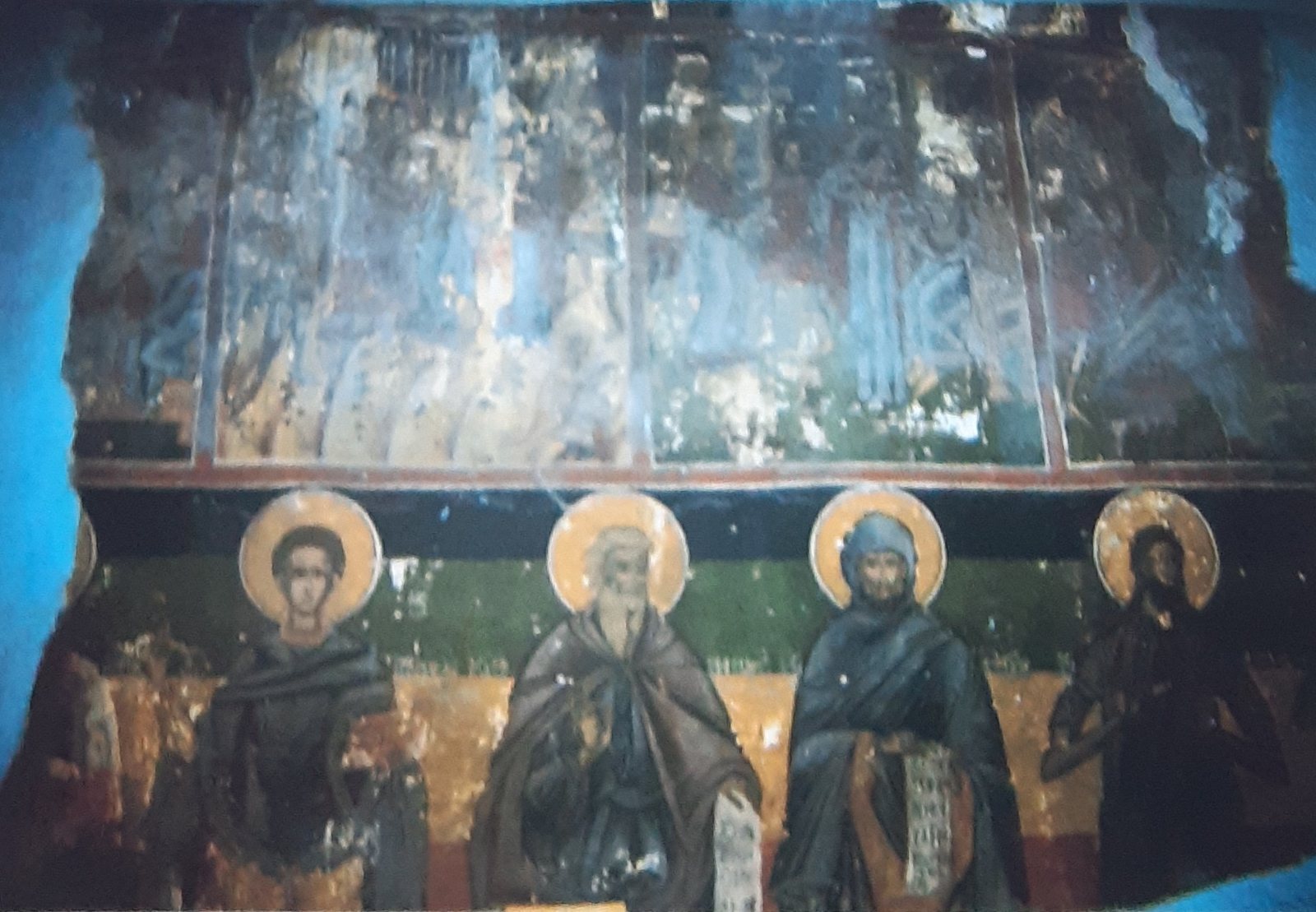
An anonymous artist painted the interior in the mid-16th century. A surviving inscription records that the interior was painted again in 1634-1635.
Worship and restoration
The church holds annual celebrations on 20 June for the feast of the wonderworking icon of the Virgin Mary Hodegetria, an epithet meaning “She Who Shows the Way.” It also observes the Apodosis, or concluding observance, of the Dormition on 23 August. The Dormition commemorates Mary’s death.
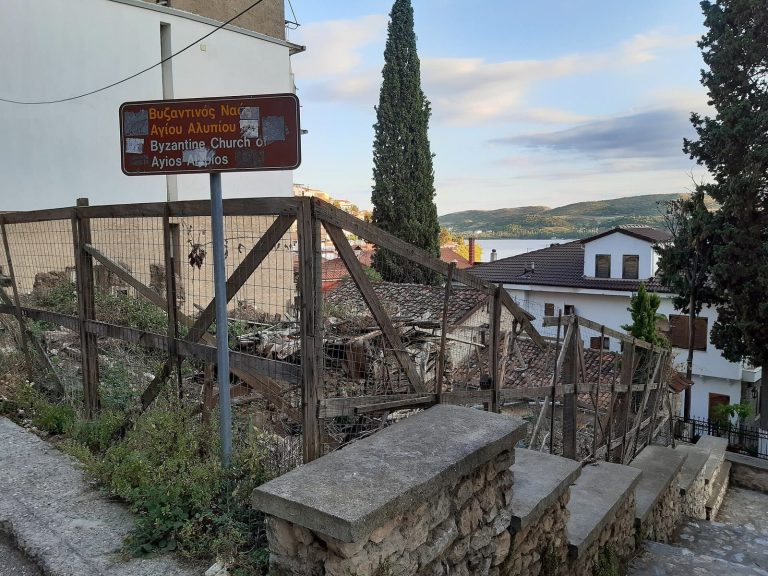
By 1997, the church had deteriorated severely. After a period of abandonment, it was restored.
Remains
Plan and construction
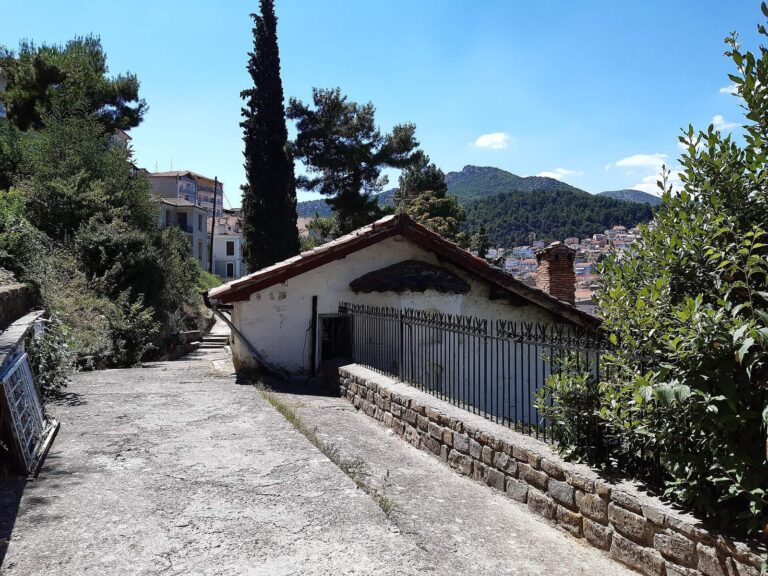
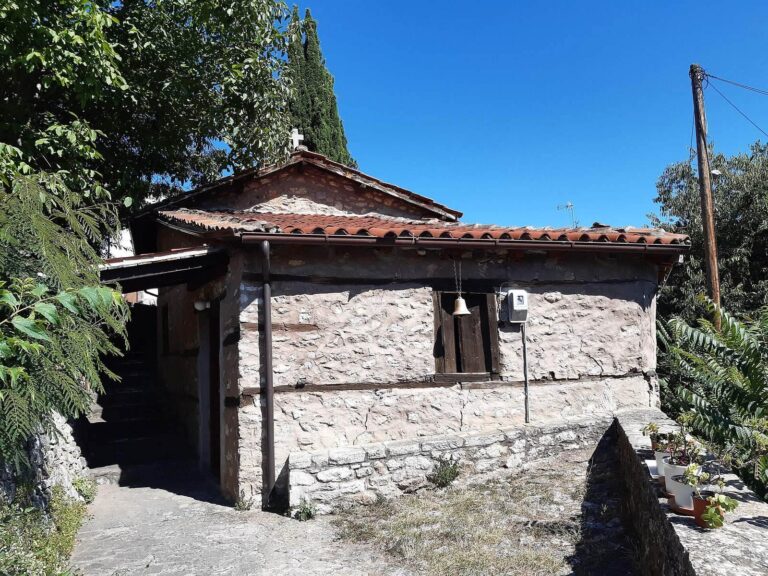
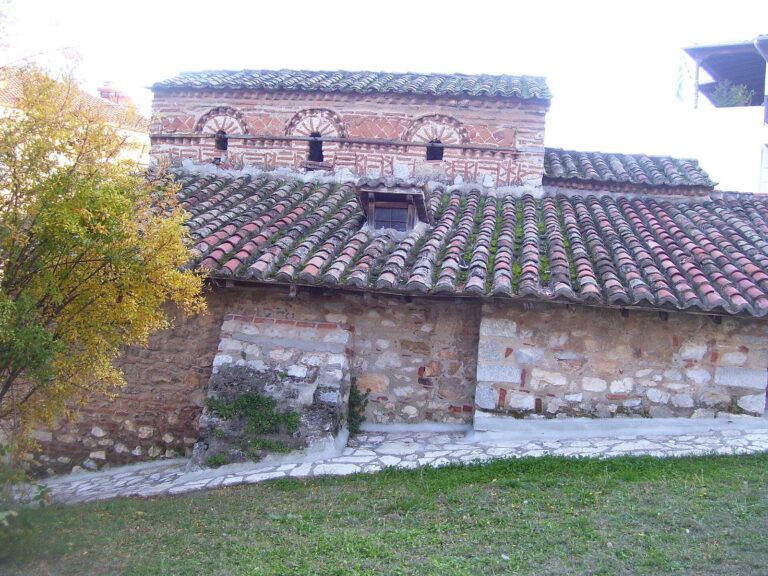
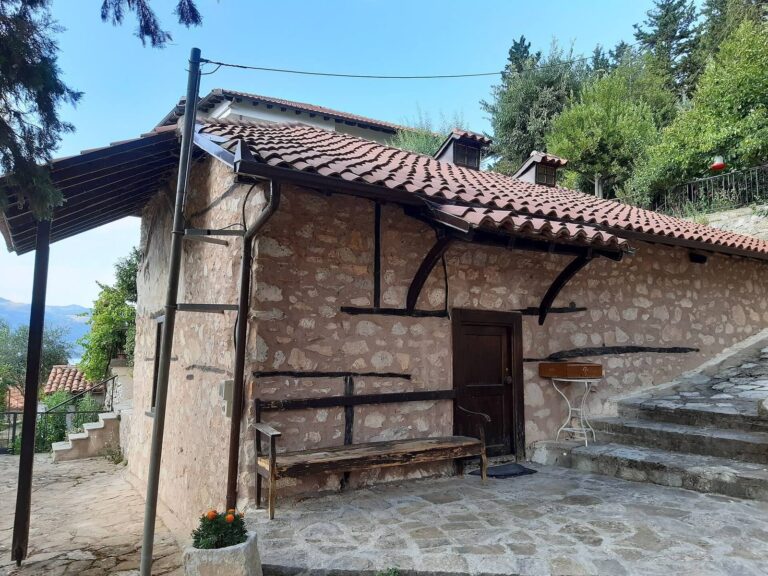
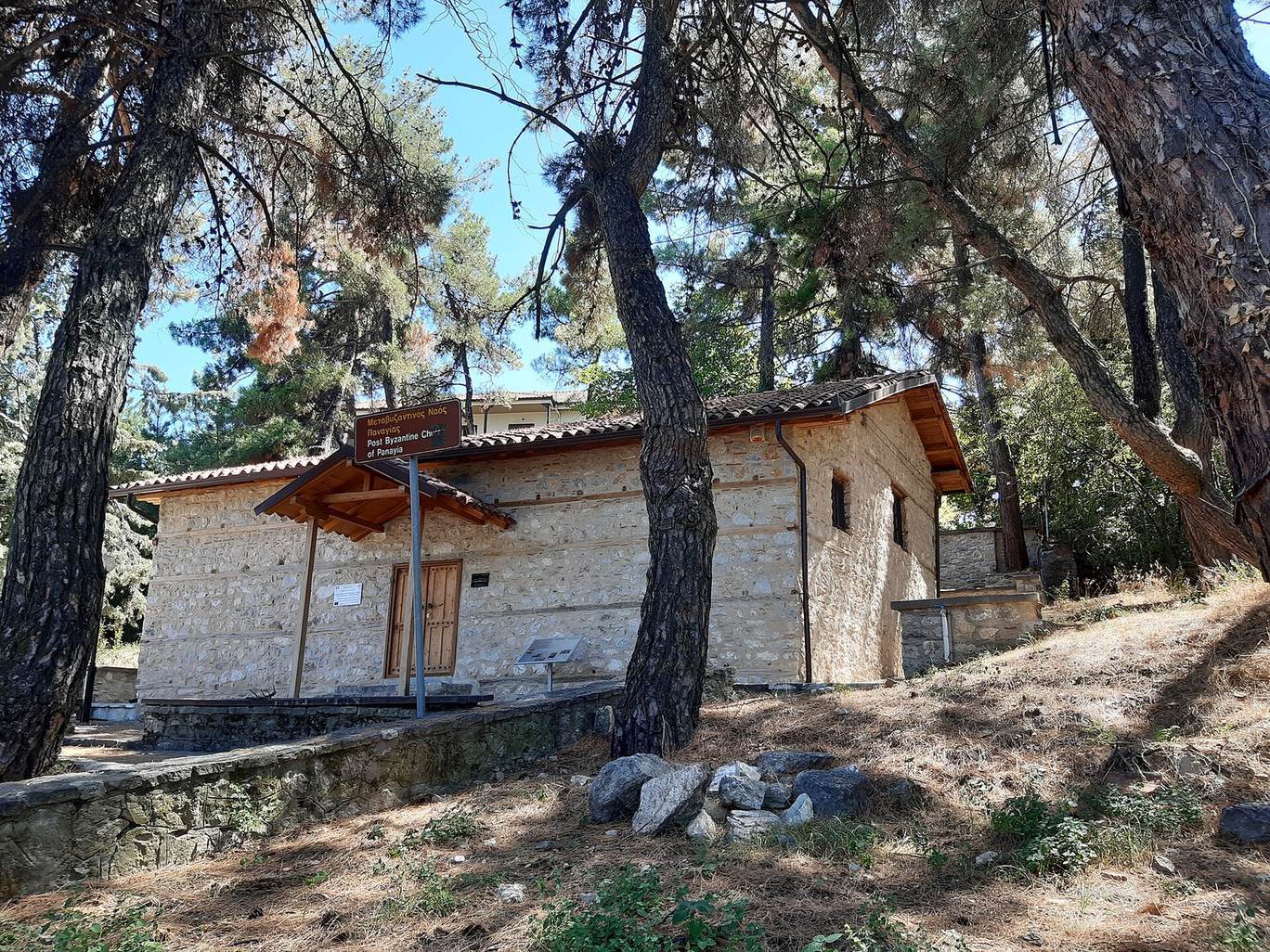
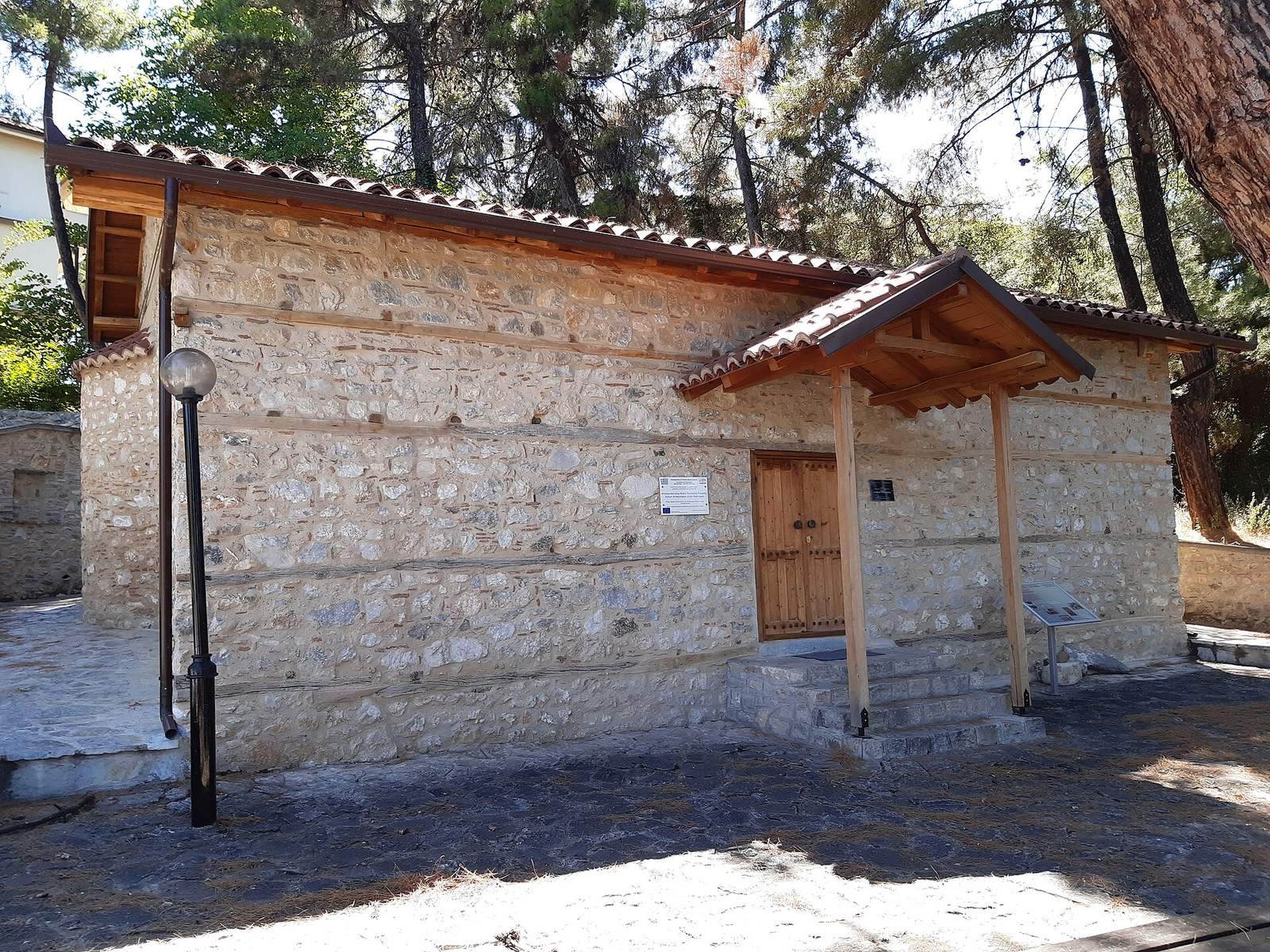
The church is a one-aisle building with a nave and sanctuary. At the east end, a semicircular apse, or rounded sanctuary end, completes the plan. The rubble-stone walls incorporate horizontal formwork, temporary boards used to guide construction, and part of the east wall is brick. A timber gabled roof is covered with slabs.
Entrance and northern extension
The main entrance is on the north side and has a wooden door; a second door leads from there into the nave. A later narthex, an entrance area of a church, extends along the full north wall of the nave.
Painted interior and inscriptions
Wall paintings decorate the interior, with some areas left unpainted. Their subjects include Saint Theodore Tiron, an early Christian soldier-martyr, and other saints; full-length figures appear in the lower zone. Founder-or-patron inscriptions are present in both the nave and narthex, including one above the narthex entrance on the north wall. The south wall bears images of saints and the conch, or rounded half-dome, of the prothesis, the area used to prepare the Eucharistic gifts.
Condition and setting
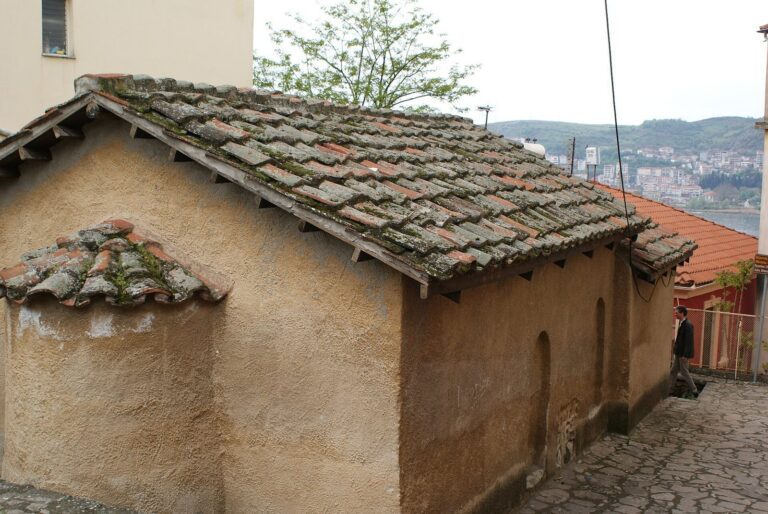
The south wall is whitewashed, and cracks occur where the mortar does not bind firmly. The timber roof is a later addition, not part of the original structure, and was described as being in poor condition. During a major repair in 2011, exterior plaster was removed to reveal the original masonry. Neglected municipal land with coniferous vegetation borders the church to the south, east, and west. A maintained paved park lies to the north, beside the entrance.