Saint Mary Immaculate: The Oratory of Cascina Increa in Brugherio
Site at a Glance
- Popularity
- Very Low
- Country
- Italy
- Primary era
- Early Modern
- Eras represented
- Early Modern, Modern
- Civilizations
- Austrian Empire, Duchy of Milan, Habsburg, Spanish
- Site type
- Religious
- Remains
- Chapel
On this page8 sections
History
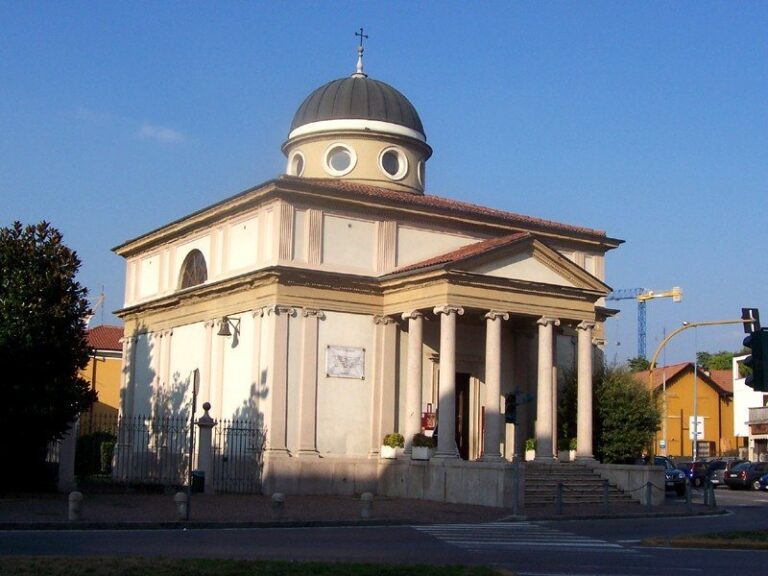
Saint Mary Immaculate is a Roman Catholic church at Cascina Increa in Brugherio, Italy, completed and consecrated in 1691. It is dedicated to the Immaculate Virgin Mary, Saint Joseph, Saint Mary Magdalene, and Saint Teresa of Ávila. The church served as the oratory of Cascina Increa, one of Brugherio’s oldest farmsteads.
Increa once belonged to the municipality of Cernusco Asinario, now called Cernusco sul Naviglio. It became part of the parish of Saint Bartholomew in 1578, then joined the municipality of Brugherio when it was established in 1866. The church belongs to the Archdiocese of Milan, a Roman Catholic ecclesiastical jurisdiction. Renovations have taken place over time without substantially altering its architectural character.
Remains
Exterior and plan
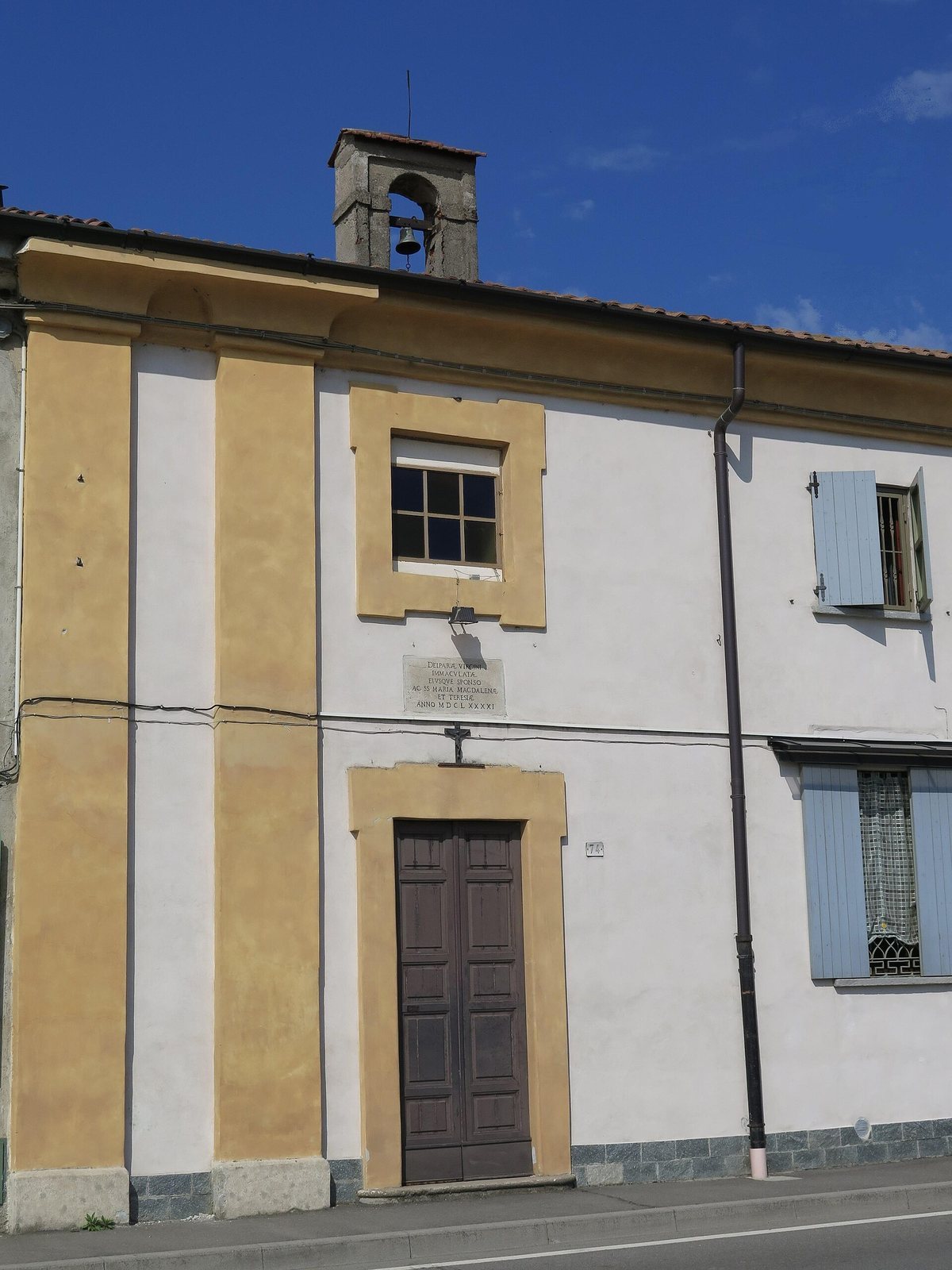
The small church is annexed to Cascina Increa, an Italian rural farmstead, beside the entrance to Villa Tizzoni Ottolini. Two pilasters, shallow wall projections resembling columns, frame the entrance. A plaque above the doorway records the church’s dedication in 1691. Inside, a square nave, the main area for the congregation, leads to a small rectangular apse, the space at the end of the church. A high, four-sided window is set into the wall, and a shaped divider of pink marble separates the nave from the presbytery, the area around the altar.
Altar and devotional decoration
Altar and niche
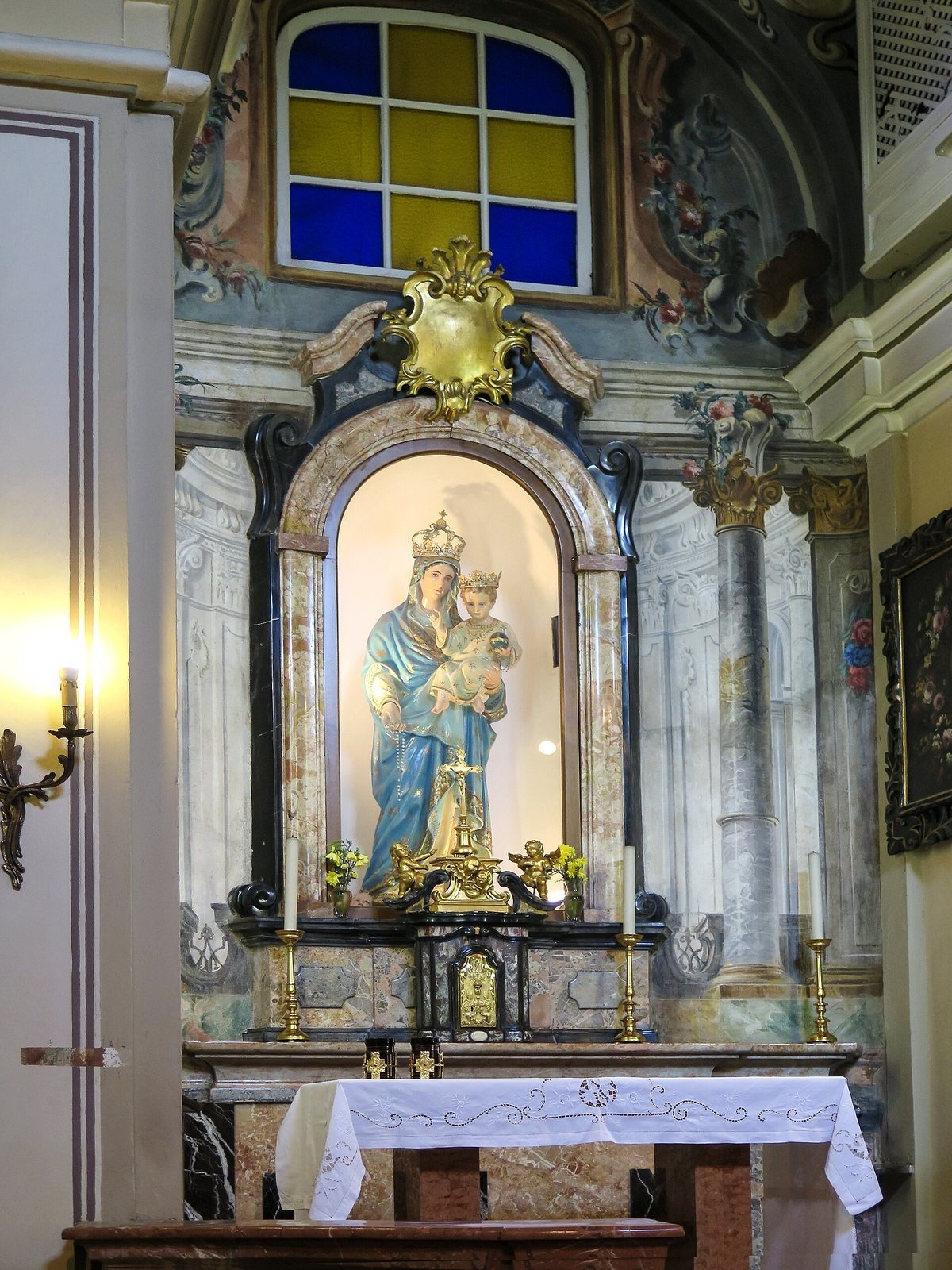
The late-Baroque marble altar, from a phase of the ornate Baroque style, has a curved outline fitted to the shallow inward angle where the rear and side walls meet. Above it, a niche holds a statue of the Madonna and Child made in the twentieth century. A marble altarpiece, a decorative structure behind an altar, frames the niche with a shaped cornice. Columns and flower garlands in an eighteenth-century style surround it, creating an illusion of greater depth and width in the apse.
Vaults
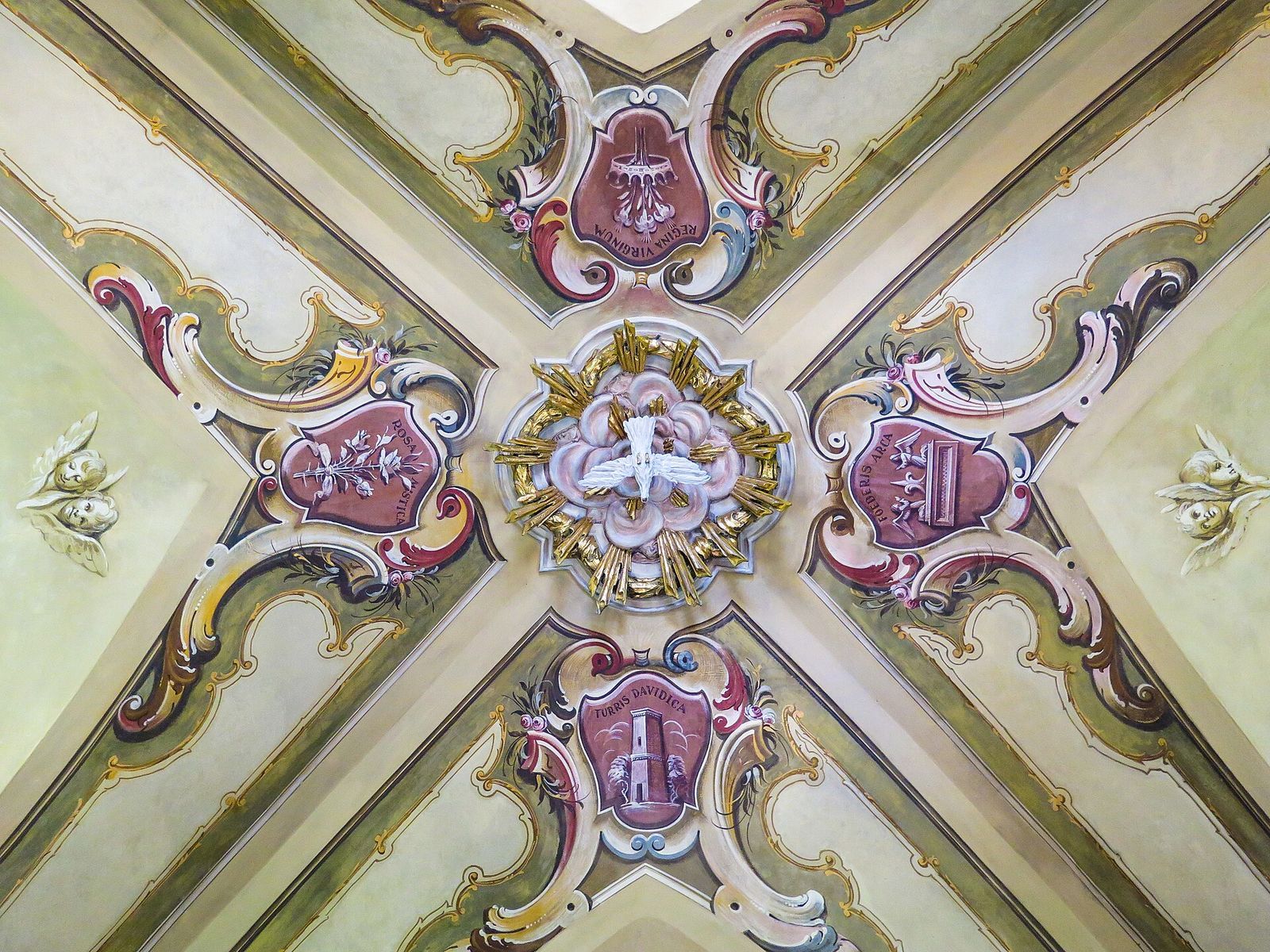
The arched ceiling over the presbytery carries symbols of the four Evangelists, the figures traditionally associated with the canonical Gospels. These decorations probably belong to the same period as those on the nave ceiling, but were added after the altar decoration. Four shields on the nave vault bear different devotional titles for the Virgin Mary drawn from a litany, a series of invocations used in prayer. At the centre, a plaster dove representing the Holy Spirit sits within a lobed panel with radiating lines.
Paintings
Two paintings beside the altar share a carved wooden frame. The left depicts the Agony of Saint Joseph; the right shows the Adoration of the Magi within a flower garland. This garland format was characteristic of seventeenth-century Lombard paintings made for private settings.
Memorials
Several plaques along the nave commemorate former owners. Beside the plaque for Ester Zanzoterra Robbiani is a white-marble Neoclassical bas-relief, a sculpture raised slightly from a flat background. Elisabetta Napollon commissioned it in memory of her husband, Count Giulio Ottolini Visconti, who died on July 26, 1839. The relief shows a seated woman in profile, her head bowed as she weeps over a Roman amphora bearing a carved portrait of the count. Neoclassicism revived forms from ancient Greek and Roman art.