Saint Mary Church: Protestant Principal Church of Kamenz


Site at a Glance
- Rating
- 4.7
- Popularity
- Very Low
- Country
- Germany
- Primary era
- Medieval
- External website
- Open
- Eras represented
- Medieval, Modern
- Civilizations
- Holy Roman Empire, Kingdom of Bohemia
- Site type
- Religious
- Remains
- Church
On this page13 sections
History
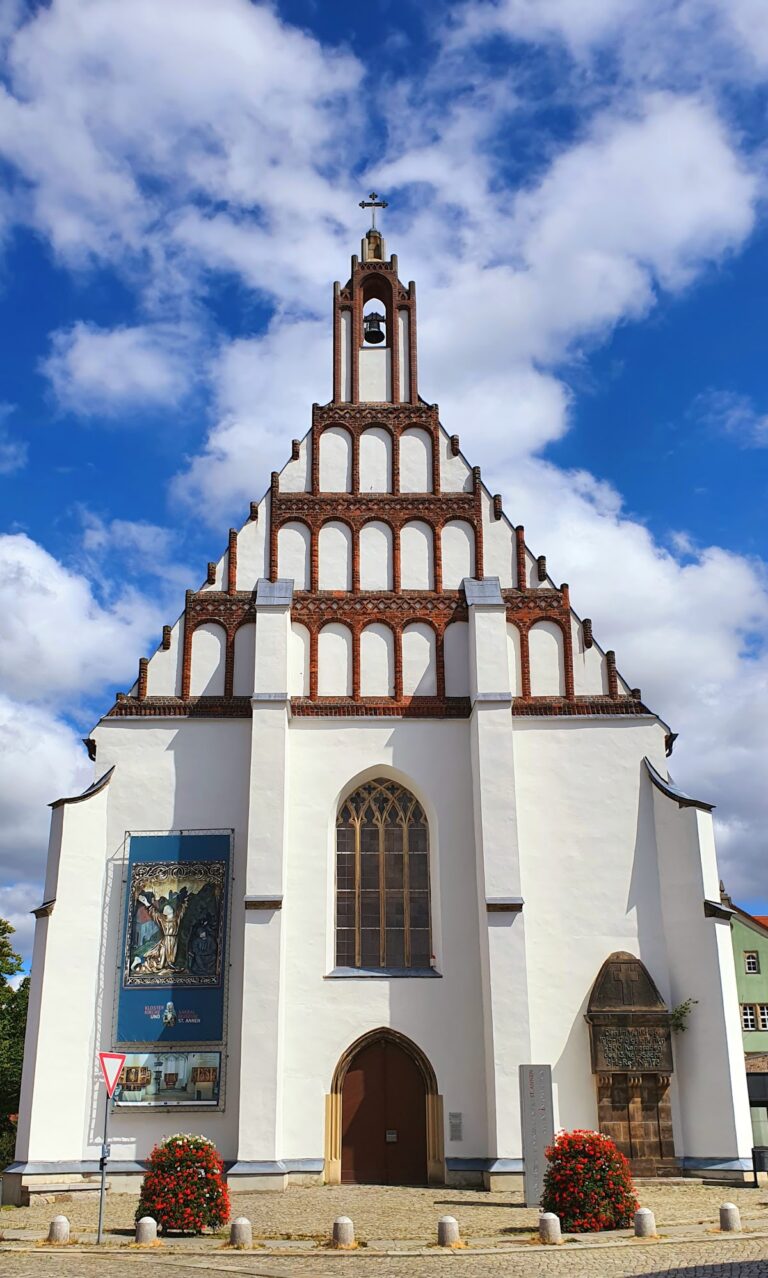
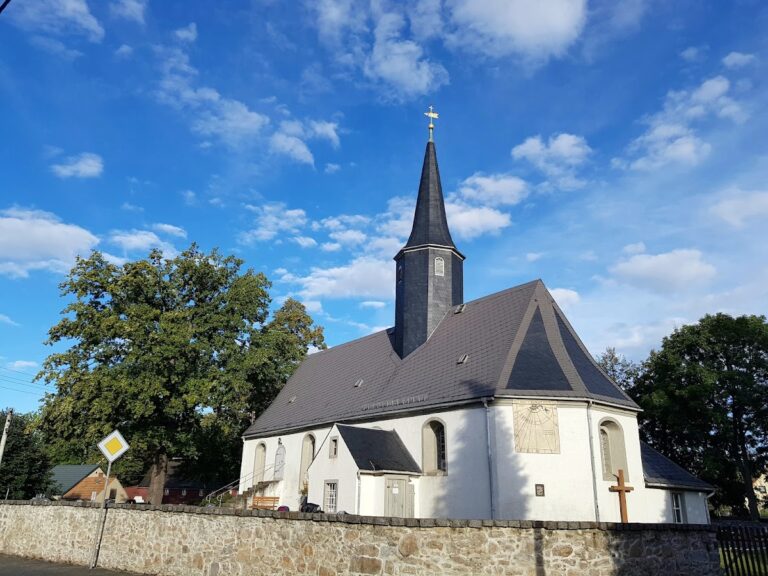
Saint Mary church is the Protestant principal church of Kamenz, Germany, a Late Gothic hall church constructed after 1430 and vaulted after 1450. It belongs to the Evangelical Lutheran Parish of Kamenz within the Evangelical Lutheran Regional Church of Saxony and remains a prominent part of the cityscape.
Medieval construction
The church replaced an earlier building whose nave still stood when the present granite-block choir was built toward the end of the fourteenth century. The sacristy and probably the tower at the northwestern corner were constructed during the same phase. The later hall church was erected after 1430, and its brick gables were added around 1500.
Several surviving interior features belong to the medieval period. The organ gallery dates from 1479, while the council gallery was built in 1480. The church originally contained more than 20 altars, but only two remain in their original positions.
Early modern furnishings and religious life
Saint Mary church received major furnishings during the sixteenth and seventeenth centuries. The 1566 pulpit was made by Andreas Dreßler, and the choir stalls along the north wall date from 1560. A 1640 lectern was placed in the choir. The church also acquired prayer rooms and galleries, reflecting the continuing adaptation of its interior to congregational and civic use.
Gotthold Ephraim Lessing, the eighteenth-century German writer and Enlightenment thinker, was baptized in the church in 1729 by his father, Johann Gottfried Lessing. His father served as archdeacon, a senior clerical office involved in church administration and preaching.
Later alterations and restoration
The tower cap was renewed in 1793. Gotthilf Ludwig Möckel restored the church in 1887, although valuable furnishings were lost during the work. Woldemar Kandler altered the galleries in 1908, and another restoration campaign began in 1992.
The church’s bells were taken for weapons production during both World Wars. Two cast-iron replacements were acquired in 1956, but their durability was limited. For Kamenz’s 800th anniversary, they were removed and replaced by two newly cast bronze bells.
Remains
Saint Mary church stands on the highest point of the city. Its surviving fabric forms a four-aisled, four-bay hall church built of granite, with a narrower choir. In a hall church, the nave and aisles are approximately the same height, creating a unified interior space. The building is surrounded by a cemetery, whose wall on the side away from the city once formed part of Kamenz’s fortifications. Historic funerary monuments survive there, and the Catechism Church directly adjoins the choir.
Choir, tower, and exterior
The three-bay choir ends in a five-eighths termination, a polygonal end formed from five sides of an eight-sided figure. The tower is integrated into the northwestern corner of the north aisle. Its square lower section supports two Gothic stories, the upper one octagonal and decorated with figurative gargoyles. Above them is a Baroque octagonal section with a cap and lantern.
Two unequal, parallel gabled roofs cover the church. The west gable of the main roof has a tall, four-tiered blind arcade, while the eastern gable of the north-aisle roof carries similar blind-arcade ornament. Portals on the north sides of the choir and nave, together with a richly moulded west portal, provide access to the building.
Interior structure and medieval features
The interior floor rises toward the east, and the fourth aisle contributes to the spacious character of the hall. Slender pointed-arch windows with elaborate tracery illuminate the interior. Tracery is the patterned stone framework within a Gothic window. Slender octagonal piers carry the vaults and continue without capitals into the arches separating the aisles.
The vaults include forms developed from three-ray patterns, parallel ribs in the central nave, and a star vault in the eastern choir bay. A star vault is a ribbed vault whose ribs form a star-shaped design. The Gothic organ gallery of 1479 and council gallery of 1480 retain elaborate star vaults. The choir also contains three Gothic niches for celebrants, each with ornamental detailing.
A medieval sacrament niche has an ogee-arched frame and a barred door. Its form resembles a monstrance, a liturgical vessel used to display the consecrated Eucharistic host. The fourteenth-century baptismal font is octagonal and chalice-shaped. A high-quality, life-sized carved Crucifixion group from around 1400 was restored and returned to the triumphal arch in 1935.
Altars and sculptural works
High altar
The high altar, made in 1519, is a winged altarpiece with rich foliage carving and an ornamental superstructure. Its central shrine contains larger-than-life figures of the Virgin Mary, John the Evangelist, and John the Baptist. The predella, the lower section of an altarpiece, presents the Last Supper in fully sculpted figures beneath carved canopies. The wings show Saints Andrew and Christopher, while five saints are arranged pyramidally in the superstructure.
An alabaster crucifix dated 1630 stands with the high altar. It is attributed to Sebastian Walther, a Renaissance sculptor from Dresden, and came from a Crucifixion group. The associated figure of Mary was destroyed in 1945, while the figure of John is held by the Dresden City Museum.
Michael altar
The 1498 Michael altar stands as a side altar in the northern aisle. Its predella shows half-length saints, with Saint Anne and the Virgin and Child at the center, flanked by Hubertus and John the Baptist. The shrine depicts Michael weighing souls. Its wings include representations of Andrew, King Sigismund, John the Evangelist, Pope Gregory, Peter, Paul, Catherine, and Barbara.
Sacristy altar
A sacristy altar made of wood and alabaster was placed against the eastern wall of the north aisle in 1620. Its two-story design uses columns, and its gable represents the Second Coming of Christ.
Paintings, epitaphs, and galleries
The church contains paintings, panel paintings, votive images, and epitaphs from several periods. In the sacristy, a three-part painted epitaph dated 1543 was made by Wolf Krodel, a painter associated with Lucas Cranach the Elder’s artistic school. Its central panel shows the Crucified Christ, with the donors’ coats of arms in the corners. The outer panels contrast judgment and grace through scenes including Adam being driven into Hell by Death and the Devil, Moses, Christ as judge of the world, the Fall, and Christ as Redeemer.
A 1554 epitaph by Andreas Dreßler depicts the Last Judgment. His 1585 votive painting, showing an old man and the Ascension within an architectural frame, is displayed in the choir. A further altarpiece painting from 1613, made by Christoph Berger of Kamenz, represents the Widow’s Mite and is located in the council gallery.
A large sandstone epitaph, probably made by Zacharias Hegewald in 1627, is attached to the south wall of the choir. Its three-part composition places a writing cartouche and coats of arms in the base, Christ on the cross in the central zone, and Peter and Paul in flanking niches. The deceased’s family also appears in the central section, while the upper part shows the Ascension with God the Father on a globe.
Several prayer rooms and galleries occupy the nave. A prayer room on the eastern wall of the tower dates from around 1660, and two contemporary prayer rooms on the north wall have a column and cartilage ornament. The Shoemakers’ Gallery on the south side of the nave and the Dark Gallery beneath the organ gallery were both made in 1675. Their parapets are painted with biblical sayings and foliage on a dark-gray ground. The two-story Long Gallery dates from 1703 and 1709 and is painted in brown wood tones. Further two-story galleries in Gothicizing forms were installed along the north wall in 1830 and 1837.
Parish treasures and organs
Until 2011, the sacristy housed parish art treasures including a small reliquary box from around 1380 to 1400 with two arm reliquaries, a small winged altarpiece from 1505, and a Christ Child figure from around 1500. A reliquary is a container for relics, while an arm reliquary takes the form of an arm or hand associated with a relic. The Christ Child raises a hand in blessing and holds a globe. These objects are now loaned to the permanent exhibition of Kamenz’s municipal Saint Anne Sacred Art Museum.
The main organ is Opus 573 by E. F. Walcker and Company, made in 1891. The Eule Organ-Building Institute renovated it in 1936, altered its specification in a Neo-Baroque manner, and converted its case into an open-pipe facade. After restoration by the Groß company in 2005, it had 42 stops on three manuals and pedal. Its later equipment includes the couplers II/I, III/II, III/I, I/P, II/P, and III/P, a Zimbelstern effect stop, several combination aids, cone chests, mechanical action, and the original 1891 console.
Before 1891, the church possessed a Baroque organ made by Matthias Schurig in 1682, with 36 stops on three manuals and pedal. The Electoral Saxon coat of arms from its facade survives on the gallery parapet of Kamenz Monastery Church. A small choir positive organ from 1823 was probably made by the Kayser organ-building company, and its pipework was renewed by Eule in 1935.