Saint George Meshchovsky Monastery: A Russian Orthodox Monastic Community in Russia
Site at a Glance
- Rating
- 4.9
- Popularity
- Low
- Country
- Russia
- Primary era
- Modern
- External website
- Open
- Eras represented
- Early Modern, Modern
- Civilizations
- Russian
- Site type
- Religious
- Remains
- Fortified Monastery
On this page12 sections
History
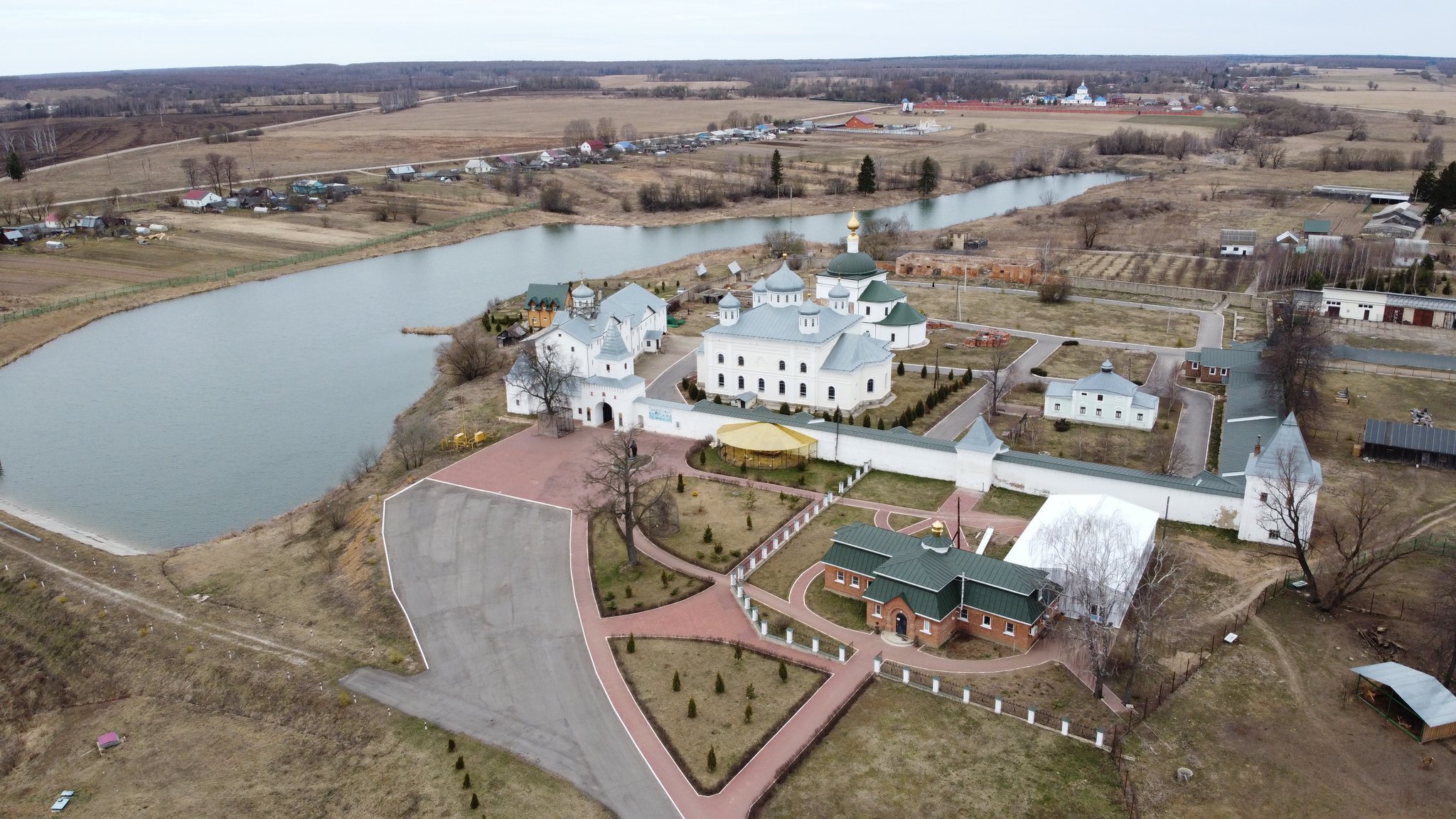
Saint George Meshchovsky Monastery is a Russian Orthodox monastery for men in Russia, located in Meshchovsk, and dedicated to Saint George the Victorious, the Christian martyr traditionally honored as a warrior saint. It was founded in the late fifteenth century at Sobolevka, on elevated ground beside the Ressa River, about 30 kilometers from Meshchovsk.
Foundation and destruction in the seventeenth century
Little is known about the monastery before the early seventeenth century because documentary evidence from its first phase is limited. During the Time of Troubles, a period of dynastic crisis, famine, political disorder, and foreign intervention in the Russian state, Polish forces plundered the monastery. Members of its brotherhood were killed or dispersed, its property was looted, and the community was abandoned.
Around 1642, the Streshnev family revived the monastery at its original location as a female community. Tsaritsa Evdokia Lukyanovna Streshneva belonged to this family. The surrounding area had become deserted, however, and the community was later transferred to Meshchovsk. A monastic record attributes the move to devastation caused by Lithuanian forces.
After the Streshnevs, Fyodor Lopukhin, the former father-in-law of Tsar Peter I and owner of the village of Serebryano, became the monastery’s benefactor. The community again became male. Lopukhin built a large stone residence near the village and connected it to the monastery by a gallery. Neither the residence nor the gallery survives.
Growth, administration, and attack
The monastery’s wealth attracted armed raiders. In 1719, about 80 bandits broke through its gates, forced the locks of the church and sacristy, and stole money and valuables kept in chests. They withdrew after residents of Meshchovsk heard the alarm bell and came to the monks’ aid.
Its institutional importance expanded during the 1720s. In 1724, the Dragoshansky Monastery at Zimnitsy, the Yukhnovsky Monastery, and Gorodechenskaya Hermitage were placed under its authority until 1727. In the same year, the brotherhoods of the closed Nikolsky, Serpeysky, Borovensky, and Lugansky monasteries were transferred there with their sacristy holdings. A sacristy was the place where a church kept vestments, liturgical vessels, and other objects used in services.
Secularization and recovery
Catherine II’s secularization reform of 1764 transferred much monastic land and property to the state and reorganized the financial status of religious houses. Saint George Meshchovsky Monastery lost its lands and privileges and became a non-staffed monastery, meaning that it was deprived of its former state-supported establishment and endowment. The change brought severe impoverishment. By 1789, only five monks remained, living in extreme poverty.
Recovery began after 1800, when a highly venerated icon of the Sorrowful Mother of God was transferred to the monastery from a roadside chapel in Meshchovsk. By order of Emperor Paul I, the Meshchovsk treasury paid the monastery 300 rubles in assignats each year. In 1800, the monastery also regained a mill and fishing rights on the Ressa, and in 1801 it received 30 desyatinas of land around its walls.
The monastery’s spiritual life was strengthened by the frequent appointment of abbots from Optina Hermitage, a major Russian Orthodox monastic center known for its elders and spiritual advisers. Monks trained at Meshchovsk later served as builders, superiors, and spiritual advisers in other monasteries.
Burial, closure, and revival
In 1812, Andrew the Fool, a peasant from the village of Kletino, was solemnly buried in the middle eastern tower of the monastery enclosure. He is also known as Blessed Andrew of Meshchovsk. In 1916, the monastery operated a shelter for children whose fathers had been killed in the First World War.
The monastery’s last superior, the Venerable Martyr George Lavrov, served from 1915 to 1918. A venerable martyr is a monastic saint who died for the faith. George Lavrov was arrested in 1918, when the monastery was closed. A labor commune made up of monastery residents operated there from 1918 to 1919.
During the Soviet period, much of the territory deteriorated. A petrol station was installed on the former monastic cemetery, and the once prosperous monastery became largely ruinous. Revival began in spring 2001, after the historic monastery was transferred to the Russian Orthodox Church. Its brotherhood undertook restoration under Archimandrite George Evdachev. The monastery is now active as a community for men and is recognized as a regional cultural-heritage site of the peoples of the Russian Federation.
Remains
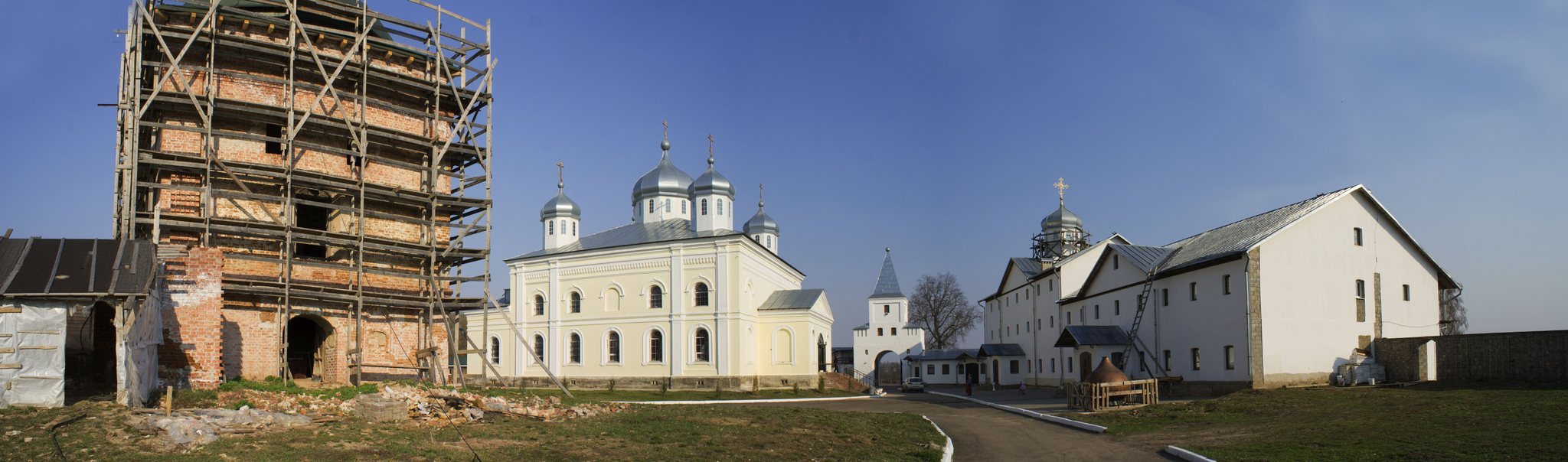
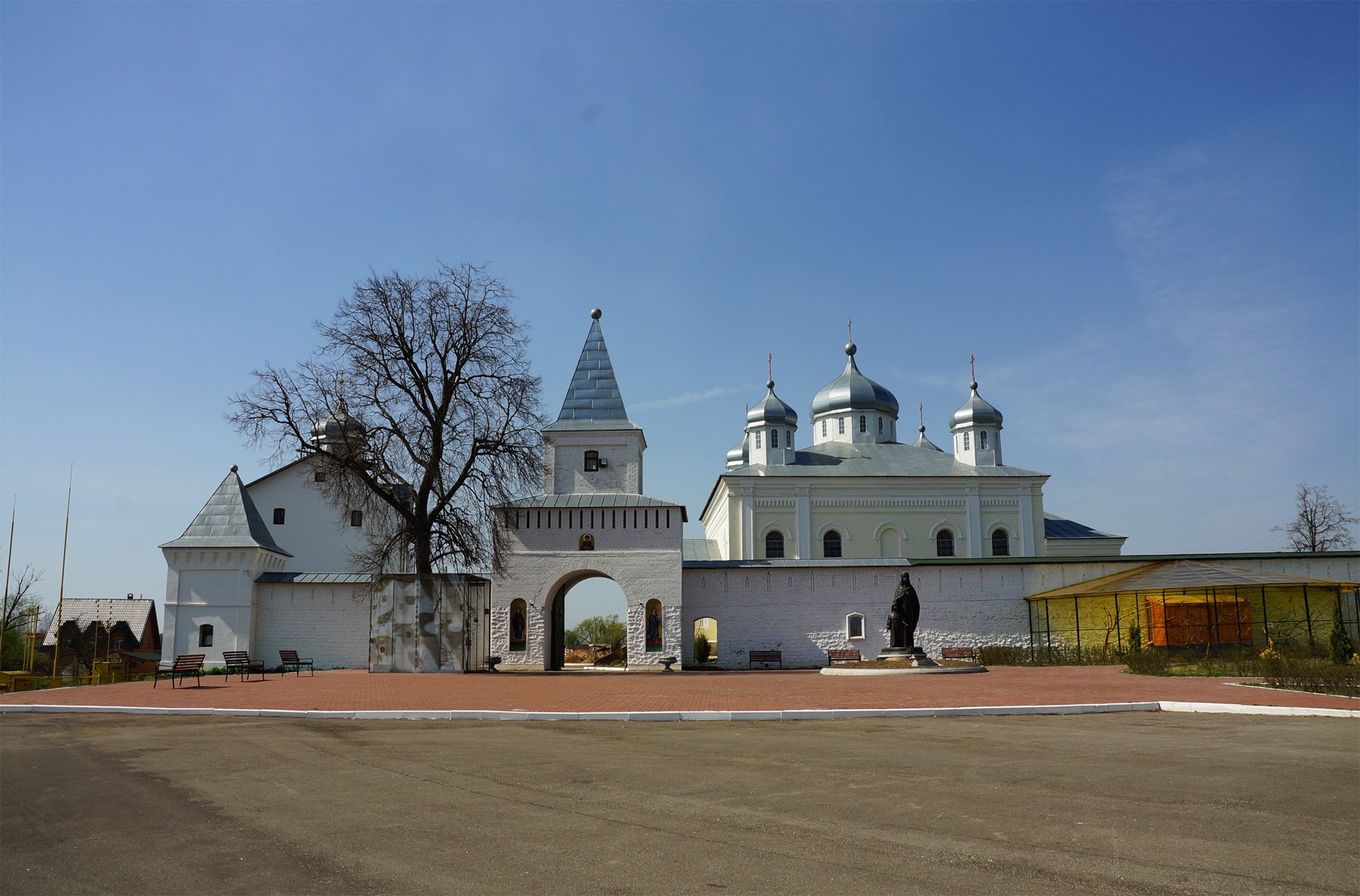
The monastery was enclosed by stone walls with towers at the corners and contained two stone churches by the beginning of the twentieth century. Its surviving architectural history combines a two-story church from the late seventeenth century, a five-domed cathedral from the nineteenth century, enclosure structures, and buildings restored or added during the revival that began after 2001.
Monastic churches
Church of Saint George the Victorious
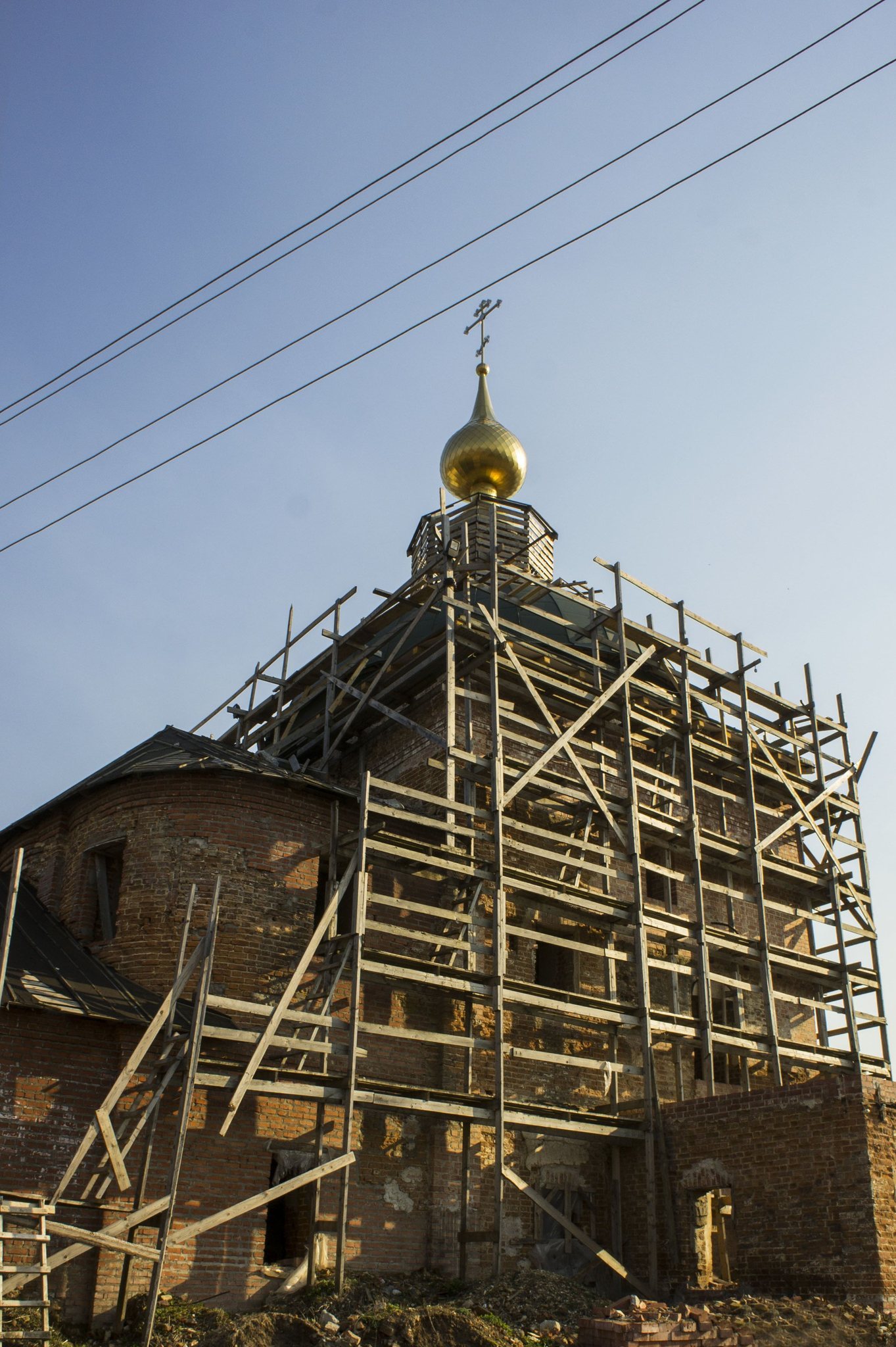
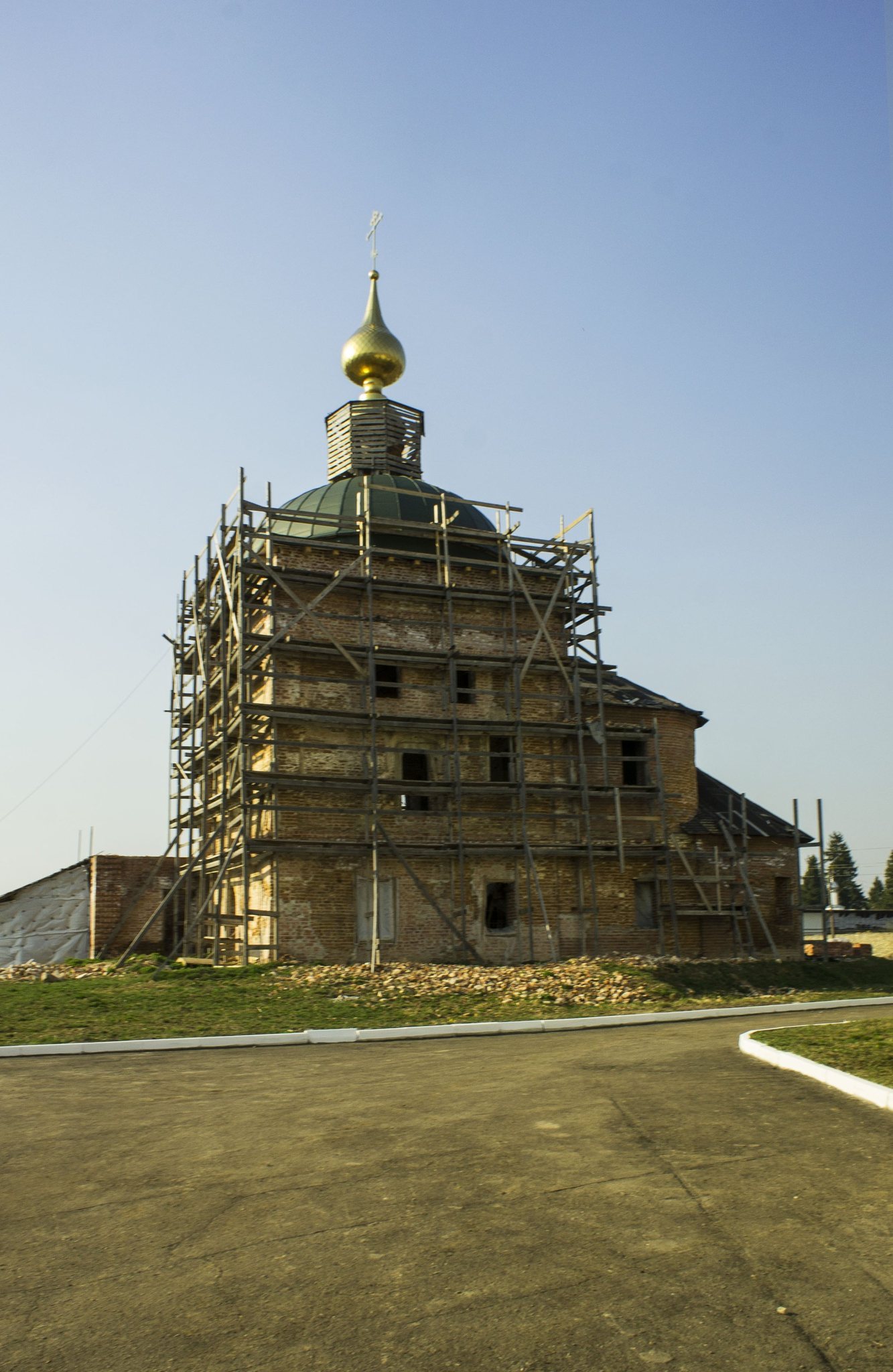
The two-story Church of Saint George the Victorious was built in 1691 and incorporated a bell tower. Its lower winter section contained three altars, dedicated to Saint George the Victorious, Saint Demetrius of Rostov, and the Exaltation of the Cross. The upper summer church was dedicated to the Nativity of the Most Holy Mother of God.
In 1800, the upper church received an elaborate chandelier. The Moscow merchant P. A. Alexandrov financed a gilded and carved iconostasis, the screen of icons separating the sanctuary from the main body of an Orthodox church. Restoration of the Church of Saint George the Victorious remains ongoing.
Cathedral of the Apostles Peter and Paul
The five-domed Cathedral of the Apostles Peter and Paul was built in the Byzantine style during the 1880s. It forms part of the monastery’s later stone architectural group. During the post-2001 revival, the cathedral was restored.
Church of the Venerable Confessor George Lavrov
A wooden church dedicated to the Venerable Confessor George Lavrov was built and consecrated during the modern revival. A venerable confessor is a monastic saint who suffered for the faith without being killed. The church commemorates the monastery’s last superior, who was arrested after the community’s closure in 1918.
Enclosure, burials, and associated buildings
The stone enclosure had towers at its corners. The middle eastern tower contains the burial of Andrew the Fool, whose remains were placed there in 1812. The monastery’s associated holy objects include part of the relics of the Venerable George Lavrov and the burial of Blessed Andrew of Meshchovsk.
The post-2001 restoration campaign also reconstructed a brotherhood building and refectory. The former monastic cemetery was later occupied by a petrol station, while other parts of the historic territory and its buildings had deteriorated before restoration began.
Venerated icons
The monastery’s religious treasures included an ancient copy of the Feodorovskaya Icon of the Mother of God, inserted into a wooden panel. Another especially revered object was the icon of the Sorrowful Mother of God, brought from Meshchovsk in 1800. Its transfer helped strengthen the monastery’s religious life during the period of recovery after secularization.
