Saint-Étienne Castle: A Medieval Stronghold in Aurillac, France
Site at a Glance
- Popularity
- Medium
- Country
- France
- Primary era
- Medieval
- Eras represented
- Medieval, Early Modern, Modern
- Civilizations
- Carolingian, French
- Site type
- Military
- Remains
- Castle
On this page9 sections
History
Early stronghold and abbey
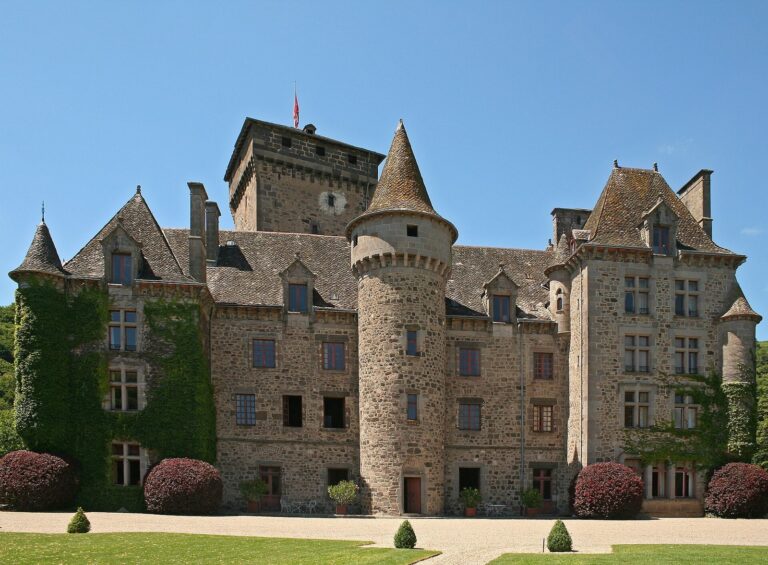
Saint-Étienne Castle is a medieval stronghold in Aurillac, France, with origins in the ninth-century Carolingian era. Its early history is linked to Girard, Count of Aurillac and of Carolingian descent. Girard’s son Géraud was born at the castle around 855 or 856; his mother, Adeltrude, was the daughter of a Count of Rouergue.
When Géraud died in 909, he left the castle to the abbey he had founded, a monastery governed by an abbot. The abbey owned it until the French Revolution and used it as the abbots’ residence. The abbots also exercised local lordly authority.
Civic conflict and destruction
In 1233, townspeople seized the castle in protest against what they considered the abbot’s arbitrary imprisonment of residents. Tensions persisted: in 1330, town consuls objected to the imprisonment of a child in the tower, and disputes between the abbot and consuls grew more serious from 1469 to 1471.
During the Hundred Years’ War, a series of conflicts between England and France from the fourteenth to the fifteenth century, townspeople helped free the castle from English control and later demolished it twice. French Protestant forces known as Huguenots destroyed it in 1569. Charles de Noailles, then abbot of Aurillac, restored the castle.
From abbey property to teacher-training college
On 6 April 1792, the state sold the castle as national property, meaning an asset nationalized and offered for sale, to Madame la Marquise de Fontange, a niece of an abbot. Early in the First French Empire, Napoleon Bonaparte’s imperial regime, the building served as a prefect’s residence. Fontange sold it to Major General Barral in 1808. It later passed to Catherine Delport, widow Guittard, and the lawyer Dejou before being bequeathed to the Bishopric of Saint-Flour on 6 April 1845.
Aurillac mayor Louis-Furcy Grognier bought the property for the town from Bishop Frédéric-Gabriel-Marie-François de Marguerye on 13 November 1847. Grognier intended it for a teacher-training college. The school, run by the Brothers of the Christian Schools and also associated with the Fathers of Christian Doctrine, moved into the castle in 1848. It had opened at Salers in 1831 and transferred to Aurillac in 1841. When it moved into the castle, eight of 25 candidates were admitted, and some spoke only the local Cantal dialect. Georges Pompidou’s father had been a pupil there.
A fire ravaged the dilapidated castle on the night of 8–9 April 1868. A law passed on 9 August 1879 barred religious directors from teacher-training colleges; France’s 1905 laws later separated church and state. The final class left in 1940, and the school was abolished in 1941. A temporary apprenticeship center occupied the castle during the 1950s.
Volcano museum and environmental work
Aurillac mayor Dr. Mézard established the House of Volcanoes at the castle. From 1970, it also housed France’s third Permanent Center for Environmental Initiatives, or CPIE, which received its formal label in 1975–76 alongside the Haute-Auvergne center. Beginning in 1972, the House of Volcanoes association occupied the castle’s left wing and worked with Professor Brousse’s laboratory at Paris-Sud University. On 6 August 1972, Georges Pompidou inaugurated the exhibition “Volcanoes and Volcanism,” an event involving participants from 40 countries and 60 laboratories.
After the museum was established, the CPIE focused increasingly on environmental-impact studies for roads and quarries, as well as local development. Its work included a water center at Vic-sur-Cère, local and departmental charters, efforts to promote Puy Courny, and a resource center described as a national pilot.
Reorganized in 1997, the Volcano Museum, formerly the Rames Museum of Sciences, focused on life and Earth sciences, Cantal volcanism, and the environment. Its holdings included mineral collections associated with Jean-Hippolyte Esquirou de Parieu (1853) and Jean-Baptiste Rames (1895); Aurillac acquired the Rames collections in 1895 and transferred them to the castle in 1991. The castle also housed the CPIE and a university research laboratory. The museum closed in September 2023 for restructuring.
The castle belongs to the Municipality of Aurillac. It was registered as a protected site in 1974 and listed as a historic monument in 2010.
Remains
Hilltop complex and tower
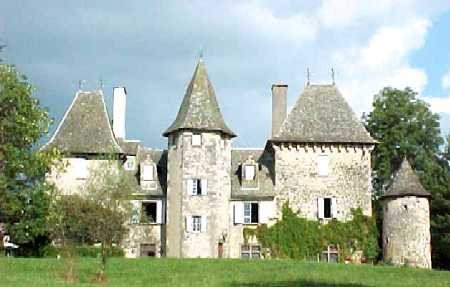
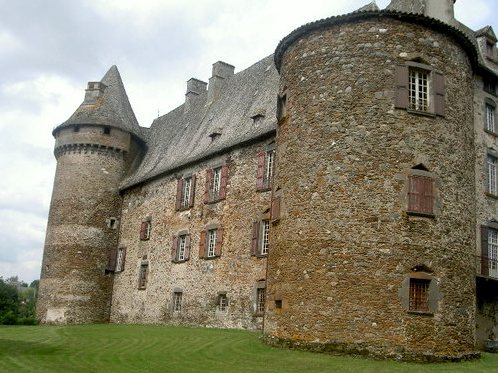
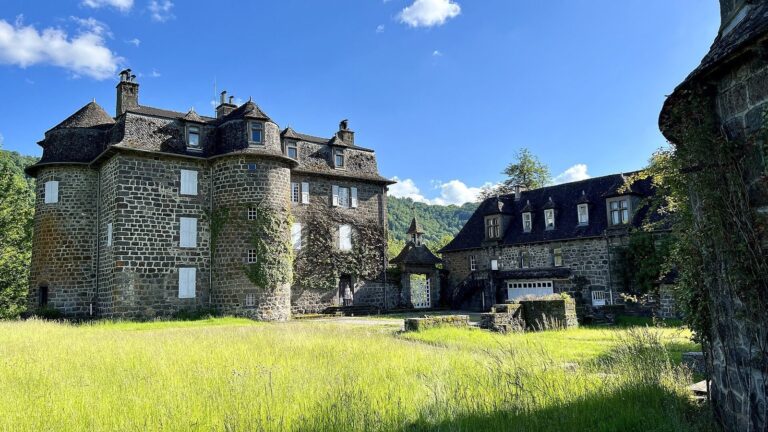
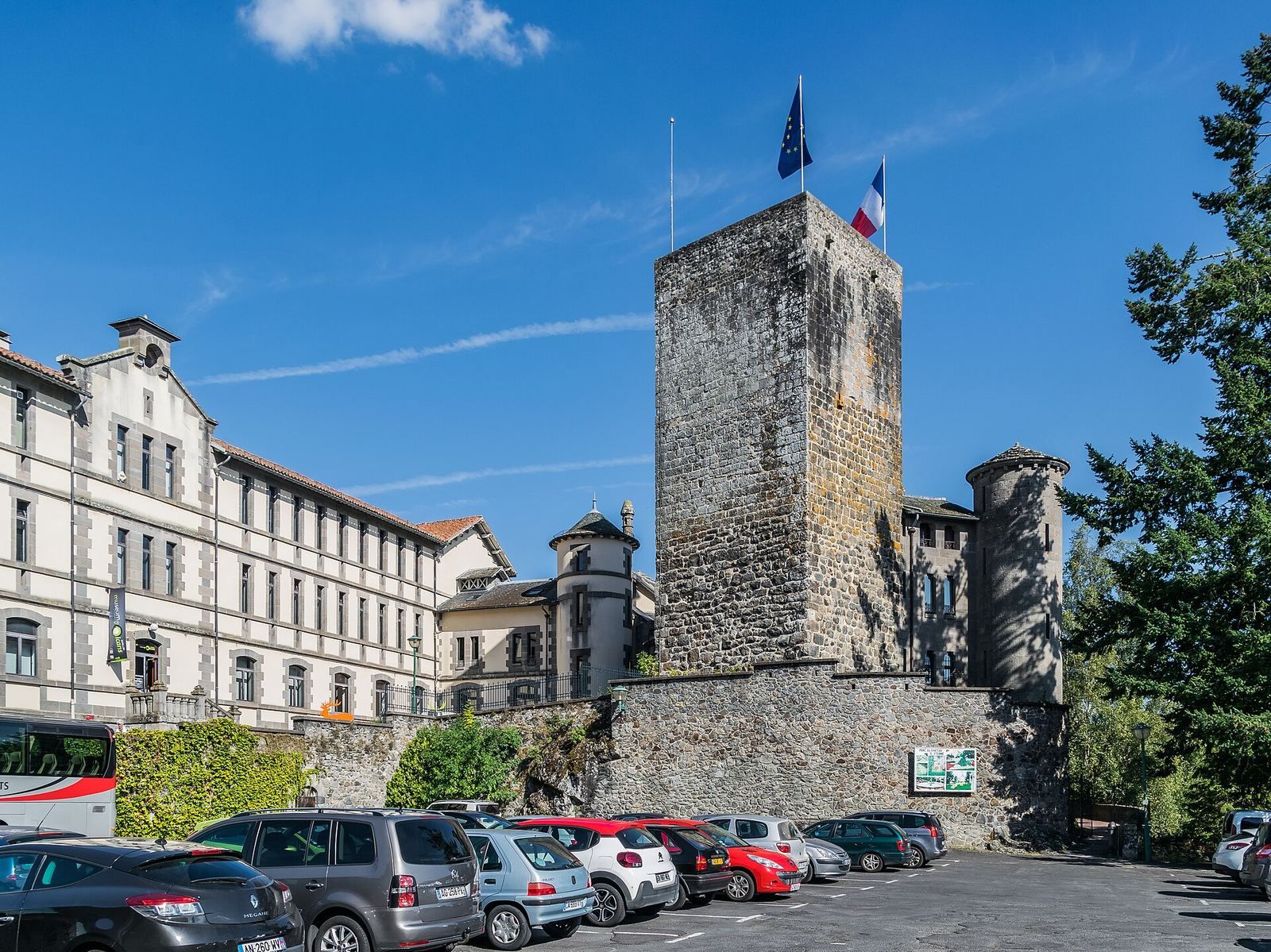
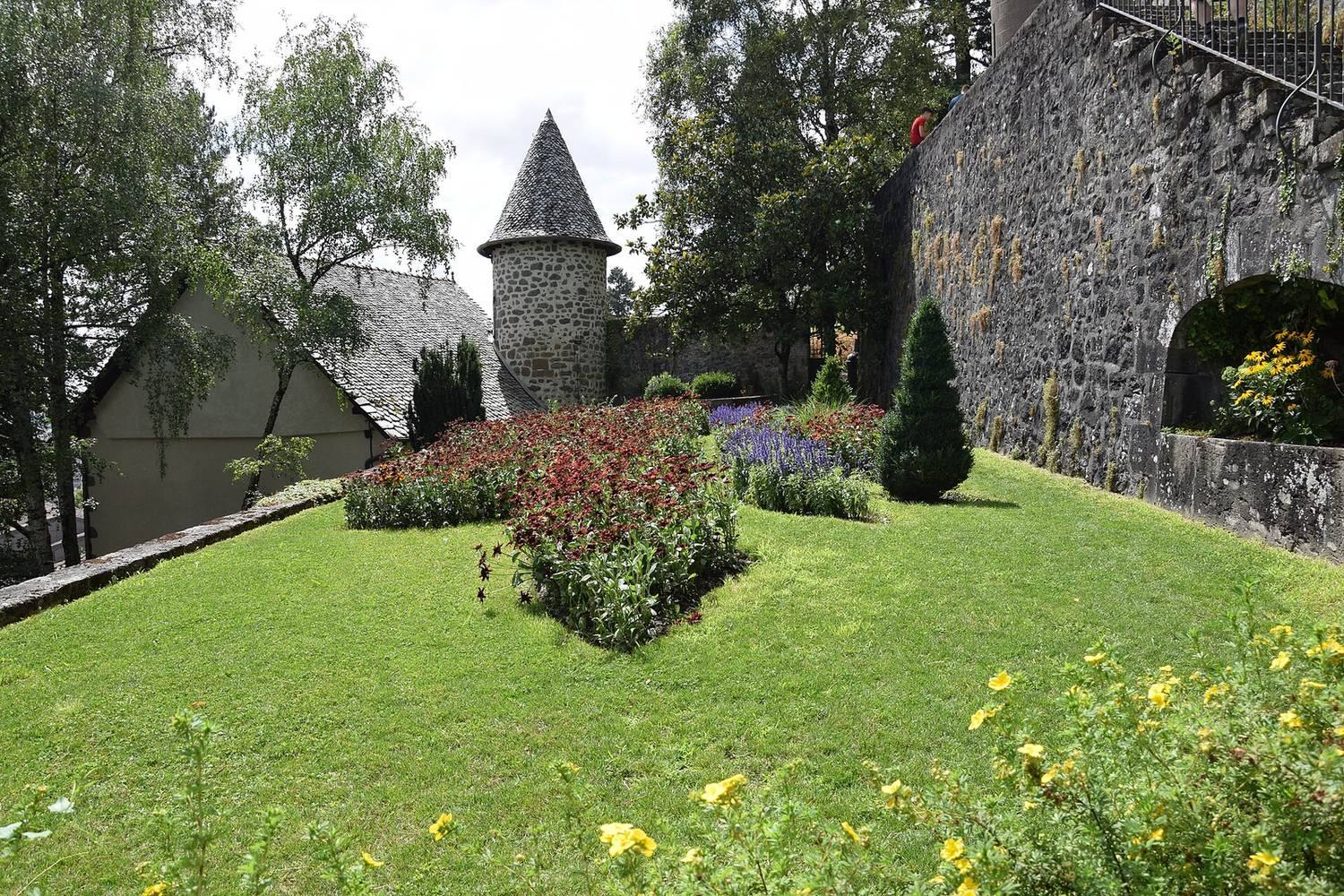
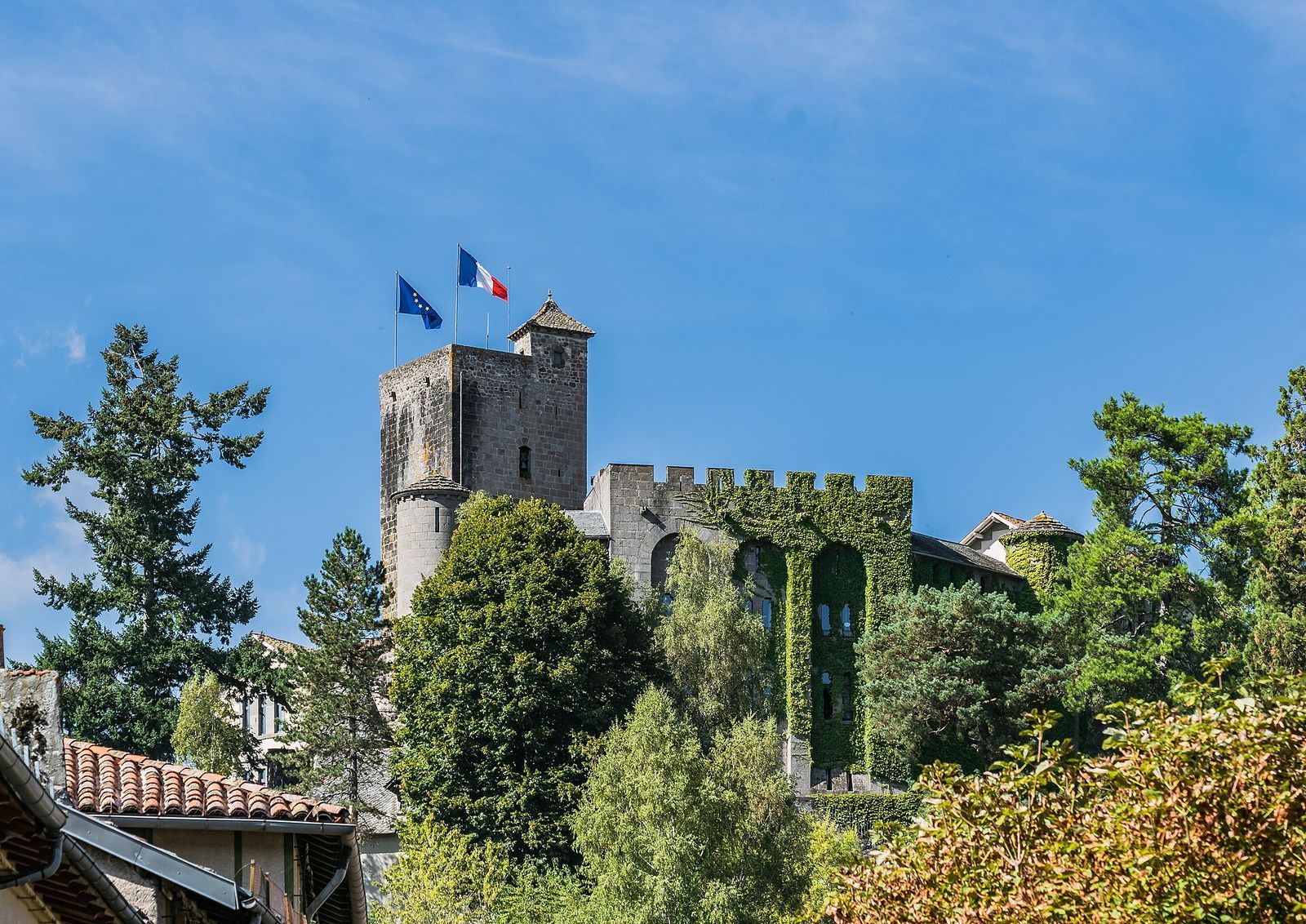
The castle stands on a hill 685 metres above sea level, overlooking Aurillac. Its former estate included upper and lower castles, a chapel, courtyard, gardens, and terraces. The surviving medieval core is a massive square tower built of masonry. Its stonework reflects construction phases attributed to the ninth, twelfth, and fourteenth centuries, while the surviving base is dated to the twelfth century. The tower once rose 32 metres and was lowered by 12 metres in 1747. Its uppermost section dates from the nineteenth century, and a terrace replaced an eighteenth-century pavilion roof. An entrance was set seven metres above ground and reached by ladder. A dolmen, a stone burial monument, may have stood on the hill during the Gallo-Roman period; traces in the tower foundations have been taken to suggest this.
Nineteenth-century residence
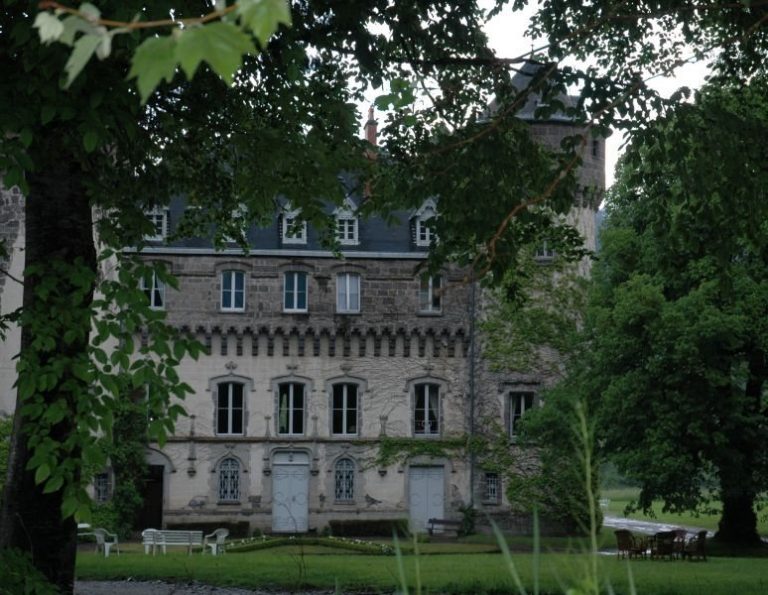
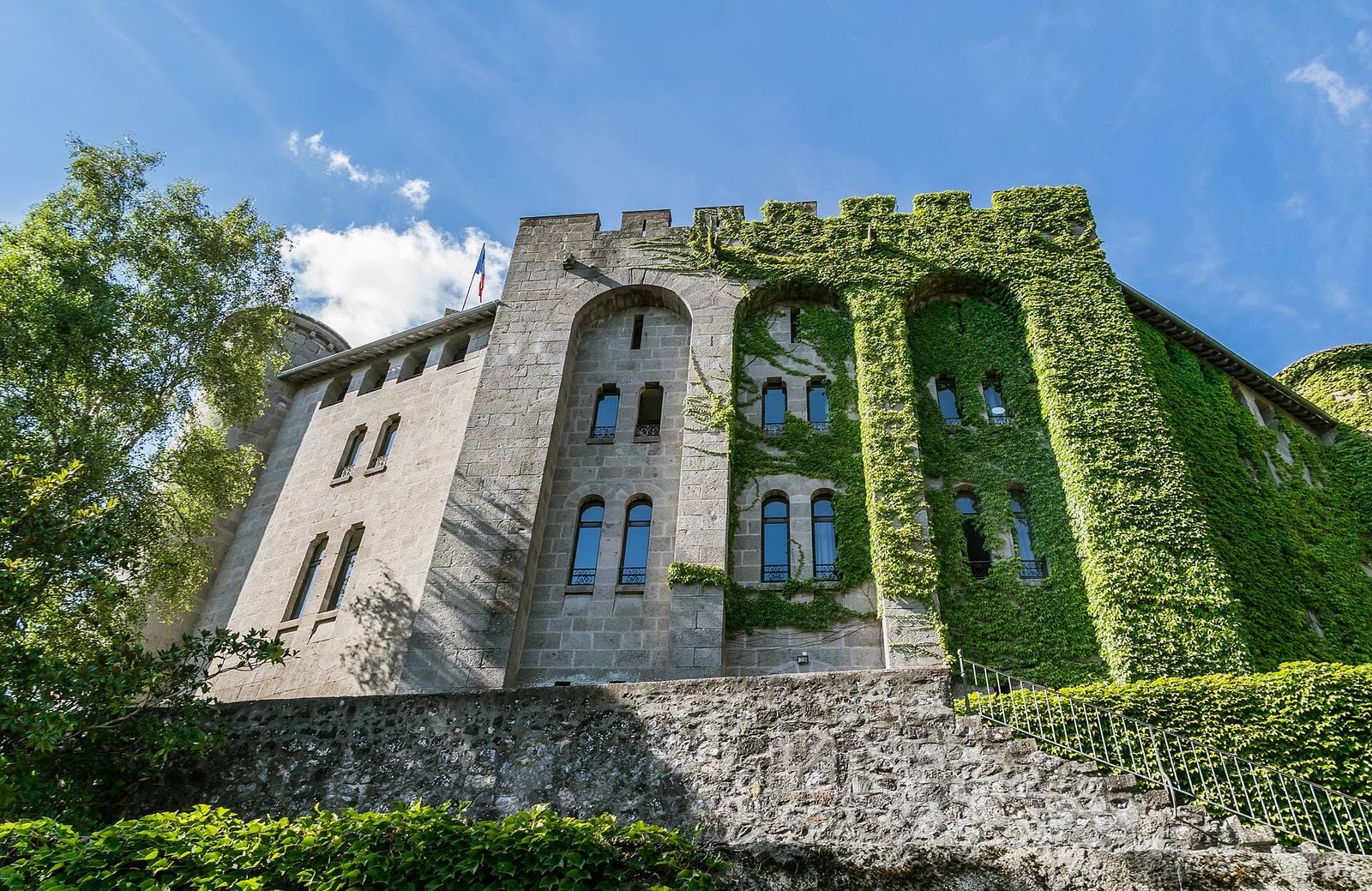
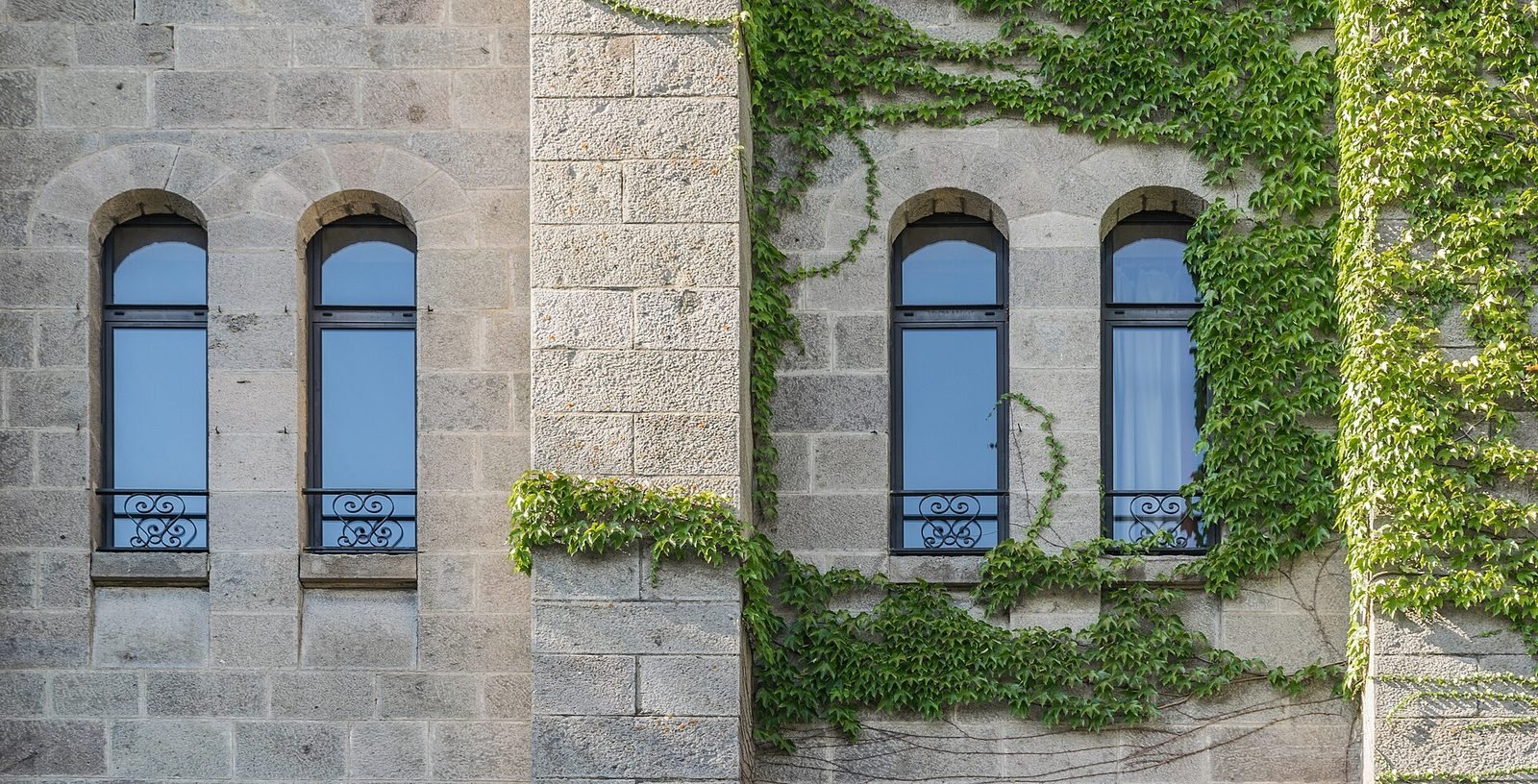
At the foot of the tower, a large reconstructed building was completed in 1898 after work extending across the following three decades. Its neo-Gothic design drew inspiration from the Palace of the Popes in Avignon. A municipal subscription was launched for a statue honoring Gerbert of Aurillac, the medieval scholar who became Pope Sylvester II. Renewed recognition of Gerbert’s local origins also influenced the building’s architectural theme.
Museum displays
During its museum use, the castle contained four interactive rooms covering volcanoes and earthquakes; the Cantal region’s 300-million-year history; the relationship between volcanoes and people, including eruption forecasting; and the region’s post-glacial animal and plant life. A screening room on the third floor showed films about the fauna and flora of the Cantal volcano. Other displays included interactive terminals, preserved animal specimens, herbarium collections, and nests.