The Fortifications of Saint-Quentin: A Detached Fort Complex near Metz
Site at a Glance
- Popularity
- Medium
- Country
- France
- Primary era
- Modern
- Eras represented
- Modern
- Civilizations
- French, German
- Site type
- Military
- Remains
- Fort
On this page11 sections
History
Planning and construction
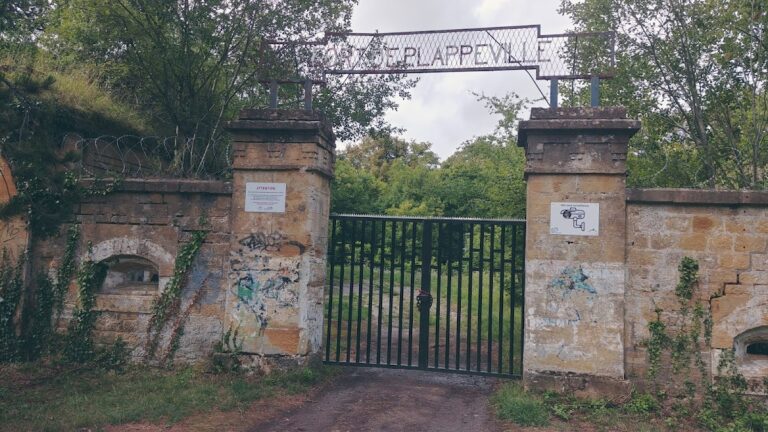
The Fortifications of Saint-Quentin are a group of detached forts on Mont Saint-Quentin in Scy-Chazelles, France, forming part of Metz’s first defensive belt. The belt was planned during the Second French Empire, Napoleon III’s rule from 1852 to 1870. French forces built part of the complex between 1868 and 1871, and German forces expanded it from 1872 to 1892. Work at Fort von Manstein continued until 1898. The group’s position overlooking Metz gave it strategic importance to French and German military planners alike.
Detached forts were separate strongpoints arranged around a city, with artillery positions close enough to support one another. French engineer Raymond Adolphe Séré de Rivières and German engineer Hans Alexis von Biehler developed designs for this kind of defensive system. When the Franco-Prussian War between France and Prussia began in 1870, many of Metz’s planned forts were incomplete or had not yet been built. Saint-Quentin itself was not conceived as one unified complex: it developed from Fort Diou in the east and Fort Girardin in the west, linked by the central Fort Saint-Quentin, also known as Plateau Barracks.
German rule and the world wars
After the Franco-Prussian War, Metz came under German rule. During the annexation, the city’s garrison grew from about 15,000 to 20,000 men early in the period to more than 25,000 before the First World War. Metz became the German Reich’s foremost stronghold. The fort was used as a Prussian training camp, and from 1890 troops of the 16th Army Corps stationed in Metz and Thionville took turns relieving its garrison. The complex was also known as Feste Prinz Friedrich Karl. It saw no combat in the First World War, serving instead as a staging point for German soldiers bound for the front.
The French army retook the fort in 1919. Some of its parts had fallen out of use before the Second World War, partly because the complex stood close to Metz. In 1939 it served as a command post for Territorial Air Defence, the French system for protecting the country from air attack. German forces took control in June 1940 and used the site for storage and training. In early September 1944, as the Battle of Metz began, they reorganized its defenses as part of the city’s defensive system.
Battle of Metz
From September to December 1944, the Saint-Quentin and Plappeville fortifications supported one another and blocked the American advance into the Moselle valley west of Metz. Fort von Manstein, also called Fort Girardin, was held by Colonel Joachim von Siegroth. Command of the Saint-Quentin group passed successively to Colonels von Siegroth, Richter, and von Stössel.
On 17 November, the combat-capable men of the 1215th Grenadier Regiment Stössel were encircled within the Saint-Quentin group. The following day, the 378th Infantry Regiment attacked the Saint-Quentin and Plappeville forts. After a further American assault secured the approaches, the defenders withdrew into the fort itself to shelter from artillery fire directed from the Plappeville plateau. A frontal attack by the 378th on 19 November failed. The 379th Infantry Regiment took its place the next day but also met strong resistance.
On 21 November, American troops captured two forward gun batteries between the Saint-Quentin group and Plappeville, but the forts continued to hold out. An air attack was considered and then cancelled because aircraft were unavailable. American forces subsequently concentrated on Metz, leaving the forts surrounded and contained by covering fire. Metz was liberated on 22 November, but the two fort groups resisted for another two weeks under orders to hold their positions. The Saint-Quentin group surrendered to the 5th U.S. Infantry Division on 6 December. Its remaining garrison included 21 officers, 124 non-commissioned officers, and 458 enlisted men. Before entering captivity with his men, von Stössel handed his Luger pistol to Lieutenant Colonel Dewey B. Gill, commander of the 2nd Battalion, 11th Infantry Regiment.
After 1945
The complex fell out of use after 1945, although it remained within a restricted military zone. A partial listing as a historic monument followed by decree on 15 December 1989.
Remains
Layout and preservation
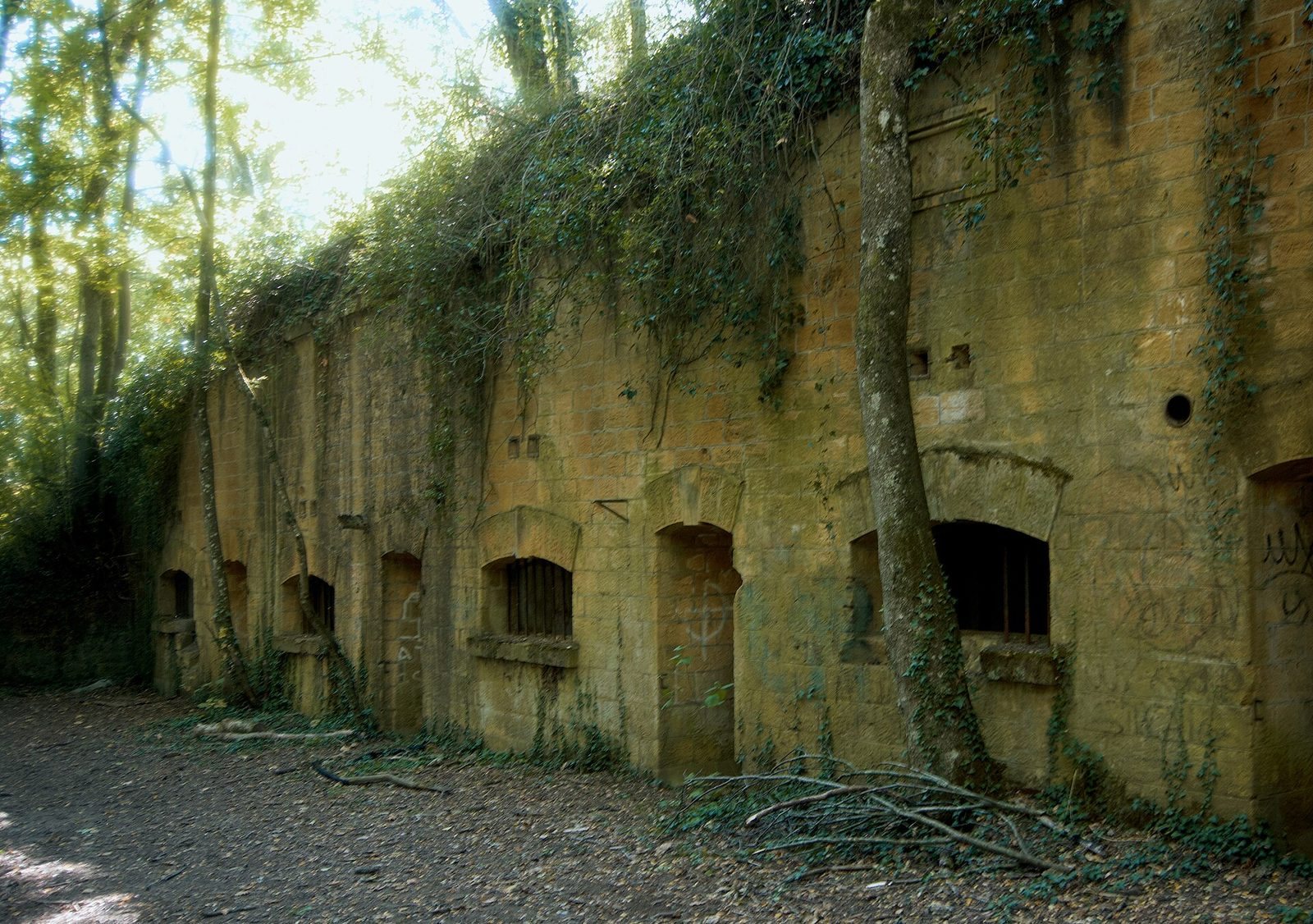
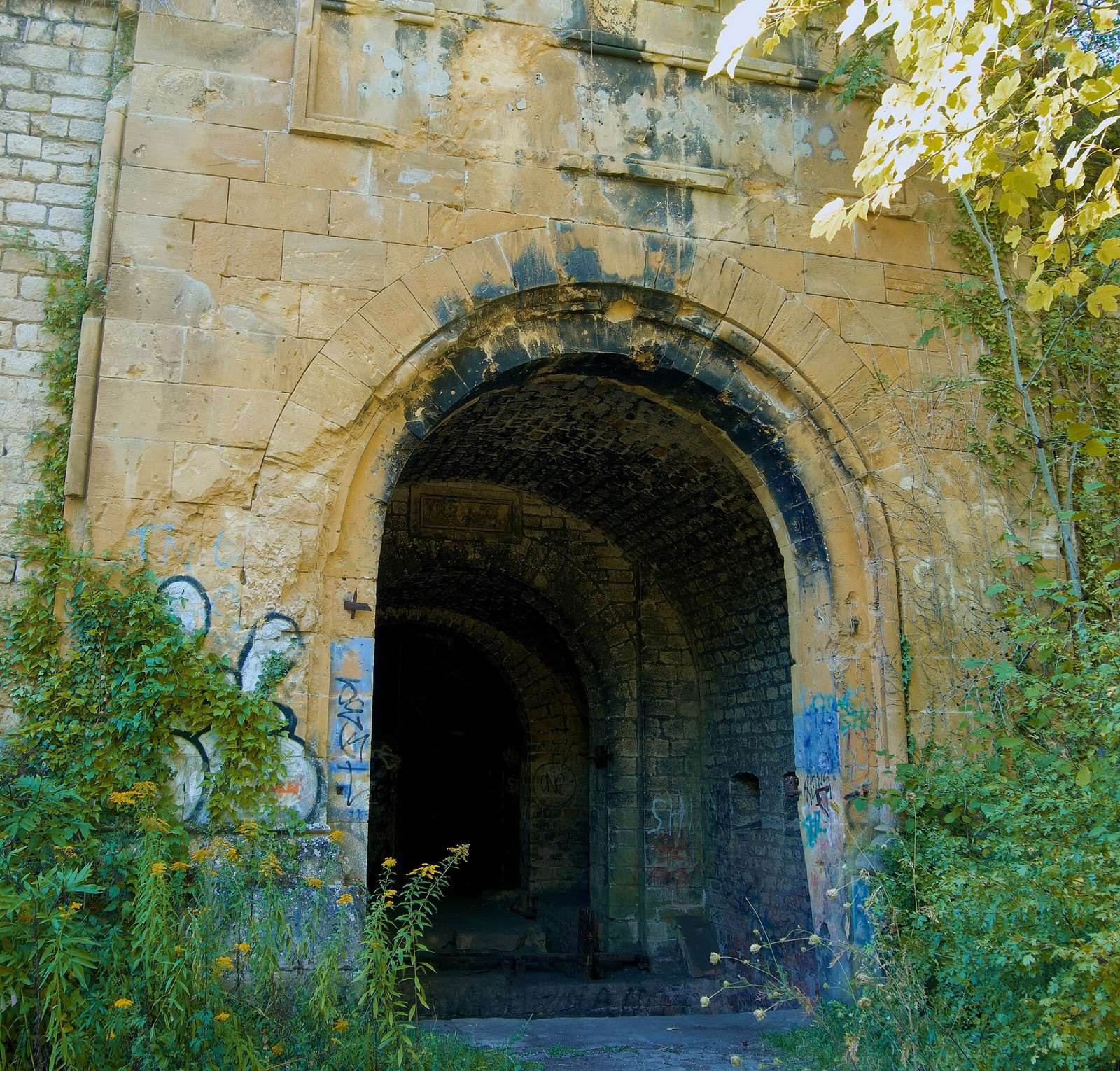
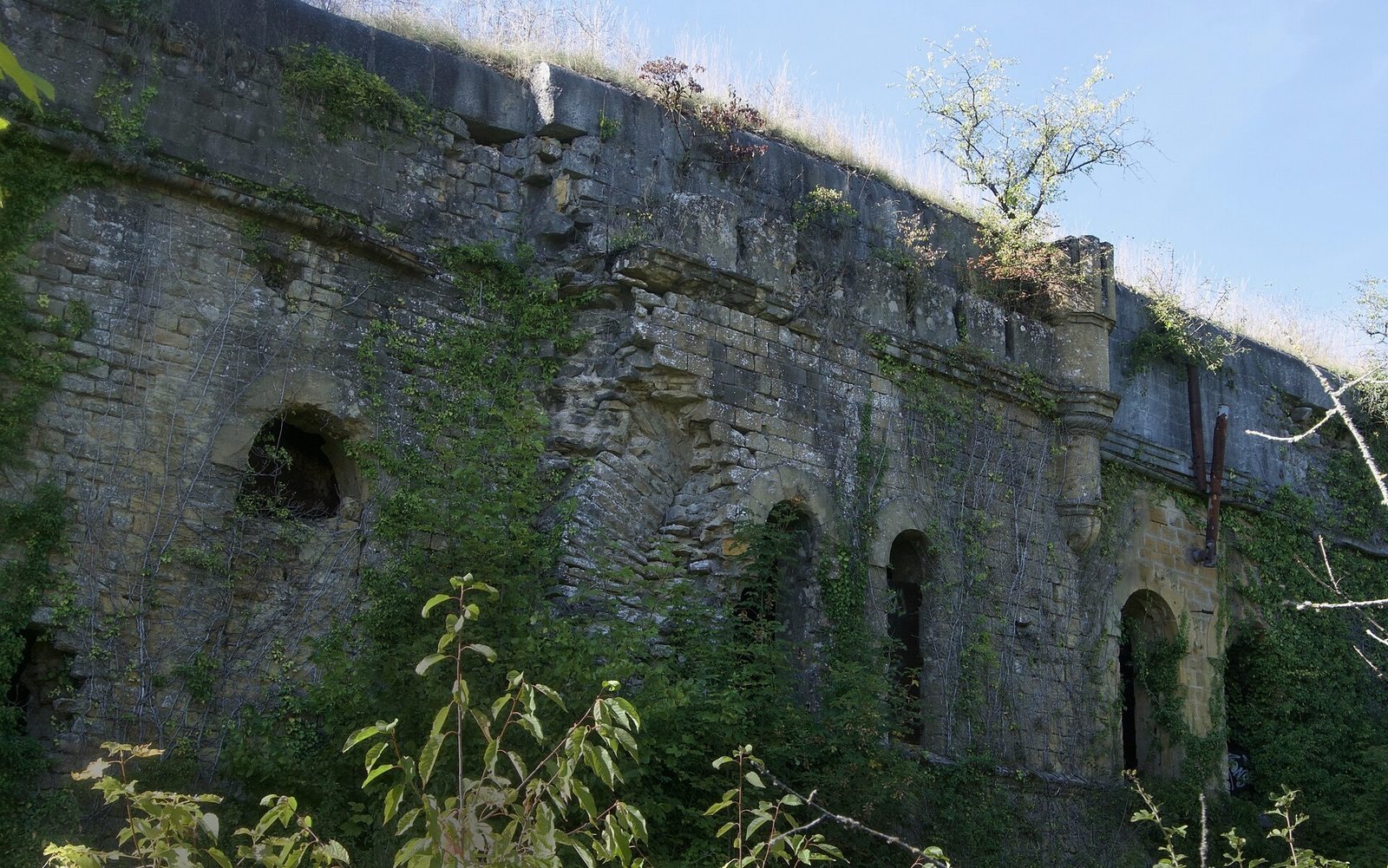
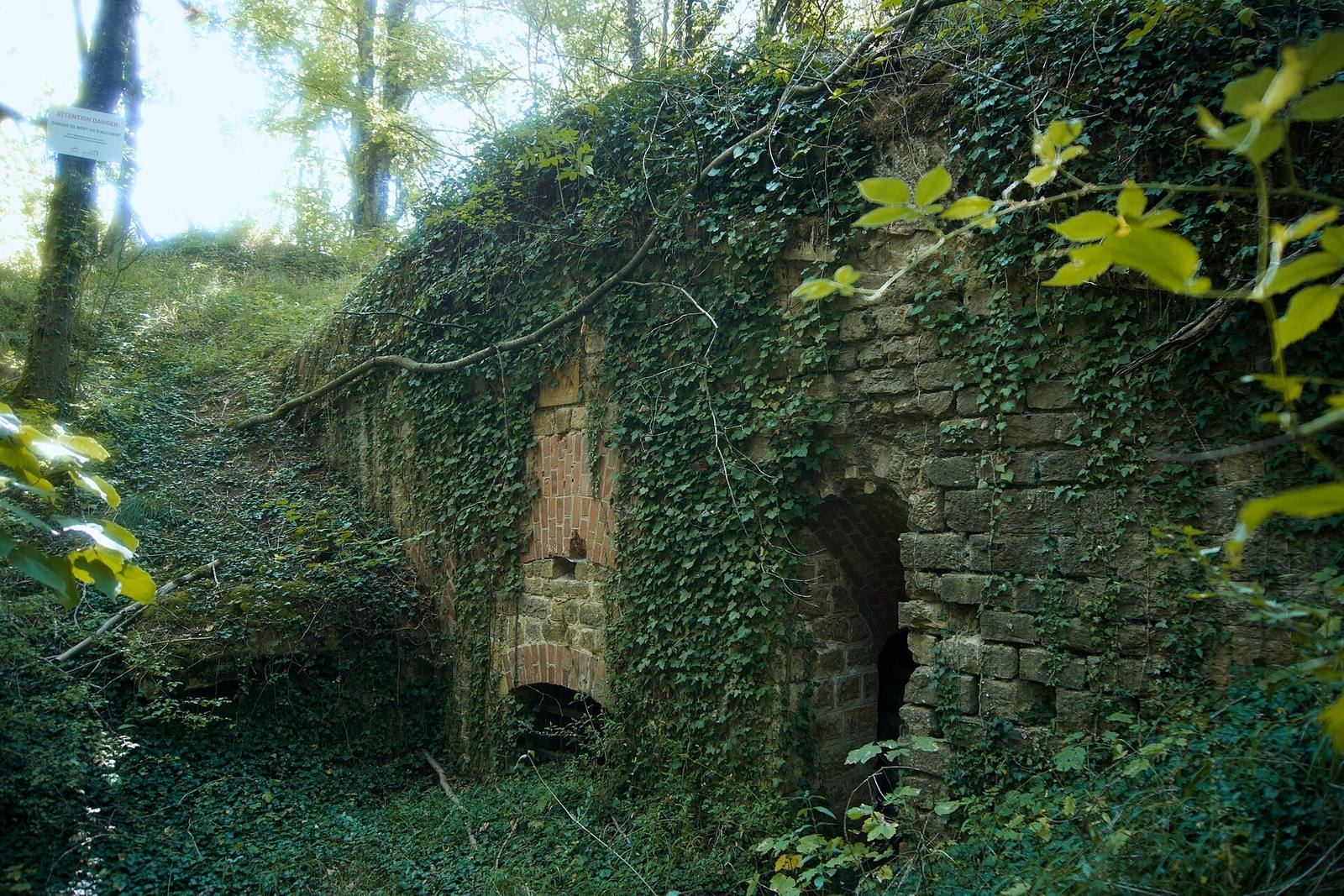
The complex extends across a plateau running west to east above Metz. Lessy Pass separates it from Fort de Plappeville. Covering 77 hectares, the site contains 72 buildings with a combined built area of 25,600 square metres, making it one of the largest complexes in Metz’s first fortified belt. Fort von Manstein stands at the western end, Fort Diou at the eastern end, and Fort Saint-Quentin, or Plateau Barracks, links them in the centre. Masonry and concrete works form part of the surviving fabric. Group-wide figures give a garrison of 600 men and an armament of 119 artillery pieces; these totals are distinct from the capacities assigned to individual forts. Bombardment in 1944 damaged a bastion at Fort Diou and scattered support buildings, while the buried works and most barracks withstood it comparatively well. On the night of 31 August to 1 September, two casemates, fortified chambers protected by masonry or earth, burned with manuscripts and books printed before 1501 from the Metz library, as well as German military supplies.
Principal works
Fort Diou
Built by the French between 1868 and 1870 and completed by the Prussians after 1872, Fort Diou was the only fortification in Metz designed by Séré de Rivières. Also called Ostfort, it has a trapezoidal plan, a deep dry moat, and projecting bastions, or corner platforms for guns. Its design allowed for 617 men and about 40 artillery pieces. A tower added in 1953 supported radio-relay transmission between the Strasbourg television transmitter and the national network. It also housed a temporary local television transmitter from 14 May 1955 until the regional transmitter at Luttange began operating on 31 July 1956.
Fort Saint-Quentin, or Plateau Barracks
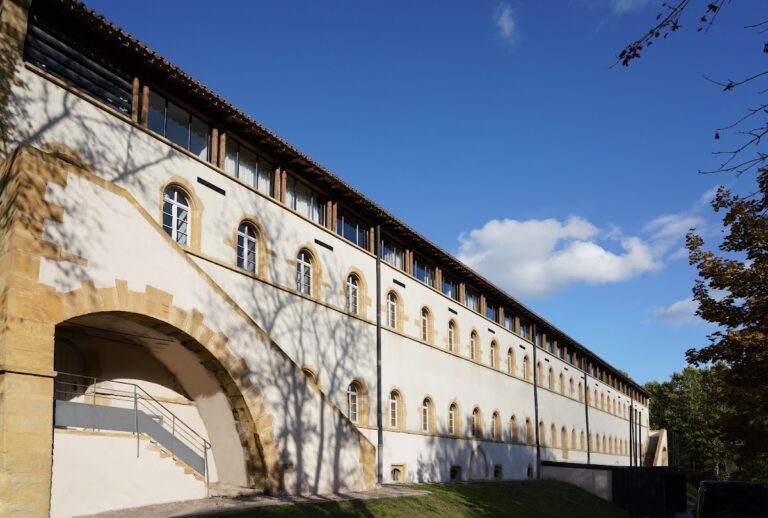
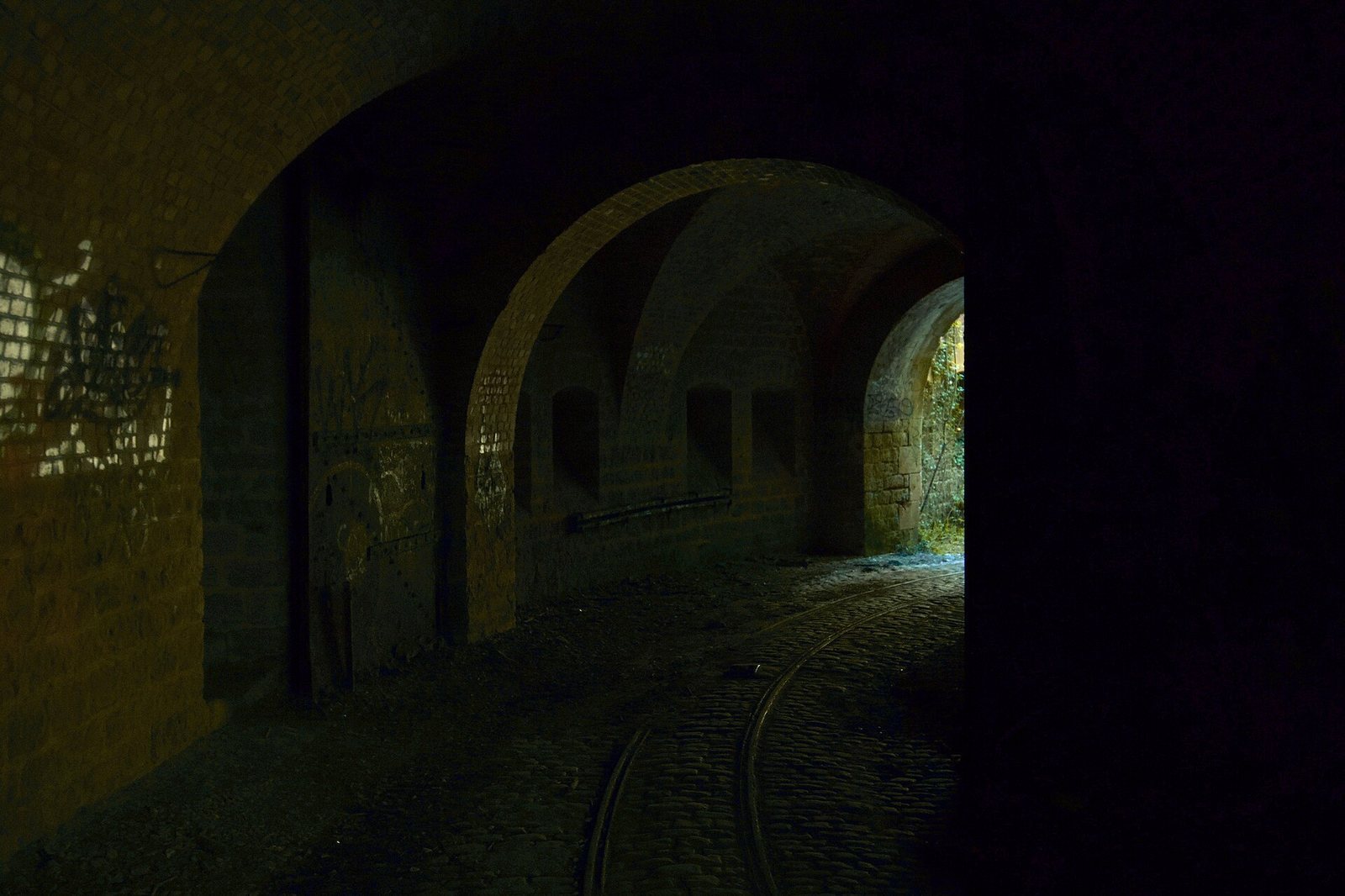
Built between 1872 and 1874, the central fort had moats to its north and south. Its main barracks was buried on three sides, and the complex included a powder magazine and several smaller forts. Protected passages connected the buildings, while a 60-centimetre-wide railway carried wagons loaded with equipment and ammunition. Ramps behind the protective walls allowed artillery to be positioned in the open.
Fort von Manstein
Built between 1872 and 1874, Fort von Manstein was intended to control the Moselle valley to the south and Lessy Pass to the north. Also known as Fort Girardin, it has a pentagonal plan, dry moats on three sides, artillery positions behind protective walls, and several observation turrets. Its planned capacity exceeded 600 men.