Saint-Bonaventure Basilica: A Medieval Franciscan Church in Lyon


Site at a Glance
- Rating
- 4.7
- Popularity
- Low
- Country
- France
- Primary era
- Medieval
- External website
- Open
- Eras represented
- Medieval, Early Modern, Modern
- Civilizations
- French
- Site type
- Religious
- Remains
- Basilica
On this page17 sections
History
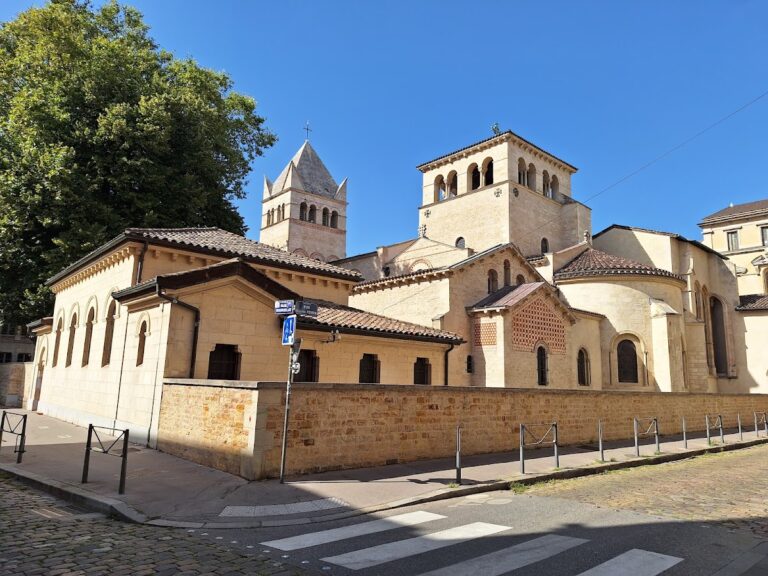
Saint-Bonaventure Basilica is a Roman Catholic church in Lyon, France, whose medieval Gothic fabric developed from a Franciscan convent established around 1226. It stands in the Cordeliers quarter of the Presqu’île and has served as an urban sanctuary rather than a parish church since 1971. Its name and the name of the surrounding quarter derive from the Cordeliers, the local name for the Franciscan friars, referring to the knotted cord they wore as a sign of poverty.
Franciscan origins and medieval expansion
The first convent occupied land bequeathed by the seneschal of Grolée. Its small church was laid out on a west-east axis. During the Second Council of Lyon, an important church council held in 1274, Cardinal Bonaventure of Bagnoregio died at the convent during the night of 14 to 15 July. The Franciscan theologian and cardinal, later known as the Seraphic Doctor, was about 57 years old. He was buried at the site, linking the church permanently with one of the order’s leading figures.
Around 1325, Jacques de Grolée, grandson of the original benefactor, ordered the construction of a larger church because the first convent church had become too small. Work began at the apse and the two apsidal chapels, and Bonaventure’s remains were transferred into the new building. The unfinished church was consecrated on 18 September 1328 by Pierre de Savoie, archbishop of Lyon, and dedicated to Saint Francis of Assisi.
The church was extended northward between about 1450 and 1480. Jean de Pavie, an adviser and physician to Kings Charles VII and Louis XI, provided major financial support for the work. Completion followed around 1484, after which the church was dedicated to the recently canonized Saint Bonaventure. The building thereby preserved both its Franciscan origin and its growing association with the cardinal who had died there.
Trade confraternities and religious life
From the fifteenth into the sixteenth century, occupational confraternities established and financed chapels inside the church. These associations brought together lay Christians from particular trades. Alongside devotion to patron saints and prayers for their intercession, they provided mutual assistance through gifts, legacies, and collections. Their activity made the church a religious center closely connected with Lyon’s working and commercial communities.
The church also developed a long musical tradition. An earlier organ was apparently destroyed by Calvinist troops during the sack of Lyon’s churches in 1562, and the city council financed a replacement around 1592. A document of 1693 records a large instrument above the central portal, made by Alexandre Thierry and equipped with forty stops, five manuals, and a nineteen-step pedalboard. That organ and its gallery were later lost during the French Revolution.
War, revolution, and nineteenth-century restoration
In 1562, during the French Wars of Religion, the troops of François de Beaumont, Baron des Adrets, completely pillaged Lyon’s churches. The damage affected the church’s chapels and furnishings, including the chapel of Saint Nicholas, through which artillery was moved. That chapel was rebuilt in 1572. The choir was restored in 1607, but the appearance described in the early seventeenth century did not survive intact.
The French Revolution brought a more profound rupture. The convent and church were sold as national property after their furnishings had been plundered. For about ten years the building was used as stables, storage space, and housing. It returned to religious use around 1806 and was gradually repaired during the nineteenth century. Cardinal Joseph Fesch became associated with this period of renewal, as did the architect Claude-Anthelme Benoit, whose interventions later reshaped the principal facade.
The church was also caught up in the upheavals and environmental hazards of nineteenth-century Lyon. During the silk workers’ revolt of 1834, about ten workers were killed inside the building. In 1840, flooding from the Saône left approximately one metre of water within the church. These events formed part of a period in which the basilica’s religious function continued alongside the social and physical pressures affecting the expanding city.
The organ was rebuilt after the revolutionary loss by Joseph Callinet and inaugurated on 29 April 1845. It was moved in 1855 and modernized by Joseph Merklin in 1860. Further alterations followed from 1870, while expansion and partial electrification took place in 1885. An electric blower was added in 1912. A fire in 1928 damaged the blower and electrical equipment, leading Michel Merklin and Kuhn to reconstruct the instrument in 1936.
Urban change and modern status
Between about 1890 and 1900, adjoining houses and shops were demolished to widen Rue Grolée and clear the church. The last building attached to the basilica was removed in 1975. The church is the only surviving medieval building in the northern part of Lyon’s 2nd arrondissement after the creation of Rue Impériale, now Rue de la République, and the redevelopment of Place des Cordeliers under the Second Empire by prefect Claude-Marius Vaïsse.
Under the French separation laws of 1905 and 1907, ownership of the church and its furnishings passed to the City of Lyon. The building was listed as a historic monument in 1927 and forms part of the Historic Site of Lyon included on the UNESCO World Heritage List. Pope Francis elevated it to a minor basilica on 28 September 2019.
During the German retreat on 2 September 1944, the destruction of nearby Pont Lafayette with heavy explosives shattered much of the basilica’s stained glass. Nine windows were beyond repair, while surviving nineteenth-century windows were retained, sometimes after restoration. The nine lost windows were replaced between 1945 and 1965. More recent work included restoration campaigns in 2005 and 2017 to 2018, followed by comprehensive work on the main facade in 2022 to 2023. The restored facade was inaugurated by Mayor Grégory Doucet on 17 October 2023.
The basilica continues to have a Catholic institutional and cultural role in Lyon. It gathers the city’s Catholic scouting movements and hosts inter-scout meetings and adoration. Its organ was restored in the early 2020s under the direction of Michel Jurine and his team, then blessed and inaugurated on 14 October 2023 by Olivier de Germay, archbishop of Lyon.
Remains
Saint-Bonaventure Basilica has an unusual southward orientation for a Gothic church, unlike its west-east-oriented predecessor. Its basilica plan consists of a higher central nave flanked by lower side aisles, with rib vaults and no transept. The church measures 72.50 metres in length. Its original width across the nave and aisles was about 25 metres, but the addition of approximately seventeen side chapels increased the width to about 35 to 37 metres. The nave rises approximately 17.50 metres, while the side aisles reach about 10.50 metres.
Medieval structure and interior
Eighteen octagonal columns carry the transverse arches and vaults. Their eight sides correspond to the loads generated by the vaults, and they are built from naturally light-yellow stone blocks of varying sizes. The columns, pointed arches, and transverse arches have no capitals. Small platforms remain from the wooden centering used during construction, and the same centering was reused for the vaults, producing their uniform dimensions.
The restrained interior reflects Franciscan ideals of poverty. The apse contains five tall windows, each divided into two lancets. Their lower sections were lengthened in the nineteenth century, and their southward position allows daylight to move across the church, reaching the western side aisle before the eastern one. Additional two-lancet windows light the upper nave. Clear glass fills the windows on the Rhône side, while glazing on the Saône side includes twentieth-century work by Louis Charrat and Joséphine Lamy-Paillet.
Facade
The medieval facade was originally plain and covered with plaster over rough stone masonry. Its principal decoration consisted of a central portal, two side portals, and a rose window with tracery arranged as six circular units around a central circle. Benoit transformed the front between 1858 and 1860 by placing a second facade of regularly coursed, high-quality stone blocks approximately 50 centimetres deep over the earlier work.
The remodeling raised the central gable by about ten metres and added a new slate roof over the first bay. It also introduced a smaller rose window, half-engaged side pinnacles, a crocketed roof edge and cross, enlarged buttresses, balustrades, heraldic devices, and crocketed pinnacles. Statues of Saint Bonaventure and Saint Anthony of Padua stand on either side, on consoles decorated with angels bearing their initials on shields.
The deeper ashlar facing altered the main portal. Its architrave and archivolts were redesigned with eleven slender colonnettes rather than six, and the former tympanum was replaced by glazed tracery containing a central statue of the Virgin Mary by Joseph-Hugues Fabisch. Later extensions to both sides added roof balustrades, small angel consoles, and pinnacles. Rooms for pastoral meetings and a secretariat remained on the Rhône side, creating an asymmetrical arrangement.
Confraternity chapels
Saint Matthew Chapel
The former Saint Matthew Chapel was founded and built in 1623 by the cloth-shearers’ confraternity. It opens through the basilica’s only major semicircular arch, framed by sculpted pilasters, and displays the confraternity’s emblem of large shears. Its retable, an ornamental structure behind the altar, was designed by Agnisetti and given by Abbé Marduel in 1852. Organized around a Pietà, it includes a Marian AV monogram. The chapel also contains a nineteenth-century altar and retable in Italian Renaissance or neoclassical style, a life-size early twentieth-century statue of Joan of Arc, and an image of Saint Elizabeth of Hungary by Charles Auguste Chavard. Old funerary slabs have been rearranged around the tombs.
Comb-makers’ Chapel
A chapel built by the comb-makers’ confraternity in 1567 retains a simple rib vault whose supports carry the four symbols of the Evangelists. Its nineteenth-century walnut altar relief by Fontan evokes Christ’s childhood in the workshop at Nazareth. A Neo-Gothic retable incorporates part of the former organ case and includes bronze statues of Saint Francis and Saint Peter of Alcantara. A seventeenth-century painting shows Saint Anthony of Padua speaking with the Christ Child. Near the entrance stands Fontan’s bronze statue of Saint Anthony, made in 1896, with the saint holding a lily and carrying the Christ Child. Opposite it is a reliquary designed by Benoit, containing small relics of Saints Bonaventure and Anthony.
Saint Joseph Chapel
The present Saint Joseph Chapel combines three former Gothic chapels whose dividing walls were removed in 1839. It has a direct entrance from Rue Grolée. Its marble altar and flamboyant Gothic retable date from 1893; the retable includes a central statue of Saint Joseph by Delorme, scenes from his life, and his entry into heaven. In the southern part, liernes and tiercerons, secondary ribs used in late Gothic vaults, form a central cross and a V-shaped pattern. An oil painting near the Rue Grolée entrance depicts the Adoration of the Magi and was copied from a work inspired by Jacopo Bassano. Scissors within a shell on the entrance arch refer to the tailors’ confraternity.
Merchants’ Chapel
A wealthy merchants’ confraternity from Troyes built another chapel between 1519 and 1538. Its elements were redesigned by Benoit around 1856. The flamboyant Gothic vault has a complex network of ribs, liernes, and tiercerons, with nineteen finely carved, slightly pendant bosses that were formerly gilded. A damaged nineteenth-century altar relief by Jean-Pierre Robert depicts the Nativity. The five-metre-high retable contains niches, angels, and a central Sacred Heart, with the four Evangelists at its corners. Faith and Hope appear near the entrance, while Charity is represented between the windows by a woman holding two children.
Former Saint Michael Chapel and baptismal chapel
The former Saint Michael Chapel, founded in 1497, now contains a nineteenth-century beige-stone altar without a retable, with traces of earlier gilding and floral decoration. Its oak group of the Baptism of Christ was sculpted by Antoine Cubisole in 1850 and restored in 2023. Saint John the Baptist pours water over the kneeling Christ.
The baptismal chapel has a floor of square limestone slabs with black quadrilobed insets. Its octagonal baptismal font represents new life, and its oak cover has relief ironwork restored in 2024. A boss over the entrance arch shows a hand holding scales, the emblem of the dealers’ confraternity. Five small pendant bosses and lancet-shaped ribs form four double leaves in the vault. Beyond a simple rib crossing, vault decoration survives in only four chapels: the baptismal chapel, the central part of the Virgin chapel, the Sacred Heart chapel, and the southern part of the Saint Joseph Chapel.
Stained glass
Three high axial windows contain two-lancet panels made by Émile Thibaud in the 1840s. Their square compartments hold circular scenes from the lives of Christ, the Virgin, and Saint Bonaventure. The vivid red and blue palette and thirteenth-century forms recall medieval Gothic glazing. A related three-lancet window with eight openings appears in the right apsidal chapel.
Two large windows made in 1854 from compositions by Louis Steinheil contain four lancets and eleven openings. Their Italian Renaissance-style scenes depict the Nativity, the Adoration of the Shepherds, and the Adoration of the Magi. Architectural perspectives, detailed clothing, Gospel quotations in Latin, foliage, acanthus, interlaced scrolls, and angels fill the compositions. Other nineteenth-century windows by Charles-Laurent Maréchal show David, Moses, Abraham, and Melchizedek beneath Gothic Revival canopies.
The nine replacement windows made between 1945 and 1965 form a twentieth-century ensemble of vivid colors, broad compositions, stylized figures, French captions, and low placement. Their subjects include the baptism of Clovis by Saint Remigius, the Annunciation, Saint Bonaventure at the Second Council of Lyon, Pius IX’s proclamation of the Immaculate Conception, episodes from Mary’s life, the Flight into Egypt, the Ascension, and the Crucifixion. Contemporary stained glass with French captions also fills the lower windows of the side chapels.
Organ
The present organ case dates from the instrument’s relocation in 1855. Its former central section was reused as the retable of the Saint Anthony of Padua Chapel. The organ now stands at the back of the choir and retains the tonal character established during the 1936 reconstruction. Restoration in the early 2020s renewed the leather of nine reservoirs, installed new fans, replaced 5,000 membranes and many wooden components, and changed the electrical transmissions to a digital system.
The work also renewed the keyboards, installed a computerized combination system, cleaned the pipes, and revoiced all 4,249 pipes while preserving the instrument’s 1936 aesthetic. The restored organ has 68 stops, three 61-note manuals, and a 32-note pedalboard.
Paintings, plaques, and textiles
Paintings associated with the basilica include François Lombard’s The Miracle of Saint Bonaventure, dated 1639, and Marco Benefial’s The Virgin on the Pillar, made around 1730. Other works include The Apparition of the Virgin, Saint Elizabeth of Hungary Caring for a Wounded Man by Auguste Chavard, Saint Anthony of Padua, The Appearance of the Christ Child to Saint Anthony of Padua, Pierre Lagarde’s Christ and the Samaritan Woman from 1863, a seventeenth-century Adoration of the Magi, and The Guardian Angel. The seventeenth-century Descent from the Cross was stolen on 15 February 2002, while Saint Francis Xavier Shown a Map of China is missing.
The church preserves a fifteenth-century funerary plaque for Simon de Rovedis, called de Pavie, commemorating his religious foundations. Fourteenth-century plaques for the d’Huon, de Barral, and de Vareys families, together with a plaque for Jean Juge, are gathered in the Joan of Arc Chapel. A gilded-silver monstrance made by Thomas-Joseph Armand-Calliat in 1858 is kept in storage. Between the central and side portals hang four eighteenth-century Aubusson tapestries illustrating episodes from Saint Bonaventure’s life, including the presentation of his cardinal’s hat. An additional eighteenth-century Aubusson pastoral scene with three female figures is displayed in a first-floor meeting room on the Rhône side.
Nearby sites