Saymaluu-Tash State Nature Park: A High-Altitude Petroglyph Site in Kyrgyzstan
Site at a Glance
- Popularity
- High
- Country
- Kyrgyzstan
- Primary era
- Bronze Age
- Eras represented
- Bronze Age, Iron Age, Medieval
- Civilizations
- Scythian
- Site type
- Civic
- Remains
- Rock Art
On this page7 sections
History
Saymaluu-Tash State Nature Park is a protected natural area in Kyrgyzstan, known for a high-altitude petroglyph site whose images span several millennia. The carvings, made by pecking or cutting into rock, are generally thought to date from the early third millennium BC through the Middle Ages. Most are assigned to the Bronze Age, around 2500–900 BC, although precise dating remains disputed. Dating is considered more reliable from the first millennium BC, when the Saka-Scythian animal style, an artistic tradition centered on animal imagery, appeared.
Prehistoric and ancient traditions
Religious carving continued into the Iron Age, while Scythian and Turkic artistic traditions lasted into the Middle Ages. Only a small number of the images are attributed to the Iron Age or medieval period. The site was sacred to peoples of the Tien Shan and prehistoric Ferghana, and it remains sacred to Kyrgyz people, who associate it with spiritual and healing qualities.
People may have settled here between the eighth century BC and the first century AD, during the pre-Kyrgyz Saka-Usun period. The Saka and Usun were ancient Central Asian peoples; Saka religious practitioners used the site for sacrifices to a sun deity. Saka settlements also extended as far as Cholpon-Ata Bay. Religious beliefs associated with the site encompassed mountains, nature, totems, and solar images. The carvings may also have served as sacred offerings made by people from the lower valley.
Rediscovery and protection
Russian cartographers encountered the site in 1902 while surveying for a proposed road connecting a military camp between Jalal-Abad and Naryn. After hearing a shepherd describe “painted stones,” cartographer Nikolai Khludov examined the area with surveyors and reported the carvings to the Archaeological Society of Tashkent. The society organized a further expedition, but the site then received little attention until an excavation in 1950 led to the images being identified, numbered, and dated. The Institute of Archaeology in Bishkek continues to investigate the area intermittently.
On 29 January 2001, the Kyrgyz National Commission for UNESCO proposed the site for World Heritage listing as “Saimaly-Tash Petroglyphs,” under cultural criteria (iii), (iv), and (vi). It remains on UNESCO’s Tentative List, an inventory of potential World Heritage nominees rather than a list of inscribed properties. Saymaluu-Tash State Nature Park was established in May 2001.
Remains
The park covers 320.072 square kilometres. The petroglyph site lies at about 3,200 metres above sea level in two high valleys of the Fergana Range, divided by a low ridge, about 30 kilometres south of Kazarman. Rivers including the Kyldoo, Kök-Art, and Kongur-Döbö rise in the range and flow through the park into the Naryn basin. Archaeologists divide the site into Saymaluu-Tash 1 and Saymaluu-Tash 2; the first extends for about three kilometres. More than 10,000 rocks bear images, many set in long deposits of stones and sediment left by glaciers.
Animal imagery and hunting
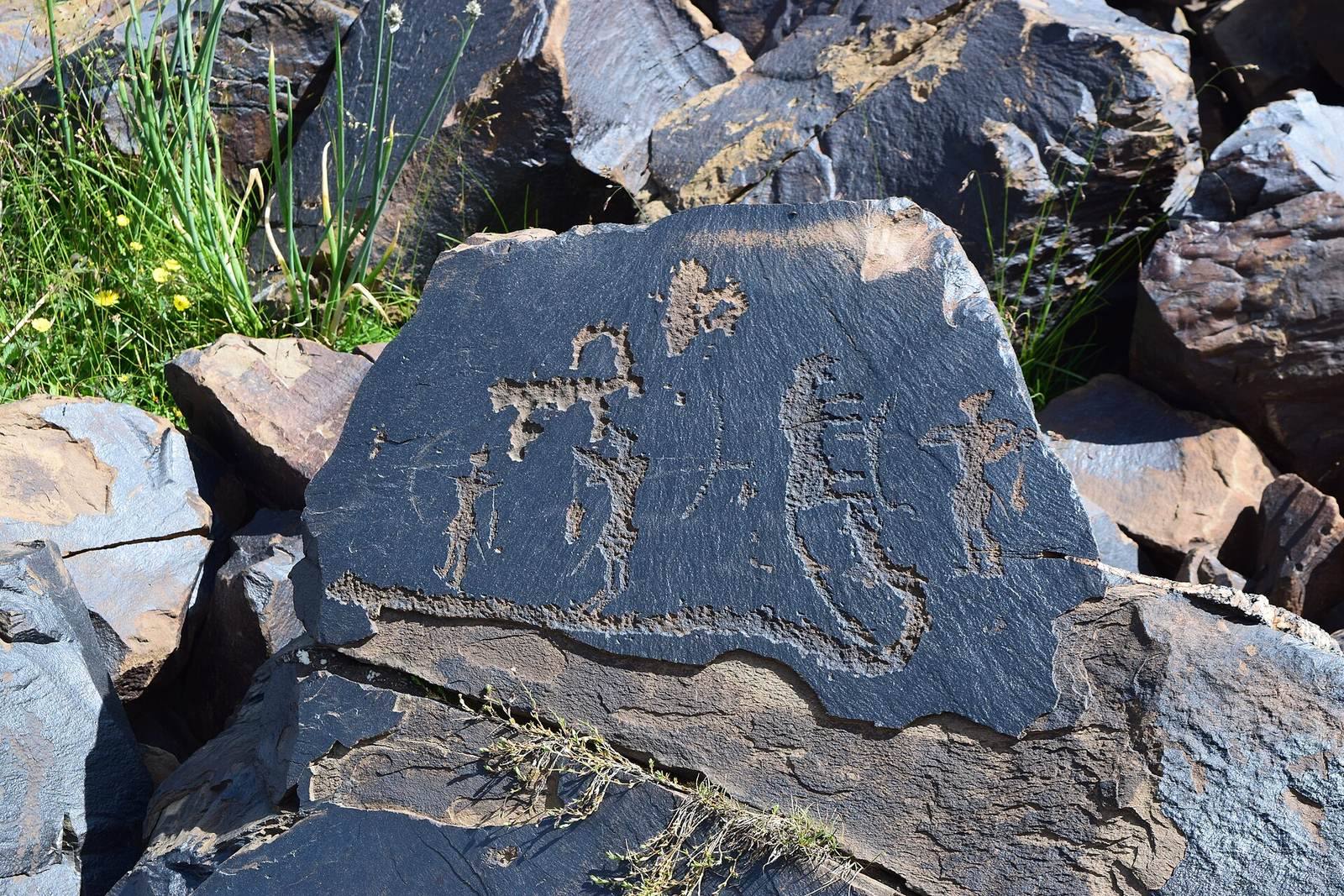
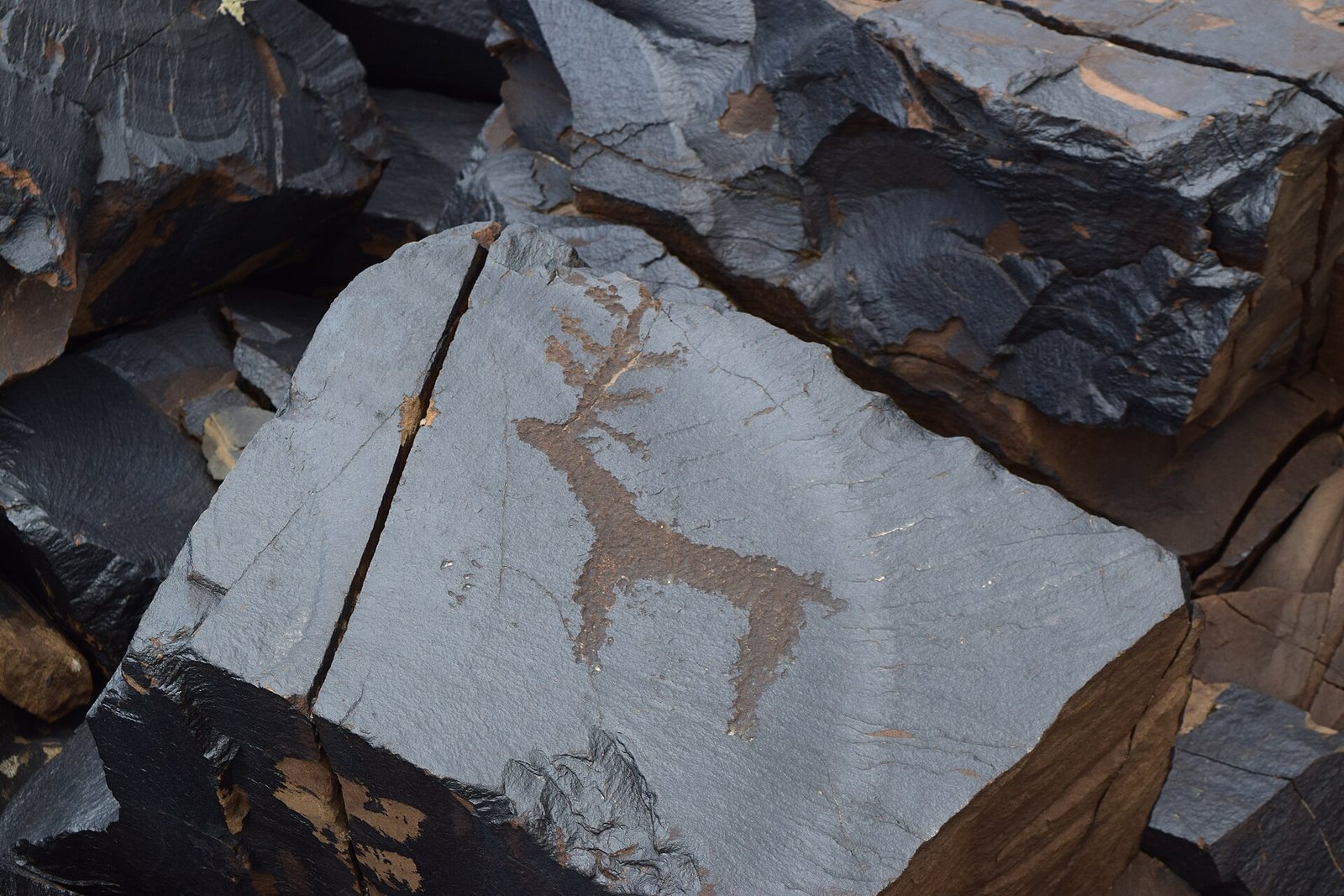
Ibex, horses, lions, and wolves appear among the black-and-white images pecked or carved into rock, including basalt covered by a dark, glossy coating called desert varnish. Long-horned ibex are especially frequent in images attributed to the Turkic period. Hunting scenes show deer with large antlers pursued by people carrying bows and arrows, clubs, or spears. Other carvings portray conflicts between individuals or small groups.
Ritual, farming, and transport
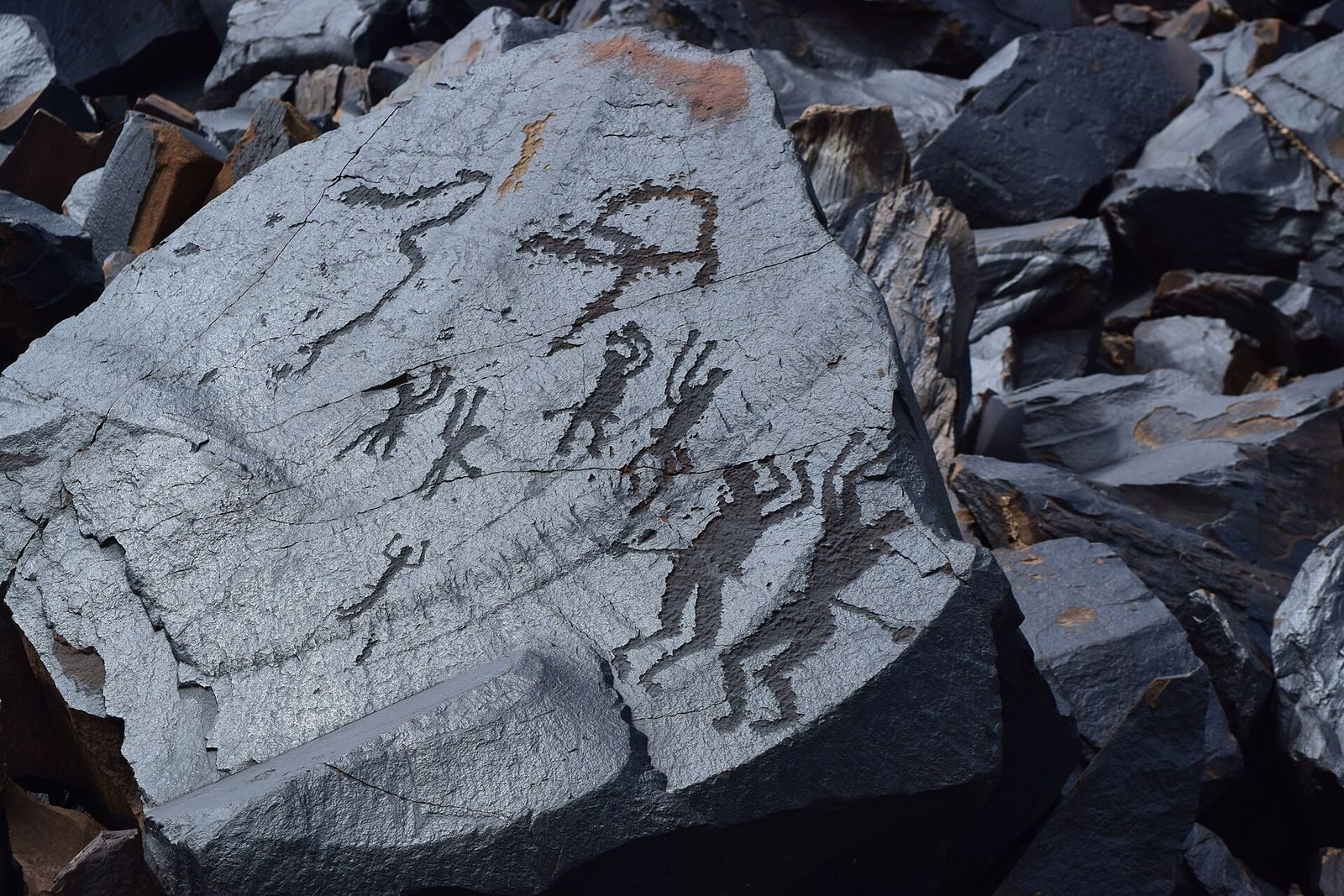
Other scenes depict farming, ritual dances, the sun, sexual activity, and wavy lines understood as representing river flow. Images sometimes interpreted as ploughing are more commonly understood as chariots with two small wheels. Many other stones show chariots drawn mainly by cattle. Horses became prominent in the imagery only toward the end of the Bronze Age, when people learned to ride them effectively. Bronze Age carvings also include human-shaped figures with solar heads, associated with an early sun cult, and bulls with elongated horns linked to bull worship. Some images may have expressed gratitude to mountain spirits after a successful harvest or hunt.
Lake and associated finds
Saymaluu-Tash 1 includes a small lake where shamans, or ritual practitioners, may have carried out sacred rites. Neolithic petroglyphs from the site are displayed at the Kyrgyz State Historical Museum.