Ruth’s Church: A Romanesque Parish Church in Denmark
Site at a Glance
- Popularity
- Low
- Country
- Denmark
- Primary era
- Medieval
- Eras represented
- Medieval, Early Modern, Modern
- Civilizations
- Danish
- Site type
- Religious
- Remains
- Church
On this page14 sections
History
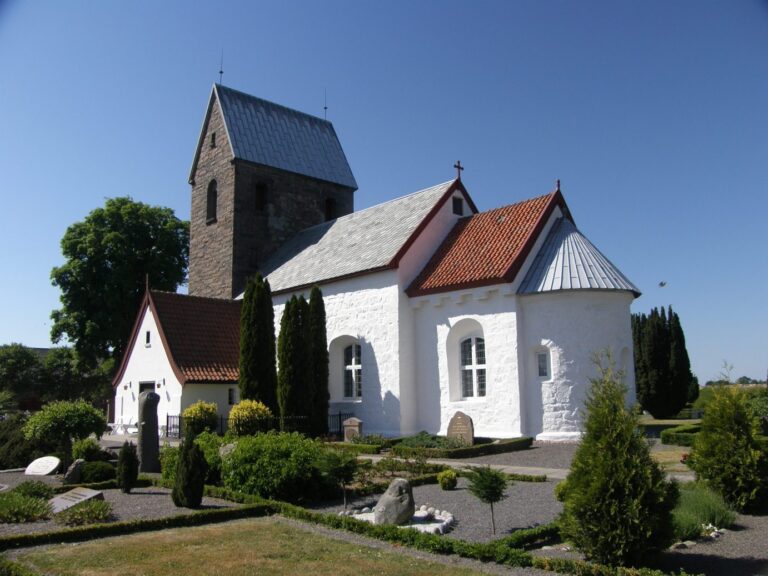
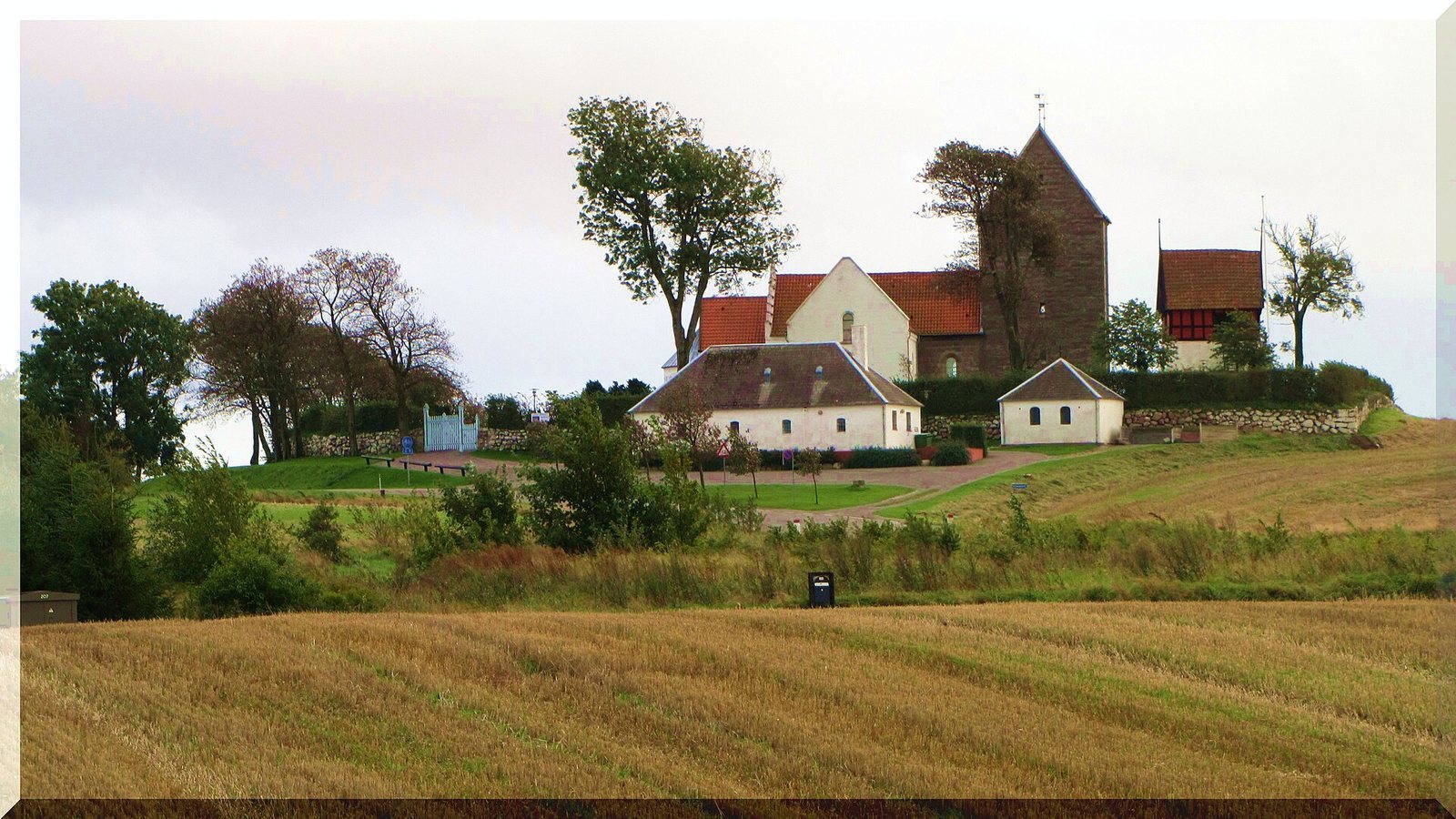
Ruth’s Church is a parish church in Rutsker, Denmark, built around the transition to the 13th century in the Romanesque style, a medieval architectural style. It was first dedicated to St Michael, a high-ranking angel venerated in Christian tradition, perhaps in reference to the church’s elevated position. That position also made the church a sea mark.
Medieval origins and names
The church appears as St Michael’s Parish in 1490. The form Røs Kirke was written down the following year; “Røs” may come from a word meaning a heap of stones. The church later lent its name to Rutsker Parish. In 1621 it was called ecclesia Rutziana. In 1671, teacher Rasmus Pedersen Ravn interpreted the name as Ruth’s Church, linking it to Ruth the Moabite, a biblical figure whose story is told in the Book of Ruth. That interpretation became established.
Alterations and parish life
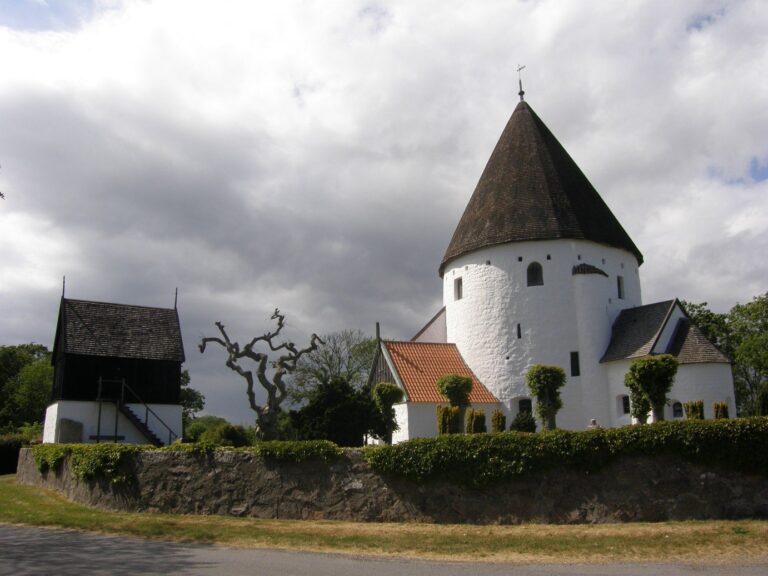
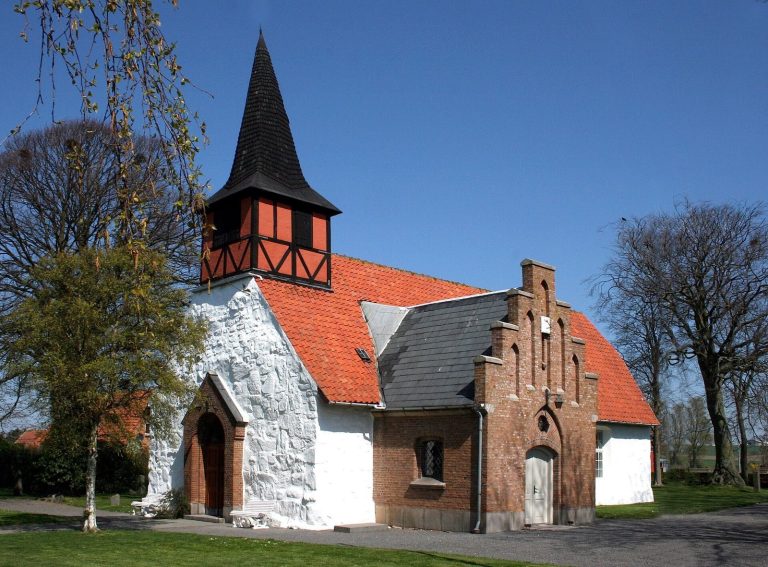
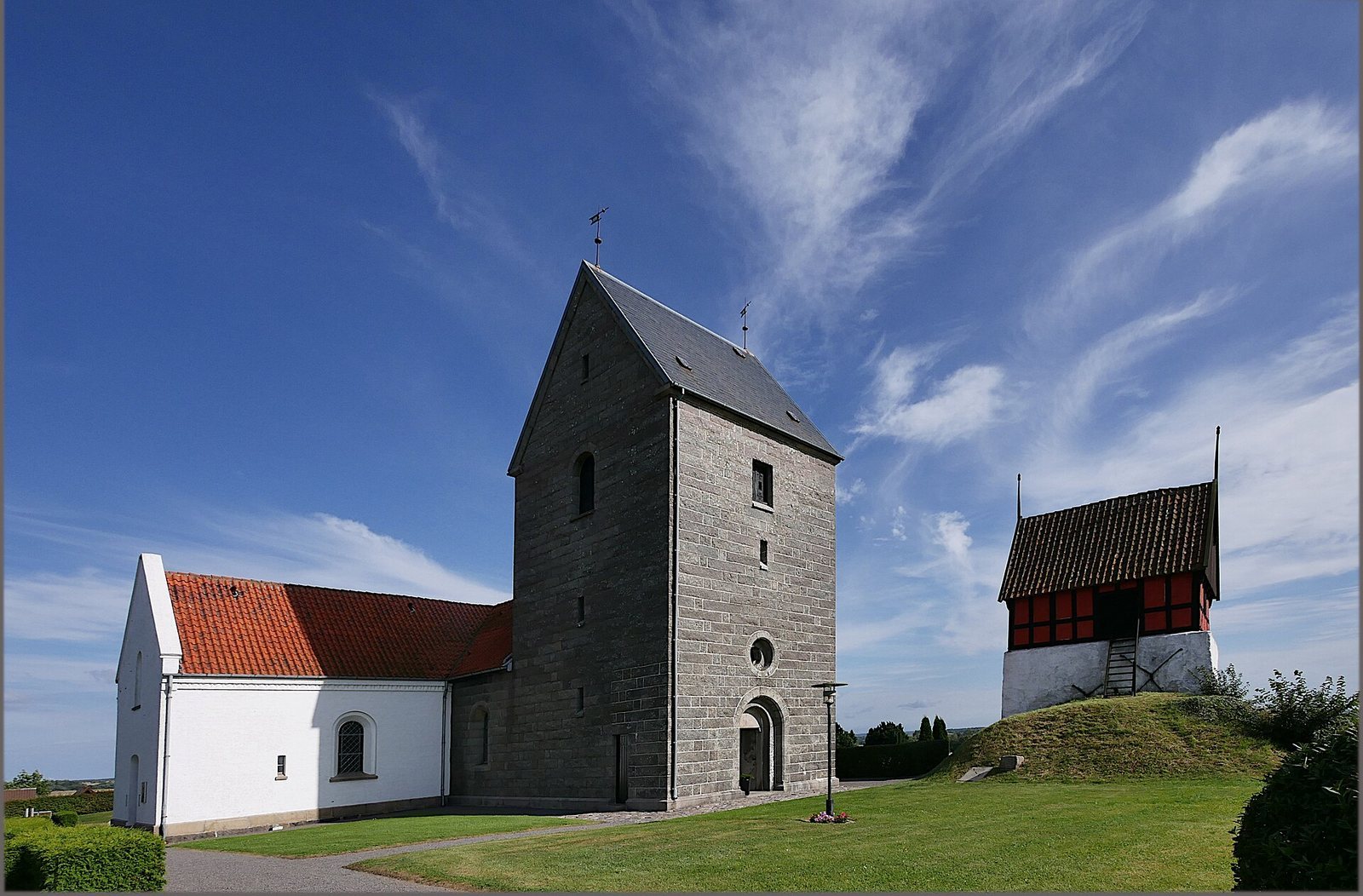
A tower at the west end and a porch on the south side were added during the Romanesque period. A north-side extension followed in 1877. In 1886, the old tower, the nave’s north wall and the porch were taken down. The nave was lengthened three metres to the west, and a new tower was built to serve as the entrance. The churchyard’s freestanding bell tower, built in the second half of the 16th century, ceased to serve its former purpose after its bells were moved into the new church tower in 1886.
By at least 1600, Rutsker’s pastor also served Hasle Church. Povl Ancher, one of the parish’s best-known pastors, is associated with 1658, when insurgents opposing the Swedish occupation gathered at his rectory in Hasle. Frescoes in the chancel vaults came to light in 1908 and were restored in 1930. Ruth’s Church is a Lutheran parish church, belonging to the Protestant tradition that developed during the 16th-century Reformation. It is part of the Evangelical Lutheran Church in Denmark and the Diocese of Copenhagen, a regional church district.
Remains
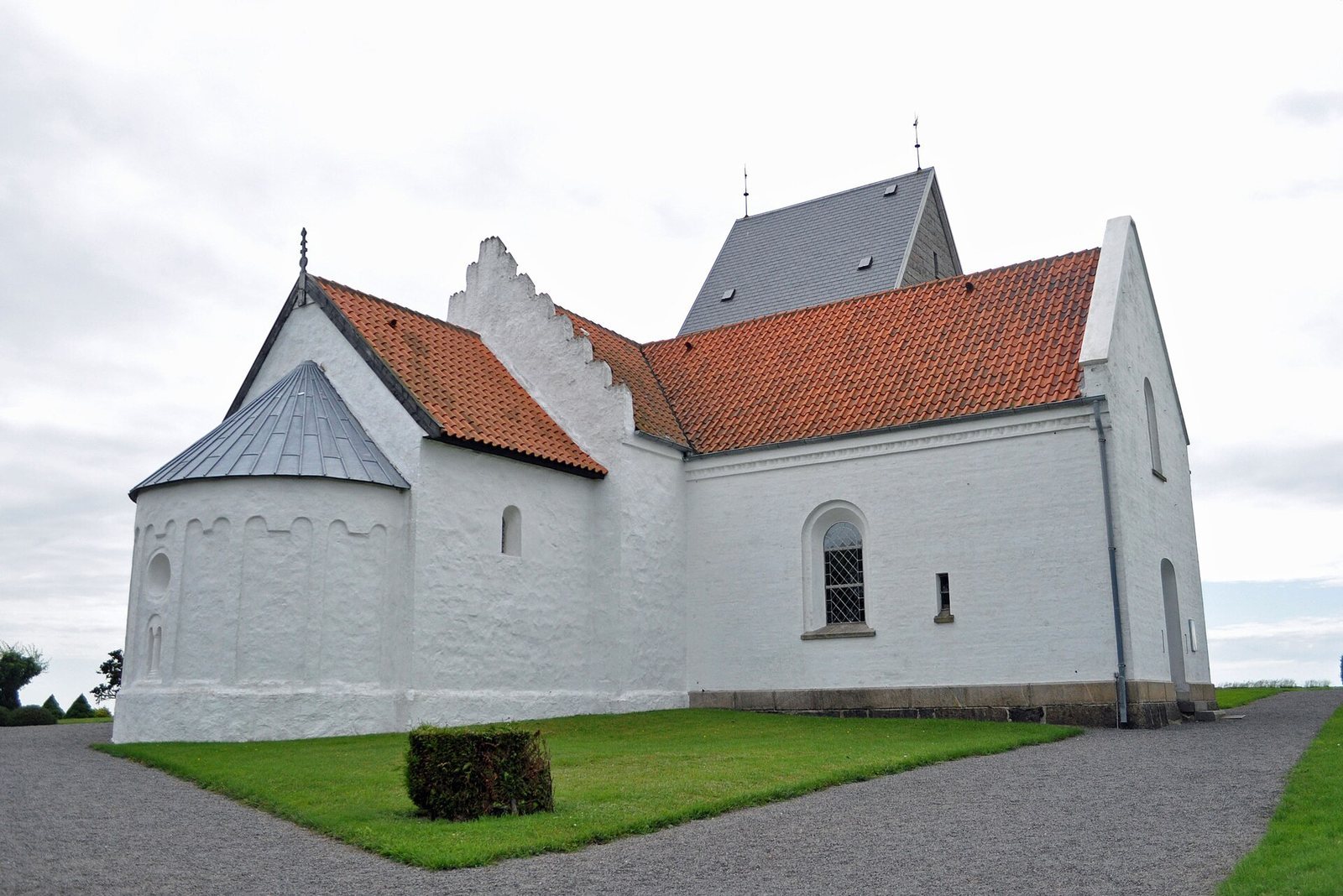
The church stands on a hill 130 metres above sea level, the third-highest point on Bornholm. It is described as the island’s highest-sited church and, with Øster Nykirke, among Denmark’s highest. The hill affords views across much of northern Bornholm and toward Sweden’s southern coast. The church’s original plan comprised a rounded apse, chancel and nave. The apse, chancel and nave’s south wall survive from the original building, while the present west tower provides the entrance.
Church building
Apse
The apse, the rounded end of the church, has a hemispherical Romanesque vault. Its exterior is ornamented with shallow vertical pilaster strips, a horizontal band of small arches and a decorative niche containing a column.
Chancel, nave and entrance tower
The chancel, the area around the altar, has a late-15th-century rib vault, a ceiling supported by intersecting ribs, in place of its original timber roof. The nave, the main body of the church, retains a timber roof. Niches for side altars sit on either side of the chancel arch in the nave’s east wall. In the west tower, the entrance hall has a barrel vault, a continuous arched ceiling. The north-side extension opened into the nave across its full height and width.
Freestanding bell tower and bells
Tower
The two-storey freestanding bell tower is probably the oldest on Bornholm. Its lower storey is built of stone and has a barrel-vaulted ceiling; the bell stage above is timber-framed. It has one doorway and was not used as an entrance to the churchyard.
Bells
Two bells transferred to the church tower are described by their size and casting. The larger is 100 centimetres in diameter and was cast in Lübeck by Matthias Benninck in 1580. The other measures 67 centimetres across and was cast in Copenhagen by Felix Fuchs in 1631.
Paintings and furnishings
Chancel frescoes
The chancel’s late-Gothic vaults carry frescoes, paintings made on wet plaster, arranged as medallions of the four evangelists, the figures traditionally associated with the four Gospels. Renaissance-style scrollwork surrounds the medallions, drawing on a European artistic movement that revived interest in classical forms. Mark is represented by a lion, Matthew by an angel, Luke by an ox and John by an eagle. The date 1559 appears beside Matthew’s image, and fragments of the paintings also remain.
Altarpiece
A Renaissance-style altarpiece from about 1625 hangs in the tower’s entrance hall. Its crowning is missing. The two panels contain paintings dated 1753 by Heinrich Möhlen, with the Baptism of Jesus on the left and the Last Supper on the right.
Altar and baptismal font
The modern altar crucifix is positioned so that the round apse window remains visible. The Romanesque granite baptismal font is almost cylindrical. Its bowl, made in southern Germany in the second half of the 16th century, depicts the Annunciation, the biblical episode in which the angel Gabriel tells Mary she will bear Jesus. The pulpit and organ are modern.