Falkenstein Castle Ruin: A Medieval Hill Castle in the Black Forest
Site at a Glance
- Popularity
- Medium
- Country
- Germany
- Primary era
- Medieval
- Eras represented
- Medieval
- Civilizations
- Holy Roman Empire
- Site type
- Military
- Remains
- Castle
On this page8 sections
History
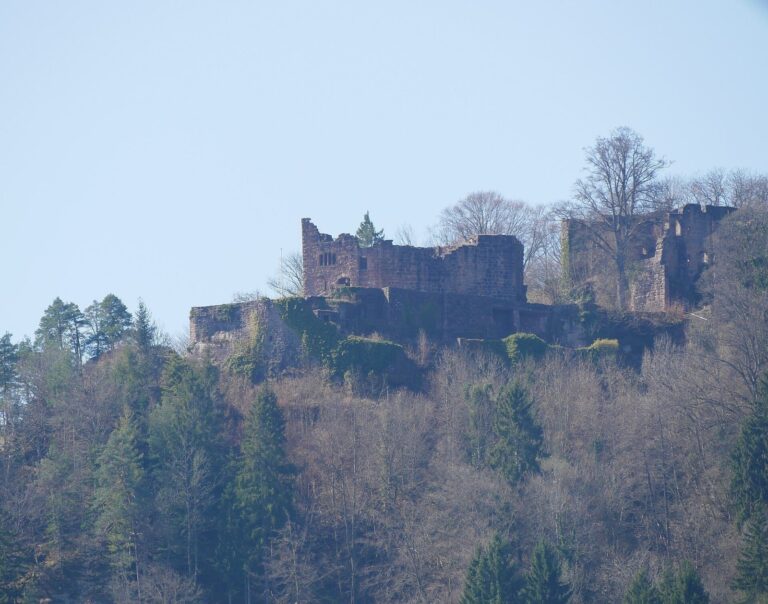
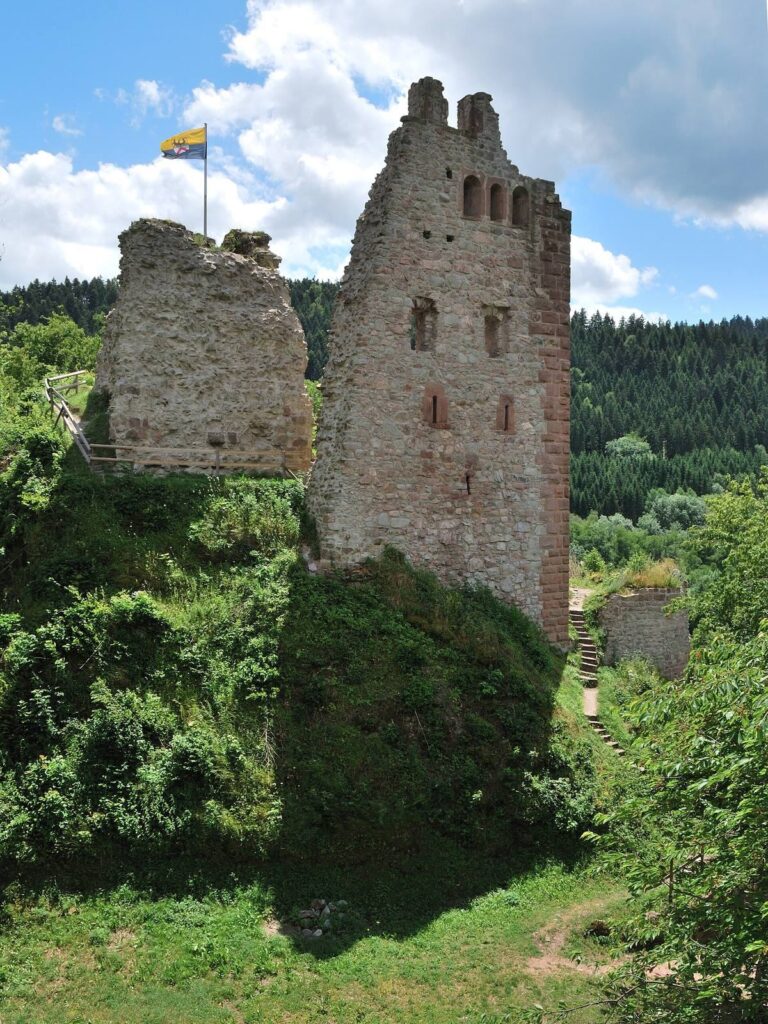
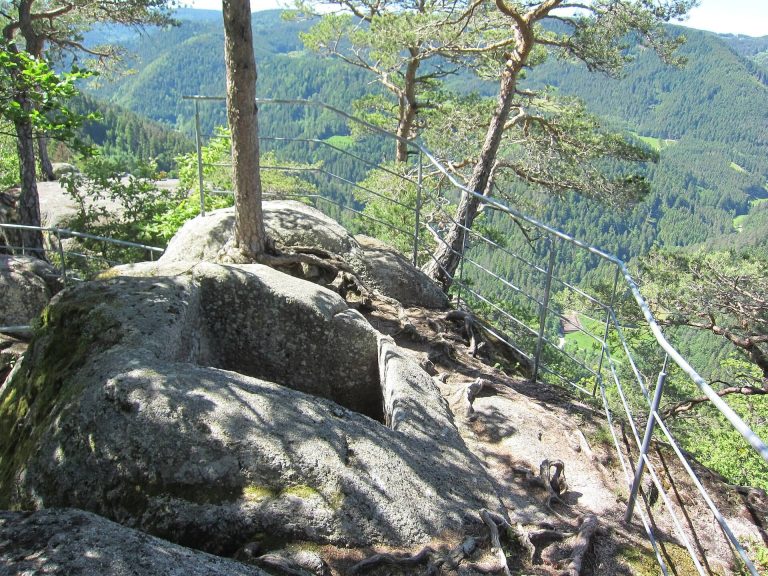
Falkenstein Castle Ruin is a medieval hill castle on a projecting spur in the Bernecktal, south of Schramberg in Baden-Württemberg, Germany. Dated to before 1030, it was probably built in the 11th century by a noble family from Kappel, near present-day Villingen-Schwenningen. It is regarded as the oldest castle in the Black Forest. Its lords belonged to the free nobility, whose members were not formally subordinate to another lord.
Origins and the 1030 record
The castle first appears in a written record in 1030 under the name Falchenstein. Duke Ernest of Swabia, described as a rebel and enemy of the Empire, fled there with his companion Werner von Kyburg. Both men were killed in a battle near the castle on 17 August 1030.
The Falkenstein family and changing lordship
In 1250, the Lords of Falkenstein bought neighboring Ramstein. At the start of the 14th century, the family divided into branches based at the two castles. Its members also held influential church offices, serving as abbots, who led monasteries, and as canons, clergy attached to cathedral and monastery chapters. Their posts included positions in Strasbourg and at St. Georgen, Reichenau, St. Gallen, and Einsiedeln.
Between 1444 and 1449, Jakob and Konrad von Falkenstein sold the castle and most of their lands to Count Ludwig of Württemberg. In the mid-15th century, Hans von Rechberg acquired Falkenstein and Ramstein, built Hohenschramberg, and established the lordship of Schramberg.
Destruction and later care
The castle was destroyed in 1491. In the 19th century, commercial councillor Arthur Junghans bought and renovated the ruin. The Falkenstein Citizens’ Association now cares for it.
The chapel
A parish at Valkenstein appears in records of the Diocese of Constance in 1275. Its chapel belonged to the Lords of Falkenstein and Ramstein as a church held under their rights and patronage, and was dedicated to Saint Erasmus. Swedish and Württemberg troops destroyed it in 1634 during the Thirty Years’ War, a major European conflict fought from 1618 to 1648. Reconstruction began in 1713, and Johann von Fugger, a suffragan bishop serving under the diocesan bishop of Constance, consecrated it in the mid-18th century. The chapel remained part of the Lauterbach parish until 1787 and was an important local pilgrimage destination.
Remains
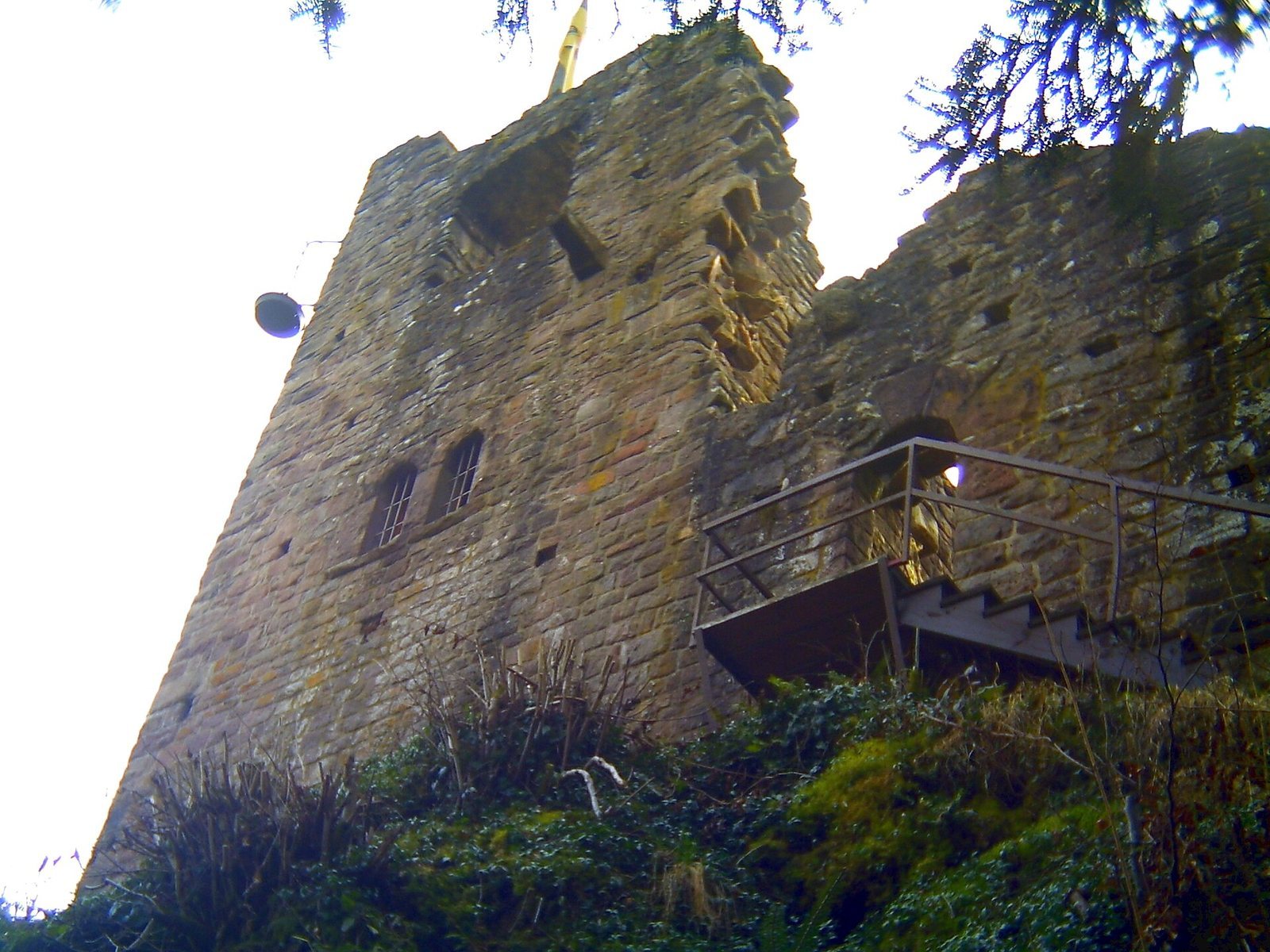
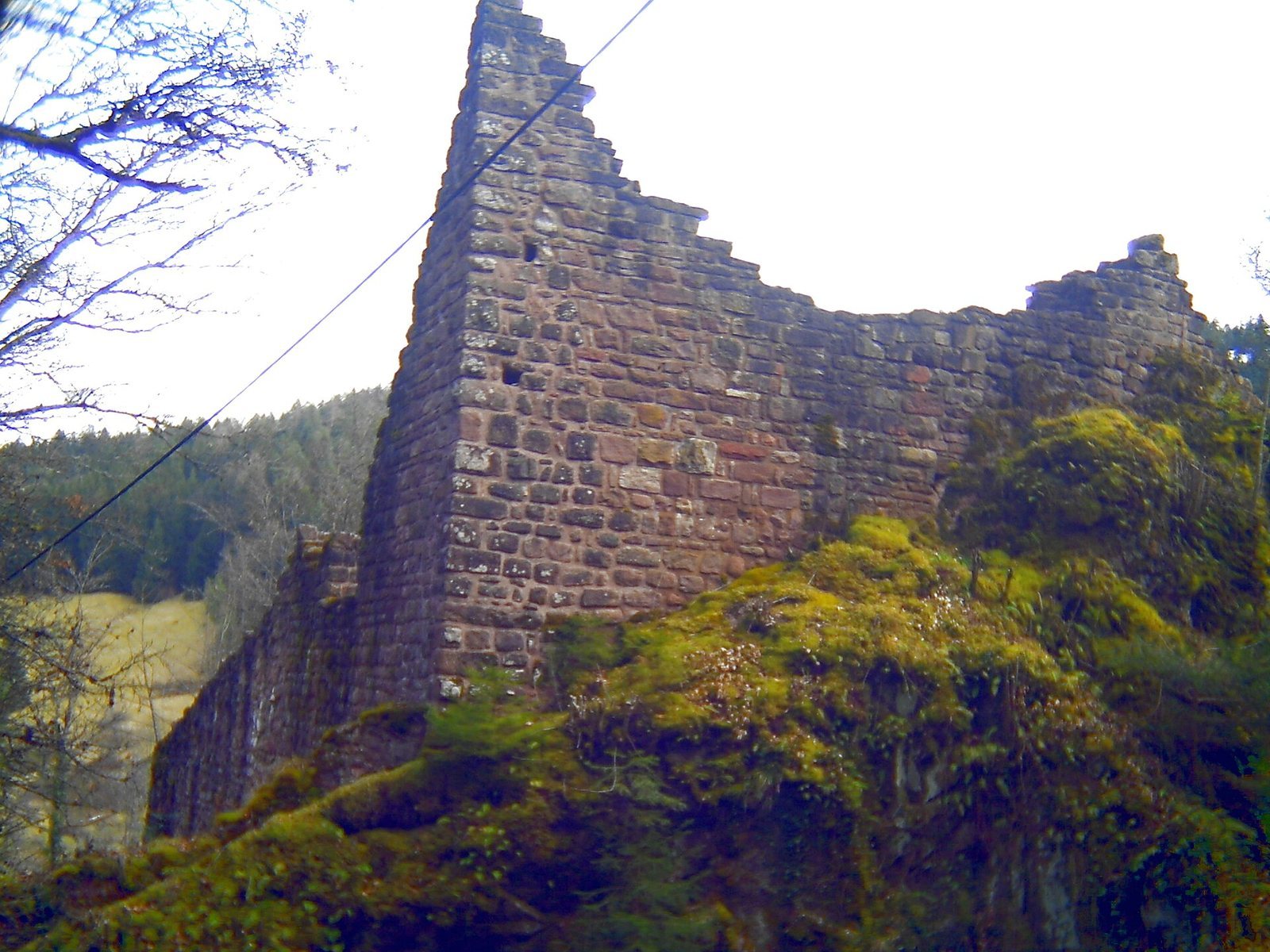
The castle remains occupy a projecting spur above the valley, while the Falkenstein Chapel stands across the valley below. The castle complex comprises an outer bailey, a residential tower, and an inner castle.
Castle complex
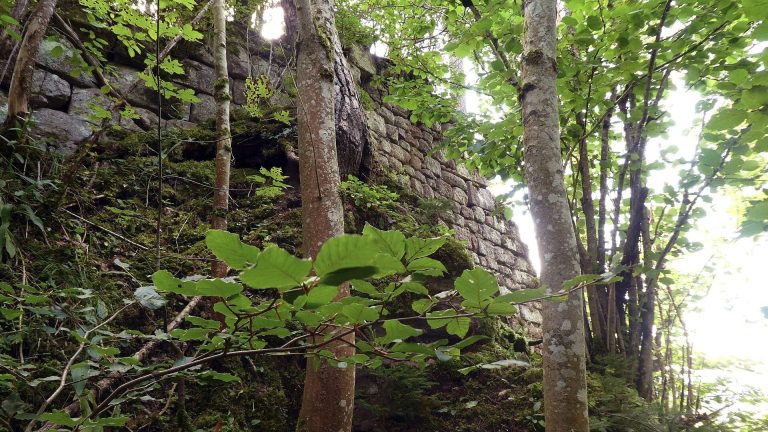
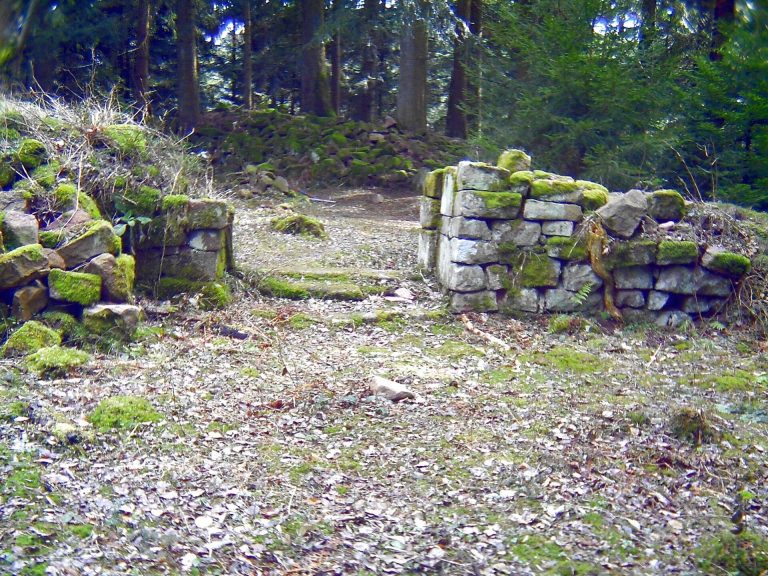
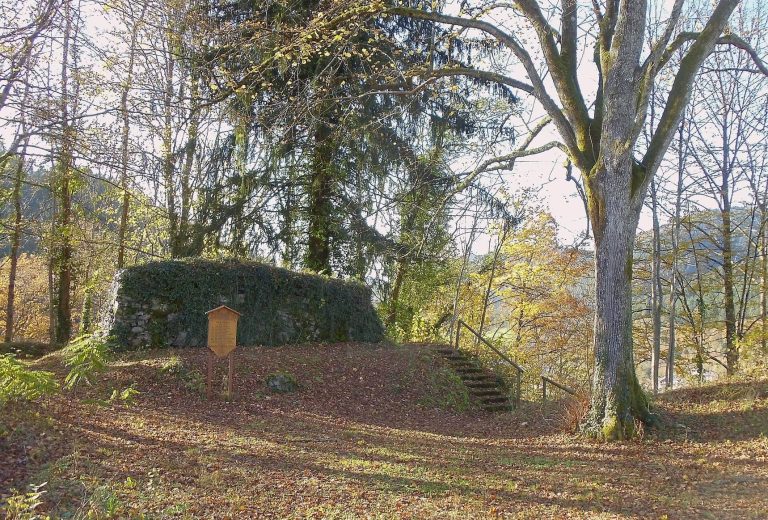
The outer bailey defended the castle from the valley side. Its surviving wall remains stand beyond a neck ditch, a defensive cut across the narrow spur; an old stairway passes through the ditch to the outer bailey. Within the inner castle, the remains of the great hall can still be traced.
Chapel and sculpture
The chapel contains a family crypt established between 1860 and 1863 as the hereditary burial place of the Counts of Bissingen and Nippenburg. In the chapel choir is the Falkenstein Lamentation, a sculpture dated to 1515 by Conrad Rötlin, an artist from Rottweil. The Late Gothic group depicts mourning for Christ after his death and is regarded as one of southern Germany’s most beautiful works of this kind.