Roter Turm: Chemnitz’s Medieval Defensive Tower
Site at a Glance
- Rating
- 4.4
- Popularity
- High
- Country
- Germany
- Primary era
- Medieval
- Eras represented
- Medieval, Early Modern
- Civilizations
- Electorate of Saxony, Holy Roman Empire
- Site type
- Military
- Remains
- Tower
On this page7 sections
History
Medieval origins
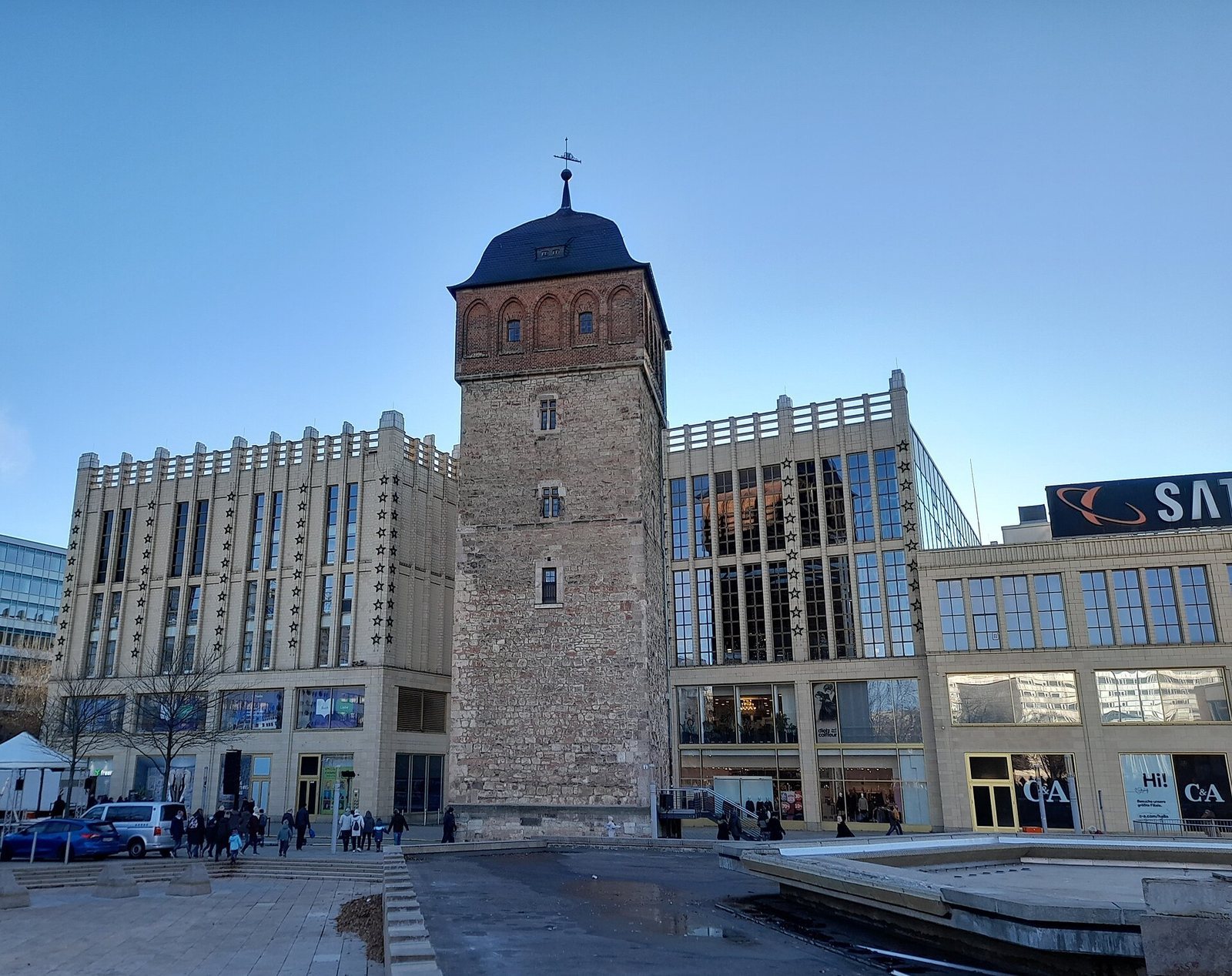
The Roter Turm is a medieval defensive tower in Chemnitz, Germany, built toward the end of the 12th century. It is the city’s oldest surviving building and a prominent remnant of its medieval past. Its lower section probably dates from the late 12th or early 13th century.
The tower initially protected nearby settlements as a tall defensive structure. It later became the seat of the city bailiff, a local official with administrative and often judicial authority. By about 1230, it had probably been incorporated into Chemnitz’s town fortifications.
Prison use and urban change
A brick upper storey was added in 1555. The tower and its annex were used as a prison until about 1900. This function spared the tower from demolition when Chemnitz’s fortifications were removed in the early 19th century. Among its prisoners were August Bebel, a leading German socialist politician, and Karl Stülpner, a Saxon hunter remembered as a regional folk hero.
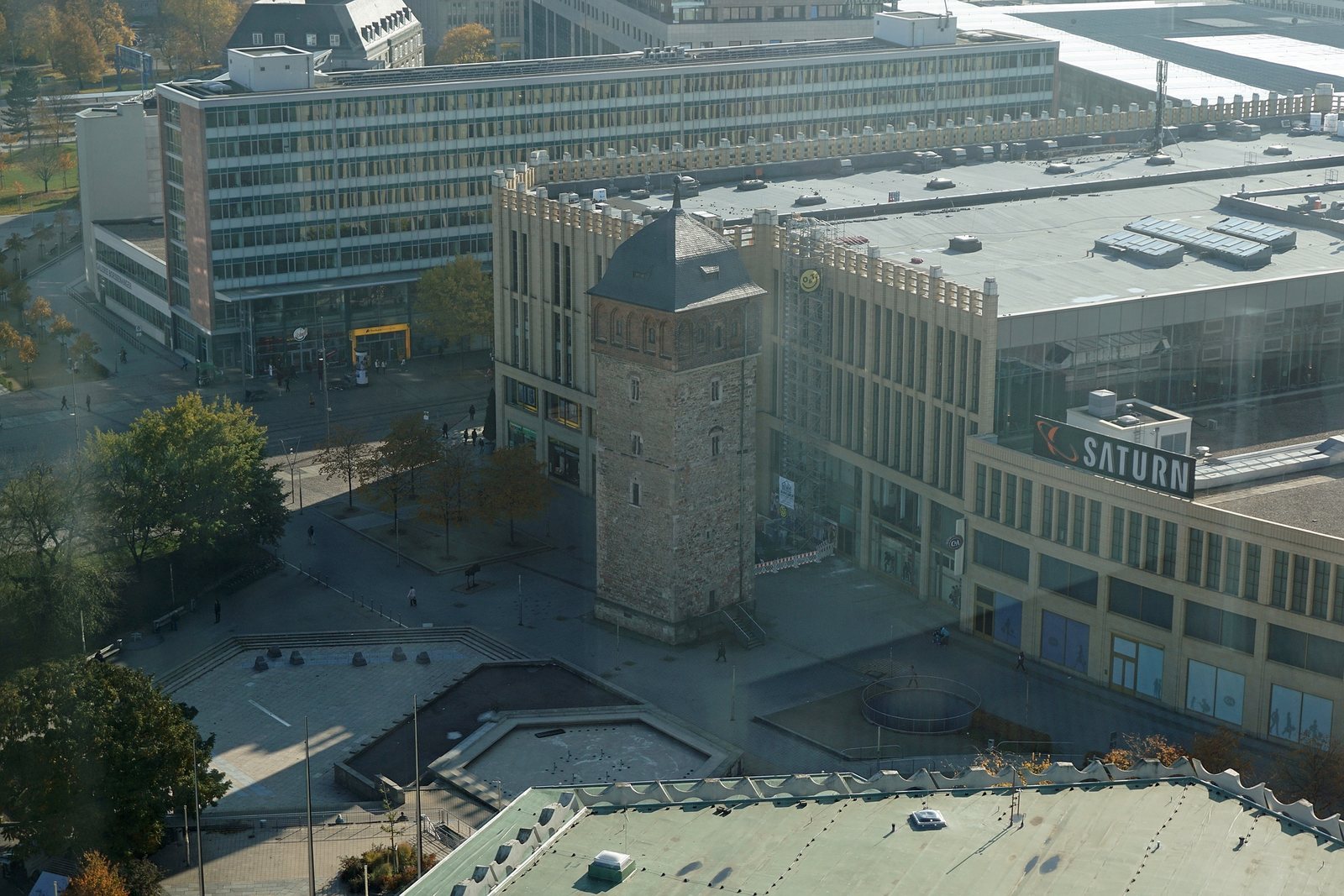
Late 19th-century redevelopment along Theaterstrasse enclosed the formerly free-standing tower behind a row of houses, leaving only its roof visible.
War damage and rebuilding
An air raid on Chemnitz near the end of the Second World War burned out the tower. It was rebuilt between 1957 and 1959, and further renovations followed after 1990.
Remains
Tower fabric
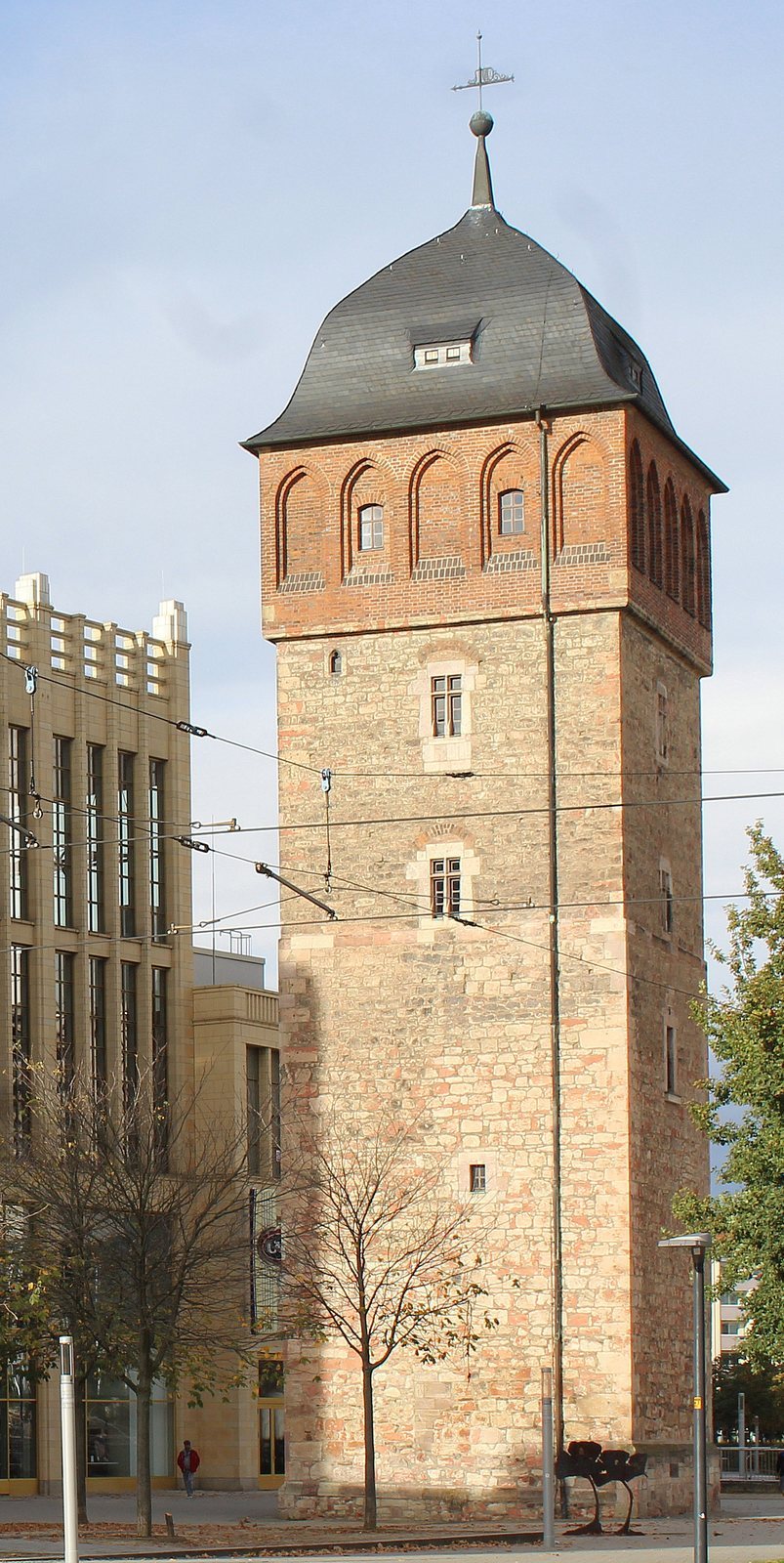
The tower rises 35 metres. Its lower section is built of quarry stone, while reddish Chemnitz porphyry tuff, a volcanic rock, forms most of the main body. The name Roter Turm means “Red Tower” and is attributed to the stone’s predominantly red color.
The upper storey is brick, with Gothic detailing, a style of medieval architecture, and red roof tiles. The tower was plastered until the mid-19th century and was probably painted white.
City wall junction
A younger section of the city wall joins the tower. Investigations in 1957–1958 established that the tower was built before the wall.