Rotberg Castle: A Medieval Castle Rebuilt as a Youth Hostel
Site at a Glance
- Popularity
- Medium
- Country
- Switzerland
- Primary era
- Medieval
- Eras represented
- Medieval
- Civilizations
- Holy Roman Empire
- Site type
- Military
- Remains
- Castle
On this page5 sections
History
Medieval origins and decline
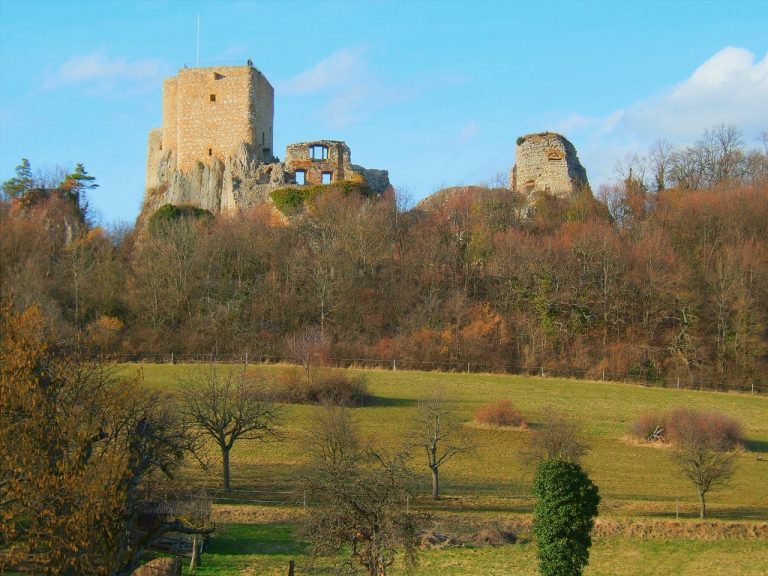
Rotberg Castle is a medieval castle in Metzerlen-Mariastein, Switzerland, whose origins probably date to the second third of the thirteenth century. It was home to the lords and knights of Rotberg and is first mentioned in 1413.
As members of the Rotberg family gained offices and status, they moved to nearby Basel, and their castle gradually lost importance. The city of Solothurn acquired it in 1555 and granted it as a fief, property held under a feudal relationship, to Mariastein monastery in 1636. By 1645 the castle was abandoned and uninhabitable. It continued to deteriorate and was often used as a quarry.
Rebuilding as a youth hostel
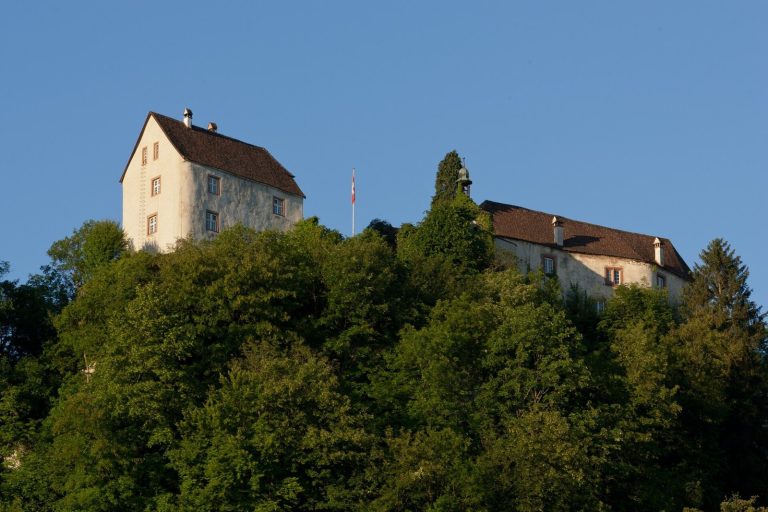
Rebuilding began in autumn 1933, when the castle was already a ruin. Donations funded work in 1934–35, carried out by unemployed young people in a voluntary labor service under plans by Swiss castle builder and architect Eugen Probst. On 27 November 1935, the rebuilt castle was handed over as a youth castle and hostel for young people from Switzerland. It has served as a youth hostel since then.
The historian Werner Meyer, who specializes in medieval castles, criticized the reconstruction as pseudo-historical. He argued that clearance work carried out without scientific supervision had severely damaged archaeological evidence.
Remains
Hilltop courtyard and buildings
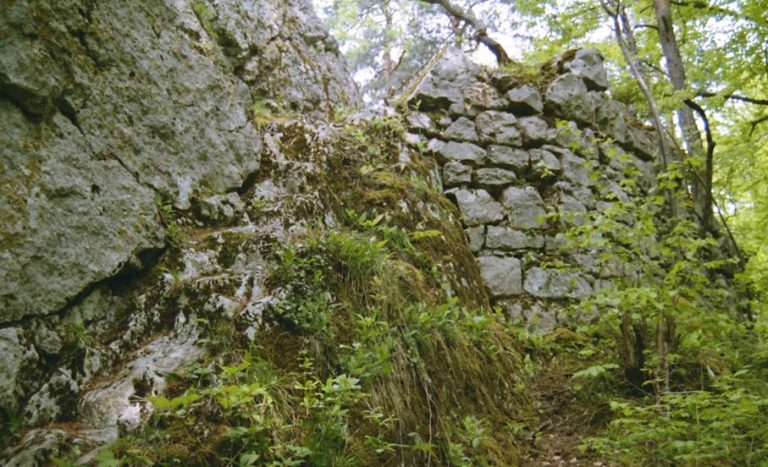
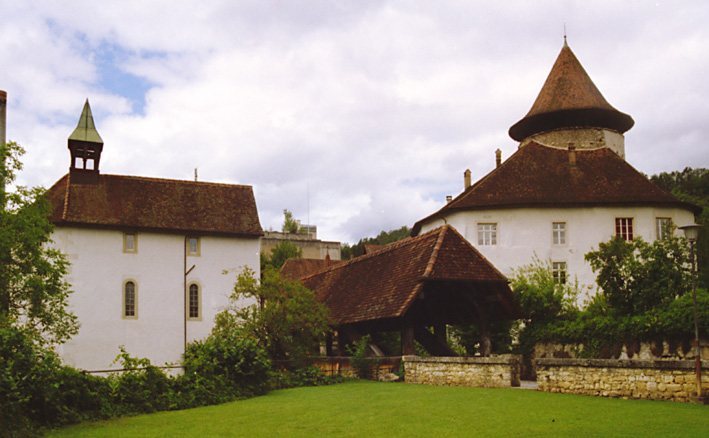
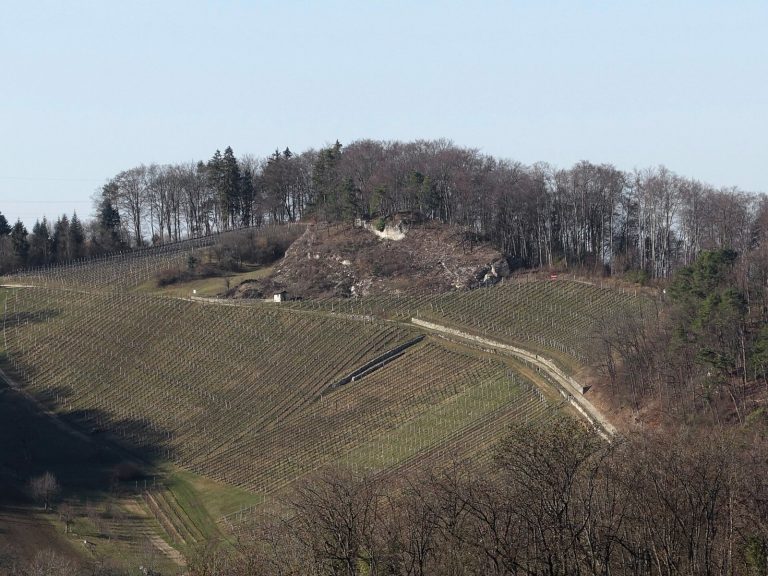
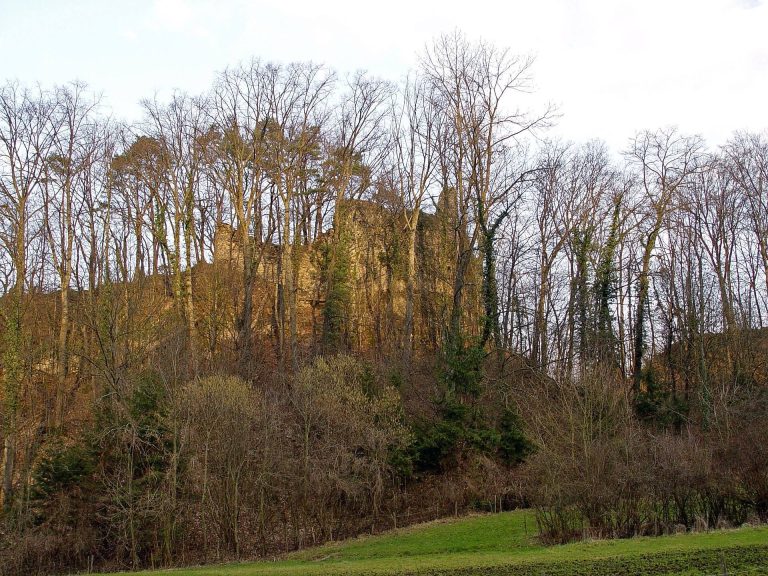
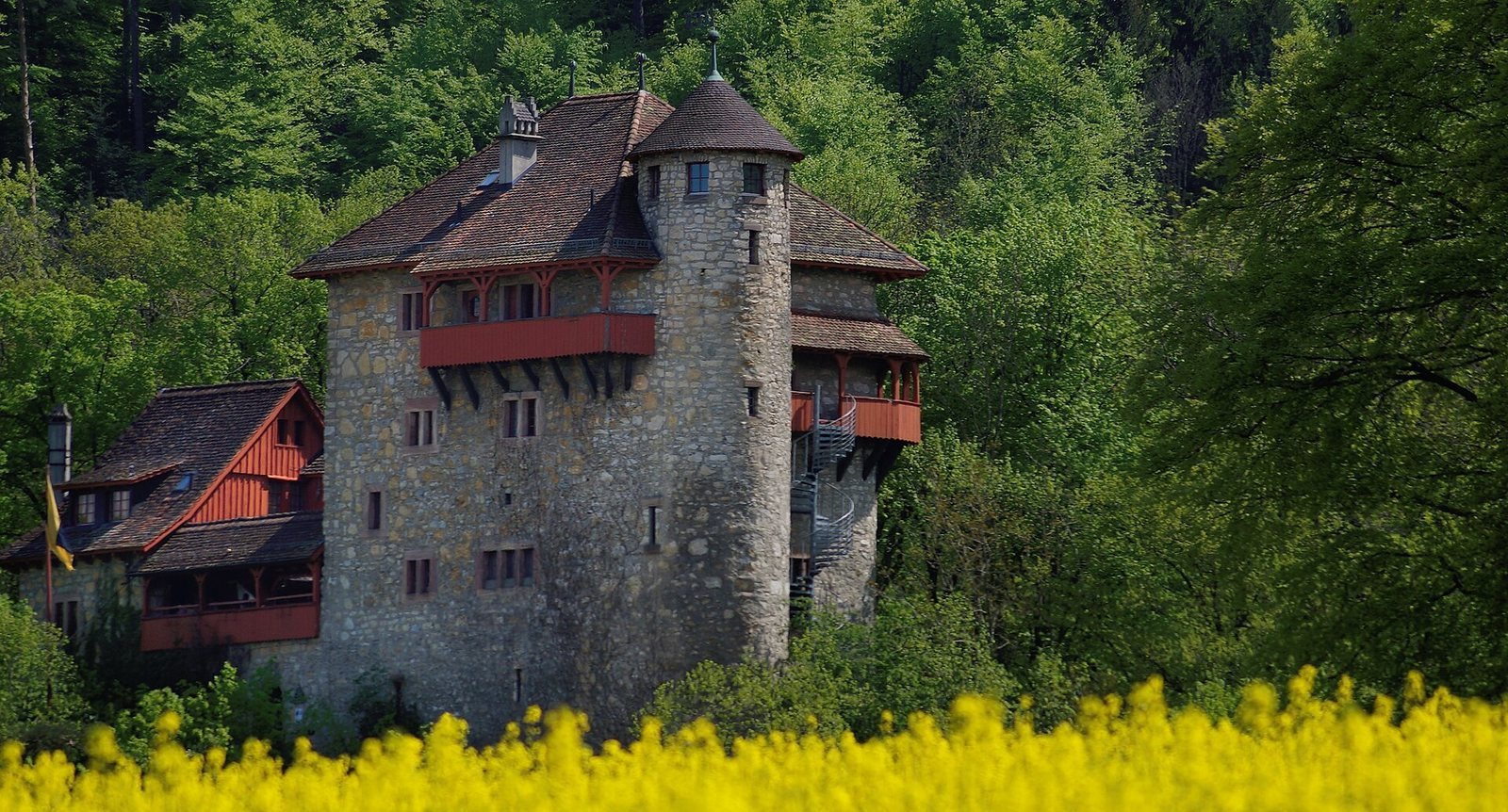
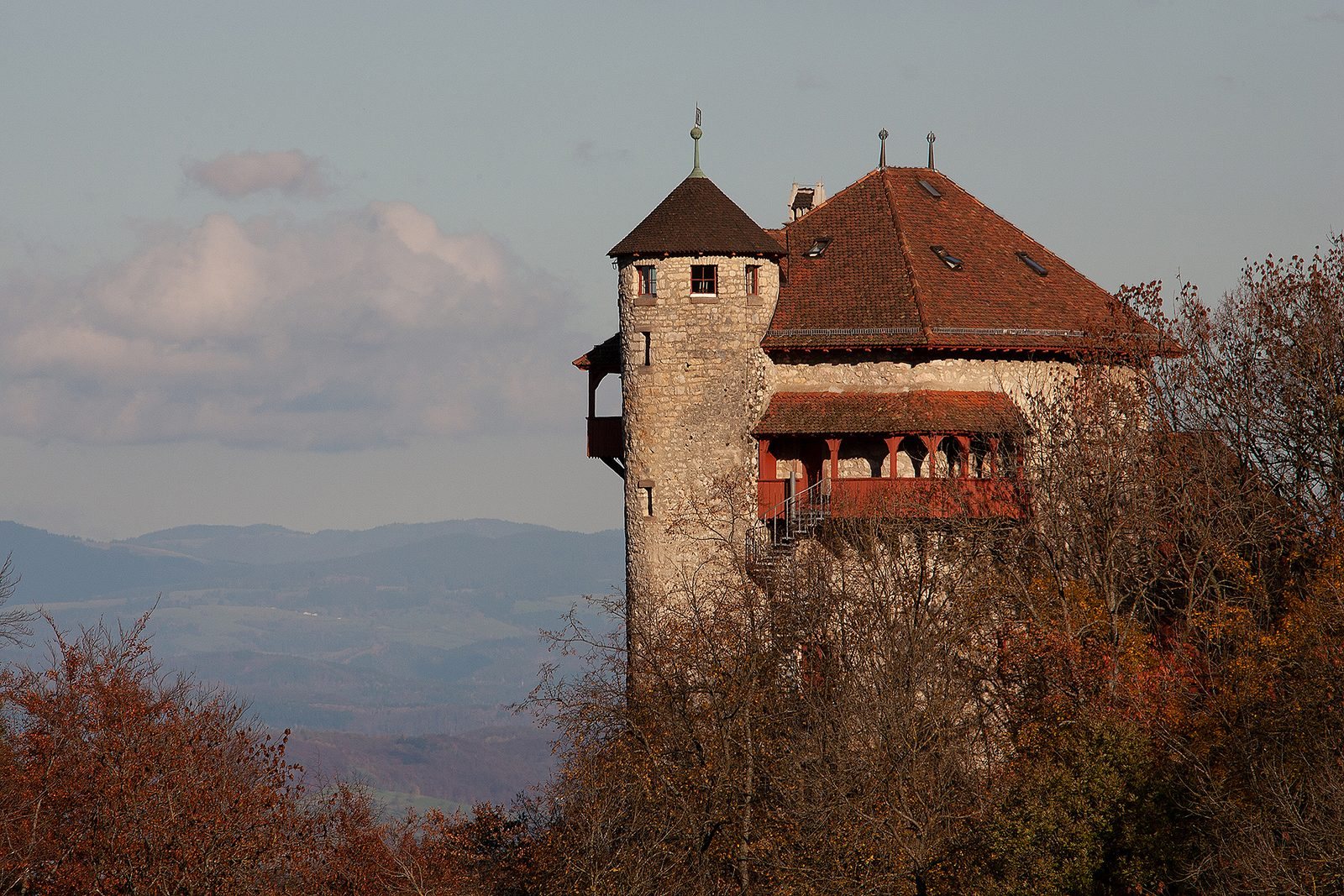
The castle stands on a hill of Jurassic limestone, rock formed during the Jurassic Period, on the northern slope of Blauen in the Birsig Valley. Its described layout leads through a gate into a courtyard between two buildings. A curtain wall, a defensive wall enclosing the courtyard, links them, with an open wall-walk, a passage along the top of a defensive wall. On the right stands the former knights’ house, with a round tower behind it. A small timber-framed building on the left formerly housed servants. Substantial parts of the castle remain, although rebuilding blurred the original masonry.