Rogów Opolski Palace: A Renaissance Castle and Later Manor House
Site at a Glance
- Popularity
- Medium
- Country
- Poland
- Primary era
- Early Modern
- Eras represented
- Early Modern, Modern
- Civilizations
- Habsburg, Habsburg Austria, Holy Roman Empire, Kingdom of Bohemia, Kingdom of Prussia
- Site type
- Domestic
- Remains
- Castle
On this page11 sections
History
Rogów Opolski Palace is a castle complex in Poland, built by the Rogoyski family around 1600 as a Renaissance residence. The Renaissance was a European period that revived interest in classical forms. The estate later passed through several noble families and was transformed into a manor house.
Rogoyski ownership
After Stefan Rogoysky died in 1612, the estate passed to his wife, who belonged to the Wrbsky family. The Rogoyskis remained at Dąbrówka until 1741, when Prussia, a German kingdom and major European state, took control and expelled them.
Haugwitz estate
The neglected castle was purchased in 1757 by Count Henry Adolf von Roedern of Krapkowice. A count held a hereditary noble title. After von Roedern’s death, the property was sold around 1760 to Count Karl Wilhelm von Haugwitz, who converted it into a manor house. The Haugwitz family owned the estate from the second half of the 18th century until 1945.
In the 19th century, Christian Heinrich Kurt von Haugwitz, then prime minister of Prussia, oversaw further changes to the estate. A prime minister was the head of the Prussian government. The works included a new architectural phase and the creation of an English-style landscape park.
Twentieth-century changes
After the last Haugwitz representative at the estate died in 1932, the property passed to a Danish branch of the family, which appointed an administrator. The castle became a training camp for the Hitler Youth, the youth organization of Nazi Germany, and was used especially by members from Berlin.
In 1945, following the transfer of Silesia to Poland, the castle was nationalized. Its less-damaged section first served as a kindergarten and later as a grain store. In 1947, coffins were removed from the devastated family chapel, with some already destroyed. The Haugwitz remains were buried in an unmarked grave in the parish cemetery. That location was later covered by a road and a rubbish dump.
The ruined castle was assigned to the Provincial Public Library in Opole in 1964. After rebuilding, a library branch opened with rare early printed books and other special collections. Renovation from 1967 to 1976 partly restored the castle’s Renaissance forms. From 1976, the building housed a branch of the University of Opole Library, including manuscript and map collections.
The family grave was discovered in 2010. The remains were exhumed and identified, then reburied in the palace chapel that November. A memorial plaque in Polish and German was installed in connection with the reburial.
Remains
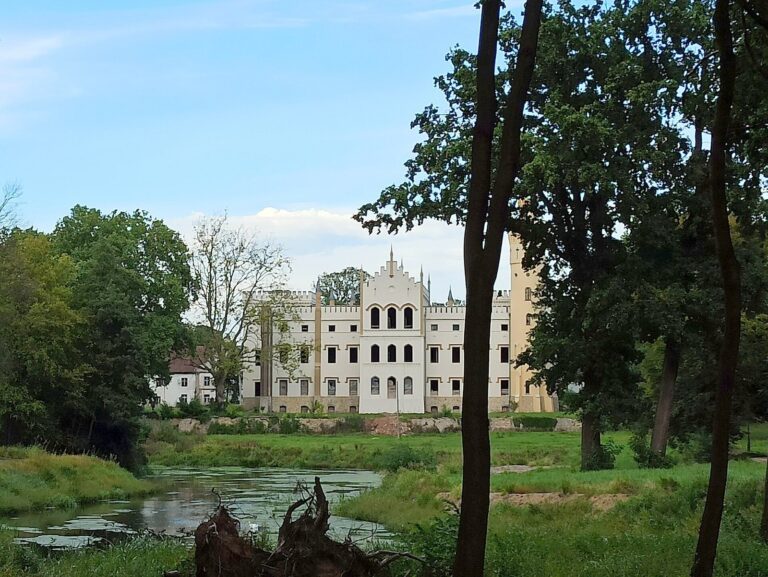
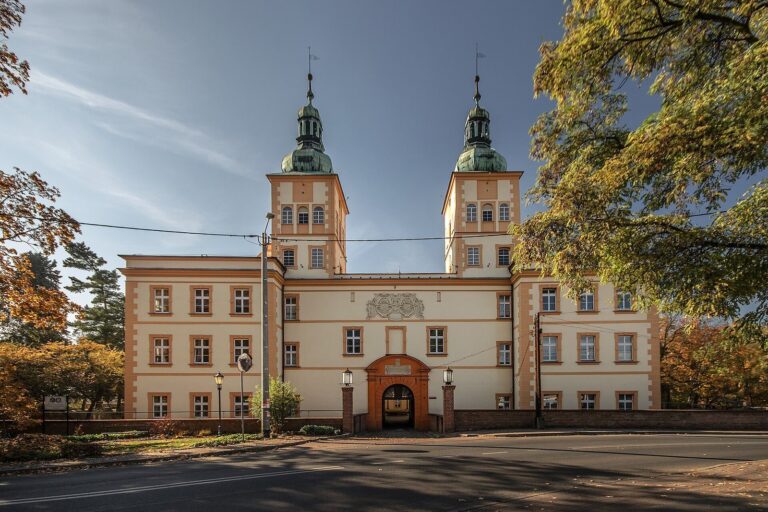
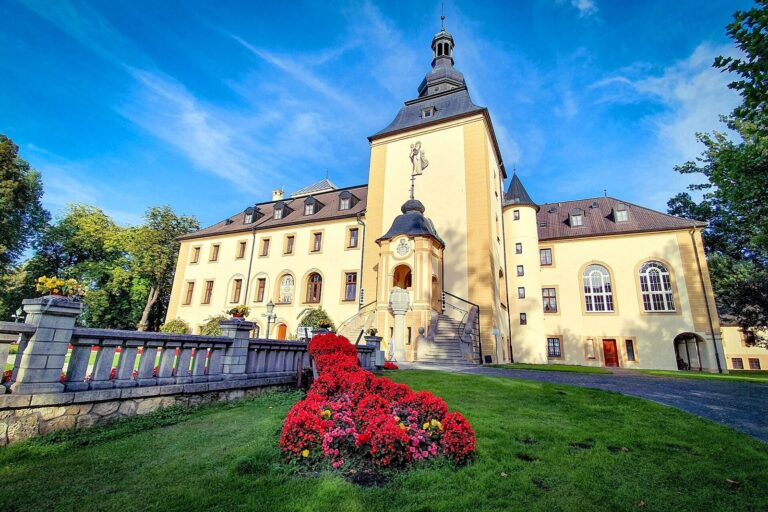
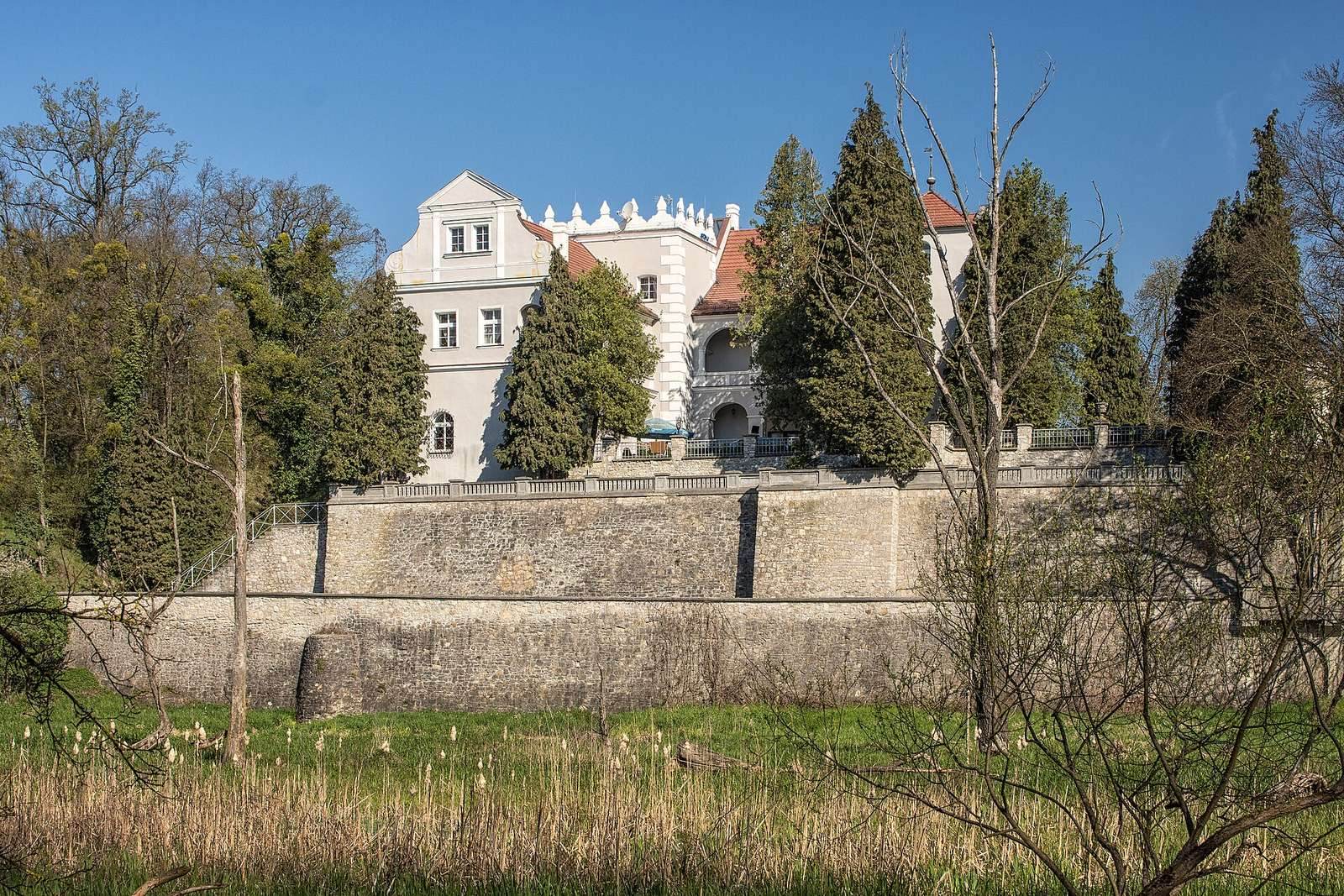
The palace complex stands on a steep bank of the Oder at the southern end of Rogów Opolski village. Its plastered buildings are mostly two storeys high and combine Renaissance and Classical forms with a courtyard and estate grounds.
Residential wings and tower
Renaissance wings and tower
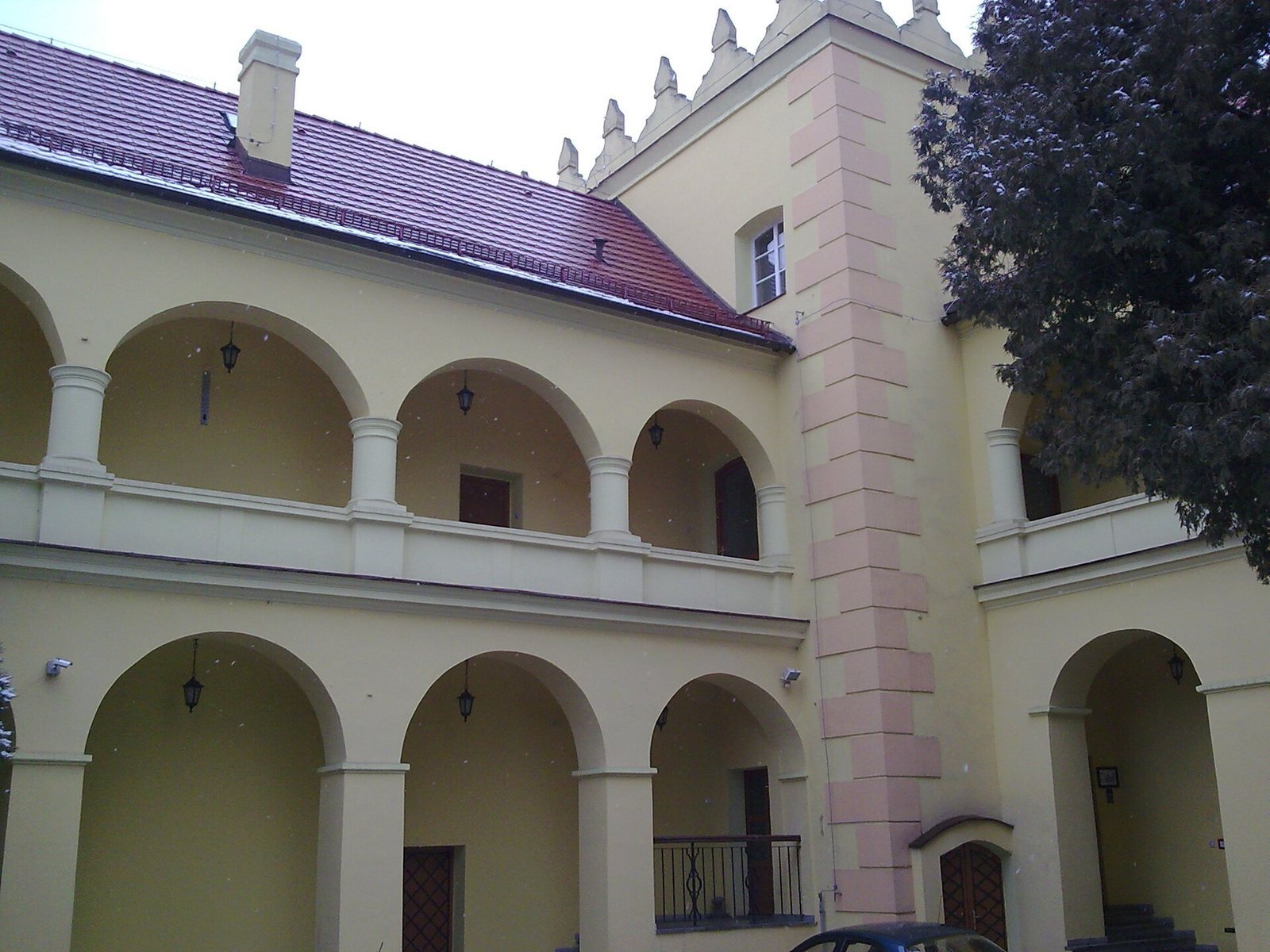
The oldest parts of the complex are two Renaissance residential wings and a tower. The southeast wing has an angular plan and forms two sides of a courtyard, with an open arcade, a passage formed by a row of arches. The tower rises three storeys and has a Renaissance-style attic, a low wall above the main structure.
Classical wing
Added in the 19th century, the Classical wing draws on ancient Greek and Roman architectural forms. It is square in plan and three storeys high.
Estate grounds and chapel
Park and garden structures
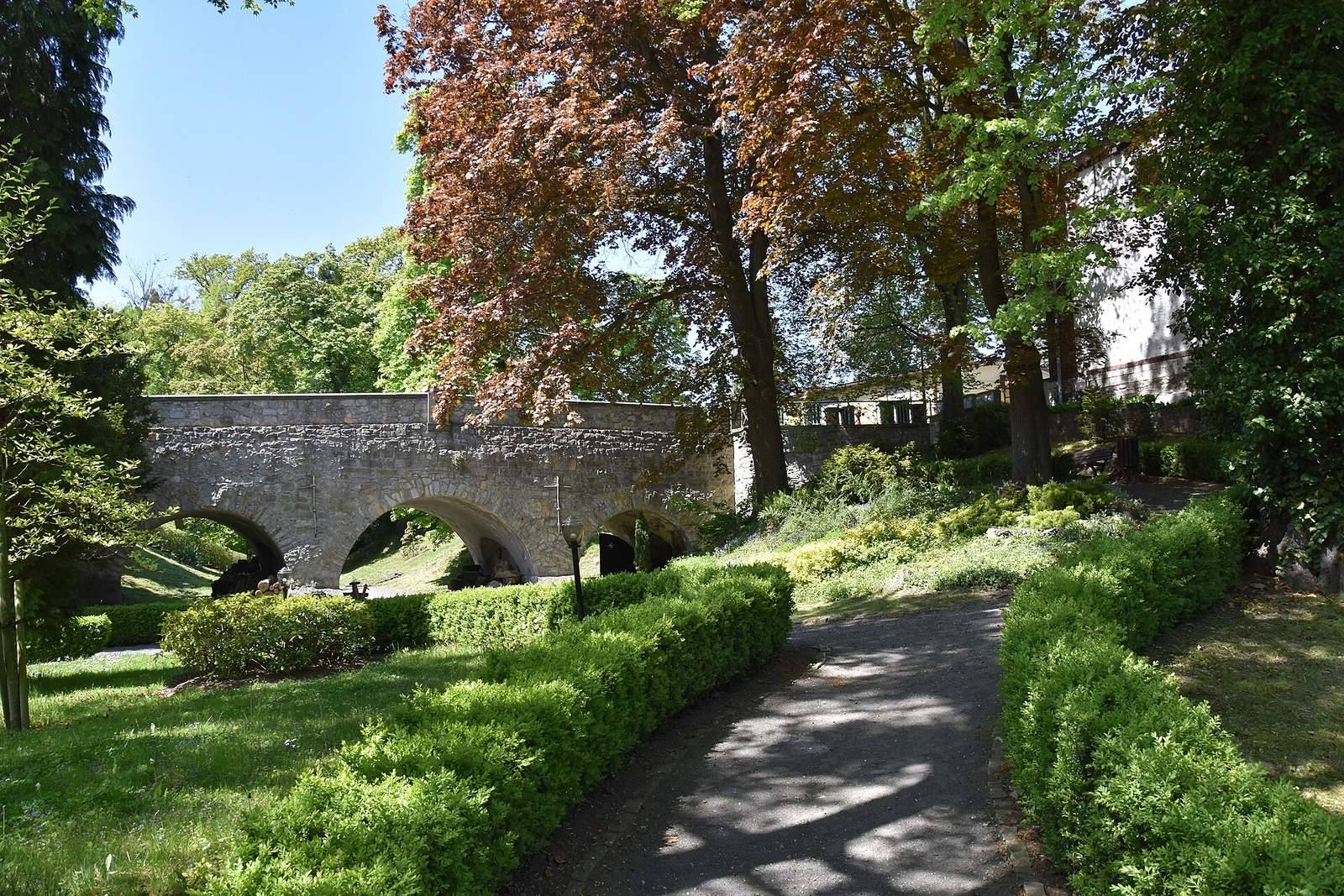
The estate includes a bridge and terraces supported by retaining walls, as well as a landscape park laid out in the English style. A garden pavilion known as Kavallerhaus is also part of the grounds. The surrounding fence includes a gloriette, a small ornamental garden structure or viewpoint, dating to the 19th or 20th century.
Family chapel
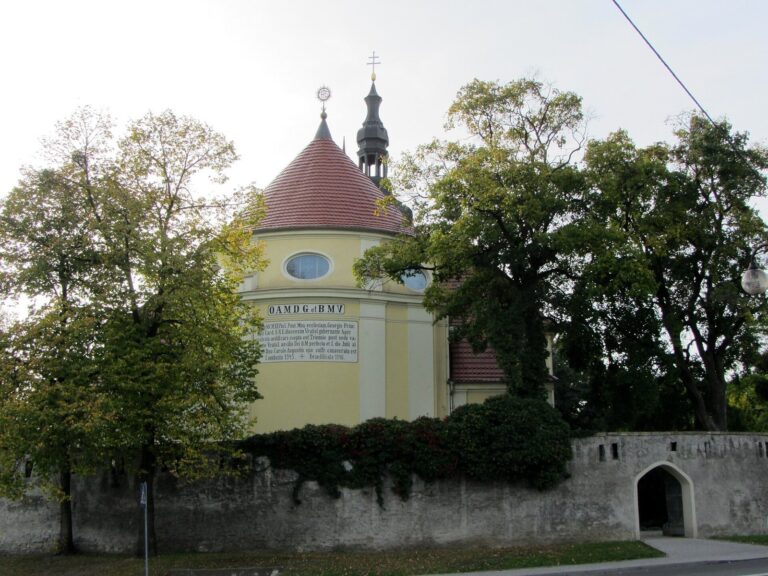
The family burial chapel, or mausoleum, dates to the second half of the 19th century. The von Haugwitz coat of arms is positioned above its entrance.