Rijckholt Flint Mines: Neolithic Underground Workings in the Netherlands
Site at a Glance
- Popularity
- Medium
- Country
- Netherlands
- Primary era
- Stone Age
- Eras represented
- Stone Age, Modern
- Civilizations
- Dutch
- Site type
- Economic
- Remains
- Mine
On this page10 sections
History
The Rijckholt Flint Mines are a prehistoric flint-mining complex in the Savelsbos of the Netherlands, where communities of the Neolithic, or New Stone Age, worked underground from about 3950 to 2650 BC. The mines are regarded as the oldest known form of mining in the country.
Prehistoric extraction and exchange
Flint gathering in the Rijckholt area began around 4600 BC. People first collected stone from the slopes of Schoone Grub, which were largely exhausted by about 4000 BC. Underground shaft mining followed, and the workings near St. Geertruid operated from approximately 3950 to 2650 BC. The broader period of flint extraction in the area is placed at about 4600 to 2600 BC.
People made weapons and everyday implements from the flint, and used flint picks to obtain mineral resources. Estimates put total production at 19,500 to 23,000 tonnes. Annual output may have reached about 25,000 blades or axes, with an estimated 12.5 million flint products made over the mines’ working life. The material was traded over hundreds of kilometres, reaching the Rhine Delta and Münster to the north, and Frankfurt and Mainz to the south. Its importance declined after bronze was discovered.
Early archaeological investigations
Belgian archaeologist Marcel De Puydt discovered the mines in 1881 and investigated the area with collaborators until 1914. In 1887, he identified a large flint-working area later known as the Grand Atelier De Puydt. In 1886 and 1887, Count René de Geloes, then mayor of Eijsden, examined his own land with Dr. Dubois, geologist Casimir Ubaghs and others. Dubois prepared a detailed map, and finds from this work went to Teylers Museum. Professor Jean Servais of the University of Liège investigated the area from 1898 to 1923; his finds and De Puydt’s were sent to the Curtius Museum.
From 1903 to 1953, Liège professor J. Hamal-Nandrin researched the wider area, focusing particularly on the separate Schoone Grub workings. He found mining shafts there in 1910 and underground galleries in 1914. Dr. Van Giffen of the University of Groningen and Dr. Van de Sleen began work in the area in 1923, mapping it in detail. Van Giffen concentrated on Schoone Grub, while Van de Sleen worked around the Grand Atelier. A gallery system was found at the edge of the working area in 1925.
French Dominican friars, members of a Catholic religious order, assisted with large-scale investigations from 1928 to 1932, clearing many shafts and galleries. Their work recovered more than 100 deer-antler tools and about 1,200 flint axes. Some finds went to the University of Groningen and the Bonnefanten Museum, others to France, while some remained at Rijckholt and were later lost through lack of interest.
Later excavation and protection
A new investigation began in 1964 under Professor Waterbolk of the University of Groningen. It exposed additional shafts and showed that the mine complex covered a much larger area than previously understood. The Dutch Geological Society formed a working group led by Werner Felder, with Sjeuf Felder and Peter Bosch among its members. The group worked weekly from 1964 to 1972, transferring more than 15,000 finds to the Limburg archaeological archive. The excavation ended on 31 May 1972. In 1969, the Society’s Limburg section organized the first International Flint Symposium in connection with the excavations. The research group’s 39-part final report was published in 1993.
In 1979, the conserved mines were transferred to the Ministry of Culture, Recreation and Social Work, and Staatsbosbeheer, the Dutch public agency responsible for forestry and nature management, took over their management. The Van Schaïk Foundation now manages the site. The mines are regarded as an archaeological world monument and a geological monument, and are registered as a national monument.
Remains
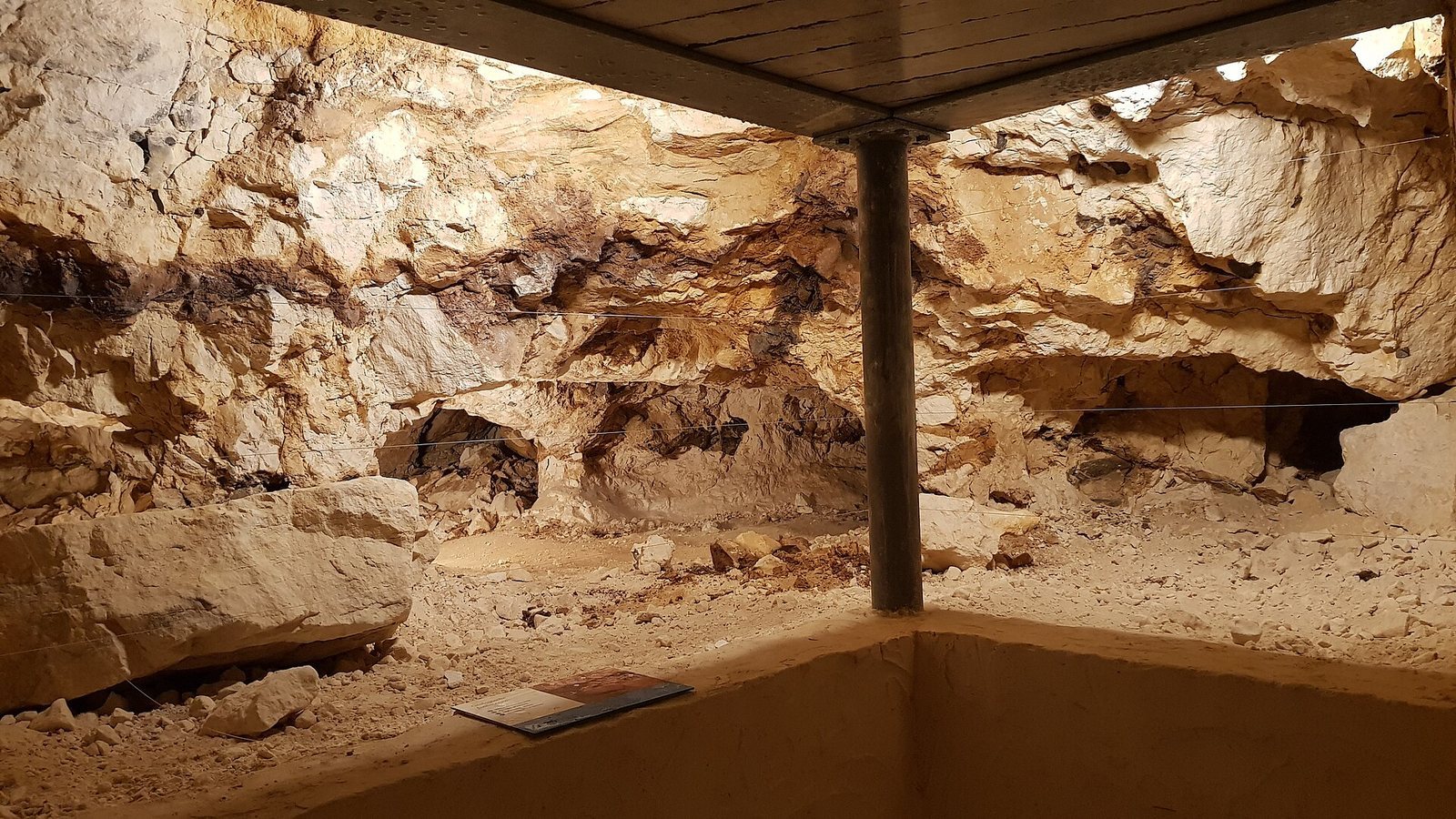
The mining area covers about eight hectares in the Savelsbos, at the edge of the Margraten Plateau. Its underground workings consist of shafts and galleries cut into the local limestone, following a flint-bearing layer beneath the ground.
Shafts and galleries
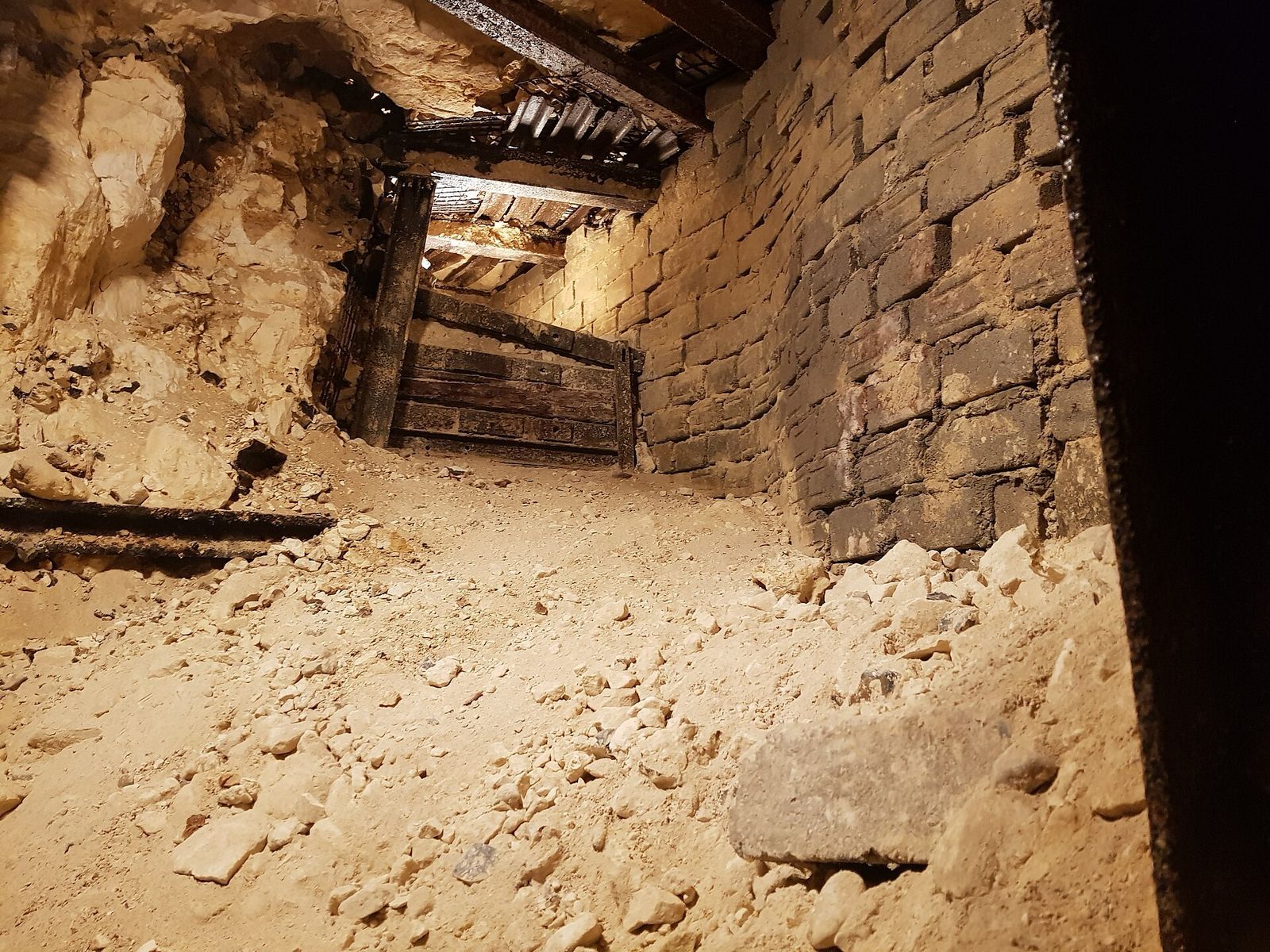
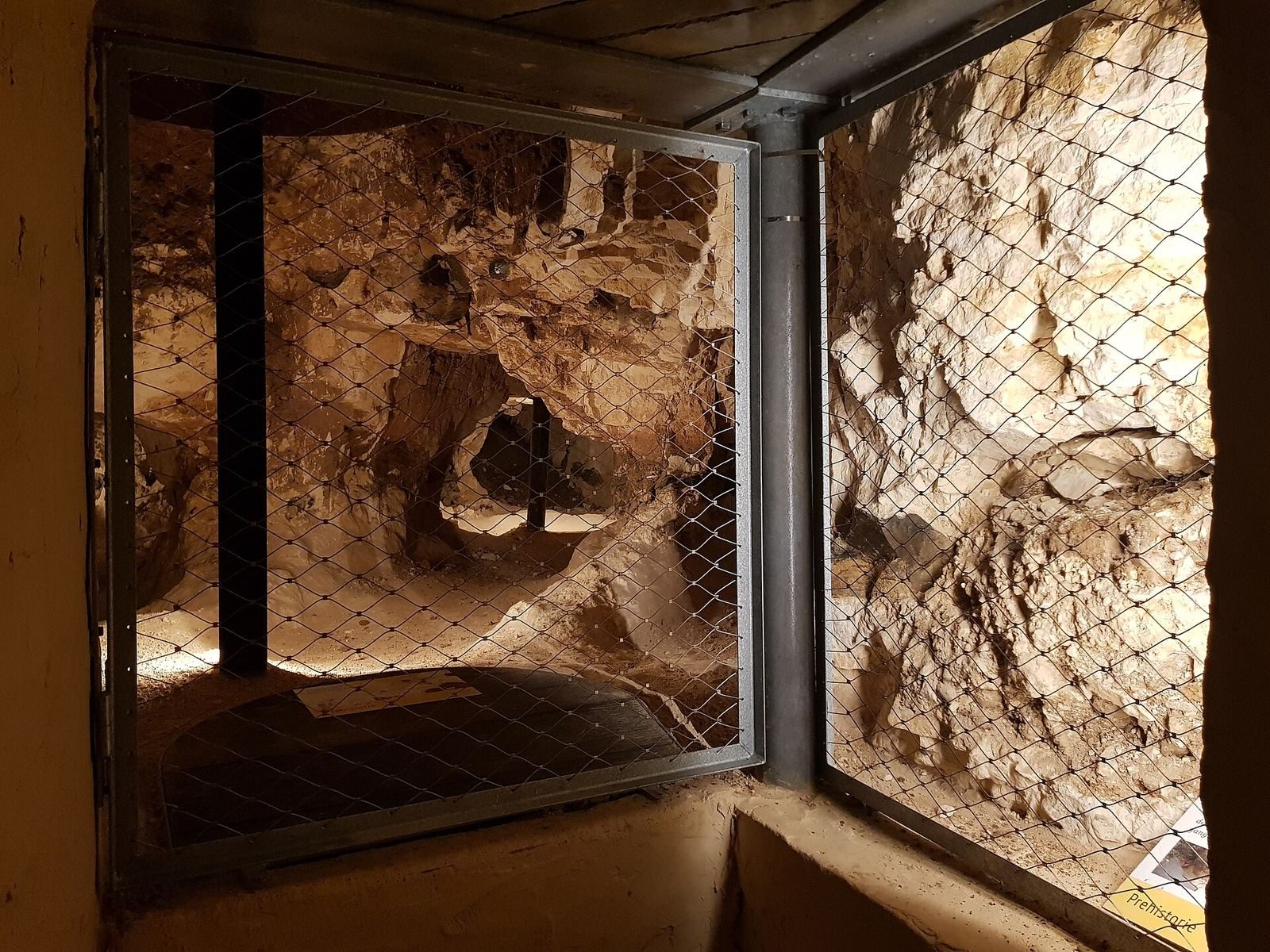
At least 75 shafts were found within one investigated area of 3,000 square metres, while the total number across the mining area is estimated at 2,000 to 4,000. The shafts descend 5 to 12 metres and were set close enough for miners to work by light from above. A mine was generally worked out after two or three years, requiring a new shaft. Galleries were about 80 centimetres high. Miners usually filled disused passages with waste limestone, though some remained open as escape routes. In places, narrow openings connected galleries in neighbouring mine fields.
Rock strata and flint
The workings cut through Lanaye Limestone, while the flint-bearing Maastricht Chalk strata lie about 500 metres east of Rijckholt. Of the 23 flint-bearing layers in the Lanaye Limestone, miners worked layer 10. Above the mines are loess, fine windblown sediment, in the Schimmert Member, a subdivision of a mapped rock unit, and gravel and sand deposited by the West Meuse in the St. Geertruid Member. Beneath are the Lanaye, Lixhe, Vijlen and Zeven Wegen limestones of the Gulpen Formation, a mapped body of rock, followed by the Vaals Formation. Pipe-shaped cavities in the limestone contain sand, coarse gravel and loess from the overlying layers. Black flint nodules in the mine walls measure at least 20 centimetres across. Their fine-grained stone ranges from dark to light grey, sometimes with a blue cast; most is opaque, and its fracture surfaces are smooth rather than glossy.
Grand Atelier De Puydt
The Grand Atelier De Puydt is an oval, bowl-shaped flint-working area measuring 54 by 37 metres. A layer of flint fragments, 1 to 1.5 metres thick, covered its floor. The fragments include flakes and material at different stages of working.
Research passage and entrance
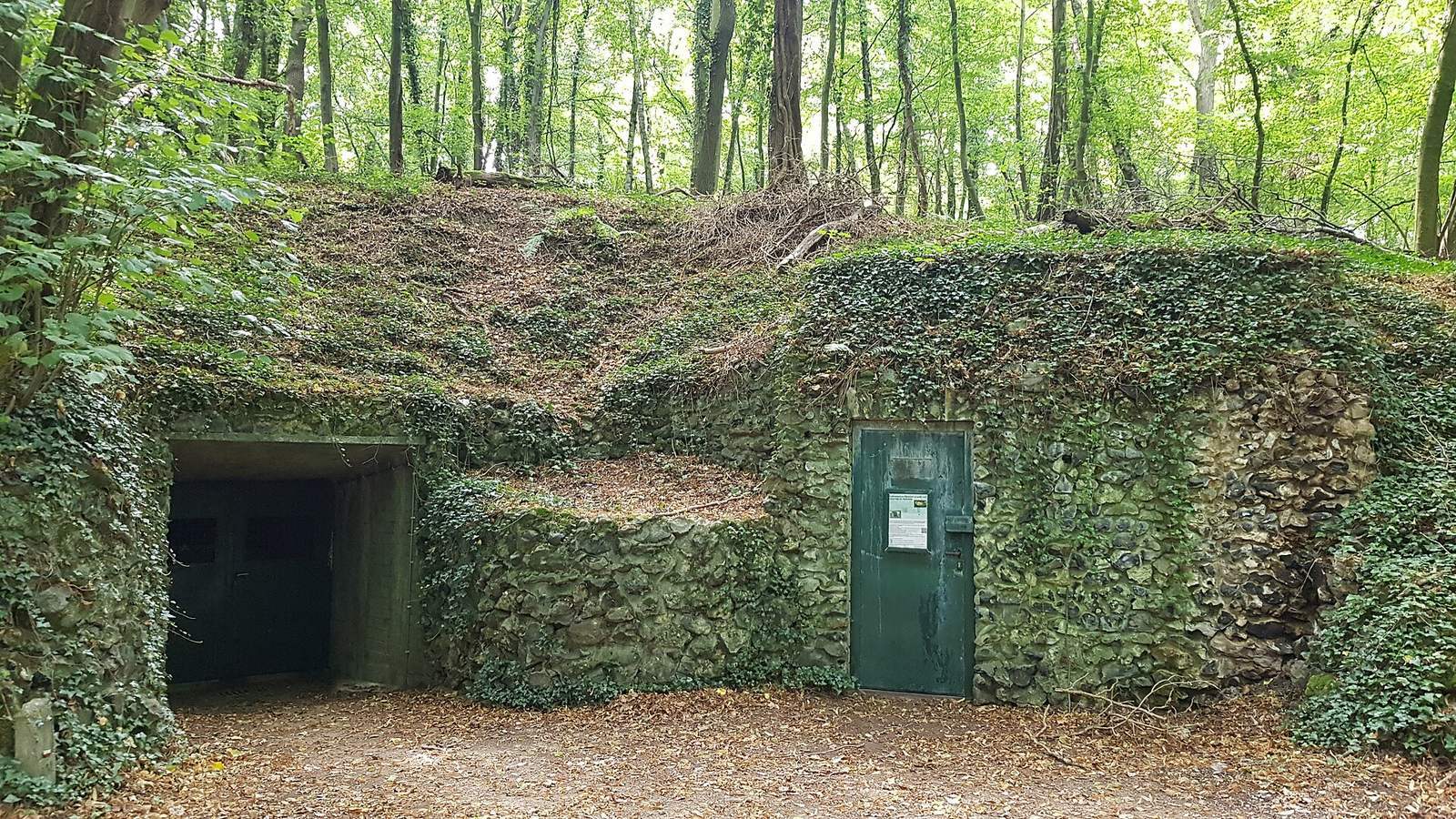
A research tunnel crossing the mining area extends for 140 metres. The mine entrance is accompanied by an artwork. Renovation from April 2021 through May 2023 added four side passages through collapsed ground, connecting the main passage with prehistoric gallery systems farther away.
Tools and worked flint
Finds from the mines include blades, large scrapers, arrowheads, axes, picks and unfinished axe-blade forms. The blanks were finished and polished by their eventual users. Some blades can be linked to particular flint cores, with examples found both in the mining area and at distant locations. Rijckholt flint cannot be reliably distinguished from flint mined at Spiennes or Jandrain-Jandrenouilles.