Rheingrafenstein Castle: A Medieval Rock Fortress in Germany


Site at a Glance
- Rating
- 4.8
- Popularity
- Low
- Country
- Germany
- Primary era
- Medieval
- External website
- Open
- Eras represented
- Medieval
- Civilizations
- Holy Roman Empire
- Site type
- Military
- Remains
- Castle
On this page7 sections
History
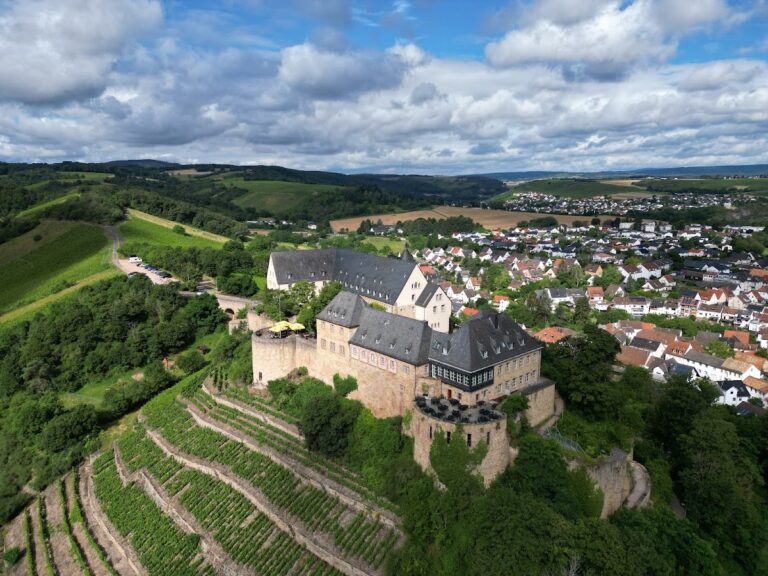
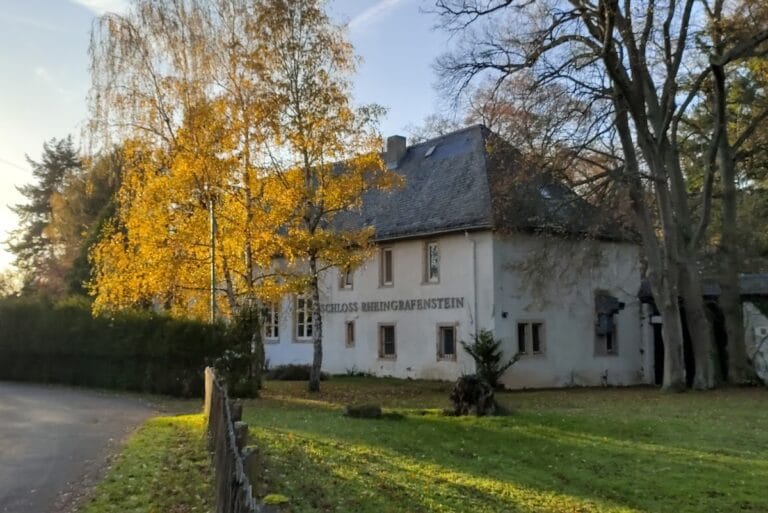
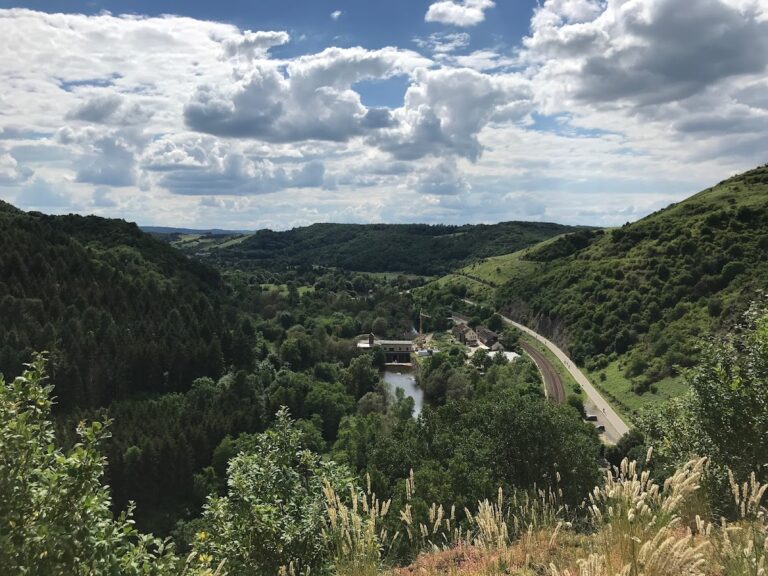
Rheingrafenstein Castle is a medieval rock fortress in Germany, above the Nahe opposite Bad Münster am Stein-Ebernburg. Its construction probably dates to the eleventh or twelfth century and is associated with the Emichones, the ruling family of the medieval County of Nahegau. The castle became the ancestral seat of the Lords of Stein, later known as the Wild- and Rhinegraves, and remained in their possession until the French Revolution.
Origins and the rise of the Rhinegraves
The rock was known as Huhinstein about a thousand years ago. The Lords of Stein appear in records from the twelfth century, although their relationship to other nobles of the same name in the Nahe region remains unclear. The castle itself is first mentioned unambiguously in the thirteenth century.
Marriage extended the family’s influence into the Rheingau during the second half of the twelfth century. Around 1160, Siegfried I of Stein married Lukardis, the daughter of Rhinegrave Embricho. Their son Wolfram inherited the Rheingau on the right bank of the Rhine. In 1196, Wolfram of Stein first used the title “Rhinegrave,” which later became associated with Rheingrafenstein. After Siegfried II lost the family’s right-bank possessions to the Archbishop of Mainz following the Battle of Sprendlingen in 1279, he moved his residence to the castle and gave the rock the name Rheingrafenstein.
Dynastic expansion and destruction
Further marriages in the fourteenth and fifteenth centuries brought the Wildgraviate and half of the County of Salm to the family. The Rheingrafenstein line, a separate branch of the Rhinegraves, was established in 1610. The castle served as the centre of the Rhinegraviate of Stein, a territory associated with the Rhinegrave title.
During the Thirty Years’ War, a major European conflict from 1618 to 1648, the castle was captured by Spanish troops and later by Swedish troops. French forces under General Mélac destroyed it in 1688 during the Palatinate War of Succession, a conflict arising from French expansion and dynastic claims in the Holy Roman Empire, under the authority of King Louis XIV.
The Grumbach line, the last princely branch to reside at the castle, moved its residence to Gaugrehweiler after the destruction. In 1721, the ruins were made available for the construction of salt works at Münster. In 1835, descendants of the Wild- and Rhinegraves, who had by then been raised to princely rank, bought Rheingrafenstein and the Huttental back from the municipality of Münster.
Remains
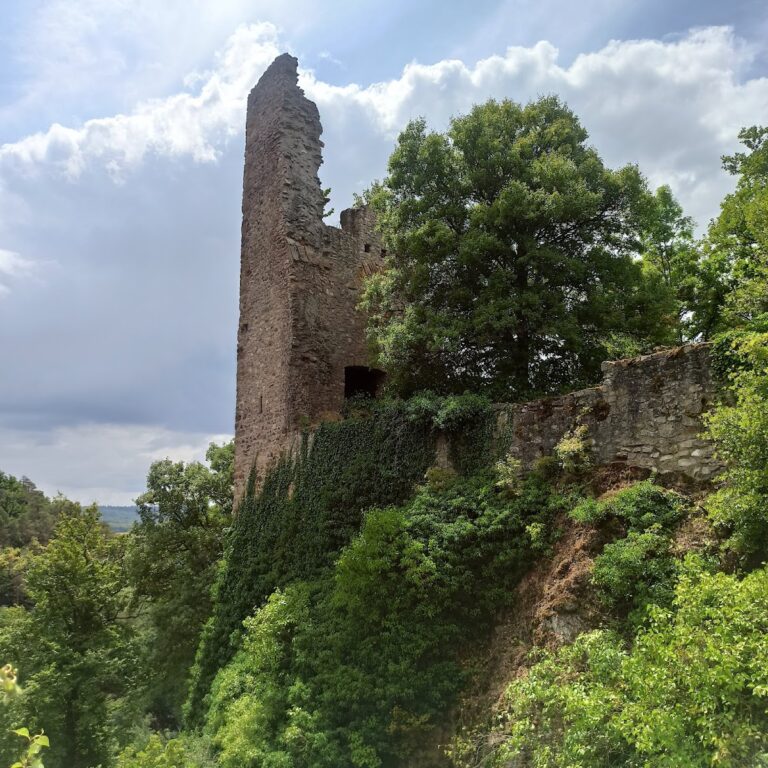
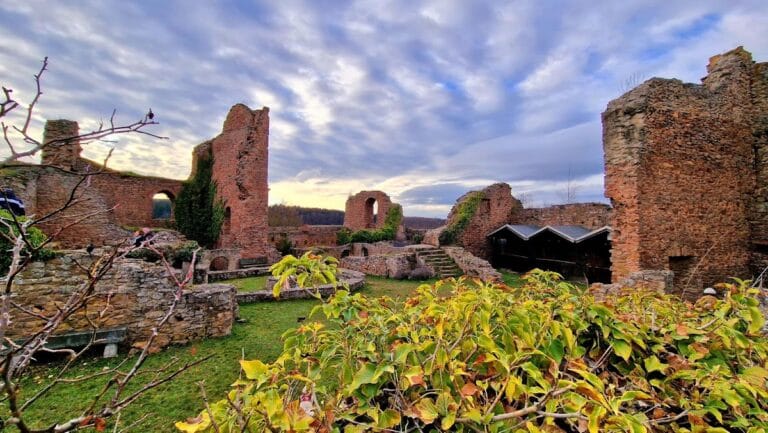
The ruins occupy Rheingrafenstein, a 136-metre-high porphyry rock beside the Nahe that rises to about 245 metres above sea level. The hilltop fortress was built in this rocky setting, and its surviving fabric consists of masonry fragments, a vaulted cellar, parts of the fortified enclosing circuit, several steps from the former tower house, and the foundations of the former tower staircase.
Fortress structures
Enclosing walls and tower house
Parts of the enceinte, the castle’s fortified enclosing wall, survive among the masonry remains. A vaulted cellar forms one of the clearest surviving elements. The former tower house remains in partial form through several steps, while the foundations of its staircase mark the structure’s earlier vertical arrangement.
Affenstein and the rock staircase
On the southern slope lies the remains of the outer bailey known as Affenstein. A bailey was an enclosed subsidiary area supporting the main castle. The name derives from “Afterstein.” A staircase passes through the rock to a viewing platform, linking the surviving route through the rocky fortress setting with the upper part of the site.