Remiremont Abbey: An Imperial Abbey and Noblewomen’s Chapter in France
Site at a Glance
- Rating
- 4.5
- Popularity
- Low
- Country
- France
- Primary era
- Medieval
- External website
- Open
- Eras represented
- Medieval, Early Modern
- Civilizations
- Duchy of Lorraine, Holy Roman Empire
- Site type
- Religious
- Remains
- Monastery
On this page15 sections
History
Remiremont Abbey is a former religious foundation in Remiremont, France, founded around 620 by Romaric, a nobleman at the court of Chlothar II, after his conversion by Amatus, a monk of Luxeuil and formerly of Saint-Maurice of Agaune. The foundation occupied the former Roman site or villa of Habendum on Mount Habend, later called Saint-Mont, above the Moselle valley. It began as a double monastery, an institution with separate communities of men and women, and later became an imperial abbey and a secular chapter of noble canonesses.
Foundation and early monastic communities
Romaric and Amatus dedicated the foundation to Saint Peter. The monks lived in the valley, while the nuns occupied the mountain settlement. Both communities initially followed the strict Rule of Saint Columbanus, an austere monastic discipline associated with the Irish missionary tradition, and maintained continuous chanting of the Divine Office. Amatus, Romaric, and Adelphus, who succeeded Amatus as an early abbot, were among the foundation’s first leaders.
Bishop Arnulf of Metz joined the community in 629 and established a monastic cell on nearby Morthomme, also called Hoerenberg. He died near Habendum around 640 and was first buried at the monastery. His remains were later transferred to Metz. These early foundations connected Remiremont with important religious centres and helped establish its enduring association with prominent ecclesiastical figures.
From mountain refuge to valley institution
In 818, the nuns established a fortified convent at the confluence of the Moselle and Moselotte. During the Hungarian invasions, between about 910 and 920, they withdrew to Saint-Mont with the relics of Romaric, Amatus, and Adelphus. They later returned to the valley settlement, which had grown around a Frankish royal villa, and settled there permanently during the eleventh century.
By the eleventh century, the community had adopted the Rule of Saint Benedict, a more flexible and widely adopted western monastic rule. The men’s monastery ceased to operate, perhaps during the ninth century, while the women’s institution continued in the valley. A violent fire struck the settlement in 1057. The abbey church was consecrated in 1051, and Pope Leo IX granted the abbey exemption from episcopal jurisdiction, placing it directly under the Holy See.
The secular chapter and imperial authority
During the eleventh and twelfth centuries, Remiremont changed from a Benedictine nunnery into a secular chapter of noble canonesses. Secular canonesses performed the chapter’s religious ceremonies but did not live under the full cloistered discipline of nuns. At Remiremont they could retain their property, live in private houses, and leave the chapter to marry. The process of secularization began in the late eleventh century and was complete by the twelfth century. The abbess alone continued to take permanent vows.
In 1070, King Henry IV granted the abbey imperial immediacy, a status that placed it directly under the Holy Roman Emperor rather than under an intervening territorial ruler. Remiremont consequently became an imperial and royal abbey, and its abbesses later held the rank of imperial princesses. The abbey also possessed the right to mint coins at Fénétrange, subject to a payment to the emperor.
Remiremont became the centre of an ecclesiastical principality with high, middle, and low justice. Its authority extended over 78 parishes and 74 seigneuries, including territories in the Upper Moselle and Cleurie valleys and possessions in areas corresponding to present-day Lorraine, Alsace, and Haute-Saône. The chapter’s income and influence rested on lands, forests, fisheries, mills, passages, tolls, rents, mining rights, and woodland grazing.
The abbess exercised both spiritual and temporal authority. Canonesses elected her by secret ballot, after which papal confirmation was required. Her ceremonial insignia included a sapphire ring, a golden crozier, and an ermine-trimmed hood. The chapter’s government was described as monarchical. Admission required proof of four noble lines on both the maternal and paternal sides, amounting to 64 noble quarters. The chapter generally contained no more than 72 canonesses. At the time of the French Revolution, it had 32 canonesses and 21 designated “nieces,” who were intended successors.
Administration was distributed among several offices. The grand provost represented the chapter legally and governed eleven seigneuries and two deaneries. The grand chancellor administered sixteen bans, while the petit chancellor supervised fourteen smaller seigneuries. The grand sonrier collected specified dues, and other responsibilities belonged to the secret lady, the great almonries, and the hospital of Remiremont.
Conflict with Lorraine and wartime survival
The dukes of Lorraine served as the abbey’s military protectors, or advocates, but this relationship repeatedly produced disputes over authority and revenue. In 1142, King Conrad III intervened in a conflict between the chapter and Duke Mathieu of Lorraine concerning income from the Vosges forests. Later disagreements involved both the abbey’s revenues and the gradual erosion of its territorial and judicial power.
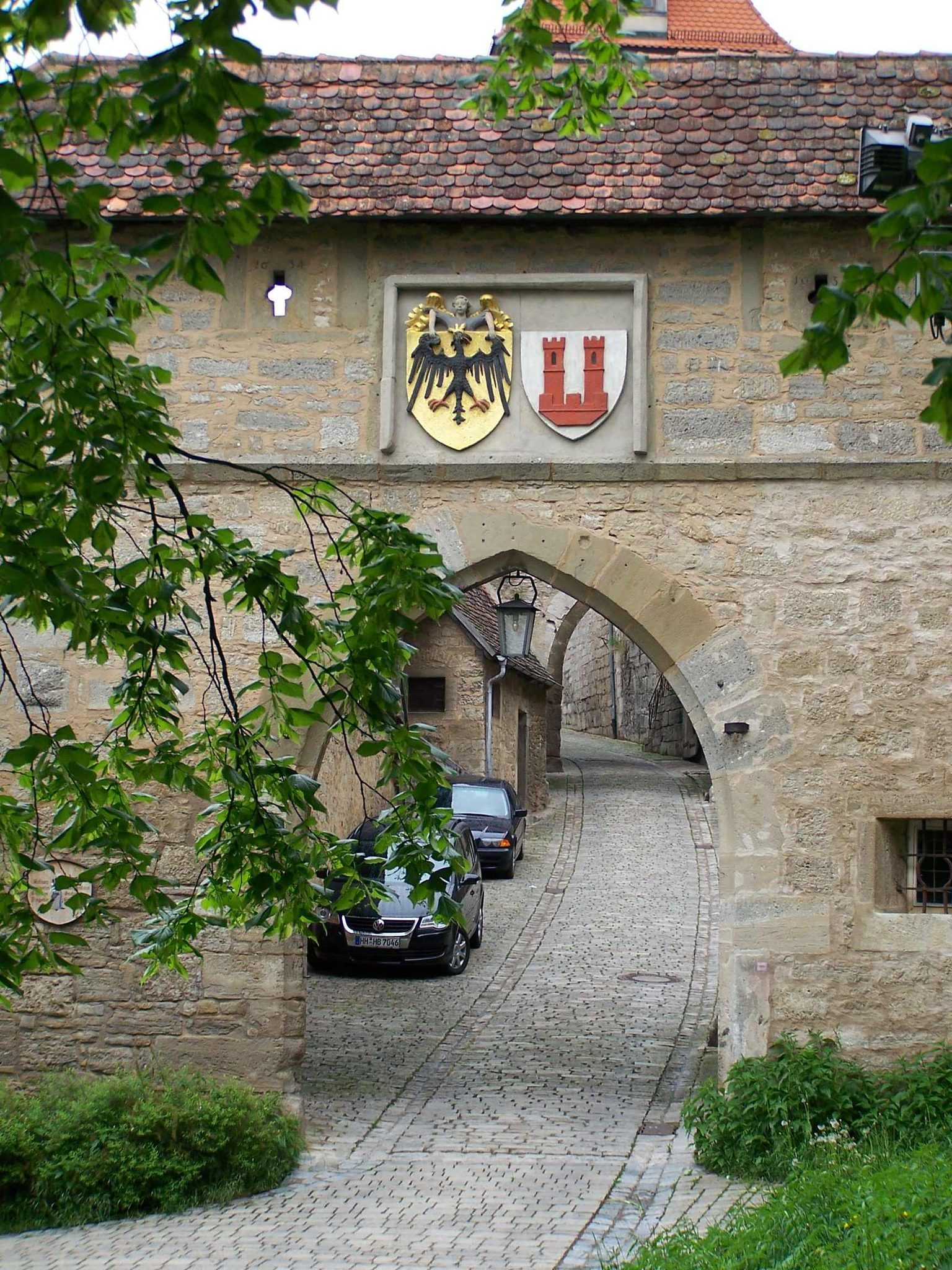
The War of the Escutcheons in 1566 brought the dispute into the open. Abbess Marguerite de Haraucourt displayed escutcheons bearing imperial eagles in and around Remiremont to assert the chapter’s imperial immediacy and independence from Lorraine. Duke Charles III removed them by force while Emperor Maximilian II was absent and compelled the abbess to submit. He established ducal sovereignty over the abbey’s former regalian rights. Remiremont retained some shared revenues and jurisdictions but did not recover its earlier political position.
During the Thirty Years’ War, a wider European conflict that devastated much of central Europe, French forces commanded by Turenne besieged Remiremont in July 1638. French artillery opened three breaches in the town walls. Catherine of Lorraine, the abbess, the canonesses, and the inhabitants repaired the damage within hours. Catherine then secured recognition of the abbey’s territory as neutral, protecting its population from further wartime devastation.
On 12 May 1682, an earthquake caused the transept vaults of the abbey church to collapse. Louis XIV, whose armies then occupied the duchy of Lorraine, contributed 6,000 livres towards rebuilding the church. The chapter also maintained distinctive religious and political customs. The Kyrioles were a Whit Monday homage ceremony in which neighbouring parishes formally honoured the chapter. When a new abbess was elected, the dukes of Lorraine were expected to come to Remiremont and swear that they would continue protecting the abbey.
Suppression and protection
The chapter was suppressed during the French Revolution by a vote on 7 December 1790. The abbey church was closed, and the institution ceased to exist as a chapter. The former abbey church, including its crypt, has been protected as a French historic monument since 29 December 1983. The surviving former abbey complex received an earlier historic-monument registration in 1965.
Remains
Church and crypt
Former abbey church
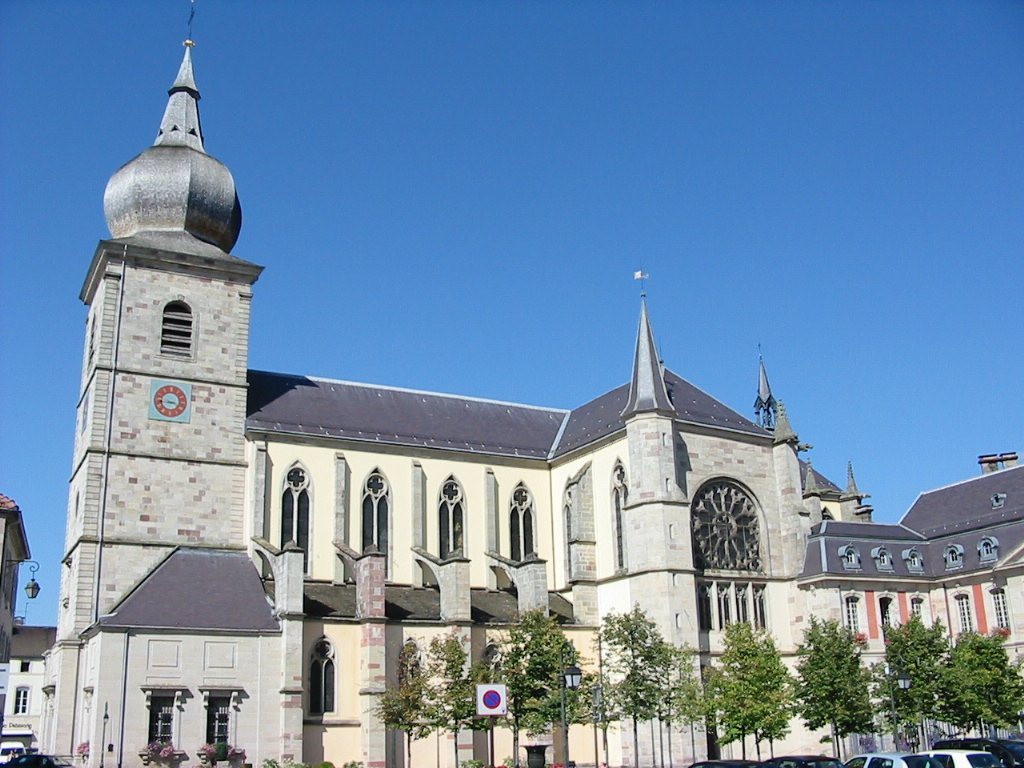
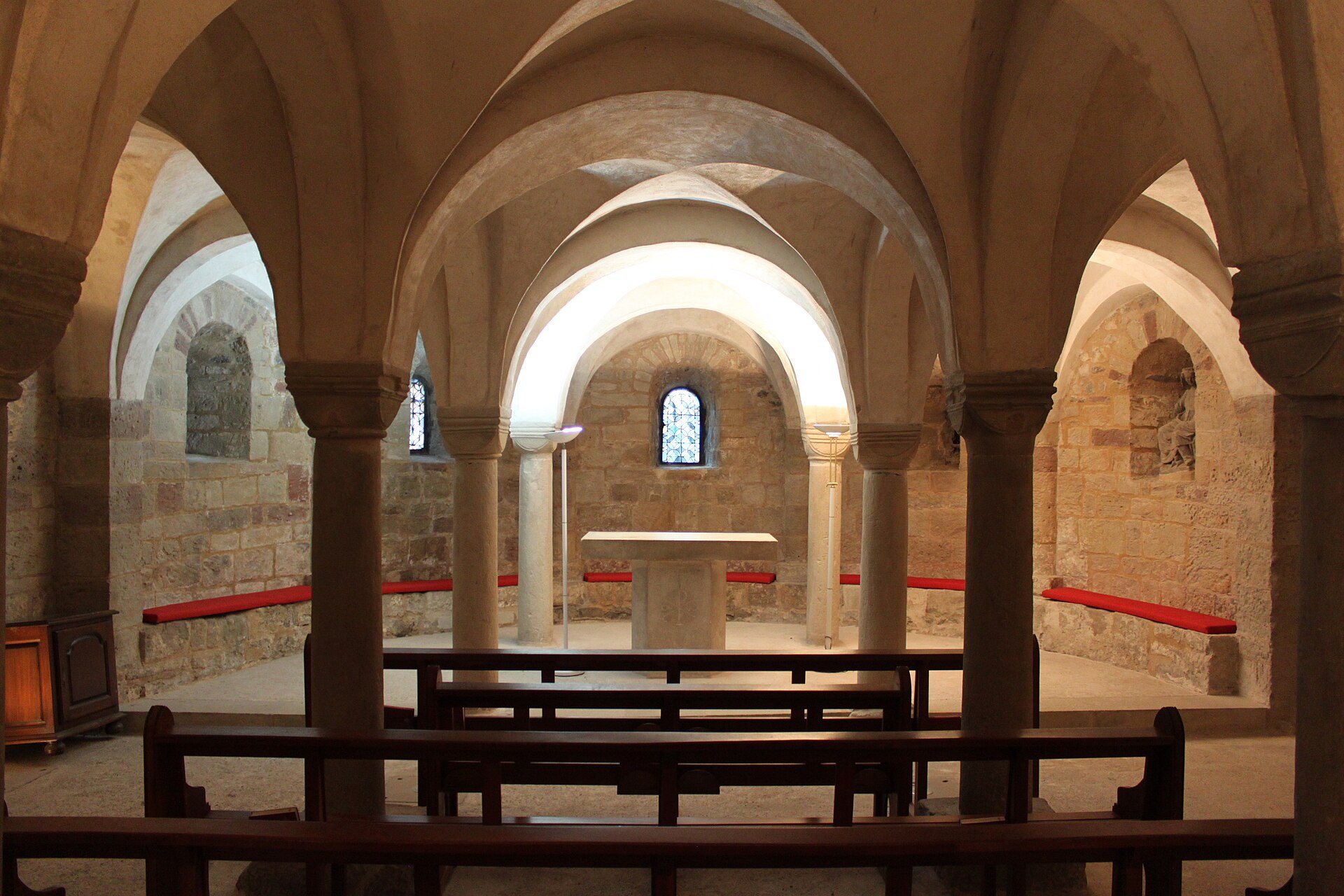
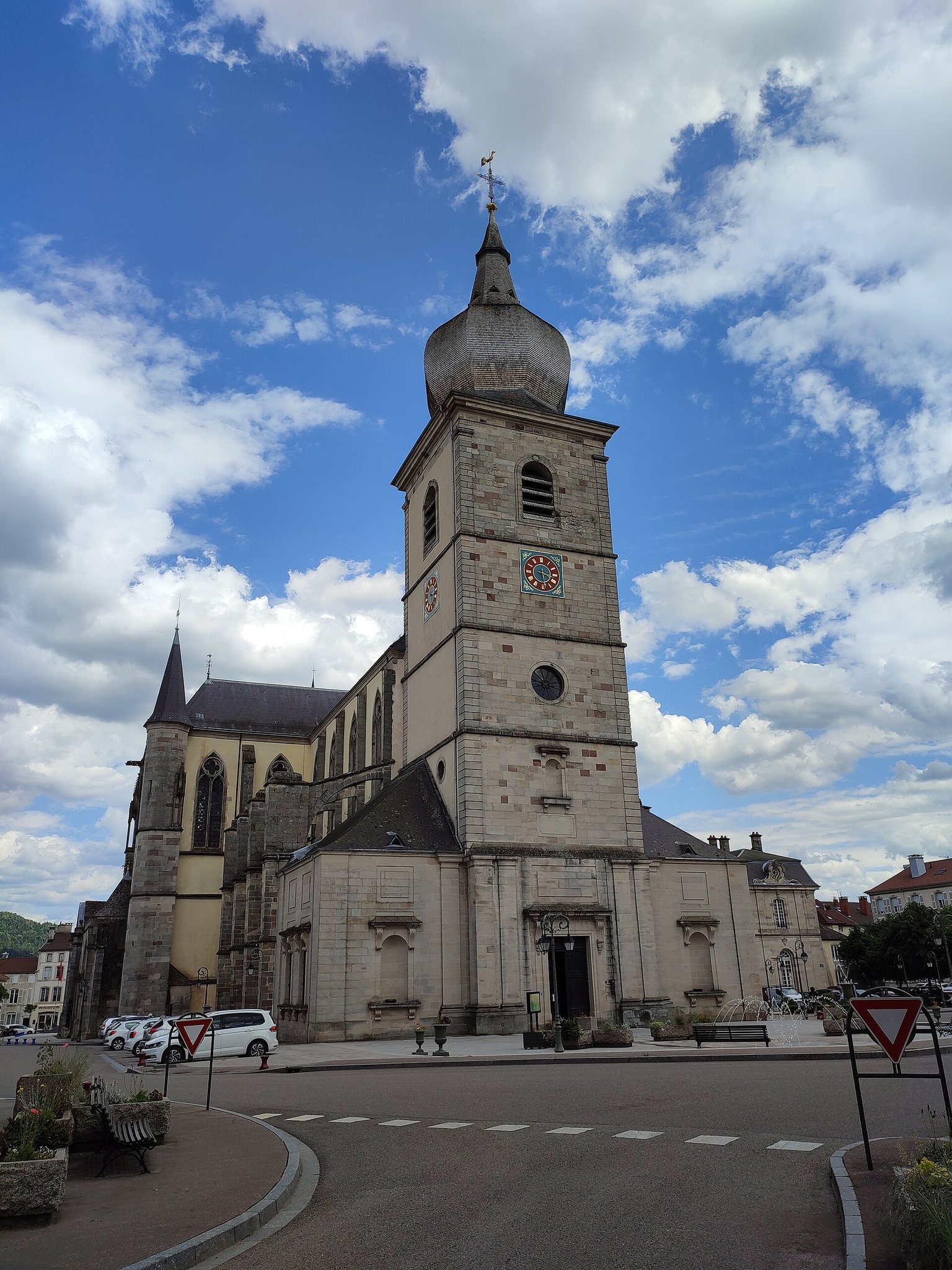
The former abbey church, also known as the Collegiate Church of Saint Peter and Notre-Dame de Remiremont, forms the principal surviving religious building. It was consecrated in 1051 and rebuilt or altered several times. Its crypt preserves an eleventh-century hall crypt flanked by two single-nave side crypts, providing a surviving architectural link with the medieval abbey.
Transept vaults
The church’s transept vaults collapsed in the earthquake of 1682 and were subsequently reconstructed. Their rebuilding forms part of the building’s later physical history, alongside the earlier medieval fabric and the alterations made over successive phases.
Canonesses’ enclosure
Former abbey palace
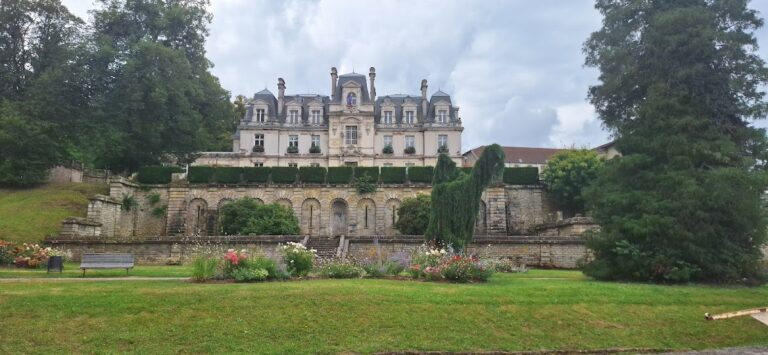
The former abbey palace was built in 1751 or 1752 in the style of a bishop’s palace. It now serves as Remiremont’s town hall and also contains judicial and library functions. Its later civic use preserves the building as part of the town’s surviving former abbey complex.
Private canonesses’ houses
Approximately fourteen private houses of the former canonesses survive near the church. Dating principally from the seventeenth and eighteenth centuries, they reflect the chapter’s secular and non-cloistered way of life. The canonesses lived in their own houses with domestic servants rather than in a common cloister, and the residential buildings formed part of a large enclosure around the church.
Museum interiors
Some former canonesses’ houses now contain museums. The Musée Charles Friry holds paintings and small religious artworks, and some rooms retain eighteenth-century furnishings. The Fondation Charles de Bruyère museum contains prehistoric and early historic material, paintings, and sculptures.
Territorial and landscape remains
The abbey’s wider possessions included seigneurial houses, mills, baths, forests, waterways, grazing grounds, fisheries, toll passages, and administrative centres. Specifically recorded properties included the seigneurial house and bath called Bain la Rein at Plombières-les-Bains, mills at Thillot and Bayecourt, the abbey grange at La Mouline, and the mint workshop at Fénétrange.
The associated landscape extended through Saint-Mont, the Upper Moselle and Moselotte valleys, the Cleurie valley, the Vosges forests and high pastures, the Vologne River, and the Barbey stream. Rivers, streams, woods, and meadows in these areas were administered wholly or jointly by the chapter. Together with the surviving buildings, these territorial features reflect the broad physical setting of the institution’s former authority.