Reicheneck Castle: A Medieval Hilltop Stronghold in Germany
Site at a Glance
- Popularity
- Medium
- Country
- Germany
- Primary era
- Medieval
- Eras represented
- Medieval, Early Modern
- Civilizations
- Holy Roman Empire
- Site type
- Military
- Remains
- Castle
On this page11 sections
History
Königstein origins and succession
Reicheneck Castle is a medieval hilltop stronghold in Germany, probably built by Ulrich II of Königstein before its ownership was first recorded in 1238. The castle complex is broadly dated to the 12th and 13th centuries. Ulrich was an imperial ministerial, a member of the service nobility whose standing depended on service to a ruler, and a supporter of the Hohenstaufen, the ruling dynasty of the Holy Roman Empire. The name Reicheneck, meaning Rich Corner, expressed the Königstein family’s standing and confidence.
A chapel dedicated to St Bartholomew, patron saint of mining, is recorded in 1253. The family’s economic base may have relied on iron-ore mining, which was widespread in the Hersbruck region during the High Middle Ages. Ulrich’s son Wirnt died before 1241, and his grandson, also named Wirnt, died around 1242 after a riding accident near Engelthal. The Königstein male line ended. After Ulrich’s death in the winter of 1252-53, the castle passed to his son-in-law Walter Schenk von Klingenburg, who had married Ulrich’s daughter Elisabeth.
The Schenks of Reicheneck
Walter’s father, Konrad Schenk von Klingenburg, was a nobleman close to the emperor and part of a branch of the Schenks of Limpurg. The family’s ancestral castle was Clingenburg, above Klingenberg am Main. After selling their Upper Main holdings, Walter’s descendants began calling themselves Schenks of Reicheneck in 1278. Schenk was a court title for a cupbearer that also appeared in noble family names.
Reicheneck became the center of a lordship supported by numerous retainers and castle guards. These men held farmsteads, small castles, or fortified residences in settlements including Birkensee, Egensbach, and Offenhausen near Engelthal.
Feuds and transfers of authority
During the 14th century, the family divided into Walthers and Konrad branches, which shared the castle and repeatedly clashed with the counts palatine, Nuremberg, and the landgraves of Leuchtenberg. After Konrad III suffered a defeat in a feud with the counts palatine and Nuremberg, he granted his half of Reicheneck as a fief, property held under obligations to a superior lord, to Friedrich I of Hohenlohe, bishop of Bamberg, in 1347-48. This arrangement probably prevented the counts palatine from destroying the castle. Its terms required Konrad to provide four years of military service and make his half and its garrison available in wartime for ten years.
The bishop soon granted the castle half as a fief to Count Ludwig of Hohenlohe, who sold it to King Charles IV in 1353. Charles became emperor in 1355 and declared the property a hereditary fief of the Bohemian Crown in 1356. The Walthers branch then gave him the right to enter and occupy its previously freely held half, enabling imperial troops to take the entire castle during wartime. Under the 1373 Treaty of Fürstenwalde, Charles exchanged substantial parts of New Bohemia, territories associated with the Bohemian crown in the Upper Palatinate and neighboring Franconia, for the Margraviate of Brandenburg. The Bohemian fief and the right of entry over the Walthers’ half consequently passed to the Duchy of Bavaria.
Absberg rule and destruction
Around 1390, after three members of the Konrad branch had died, Ludwig II Schenk of the Walthers branch acquired its remaining shares, apart from an eighth held by Erhard Schenk. When Ludwig died in 1395, his daughters Margaretha and Klara inherited the castle and passed it to their husbands, Hans and Heinrich of Absberg zu Rumburg. The Absbergs had been involved in a bitter feud, including one with Nuremberg, since 1388. Although they pledged to King Wenceslas in 1397 to uphold the public peace, they soon resumed hostilities.
On 7 July 1398, troops of Friedrich VI, Nuremberg’s burgrave, an official with authority over a castle and its territory, joined forces from the city to besiege and capture Reicheneck. At Wenceslas’s command, they burned and demolished the castle within six days. In 1400, Rupert, elected King of the Romans after Wenceslas lost that office, prohibited an attempted rebuilding. A Nuremberg administrative castle later occupied the site during the second half of the 16th century; it was demolished in 1807.
Remains
Layout and setting
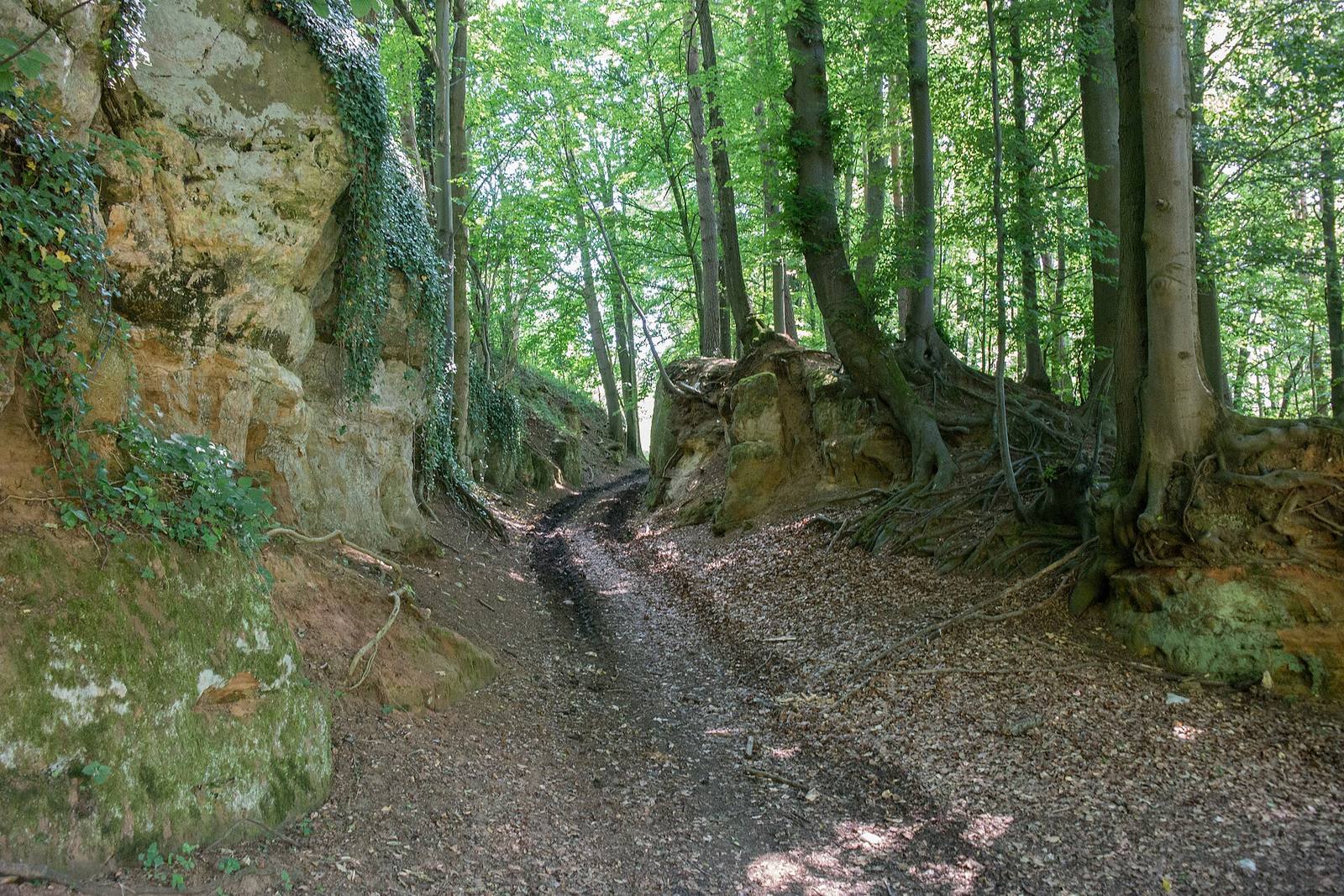
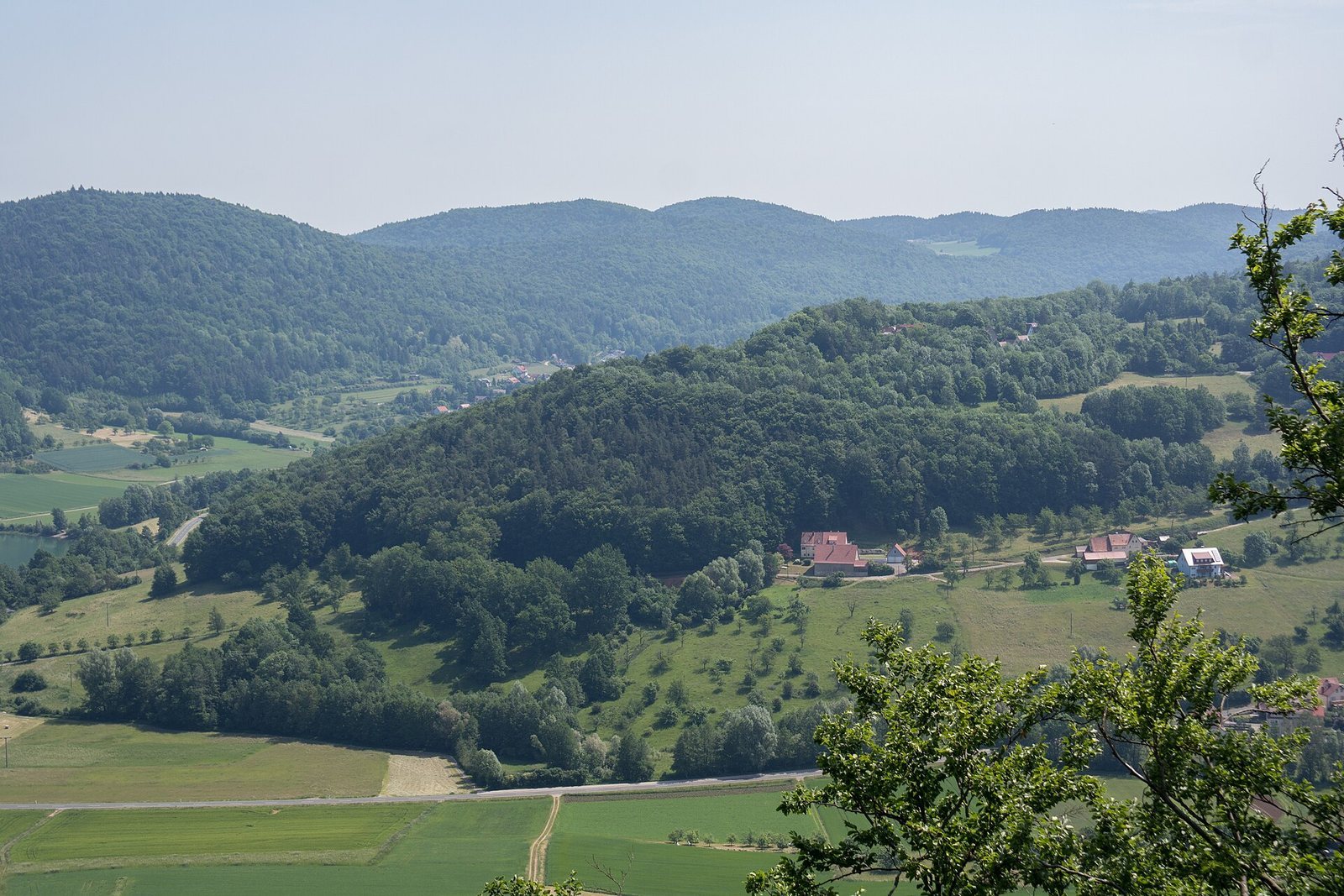
Reicheneck was a two-part hilltop castle built on a spur in the central Hersbrucker Alb, part of the Frankenalb. The site lies about 500 metres above sea level and approximately 130 metres above Happurger See. The Happurger Bach valley borders the spur to the northeast, while the Kainsbach valley lies to the west.
Surviving structures and features
Outer moat and masonry
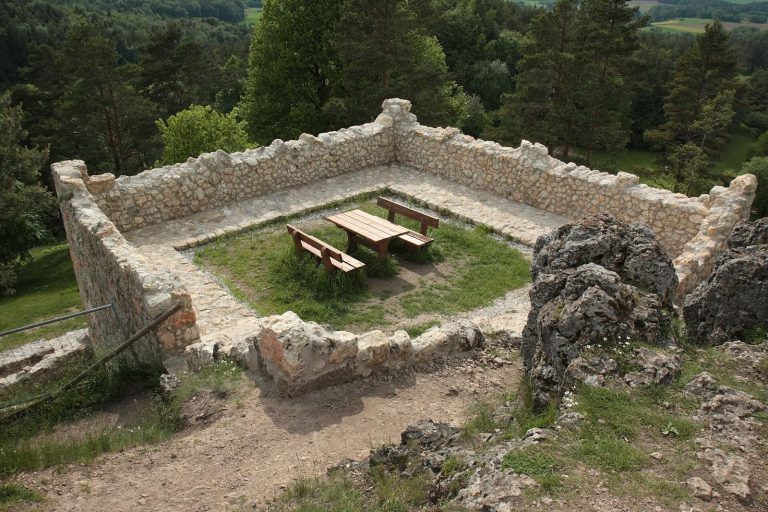
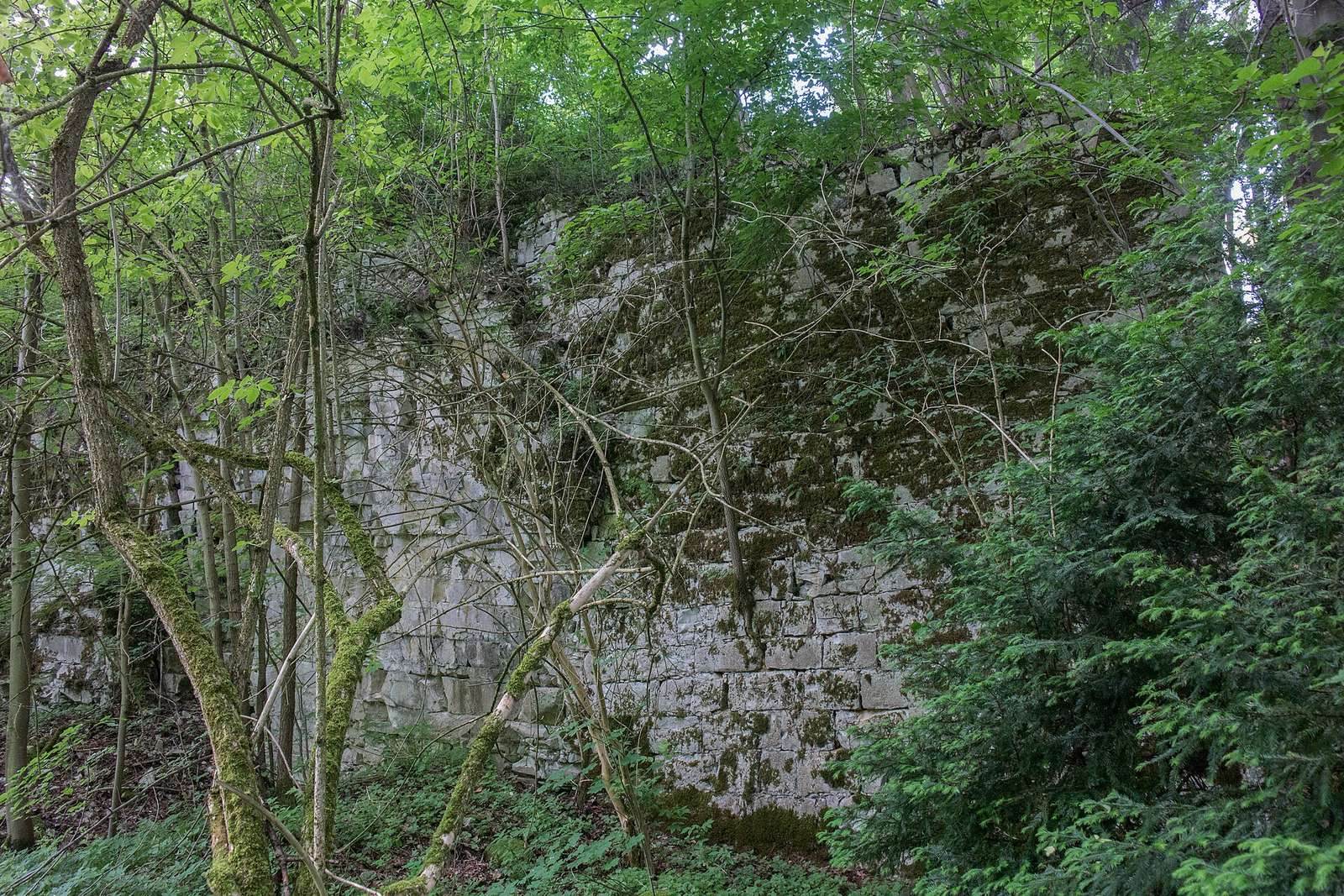
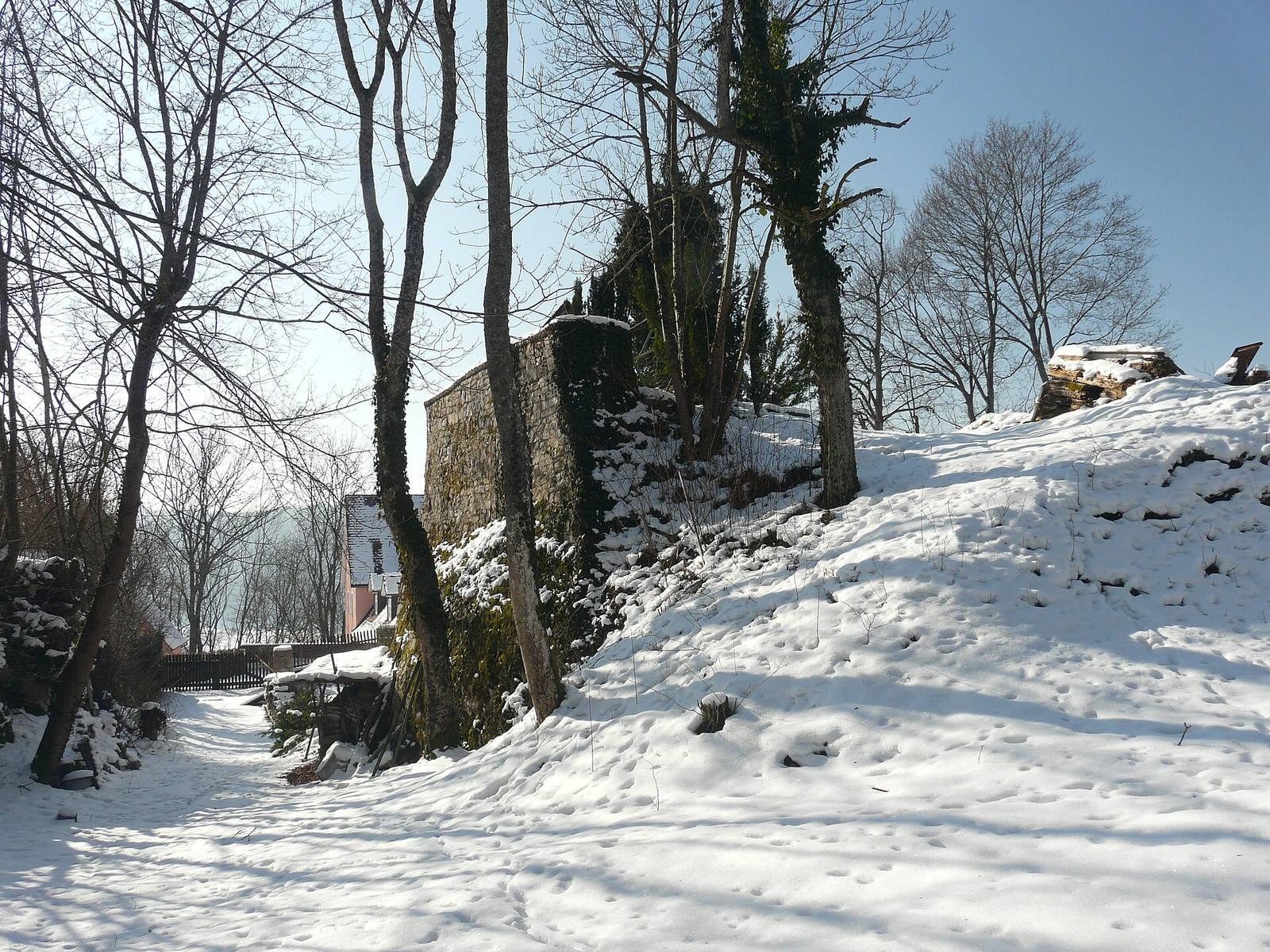
Masonry remains lie beside the castle’s outer moat. The surviving fabric is sparse, and the complex is now a ruin.
Former outer gatehouse
The former outer gatehouse is now a dwelling. This two-storey building has a gabled roof and limestone-rubble masonry, and dates to the second half of the 16th century.
Chapel and residential chambers
The castle also included a chapel and probably had two residential chambers by 1278. Such chambers were commonly heated in medieval castles.