Reformed Church of Turda-Nouă: A Historic Church and Fortified Enclosure in Romania


Site at a Glance
- Rating
- 4.6
- Popularity
- Very Low
- Country
- Romania
- Primary era
- Early Modern
- Eras represented
- Medieval, Early Modern, Modern
- Civilizations
- Habsburg, Hungarian
- Site type
- Religious
- Remains
- Fortified Church
On this page7 sections
History
The Reformed church of Turda-Nouă is a historic church in Turda, Romania, whose present building was erected between 1500 and 1504. Its long history began with a Roman Catholic church on the site in 1179, and it later became a Reformed, or Calvinist, church within the Reformed Church District of Transylvania and the Turda Reformed deanery.
Medieval foundations
The first church was destroyed along with the town during the Tatar invasion of 1241. Tradition connects its rebuilding with Charles Robert of Anjou, the fourteenth-century king of Hungary and Croatia, who is said to have dedicated it to Saint Ladislaus, a medieval Hungarian king regarded as a Christian saint and dynastic patron. The rebuilt church was associated with the Early Gothic style. Turda-Nouă was listed as a Roman Catholic parish with a church in the papal tithe register of 1332 to 1337, and an earlier church on the site was built during 1311 to 1340.
The present church and later changes
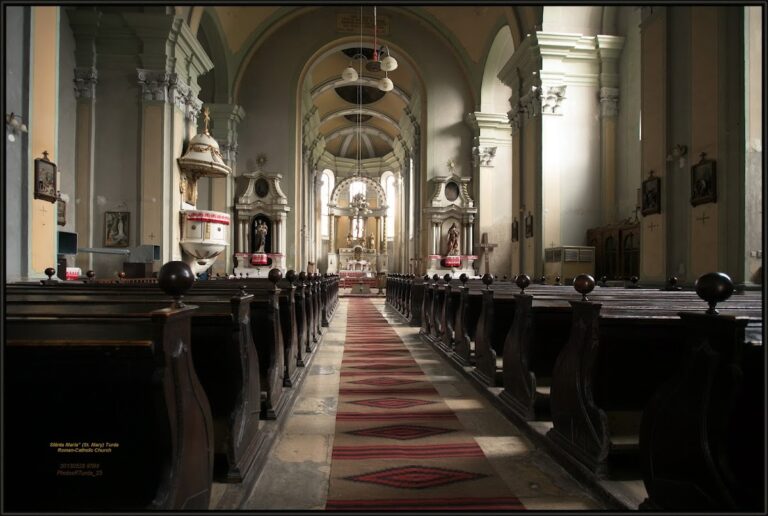
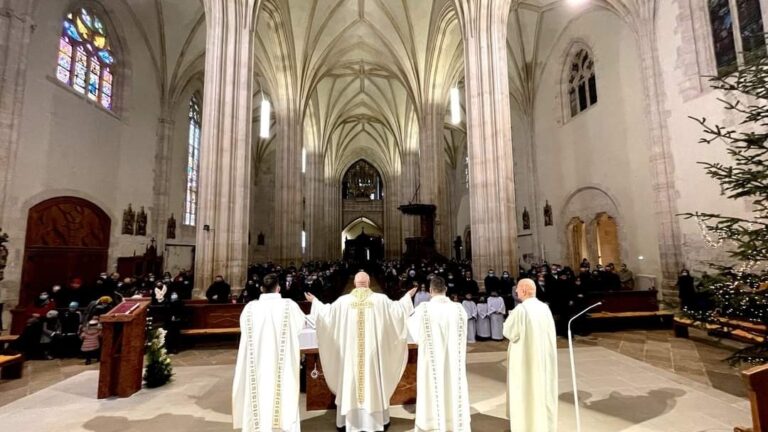
The present church was completed in 1504 by a construction team that also worked on the Roman Catholic Church of Turda Veche. During the sixteenth century, the building changed from Roman Catholic worship to the Reformed faith. Military conflicts in 1600 and 1601 caused further destruction. In the eighteenth century, the main nave, the central hall of the church, was restored in the Baroque style and received stucco decoration. Its Baroque interior dates to 1740.
The exterior was renovated between 1969 and 1972. The church is listed in Romania’s national register of historic monuments under code CJ-II-m-B-07789. Because only a limited number of its original defensive elements survive, it is only rarely included among Transylvania’s fortified churches.
Remains
Church building
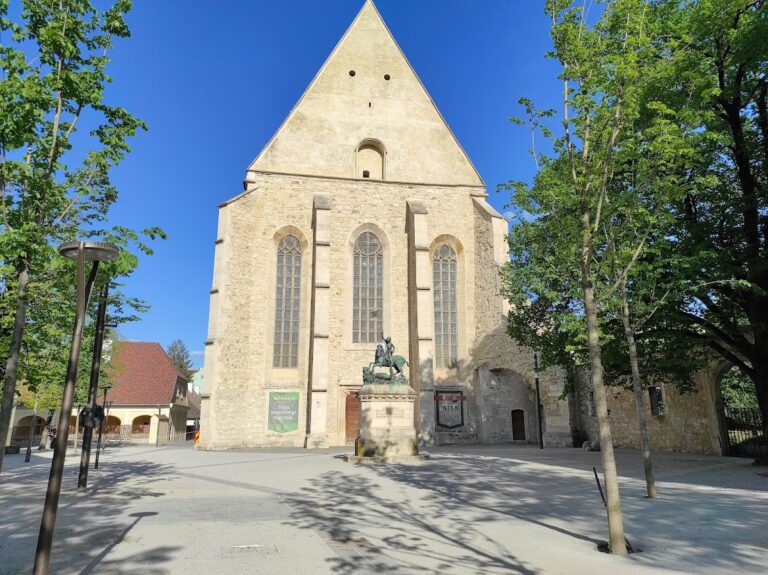
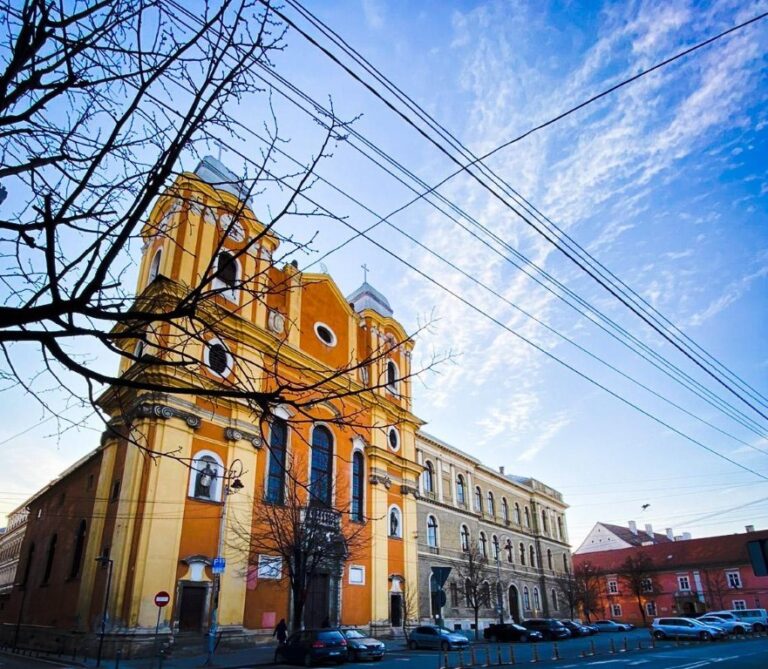
The church is a single-nave hall measuring approximately 28 metres in length, 8 metres in width, and 11 metres in height. Its eastern end has a polygonal altar area, while a sacristy, a room for preparing and storing worship items, is attached on the north side. A porch stands on the south facade, and a bell tower rises on the west. The sanctuary and sacristy preserve Late Gothic changes associated with the rebuilding completed in 1504. The present consoles are in the Empire style, an early nineteenth-century neoclassical form, and the bell tower is Baroque.
Massive buttresses support the north and south facades and the choir. The main entrance opens on the south side beneath a porch covered by a semi-cylindrical vault carried on a double arch. The windows end in pointed arches on the exterior and have simple reveals without decoration. The year 1504 appears in Gothic numerals carved into the southern buttress of the choir.
Fortified enclosure
A fortified elliptical wall was constructed around the church in the fifteenth century. It stood approximately 4 to 5 metres high and was strengthened by buttresses placed at intervals of about 4 to 5 metres. The enclosure originally contained six semicircular bastions and one square bastion. A bastion is a projecting defensive tower or platform. The square bastion also served as the bell-ringer’s residence and survives as the entrance tower to the churchyard.
One semicircular bastion, known as the Bailiff’s Tower, also survives and carries the incised year 1870. The enclosure retains loopholes and a southeast gate tower. In the northwestern part of the wall, the remains of a pointed-arched portal stand beside the inscription “RENOVATUM ANNO 1740 TEMPORE CURATORIS KOMIVES.”
Inscriptions and interior features
A bilingual plaque in Latin and Hungarian is embedded in the south facade. Its moral sequence links peace with prosperity, prosperity with pride, pride with hatred, hatred with war, war with poverty, poverty with humility, and humility with peace.