AlSaraya Alhamra Museum (Red Castle Museum): Libya’s National Museum
Site at a Glance
- Rating
- 4.5
- Popularity
- Low
- Country
- Libya
- Primary era
- Classical
- External website
- Open
- Eras represented
- Iron Age, Classical, Medieval, Early Modern, Modern
- Civilizations
- Amazigh, Ancient Greek, Byzantine, Carthaginian, Garamantian, Italian, Ottoman, Phoenician, Roman
- Site type
- Museum
On this page10 sections
History
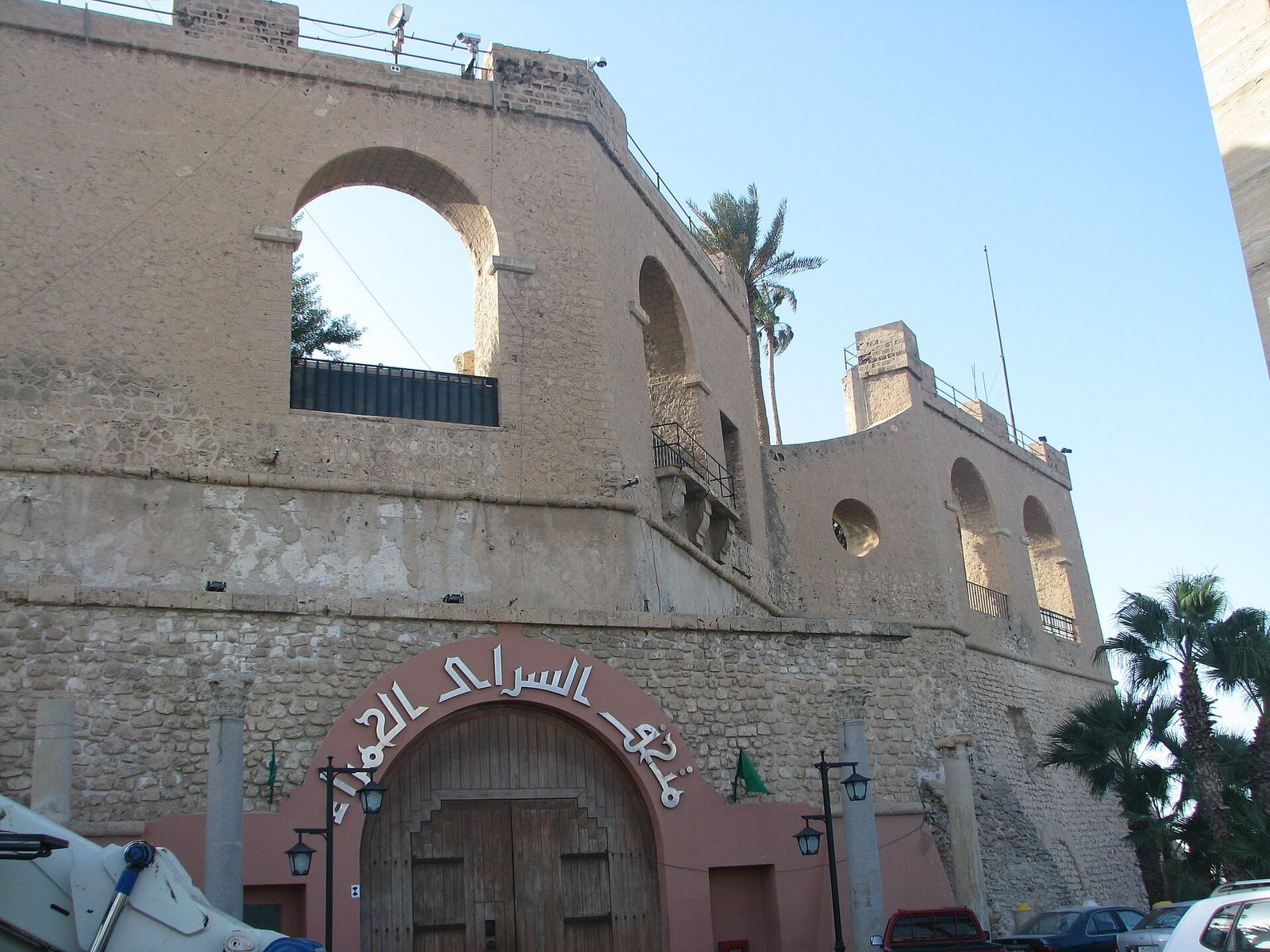
AlSaraya Alhamra Museum (Red Castle Museum) is Libya’s national museum in Tripoli, occupying the historic Red Castle during the country’s Italian colonial period. Established in 1919, it developed from an archaeological museum into an institution covering approximately 5,000 years of Libyan history, from prehistoric communities to the 1953 independence revolution and twentieth-century heritage.
Foundation and colonial transformation
Italian colonial authorities established the museum in 1919 to house archaeological artifacts gathered from across Libya, including material from prehistoric periods. Its first display area occupied a building beside the castle that had previously served as an ammunition store.
During the 1920s, the ammunition-store building and associated castle structures underwent extensive alteration and removal work. Plans for the renovation of the museum building were prepared by Armando Brasini, whose work introduced the characteristic arches. In 1930, the entire castle complex became a museum known as the Classical Museum under Italo Balbo, an Italian Fascist leader and colonial administrator of Italian Libya. The square around the castle was designed during the same decade by Florestano Di Fausto.
War, renaming, and national identity
The Red Castle had previously served as a seat of government. During the British occupation of Libya in the Second World War, the complex came under British control. In 1948, the museum was renamed the Libyan Museum.
Over time, the institution also became known as the Archaeological Museum of Tripoli and the Jamahiriya Museum. The latter name belonged to the period when Jamahiriya was the official state designation used in Libya under Muammar Gaddafi, who ruled the country from 1969 until 2011.
Rebuilding, closure, and reopening
Construction of a new museum complex within the castle walls began in 1982. The work was carried out under the supervision of UNESCO, the United Nations Educational, Scientific and Cultural Organization, to accommodate the historic castle buildings. The complex covers approximately 10,000 square metres and reopened in 1988 as the Assaraya Alhamra Museum–Red Castle Museum.
The museum closed in 2011 because of security concerns following the Libyan Civil War and later unrest. During the conflict, rebels entered the museum. Several objects associated with Muammar Gaddafi were damaged, while staff moved the most valuable objects to another location and placed the remaining Gaddafi-related material in storage.
In March 2023, a committee was established under Libyan government decision no. 117 to reactivate and reopen the National Museum. Its programme included conservation, restoration, modernization, new exhibition technologies, digital transformation, and revision of the historical displays. The museum officially reopened on 12 December 2025 under the name National Museum of Libya, after remaining closed for security reasons from 2011 to 2025. Initial access was limited to school groups.
Remains
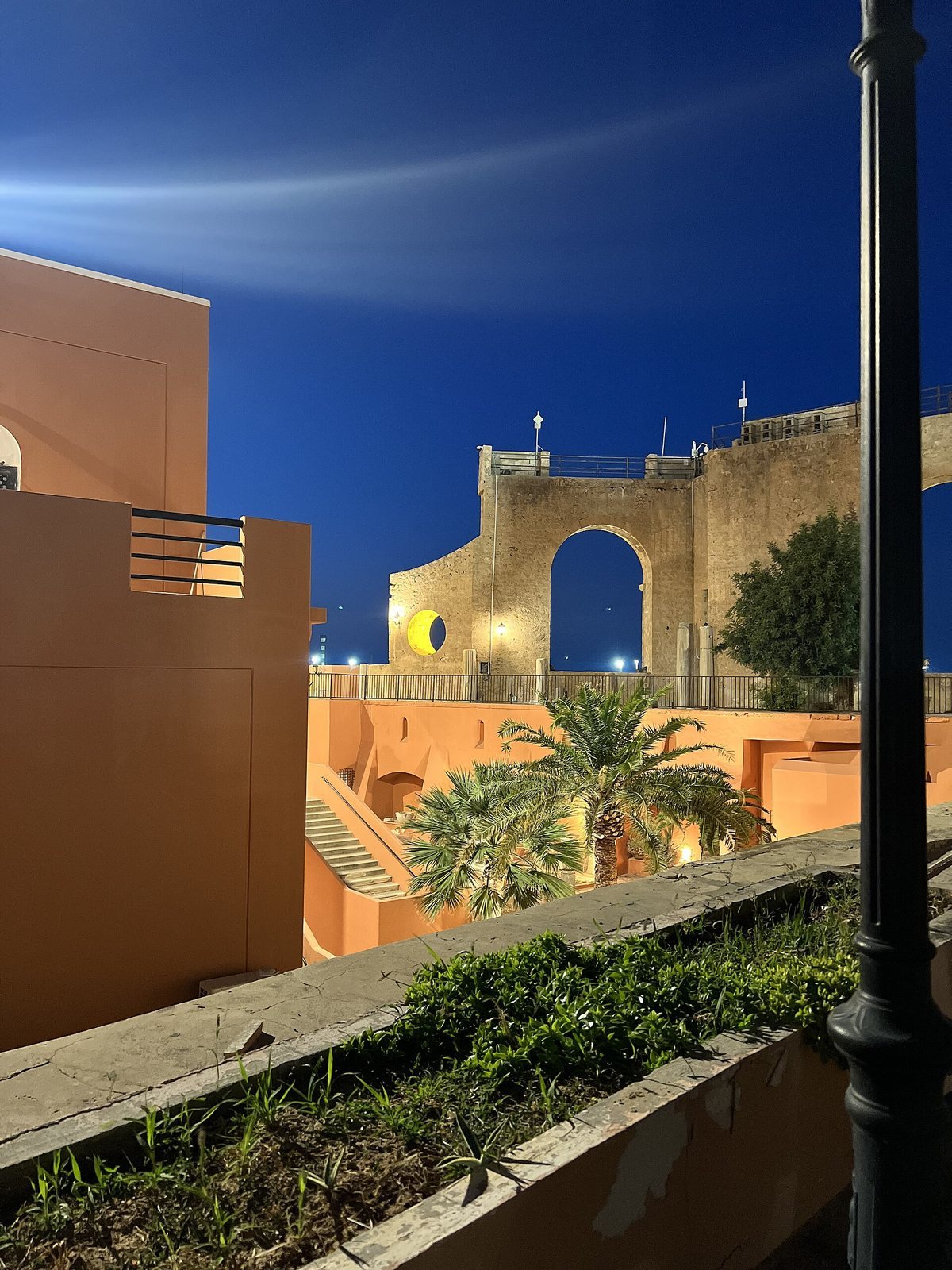
The museum occupies the Red Castle, also called the Red Saraya, on a promontory above and beside Tripoli’s historic old-city quarter, Medina Ghadema. Its entrance faces Martyrs’ Square, the prominent public square in central Tripoli. The museum is arranged across four principal levels or sections, with separate wings and floors assigned to different collections.
Castle architecture and exhibition areas
The surviving museum complex combines historic castle buildings with the arrangements introduced during its twentieth-century conversion. The early-1920s renovation produced the building’s characteristic arches, while the later complex was planned to fit the historic structures within the castle walls. Together, the separate levels and wings provide spaces for archaeological, historical, cultural, and natural-history displays.
Historical collections
Archaeological and cultural displays
The historical collections range from prehistoric Libya and ancient Libyan tribes to the Garamantes, Tuareg, and other Maghreb Berber communities. The Garamantes were an ancient Saharan people associated especially with the Fezzan region, while the Tuareg are traditionally nomadic Berber-speaking people of the Sahara and Sahel. Other galleries address Phoenician-Punic, Greek, Roman, Byzantine, Ottoman, and Islamic Libya, followed by the Italian colonial period, the Second World War, independence, and twentieth-century Libyan heritage.
Antiquities and artworks
Libyan antiquities from several periods include ancient Libyan, Greek, and Roman material. The displays also contain statues and mosaic panels discovered in different parts of Libya, linking objects from varied regions and historical communities within the museum’s wider chronological presentation.
Natural-history displays
The natural-history areas present animal and plant fossils, rocks from different formations, and taxidermied animals. Additional sections are devoted to wildlife, insects, and birds, extending the museum’s scope beyond human history to the natural history of the Libyan region.