Ranis: A Preserved Hilltop Castle in Germany
Site at a Glance
- Rating
- 4.5
- Popularity
- Low
- Country
- Germany
- Primary era
- Medieval
- External website
- Open
- Eras represented
- Medieval, Early Modern
- Civilizations
- Holy Roman Empire
- Site type
- Domestic
- Remains
- Castle
On this page11 sections
History
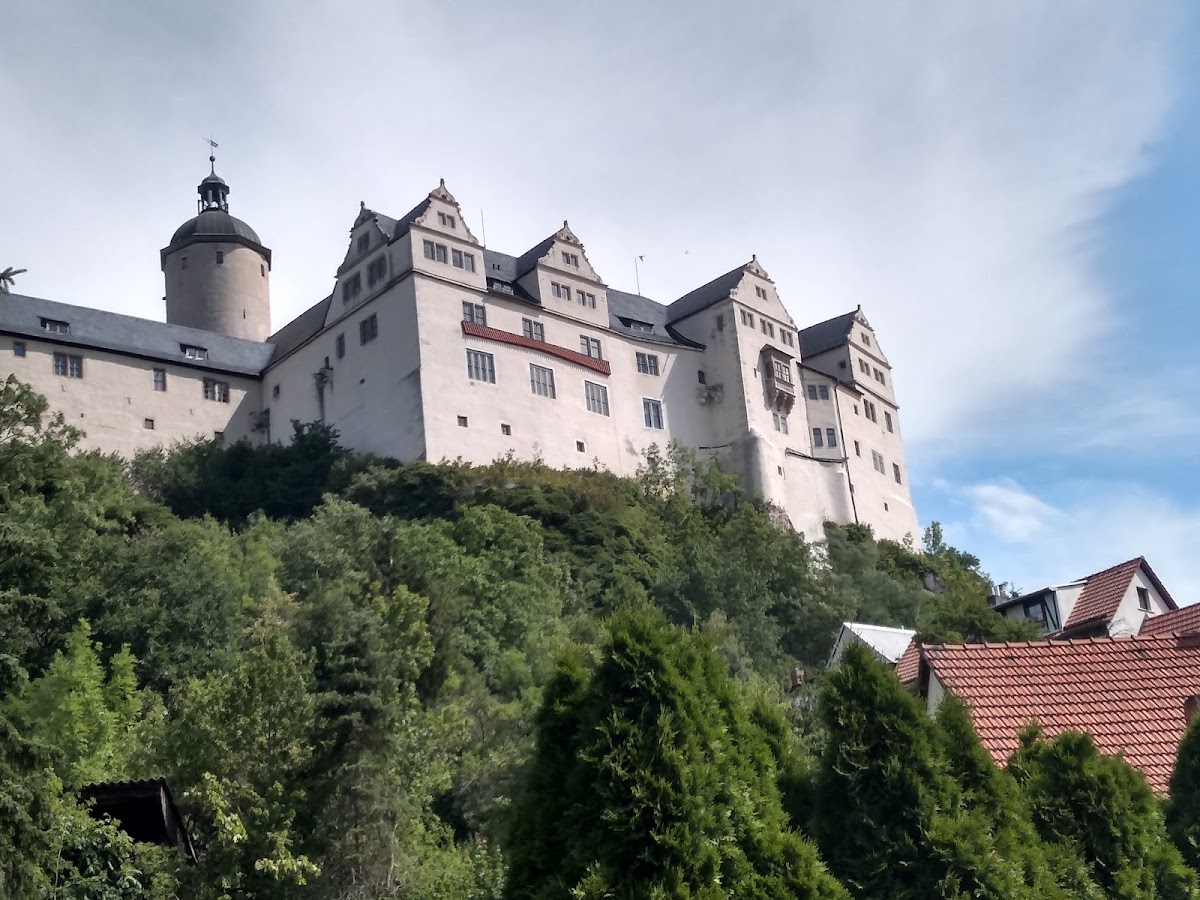
Ranis is a preserved hilltop castle in Germany, occupying a rocky elevation above the town of Ranis. A fortified site stood here by the eleventh century, although its exact foundation date is uncertain. The complex reaches back to the twelfth century, while its recognizable basic layout developed mainly during the thirteenth and fourteenth centuries. Its position made it an imperial frontier fortress in the Saalegau and a support of royal authority in eastern Germany.
Imperial fortress and noble lordship
Ranis first appears in a document in 1084, when Emperor Henry IV, a medieval German king and Holy Roman Emperor, enfeoffed Wiprecht of Groitzsch with the castrum Ranis. Wiprecht later became Margrave of Meissen and Lusatia. By 1199, Ranis was the seat of imperial ministerials, service-dependent nobles who carried out administrative, military, and judicial duties for the king or emperor. As Reichsgut, or property held by the German ruler rather than a territorial prince, the castle held a direct connection to imperial power.
Emperor Otto IV later pledged Ranis and the lordship around Saalfeld to the Counts of Schwarzburg. In 1220, Emperor Frederick II enfeoffed the Schwarzburgs with the castle. Ranis remained associated during the thirteenth and fourteenth centuries with both the Counts of Kevernburg and the Counts of Schwarzburg, noble dynasties that held territorial power in central Germany.
Transfer to the Wettins and Brandensteins
The Schwarzburgs sold Ranis to the Wettin dynasty in 1389. The Wettins were major rulers of Saxony and neighboring territories. In 1463, William III transferred the castle to Heinrich von Brandenstein, the brother of his wife, Katharina von Brandenstein. The castle therefore passed from an imperial and dynastic sphere into the hands of a family with a direct connection to the Wettin court.
Indebtedness led the Brandenstein family to sell Ranis in 1571 to the Lords of Breitenbauch. Under their rule, the town of Ranis and the Ziegenrück district became part of Prussia in 1815. The family adopted the name Breitenbuch in 1906. In 1942, the von Breitenbuch family sold the castle to the German Red Cross. Since 1994, Ranis has belonged to the Stiftung Thüringer Schlösser und Gärten.
From fortress to residence and museum
Building work at the beginning of the seventeenth century changed the character of Ranis. The addition of the south wing in the late Saxon Renaissance style gave the fortified complex a more representative residential function. Its decorated gables belonged to this transformation from defensive stronghold into a residence suited to aristocratic life.
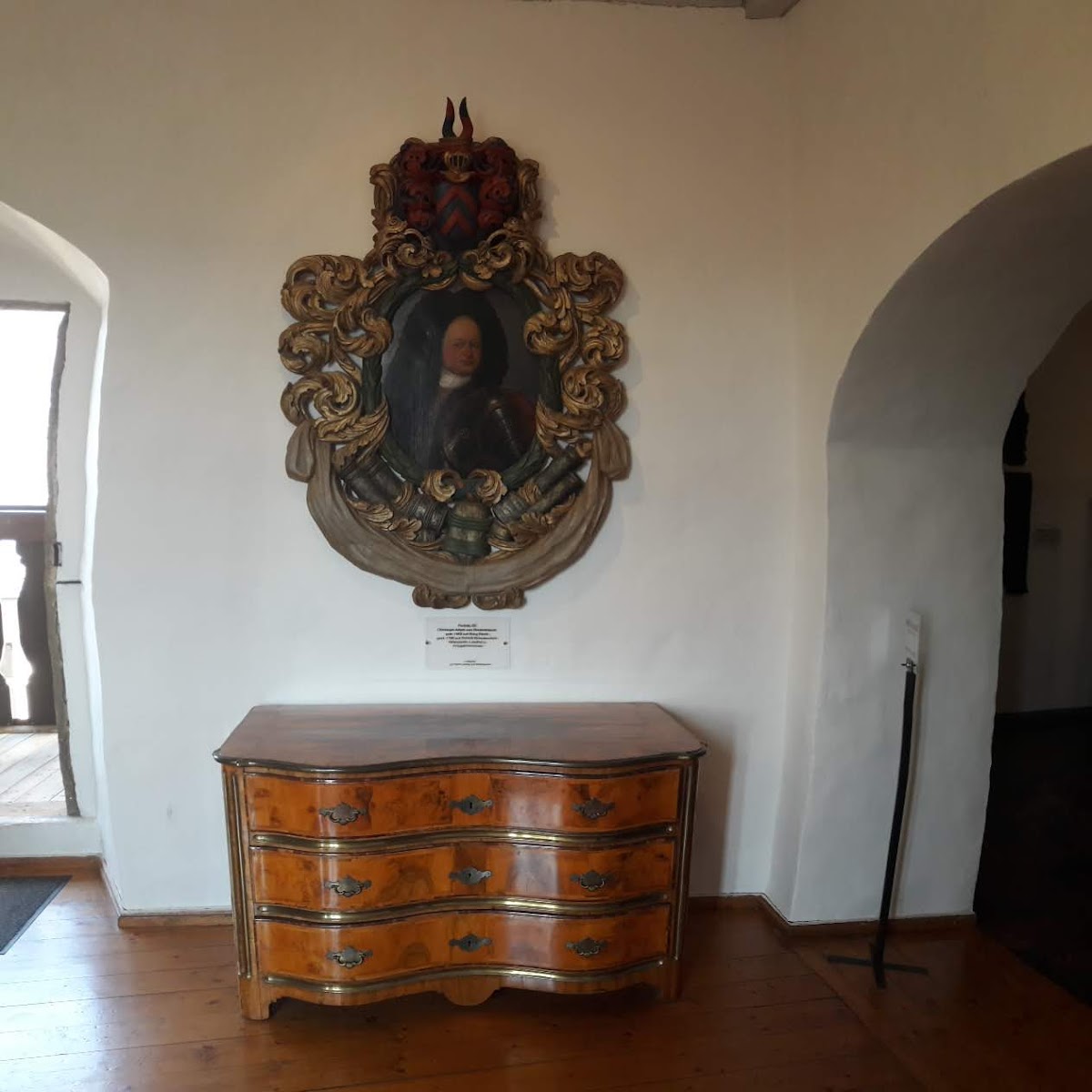
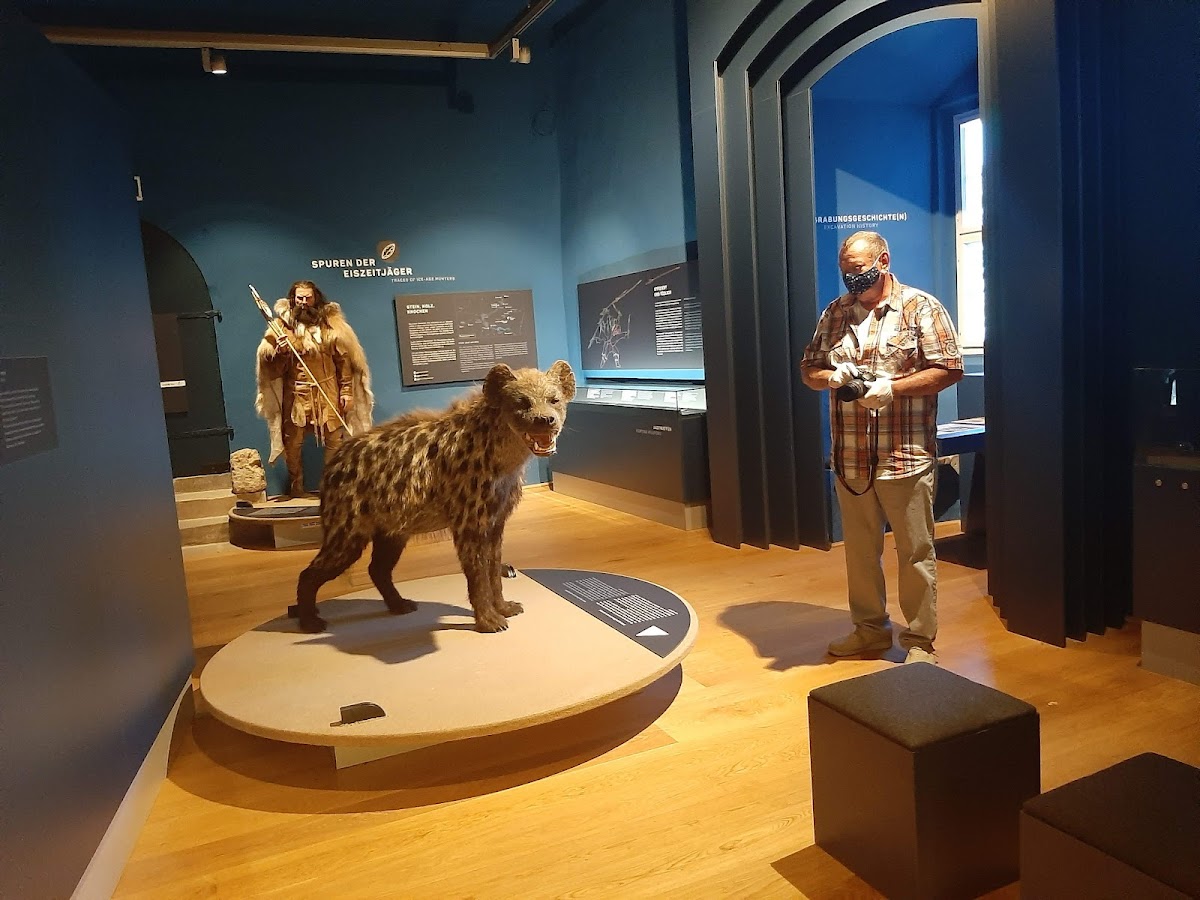
Dietrich von Breitenbuch established a castle museum in 1926. After the Second World War, the town of Ranis re-established it in 1956 as a local history museum. Its subjects include the history of the castle and its surroundings, the Ilsen Cave beneath the castle, regional geology and seismology, and prehistoric and early historic archaeology.
The museum faced a serious financial threat in April 2014, when the German Cultural Council placed it in Category 1 of its Red List of Culture after the municipal council withdrew its funding. The state of Thuringia subsequently announced support for the Saale-Orla district from 2015 to 2017 to secure operations, together with plans for a sustainable funding concept and exhibition modernization. Other twentieth-century uses included a restaurant established in 1928 by the von Breitenbuch family to help meet maintenance costs and a bear enclosure that existed around 1940. The restaurant is no longer operated. The largest renovation project focused on the south wing and was completed in 2008 with support from the European Regional Development Fund.
Remains
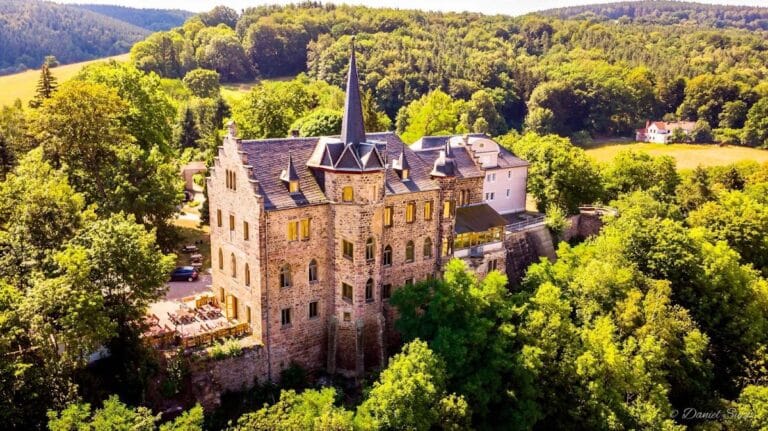
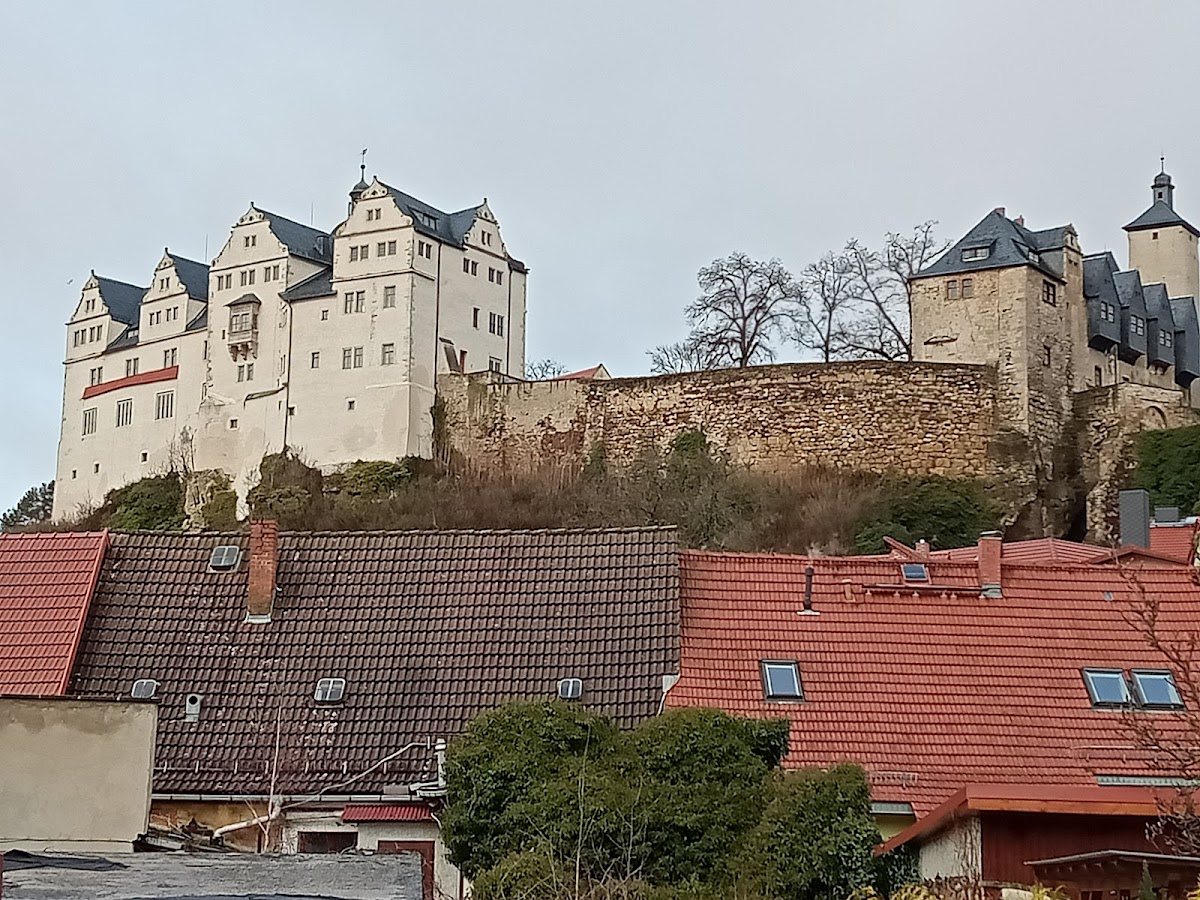
Ranis is a preserved Höhenburg, or castle built on elevated ground for defense and command of the surrounding area. It stands at 405 metres above sea level, in and above the town, on the rock of a Zechstein reef that forms part of a larger reef complex above the Orla Valley. The complex is arranged around a small upper castle in the west, a small inner courtyard, a circular tower, the south wing, and two spacious outer baileys.
Fortifications and courtyards
Upper castle and tower
The upper castle occupies the western part of the complex and encloses a small inner courtyard. Its circular bergfried, the principal tower of a medieval German castle and a strong defensive refuge, rises 38 metres. Together, these elements form the elevated core of Ranis and preserve the principal defensive organization of the medieval castle.
Outer baileys and gate defenses
Two spacious outer baileys extend beyond the upper castle. The preserved outer-bailey building separates the large castle courtyard to the east from the outer-bailey area, which formerly contained the economic buildings. A vaulted tunnel descends from this area toward the old town. The outer-bailey building and eastern fortification wall were protected by a Zwinger, a defended strip between two lines of fortification, as well as by an outer ditch and a drawbridge. The eastern outer bailey also contains the main gate and service buildings.
Residential and subterranean features
South wing
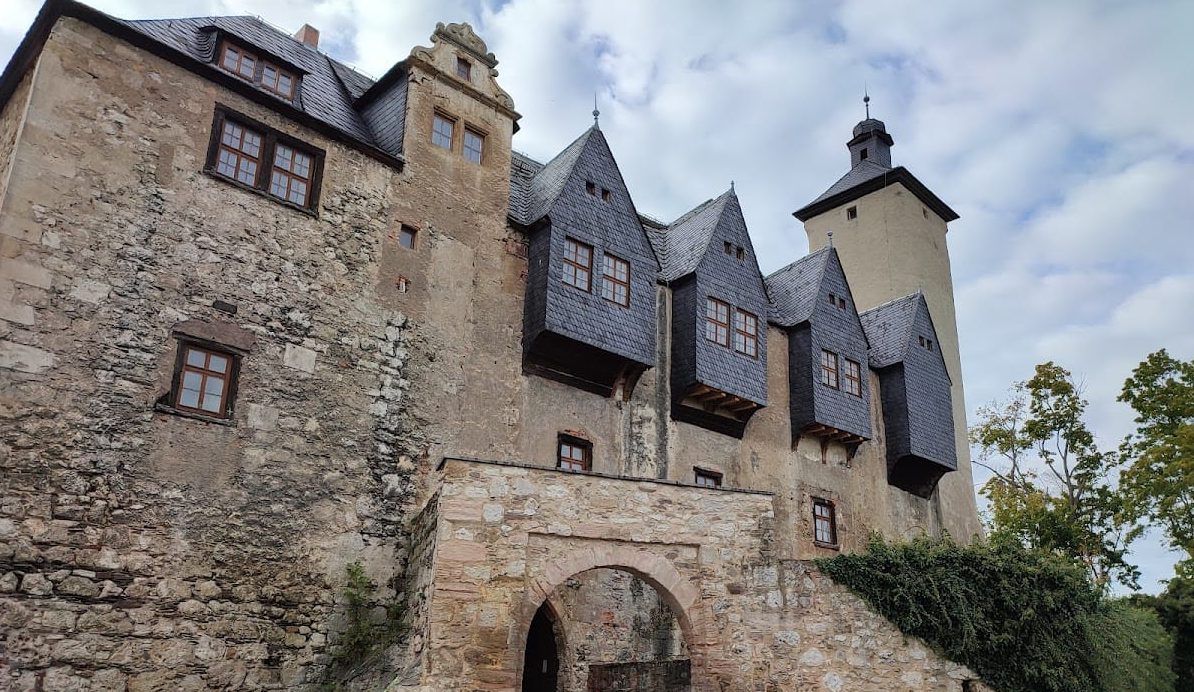
The south wing dominates the castle’s present appearance. Added during building works at the beginning of the seventeenth century, it follows the late Saxon Renaissance style. Its characteristic gable oriels, projecting upper structures associated with the gables, gave the residence a more formal and representative appearance while remaining part of the fortified complex. Renovation of the south wing was completed in 2008.
Ilsen Cave
The small Ilsen Cave lies in the rock beneath the castle, within the outer-bailey area. It forms part of the physical setting of Ranis and is also presented in the castle museum alongside the site’s regional geology, seismology, and prehistoric and early historic archaeology.