Cove Fort, Utah: A 19th-Century Way Station and Fort
Site at a Glance
- Country
- United States
- Primary era
- Modern
- Eras represented
- Modern
- Civilizations
- Unclassified
- Site type
- Military
- Remains
- Fort
On this page7 sections
History
Cove Fort is a stone fort in Utah, United States, founded in 1867 by Latter-day Saint pioneer and builder Ira Hinckley. Brigham Young, an early leader of the Church of Jesus Christ of Latter-day Saints, a Christian restorationist denomination, selected the site and requested the fort as a way station on the Mormon Road, an overland route used by Latter-day Saint travelers.
Early travel station
Young chose a location roughly halfway between Fillmore, then the capital of the Utah Territory, and Beaver, the nearest city. A defensive enclosure made of upright wooden stakes, called Willden Fort, already stood there and sheltered crews building Cove Fort. A town was planned, but the limited water supply could not support a large population.
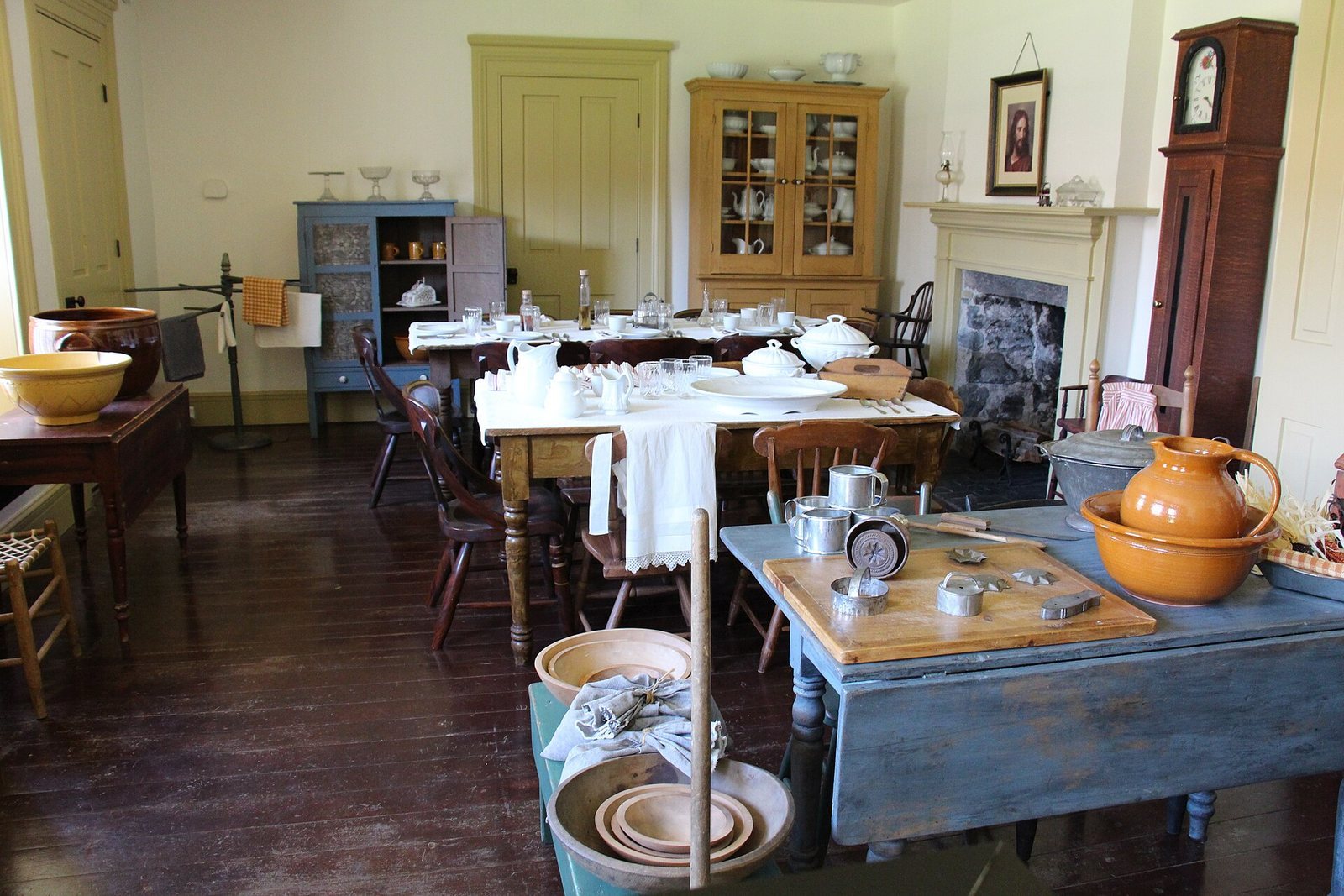
For many years, two stagecoach lines and other travelers stopped at the fort each day. It sometimes lodged and fed as many as 75 people at once. A blacksmith and farrier, who shod horses and other working animals, repaired wagon wheels as well. The fort also operated as a telegraph office.
The Kesler years
In the early 1890s, the Church of Jesus Christ of Latter-day Saints decided the fort was no longer needed and leased it to several parties. W. H. Kesler began leasing the property in 1903, and the church sold it to him in 1911.
When Kesler visited in 1903, a fire had destroyed the rooms along the north side, and parts of the fort were badly deteriorated. In spring 1904, Kesler and his wife, Sarah, moved in to raise a family and earn a living from cattle and horses. They gradually repaired the fort, cultivated alfalfa, planted fruit trees, and rebuilt the north-side rooms in 1917.
Return to church ownership
In 1988, the Hinckley family bought Cove Fort and donated it to the Church of Jesus Christ of Latter-day Saints. The church restored the fort and reopened it as a historic site. Cove Fort is listed on the U.S. National Register of Historic Places, a federal list recognizing historic sites and properties.
Remains
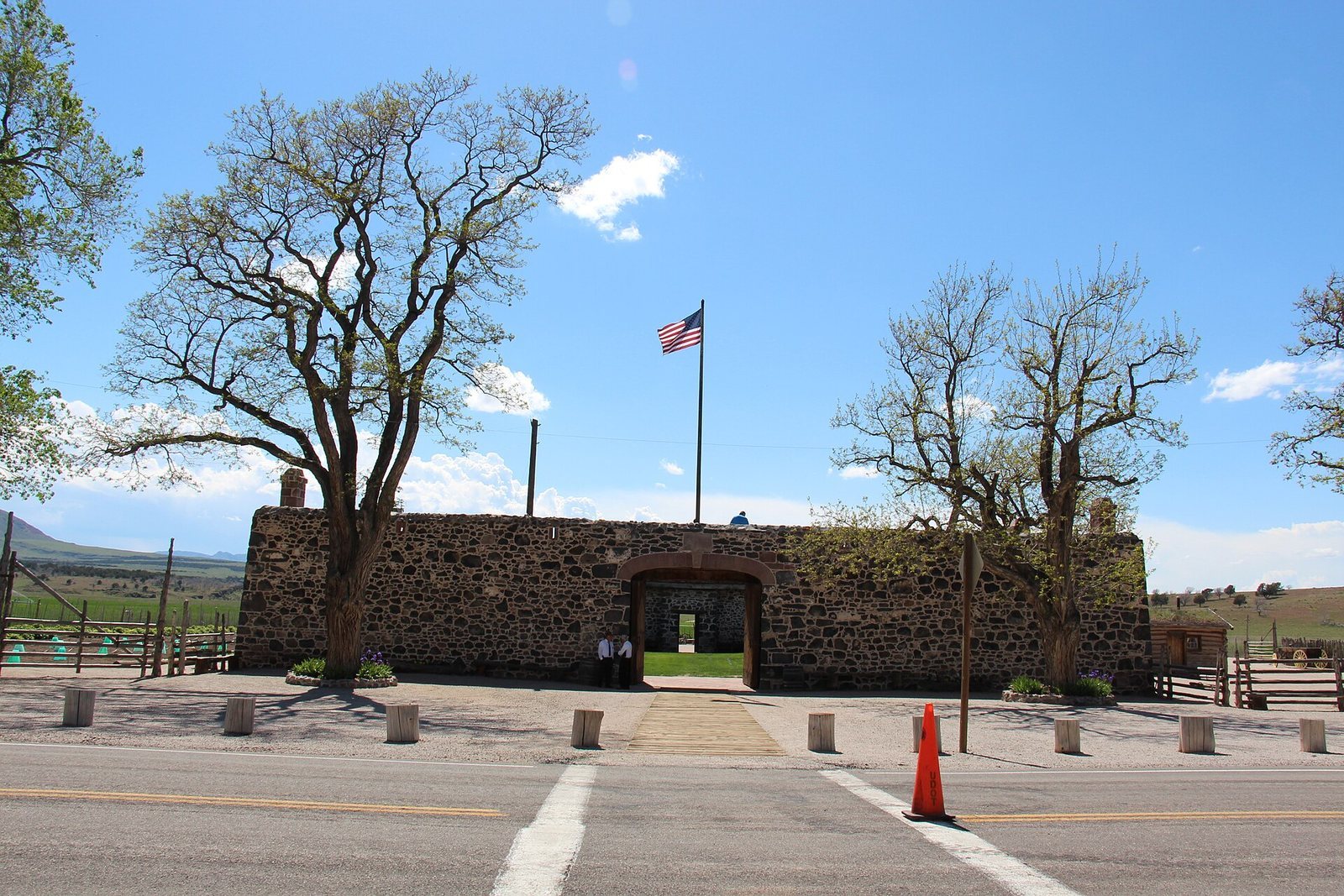
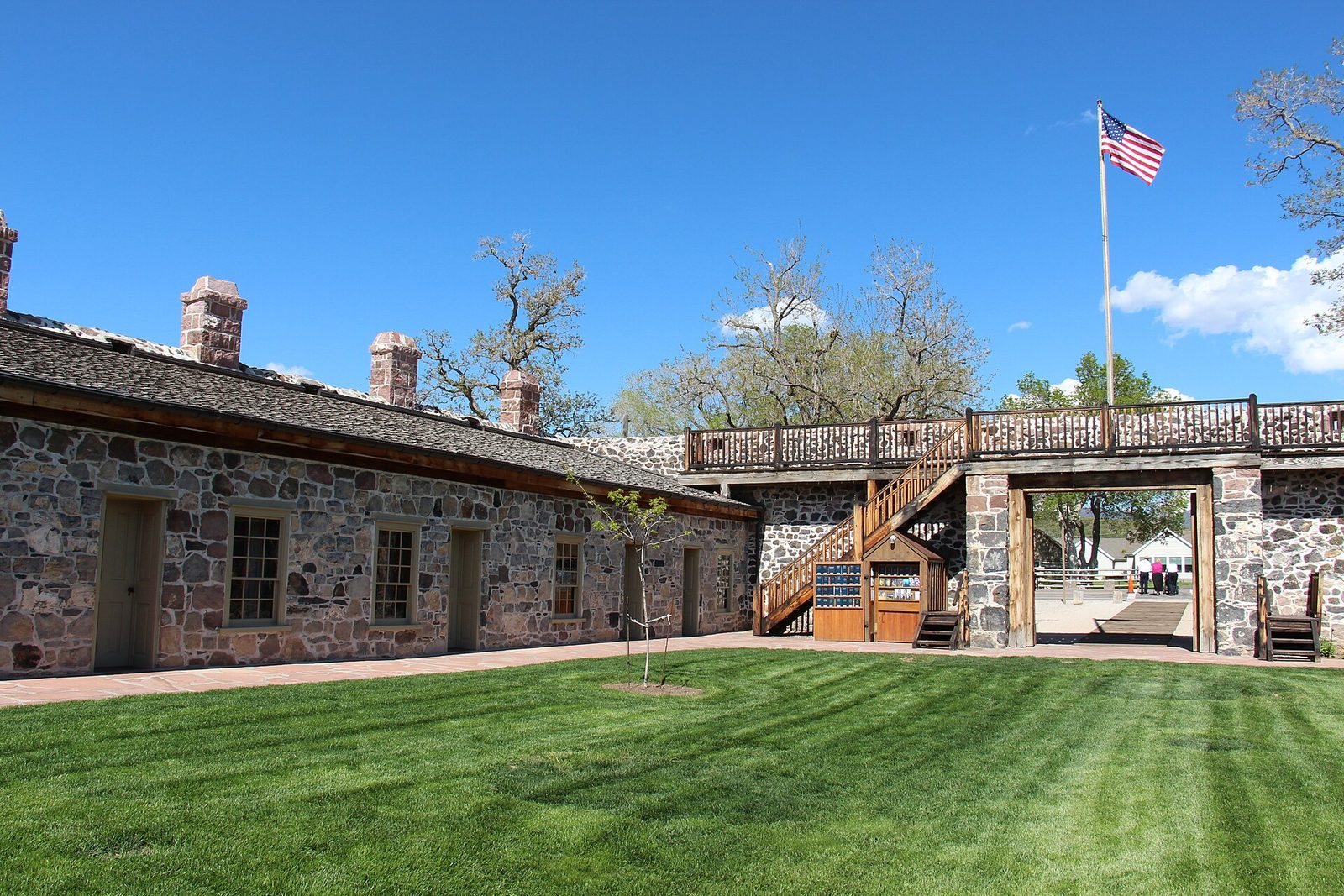
Cove Fort has a square plan, with a stone enclosure and rooms arranged along its north and south walls. Its thick masonry distinguishes it from many western forts of the mid-19th century, which commonly used wood.
The fort structure
Each side of the fort measures 100 feet (30 m). Its walls combine black volcanic rock and dark limestone quarried in nearby mountains. They rise 18 feet (about 5.5 m), measure 4 feet (about 1.2 m) thick at the base, and narrow to 2 feet (about 0.6 m) at the top. Large wooden doors stand at the east and west ends; they were originally filled with sand to help stop arrows and bullets. Inside are 12 rooms, six along the north wall and six along the south. Cove Fort is one of the few forts of its period to survive.
Later buildings
The site also includes Ira Hinckley’s cabin, moved from Coalville, Utah, and a visitor center built during the church’s restoration.