Qasr el-Labakha: A Roman Fortress and Settlement in Egypt


Site at a Glance
- Rating
- 4.6
- Popularity
- Very Low
- Country
- Egypt
- Primary era
- Classical
- Eras represented
- Classical
- Civilizations
- Roman
- Site type
- Military
- Remains
- Fort
On this page7 sections
History
Qasr el-Labakha, also known as the Labakha Spring, is a Roman fortress and settlement in Egypt’s Kharga Oasis. Built in the fourth century AD, the final imperial century of Roman rule in Egypt, it stood in a valley below the northern escarpment and guarded the meeting point of two important caravan routes from the north and west.
A Roman garrison and settlement
A garrison occupied the fortress, while a larger settlement developed around it. The community included two temples and decorated tombs, along with many other buildings that once surrounded the fortified enclosure. A large well and an ancient spring south of the fortress supplied water for both the garrison and the settlement. The well’s scale indicates that a substantial community lived there, and channels carried water onward to cultivated fields.
Archaeological investigation
The fortress has not itself been excavated, but areas beneath its western and southern walls were investigated by Egypt’s Supreme Council of Antiquities in cooperation with the French Alpha Necropolis team. These investigations produced numerous small statues and large quantities of Roman pottery. Qasr el-Labakha was also examined during a French archaeological survey of the northern Kharga Oasis.
Remains
Fortress
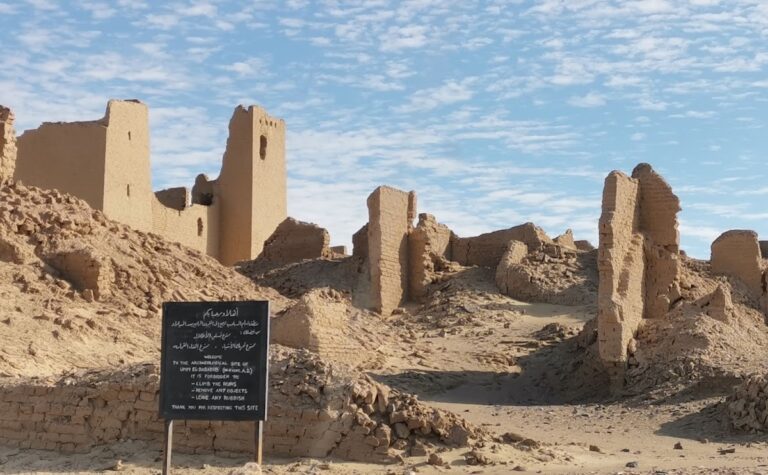
The fortress is smaller but architecturally similar to the nearby fortress of Deir el-Munira. Its mud-brick walls once rose approximately 12 metres and incorporated four massive round towers at the corners. An entrance on the eastern side led into the enclosure. The interior survives as collapsed wall ruins and vaulted chambers that are partly buried by sand.
Water supply
South of the fortress are mud-brick remains of a large well and an ancient spring. Palm, acacia, and tamarisk trees still surround the spring area. A series of channels carried water from the spring and well toward the cultivated fields, linking the water source with the settlement’s agricultural area.
Temples and tombs
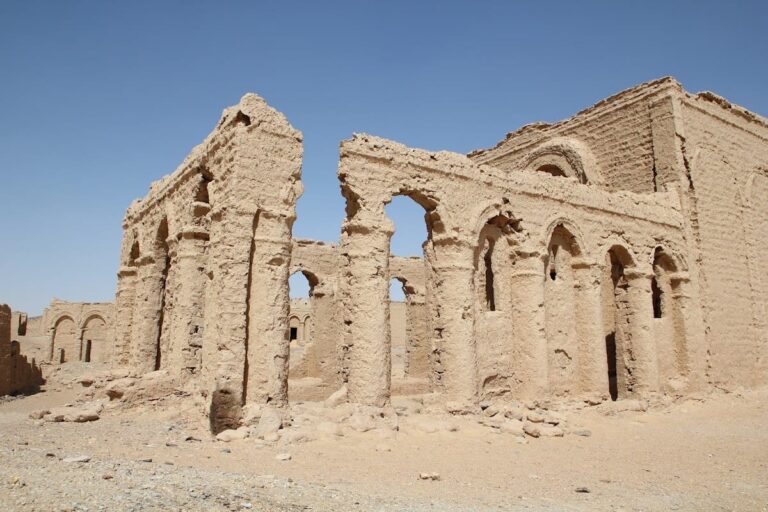
Two temples and a group of decorated tombs form part of the settlement’s surviving archaeological remains. Together with the fortress, water installations, and the finds recovered near its walls, they indicate the range of religious, funerary, residential, and military activity at Qasr el-Labakha.