Pula Communal Palace: The City’s Medieval Civic Seat
Site at a Glance
- Popularity
- Medium
- Country
- Croatia
- Primary era
- Medieval
- Eras represented
- Classical, Medieval, Early Modern
- Civilizations
- Roman, Venetian
- Site type
- Civic
- Remains
- Palace
On this page9 sections
History
From temple site to civic centre
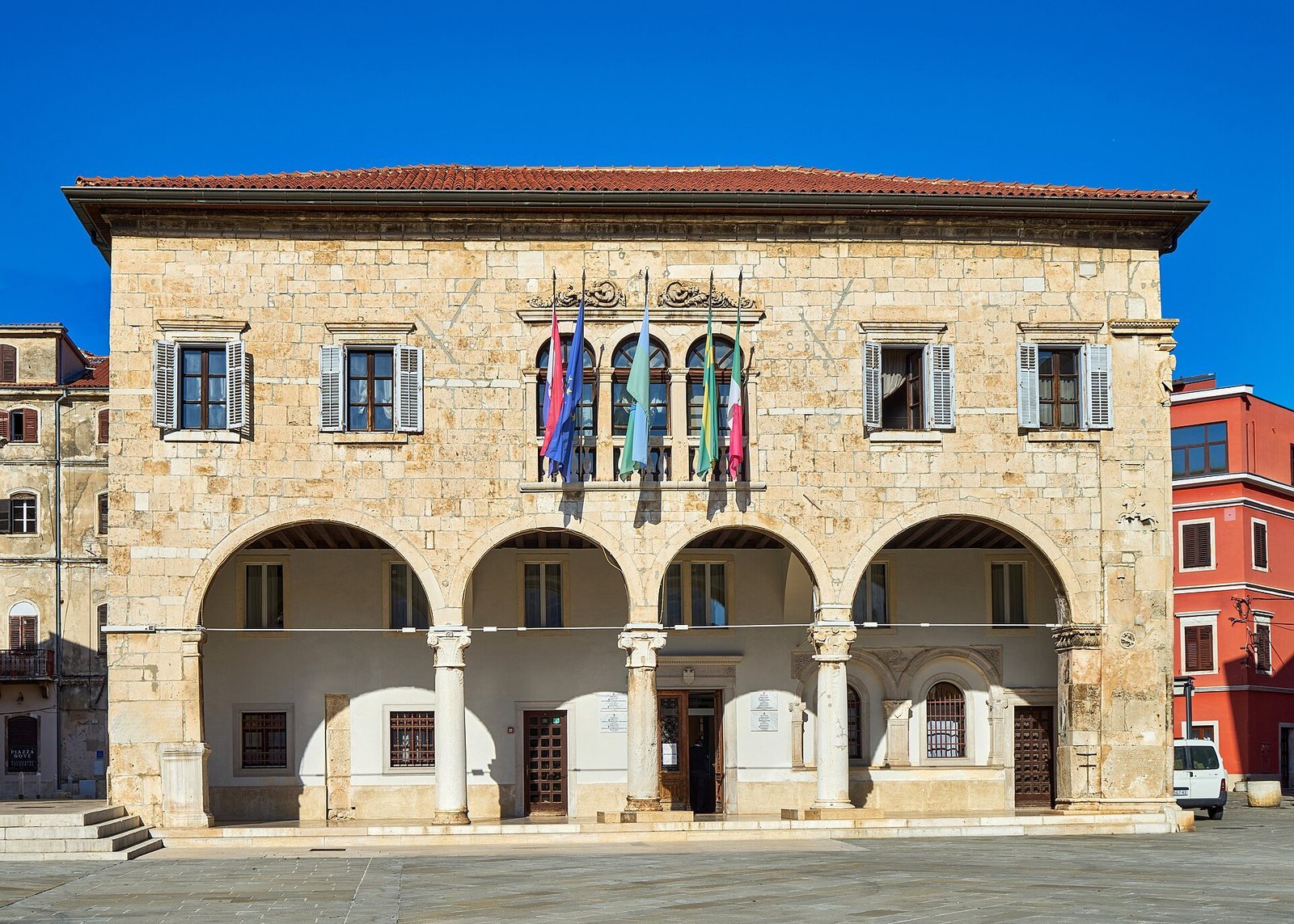
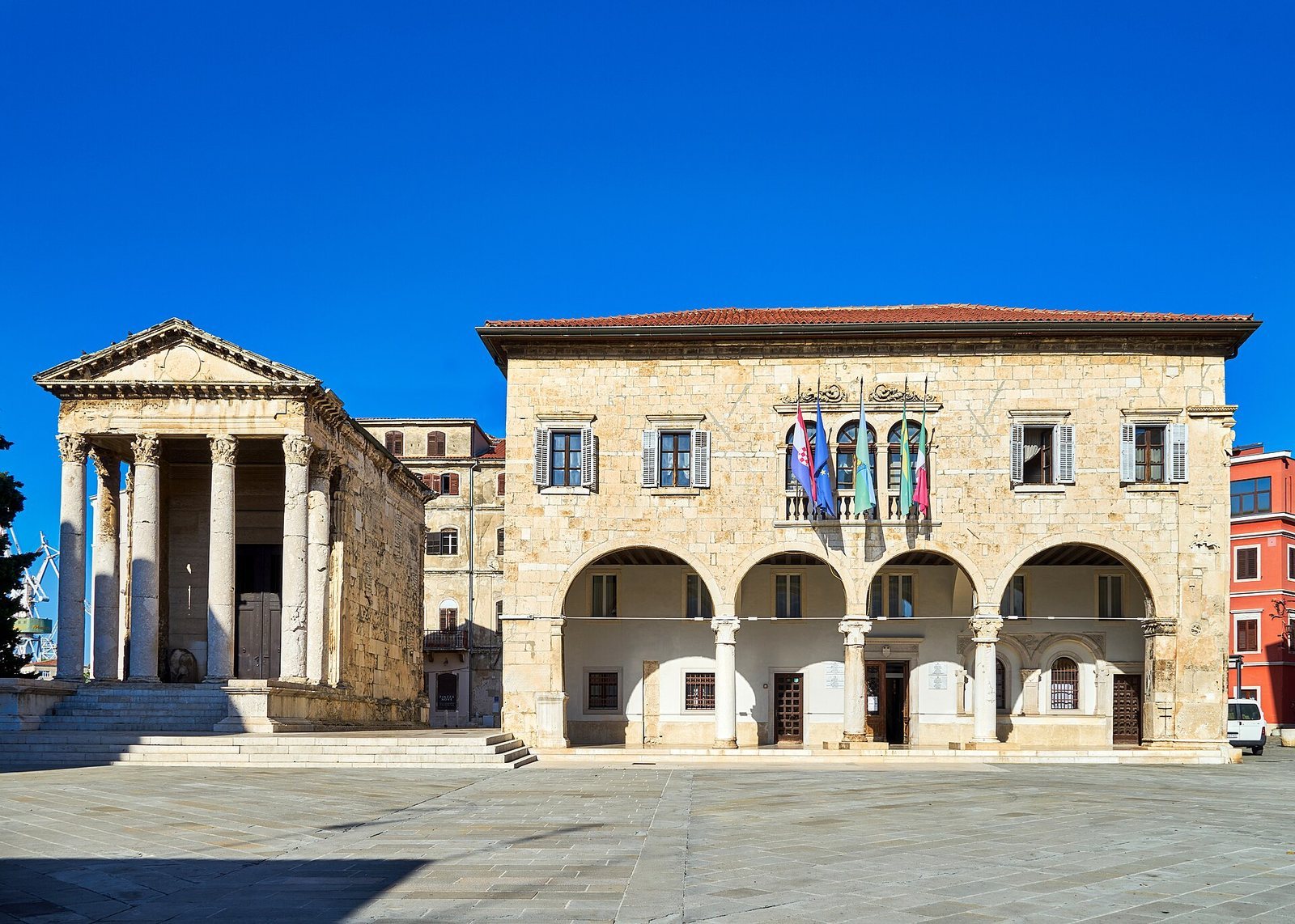
Pula Communal Palace is a civic building on the north side of the Forum in Pula, Croatia. Formed in the late thirteenth century in Gothic style, it was completed in 1296. The site had an earlier civic role: the former Temple of Diana housed municipal institutions from the ninth century, continuing the Forum’s function as the city’s central public square and civic centre after the fall of the Roman state.
Formation of the palace
The palace took shape by adapting older buildings that had already served similar purposes. Its construction coincided with a period of Pula’s prosperity and independence, when the city’s wealthy families had the means and ambition to undertake the project. The building became the seat of municipal government and has continued in that role.
Rebuilding and continued use
The palace was reconstructed in Renaissance style during the fifteenth century. Renovations in 1696–1698 added a city clock. A major restoration from 1982 to 1988 respected the building’s architectural character. The palace remains Pula’s municipal seat and houses the city government.
Remains
Setting and reused fabric
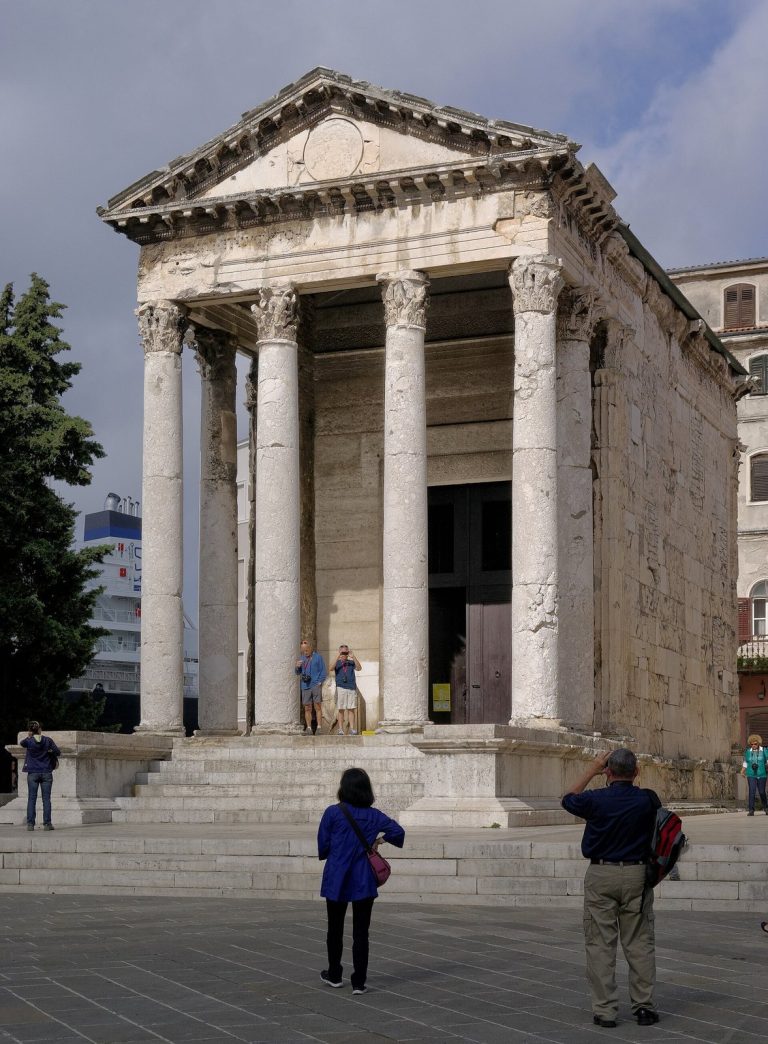
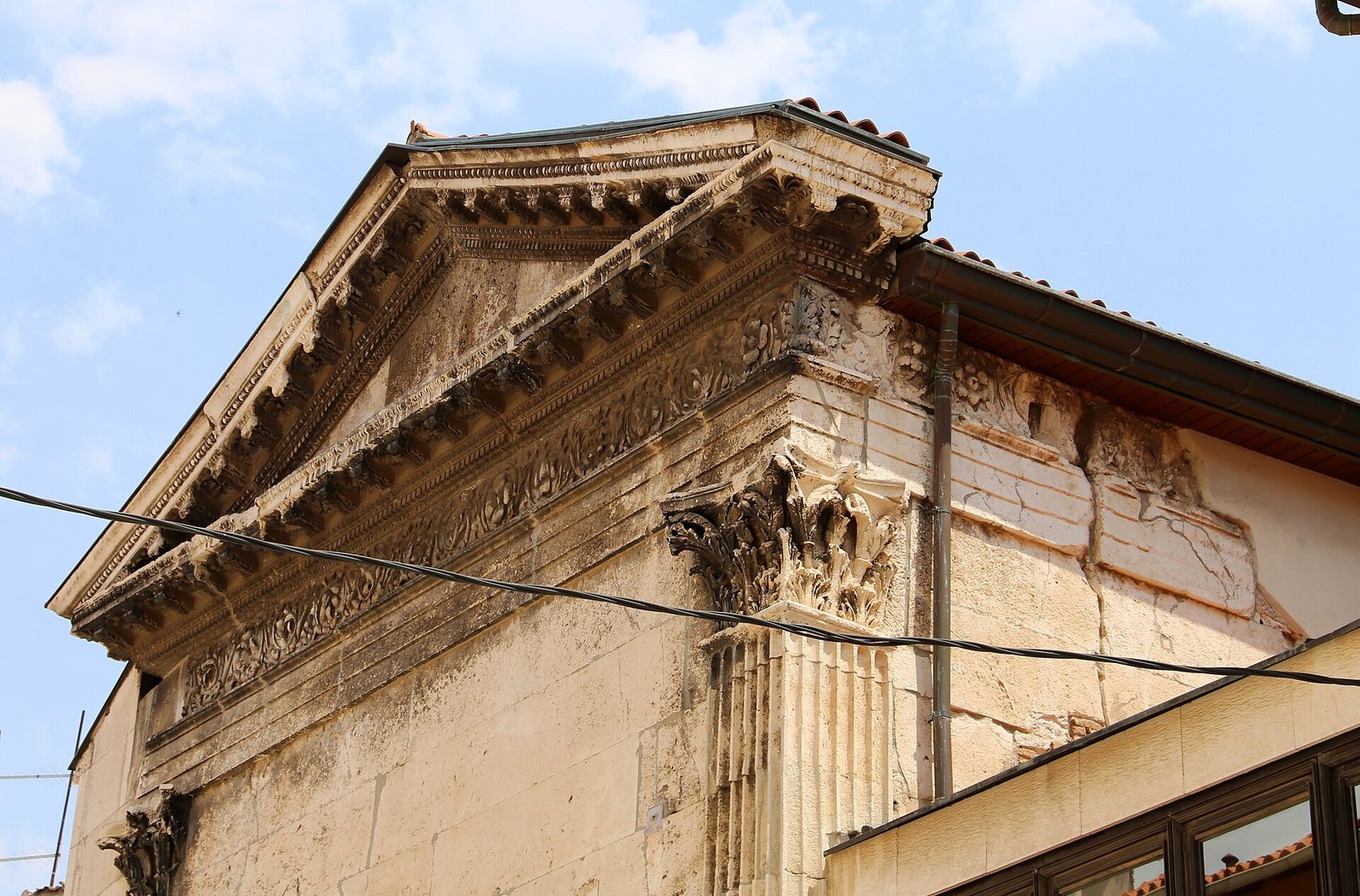
Standing beside and east of the Temple of Augustus, the palace occupies the north side of the Forum. In Roman times, three temples stood in this area. Built of stone, the palace brings together features associated with antiquity, the Romanesque and Gothic periods, and the Renaissance and Baroque eras. Its late-thirteenth-century form was Gothic. Materials from the earlier Temple of Diana, along with walls from older buildings where possible, were incorporated into the structure. The north side of the former temple forms the palace’s rear.
Carved façade features
Completion inscription and horseman relief
A façade inscription marks the palace’s completion in 1296 and names Bartholomeus de Vitreo as podestà, the chief magistrate of a medieval Italian commune. It identifies the palace as the seat of two councils and a court, and calls for wise government and civic concord to preserve peace. Nearby, a stone relief of a mounted figure commemorates Bartholomeus as “president of the city.” Above the horseman, a crouching male figure, called a telamon, appears to support the roof.
Mermaid and Venetian-period inscription
At the palace’s northeast corner, a Romanesque mermaid holds the tips of her stone fins in her hands. Low on the wall beneath the horseman, a stone inscription from the Venetian period prohibits cutting trees and grazing in the area around Pula.