Pronskoye I Hillfort: The Medieval Fortified Center of Pronsk
Site at a Glance
- Popularity
- Medium
- Country
- Russia
- Primary era
- Medieval
- Eras represented
- Medieval
- Civilizations
- Unclassified
- Site type
- Military
- Remains
- Fortified Town
On this page14 sections
History
Pronskoye I Hillfort is the site of the medieval Pronsk Kremlin in Pronsk, Russia. The fortified center dates to the 12th century, when Pronsk became the second most important city in the Ryazan lands and the center of an independent appanage, a semi-independent territory governed by a prince of the ruling dynasty. The fortress later served as a southern outpost of the Ryazan principality and, in turn, the centralized Russian state.
Early settlement and medieval Pronsk
Pronsk developed on the site of an earlier settlement associated with the Gorodets culture, an Iron Age culture of the forest-steppe regions of what is now Russia. That settlement dates from the 7th century BC to the 5th century AD. Pronsk itself is first mentioned under the year 1131 in the Nikon Chronicle, a Russian chronicle compiled in the 16th century.
By the late 12th century, the citadel, or fortified inner stronghold, held the residence of the Glebovichi princes, a branch of the Rurikid dynasty. Extensive suburbs without their own fortifications surrounded the center. Across from the citadel, a suburb on Gnevne Hill may also have included a fortified estate belonging to a prince or boyar.
The wooden fortress resisted an unsuccessful siege by the Ryazanians in 1186. In 1203, Vsevolod the Big Nest, grand prince of Vladimir, took it after a successful siege. Batu Khan, a Mongol ruler and leading figure in the conquest of Rus’, captured Pronsk in December 1237 after a three-day siege.
Renewed defenses in the 16th century
During the regency of Elena Glinskaya, who governed Muscovy while her son Ivan IV was a minor, the fortress was strengthened and renewed. She sent the Italian architect Petrok Maly Fryazin, who served in Russia, with builders to Pronsk. Voivodes Alexander Kashin-Obolensky and Nikita Turenin, military and administrative commanders, accompanied them for protection.
In 1541, Sahib I Giray, ruler of the Crimean Khanate, besieged Pronsk with artillery, firearms, and siege equipment. The defenders, led by voivode Vasily Zhulebin, repelled repeated assaults. When the khan learned that Moscow’s forces were approaching, he withdrew and ordered the siege equipment burned. Crimean Tatar forces continued to raid the district and approach the town during the 16th century.
Pronsk during the Time of Troubles
Pronsk joined the Bolotnikov uprising, a major Russian revolt of the early 17th century, and later supported False Dmitry II, a claimant to the throne during the Time of Troubles, a period of dynastic crisis and political upheaval. In 1608, a tsarist army led by Ivan Khovansky and Prokopy Lyapunov captured the outer fortified town. Lyapunov was wounded during an assault on the inner timber fortress. The resulting confusion among the besiegers led them to withdraw to Pereyaslavl-Ryazansky.
Lyapunov took Pronsk in 1611, but Zaporizhian Cossacks, members of semi-autonomous military communities in eastern Europe, soon besieged him alongside Russian defectors. They were led by Isaak Sumbulov, whom the Lithuanian hetman Gonsevsky had sent. Dmitry Pozharsky came to Lyapunov’s aid and drove the besiegers away.
In autumn 1612, Pronsk sided with Cossack ataman Ivan Zarutsky, an ataman being a Cossack leader. Grigory Volkonsky’s army failed to take the town, which later surrendered as the forces of voivode Miron Velyaminov-Zernov approached. In 1618, Cossack hetman Petro Sahaidachny, a senior Cossack military and political leader, made an unsuccessful attack on Pronsk.
Rebuilding and decline
Frequent Crimean Tatar attacks prompted the rebuilding of Pronsk’s walls and towers in 1630. In 1633, a force of 2,000 men under Prince Mubarek Giray, a Crimean Tatar prince, attacked the town four times. The citadel sustained little damage, while the outer fortified town was badly damaged. Fortifications were renewed repeatedly in the following decades.
A major fire destroyed Pronsk’s fortifications in 1681, but they were soon rebuilt. They remained in use until the late 1720s, when neglect and the town’s reduced military importance left them in disrepair. Archaeological investigations began in the late 19th century and were later undertaken by N. P. Milonov and A. A. Mansurov. The hillfort has federal protection as an archaeological monument and federal cultural-heritage status.
Remains
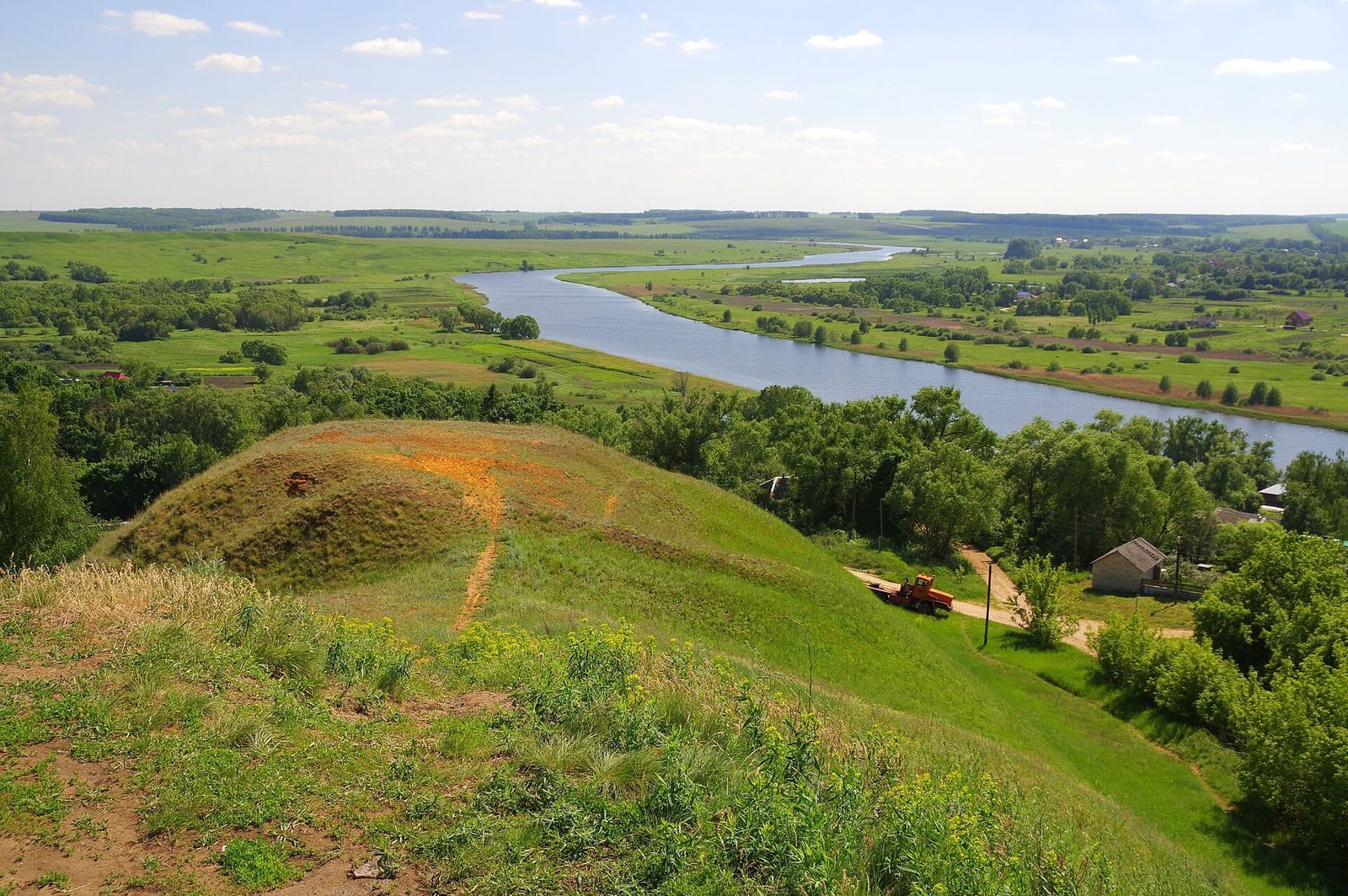
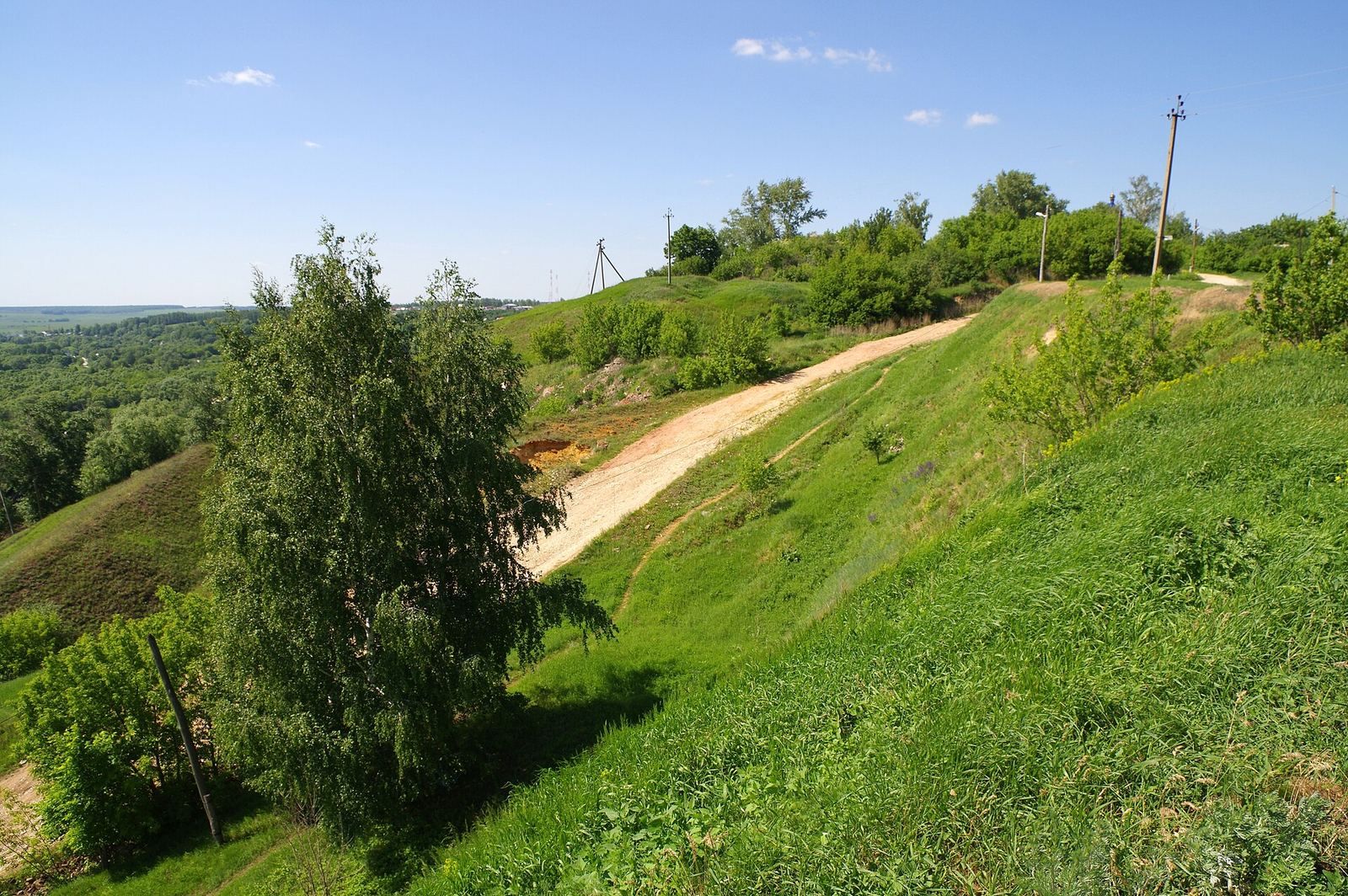
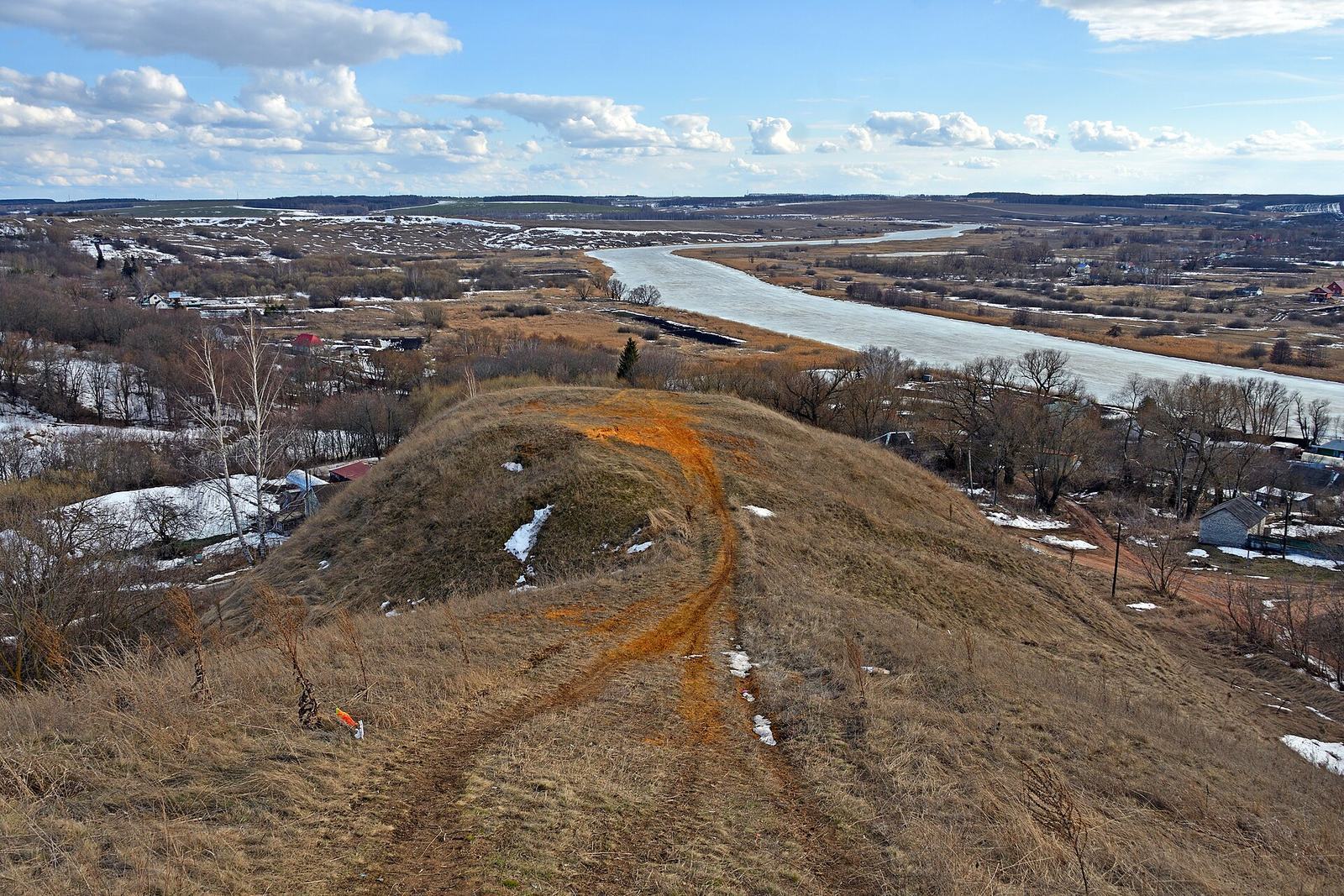
The hillfort occupies Pokrovsky Hill, a high, narrow promontory in southern Pronsk on the left bank of the Pronya River, at its confluence with the Pralia. The river protected the site on the west, while deep ravines containing streams defended its other sides. Strong earth ramparts guarded the approach across the land. Two surviving ditch lines mark the positions of a citadel about 300 by 150 metres and an outer fortified town about 300 by 200 metres. Sandstone slabs lined the outer faces of the ramparts and the edges of the ditches.
The citadel
Timber walls and gates
In the late 16th century, the citadel had an oak wall about 945 metres long, formed from 172 compartments built of logs. Six towers stood apart from the entrances, while three gate towers held the Moscow Gate, Small Water Gate, and Pralia Water Gate. The Corner Tower, facing the Pralia, contained a concealed small gate. A ditch on the landward side measured about 192 metres long, 13 metres wide, and 6.4 metres deep.
Churches and internal compounds
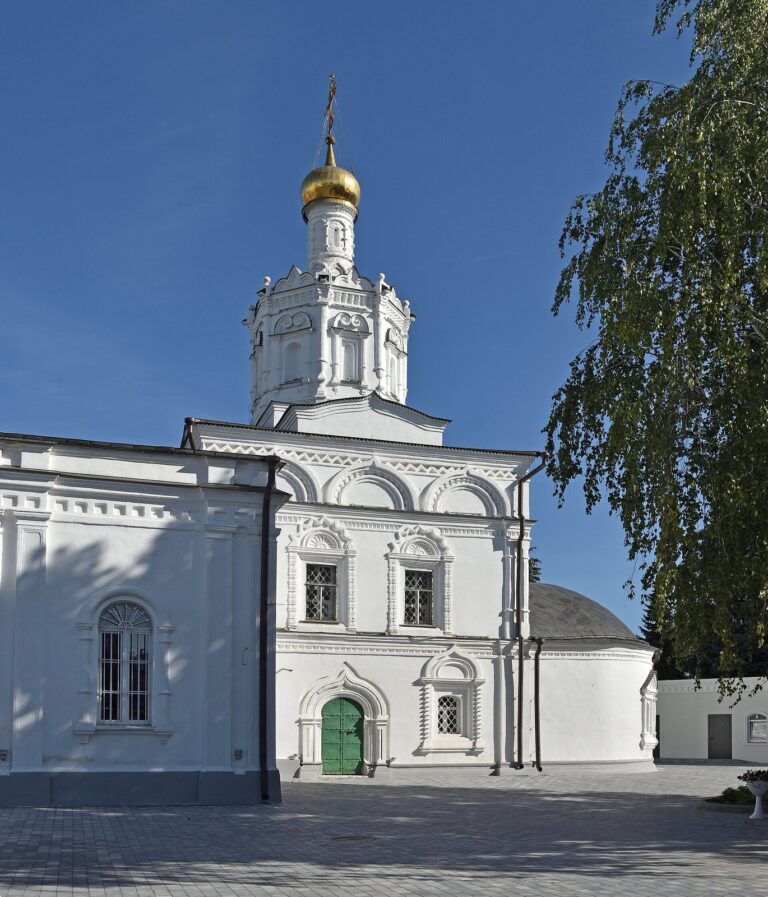
The citadel contained a wooden cathedral dedicated to the Intercession of the Mother of God, the Virgin Mary’s protection of the faithful in Eastern Orthodox tradition, as well as a stone Church of Boris and Gleb, early Rus’ princes venerated as saints. Other grounds included a granary, a yard belonging to the Ryazan archbishop, and residential and siege yards used by local servicemen and nobles. Boyar sons, members of Muscovy’s service class, also held yards there. A marketplace stood near the Moscow Gate.
The outer fortified town
Wall and landward defenses
The adjoining outer enclosure had a wooden wall about 2,747 metres long, with five towers apart from the entrances and six gate towers. Its landward defenses included a ditch, a stake barrier beyond it, and additional wooden obstacles. When the enclosure was later restored on a reduced scale, its wall measured about 898 metres.
Buildings and grounds
Within the outer town stood the Church of John the Theologian, a traditional Christian name for the apostle John, as well as a customs house and the sovereign’s tavern. Courtyards and estates also occupied this enclosed area.
Archaeological evidence
The hillfort’s archaeological deposits include Iron Age material, substantial layers from the 12th and 13th centuries, and later remains from the 14th to 17th centuries. Finds include above-ground dwellings, traces of an ancient street, pottery fragments, slate spindle whorls used in spinning thread, household objects, and weapons. Bloomery furnaces, which smelt iron without melting it, and a forge appear to have stood in the northern part of the hillfort near a destroyed rampart.
Survival and damage
Earthworks survive in fragmentary form. Landslides, urban development, and a later road have damaged the hillfort.