Prittlewell Priory: A Cluniac Monastery and Museum in Southend-on-Sea
Site at a Glance
- Popularity
- Medium
- Country
- United Kingdom
- Primary era
- Medieval
- Eras represented
- Medieval, Modern
- Civilizations
- British, English
- Site type
- Religious
- Remains
- Monastery
On this page11 sections
History
The medieval priory
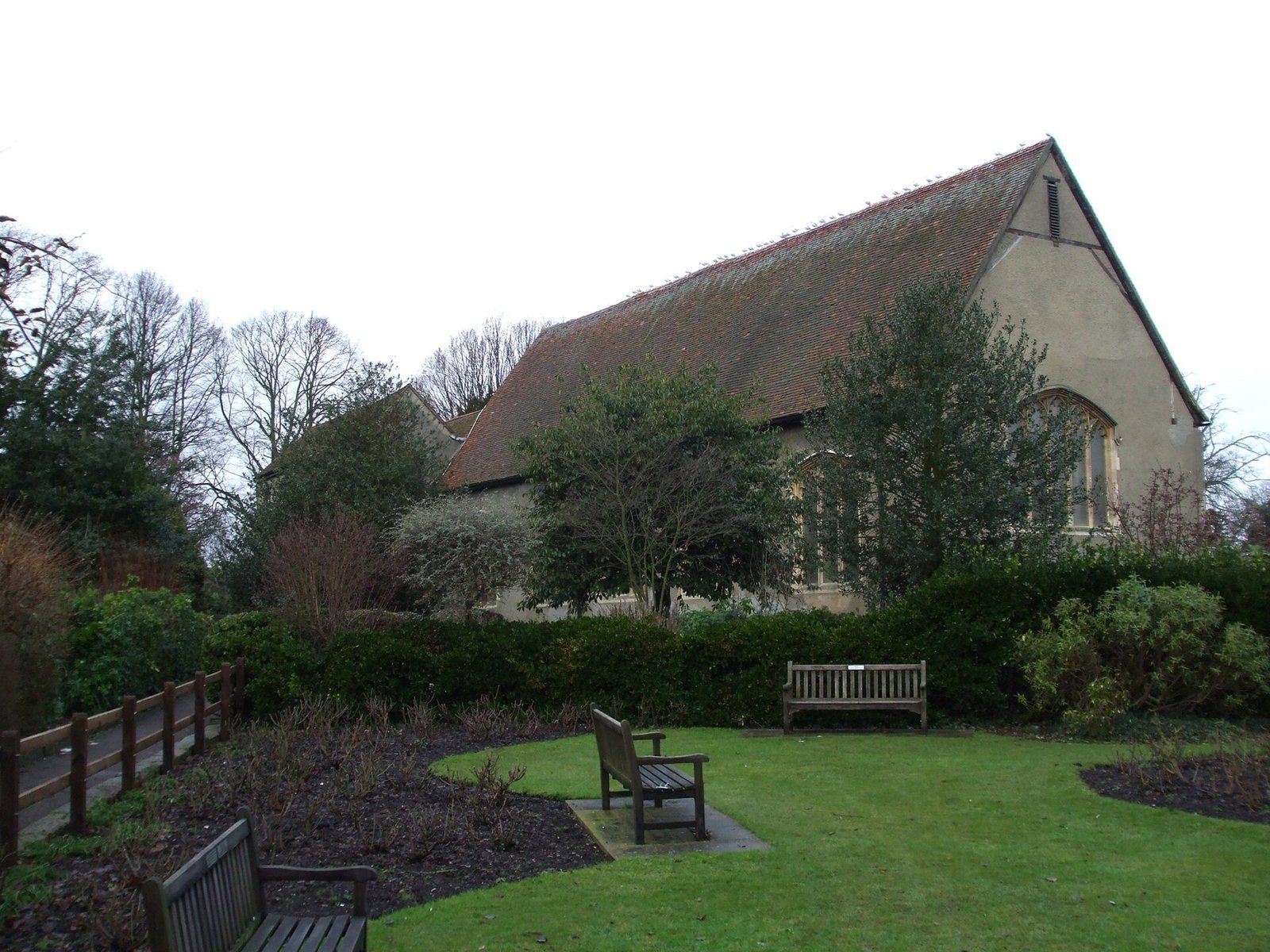
Prittlewell Priory is a former monastery in Southend-on-Sea, England, United Kingdom, founded around 1110 by monks from the Cluniac Priory of St Pancras at Lewes. The Cluniac movement was a network of monasteries centred on the Abbey of Cluny. Prittlewell was a dependent house, or cell, of Lewes, and housed no more than 18 monks.
Lewes appointed the head of Prittlewell, known as its prior. In 1311, the post went to William le Auvergnat, who faced accusations of corruption two years later. When Lewes sought to replace him with James de Cusancia, William appeared before the King in 1318 and seemed to resign. He then returned with supporters and seized control of the priory. In 1321, armed monks from Lewes entered during Mass, took captives, and dealt William a fatal blow at the altar. James then became prior.
Dissolution and private ownership
In 1536, during Henry VIII’s reign, the Dissolution of the Monasteries suppressed English religious houses and transferred their property. Much of Prittlewell Priory was destroyed, and the remaining property became a private residence. Its yearly revenue was assessed at £194 14s 3d. Henry VIII granted the priory to Lord Chancellor Thomas Audley, who passed it to Robert, the son of Lord Rich. It later changed hands among several families alongside the manor.
The surviving buildings underwent extensive changes in the 18th century. Daniel Robert Scratton inherited the priory in 1842 and renovated it with his wife, Maria, as a comfortable home. He moved to West Ogwell Manor in 1869. William Howell Scratton bought the property in 1887, and it served as a family home.
A public park and museum
In 1917, Southend jeweller and philanthropist R. A. Jones bought the priory from the Scratton family and gave it, with the surrounding grounds, to the local council for a public park. Priory Park formally opened on 14 July 1920. The priory became Southend’s first museum in May 1922. Jones died in 1925 and was buried in the grounds.
The priory building is Grade I listed, a category for buildings of exceptional architectural or historic interest in England, and the remains are a scheduled monument, a nationally protected archaeological site or historic monument. A refurbishment of the existing buildings began in 2011 and was completed in summer 2012.
Remains
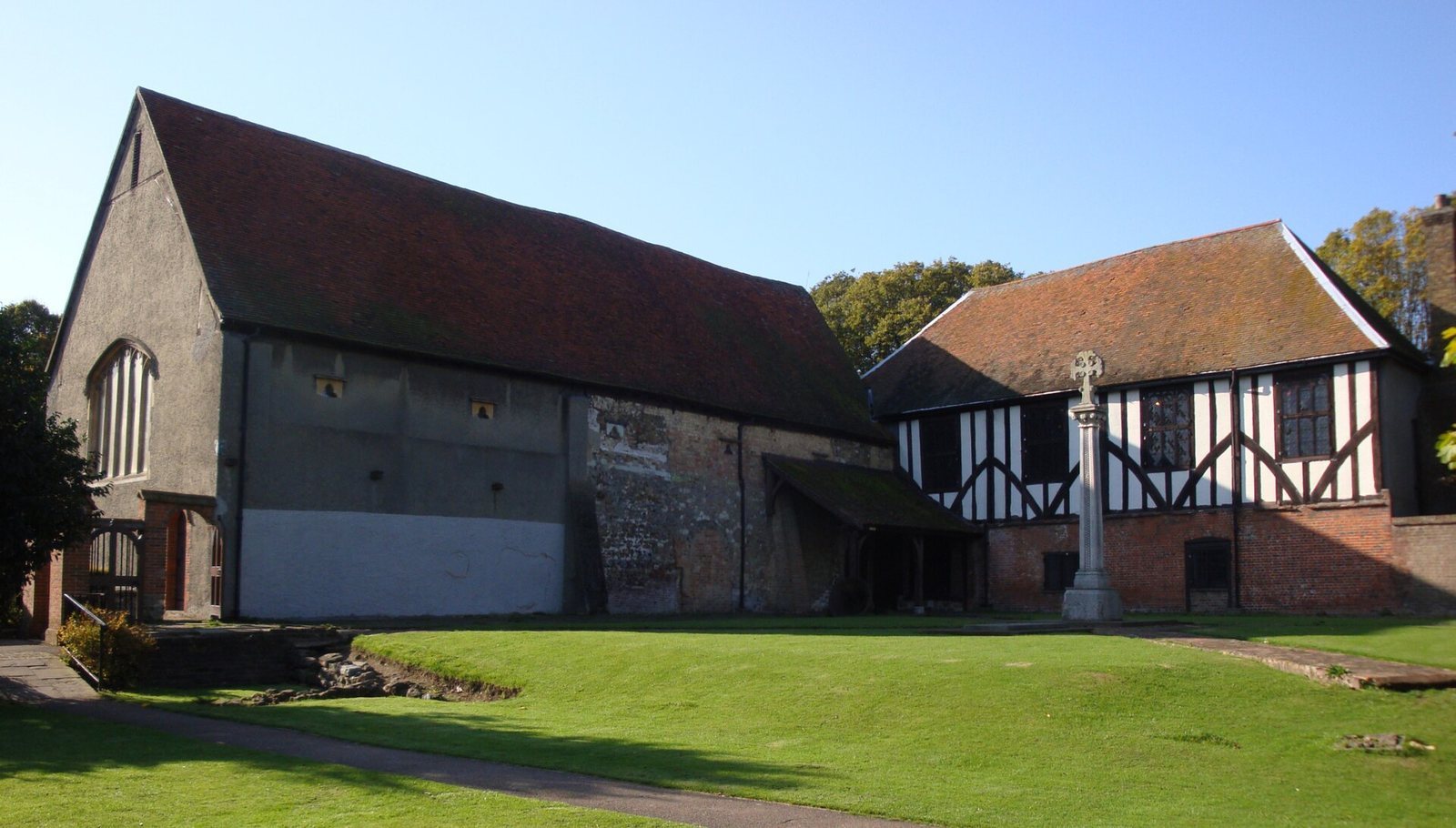
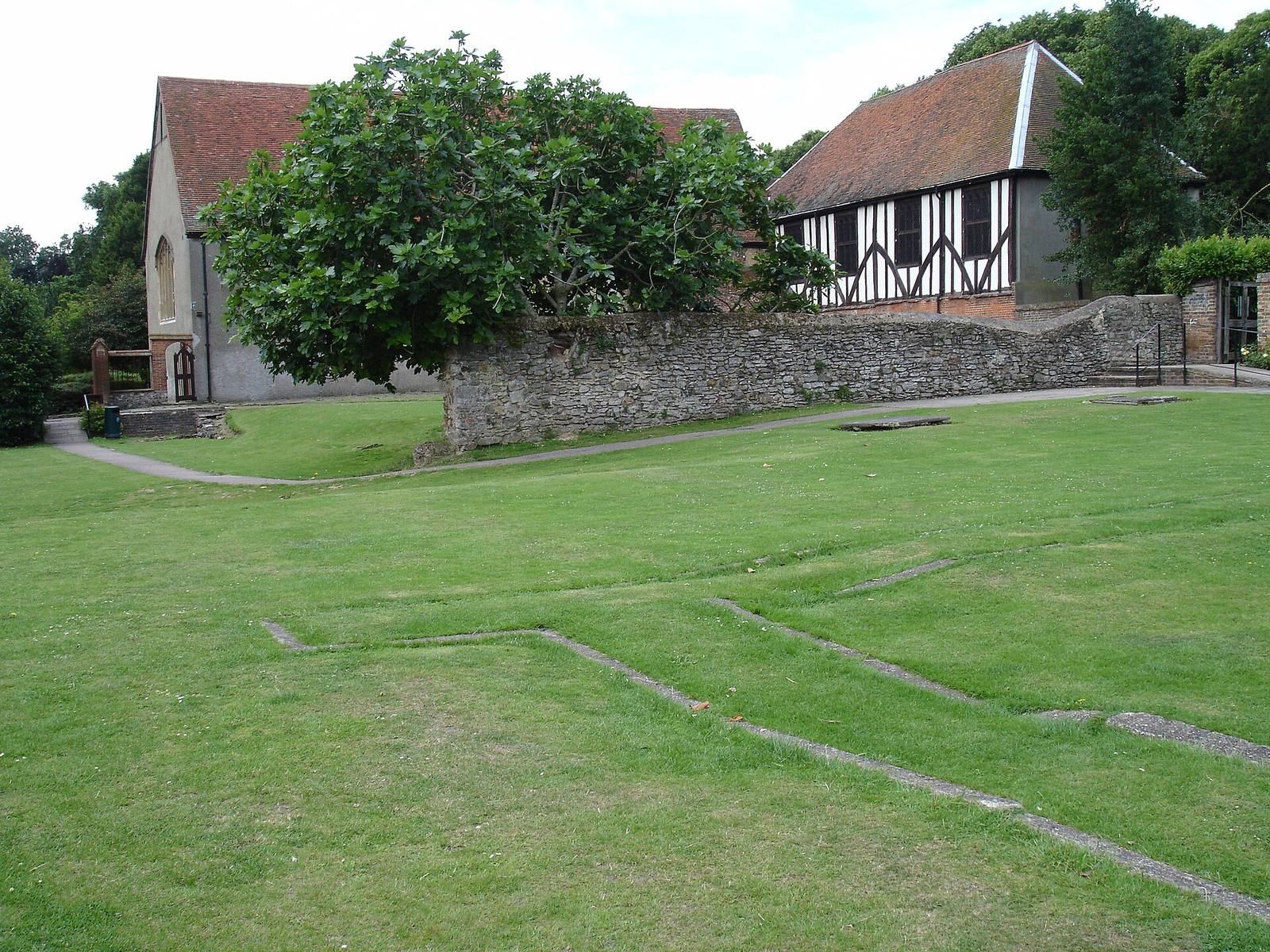
The surviving site includes a cloister area and associated monastic buildings, alongside later domestic additions and a garden created over the monks’ burial ground. Its medieval fabric is complemented by changes made when the priory became a residence and by later restoration.
Medieval buildings
Cloister and doorway
The cloister is a covered walkway enclosing an open space, and the priory also retains associated monastic buildings. One surviving 12th-century doorway is decorated with chevron, a zigzag pattern, and dog-tooth, a repeated tooth-like carving.
Refectory
The refectory, or monks’ dining hall, was restored and partly rebuilt in the early 20th century.
Later additions and garden
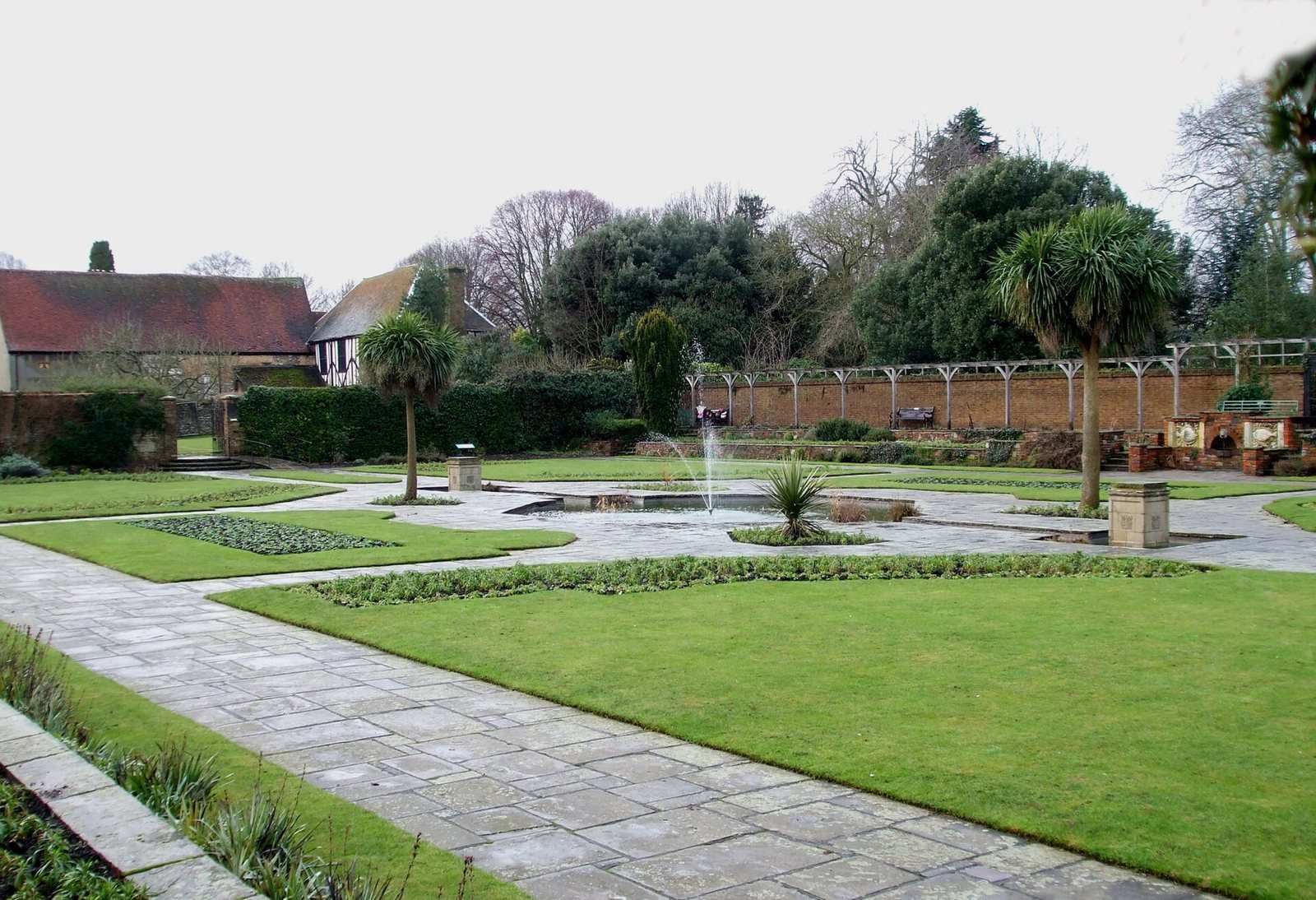
A Victorian extension once contained bedrooms and now houses an interactive display about local wildlife. The Scratton family established a walled kitchen garden on the site of the monks’ burial ground. It originally included hot houses and a melon pit; it is now an ornamental garden.
Memorials and museum portraits
Plaques on the gateposts to Priory Park and a memorial stone outside the priory commemorate Jones’s gift of the park and priory to the people of Southend. The museum collection includes a portrait of Daniel Robert Scratton painted by Stephen Pearce in 1867, showing him on a hunter, and a portrait of Mrs Scratton by an unidentified artist.
Visitor centre
A visitor centre stands beside the priory. It was built as part of the 2011–2012 works and opened in February 2013.