Princeton Battlefield: Site of a Revolutionary War Victory
Site at a Glance
- Rating
- 4.6
- Popularity
- Low
- Country
- United States
- Primary era
- Early Modern
- External website
- Open
- Eras represented
- Early Modern, Modern
- Civilizations
- British
- Site type
- Military
On this page8 sections
History
Princeton Battlefield is the site of the Battle of Princeton in Princeton, New Jersey, United States. Fought on January 3, 1777, during the American Revolutionary War, the conflict was part of the thirteen American colonies’ struggle against British rule. American forces commanded by General George Washington defeated British troops, and British soldiers surrendered in Nassau Hall.
The Battle of Princeton
The battle followed the American victory at Trenton on December 26, 1776, and the fighting at Assunpink Creek on January 2, 1777. Together, these engagements helped improve American morale during a difficult phase of the war. The wounded American general Hugh Mercer was carried to the Clarke House, where the physician Benjamin Rush treated him unsuccessfully.
Preservation and Historic Designations
Princeton Battlefield State Park was established in 1946 on approximately 40 acres to preserve part of the battlefield. The present park covers 681 acres and is maintained by the New Jersey Division of Parks and Forestry. The battlefield district became a National Historic Landmark District in 1961, entered the National Register of Historic Places in 1966, and was listed in the New Jersey Register of Historic Places in 1971–1972. Its National Register boundaries were expanded in 1989 and 2019.
In 1989, the Princeton Battlefield and Stony Brook Village Historic District was formed through an expansion of the National Register designation. The district includes the battlefield and a contiguous preserved area associated with the Stony Brook Meeting House, its cemetery, and former farms of Quaker settlers who lived south and west of the battlefield. Portions of the battlefield later faced a proposal for faculty housing on Maxwell’s Field by the Institute for Advanced Study. The American Battlefield Trust and its partners had preserved 9 acres and completed the purchase of almost 15 more acres in 2018, ending the dispute over development of that land.
Remains
The preserved area combines battlefield ground, an eighteenth-century farmstead, memorial features, and the nearby landscape connected with Stony Brook’s Quaker community. These elements retain physical links between the battle, the treatment of wounded soldiers, and the settlement that surrounded the battlefield.
Battlefield Landscape
Princeton Battlefield State Park preserves part of the ground on which the 1777 battle took place. The Mercer Oak was a notable feature in the middle of the battlefield and stood there until recent years. The wider preserved setting also includes the landscape associated with the Stony Brook Meeting House and Cemetery, established before the Revolution and in full view of the fighting, together with former farm properties connected with Quaker settlers.
Clarke House and Farmstead
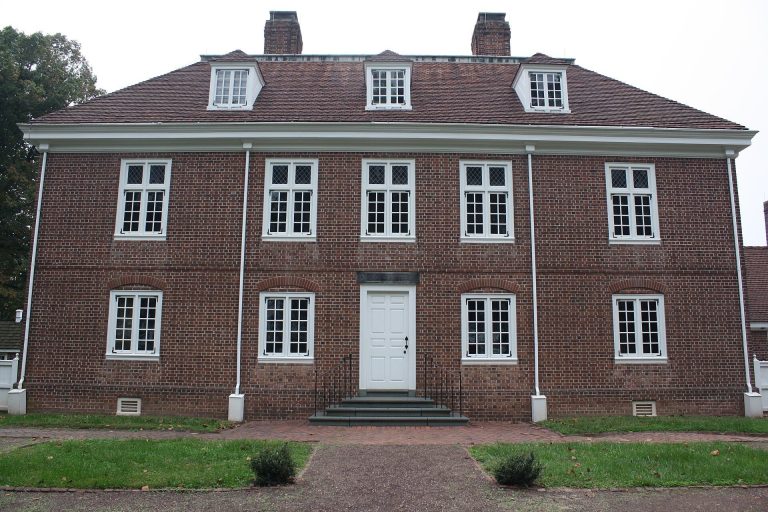
The Thomas Clarke House was built in 1772 by the third generation of Quakers at Stony Brook. It survives as a furnished Revolutionary-period museum with military artifacts, battle exhibits, and a research library. After the battle, it served as a field hospital, while its surviving flooring, windows, and moldings preserve elements of its eighteenth-century fabric. The associated farm complex included a carriage barn and a smokehouse. The property was also associated with Susannah, an enslaved Black woman who lived and worked there.
Common Grave and Ionic Colonnade
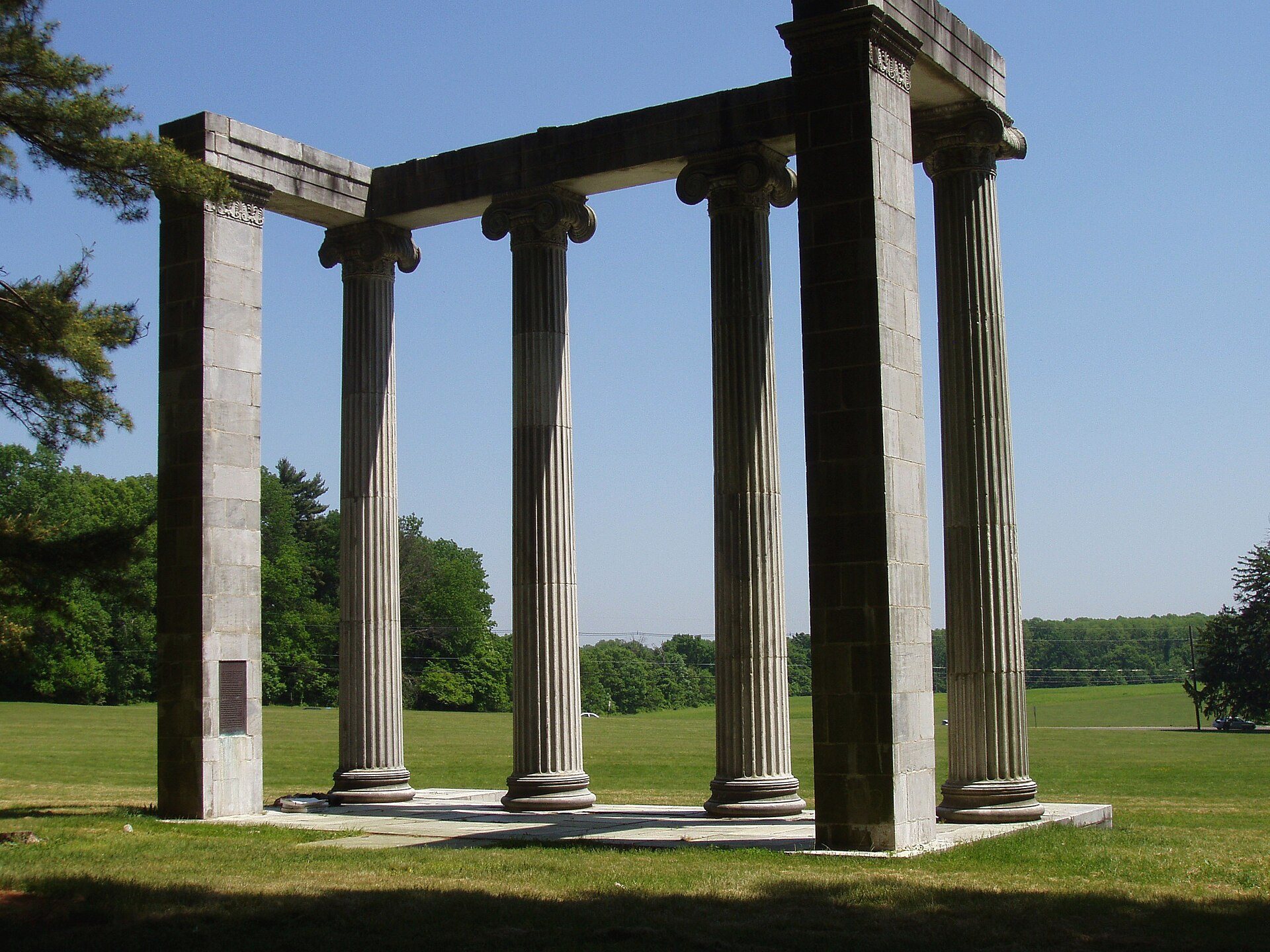
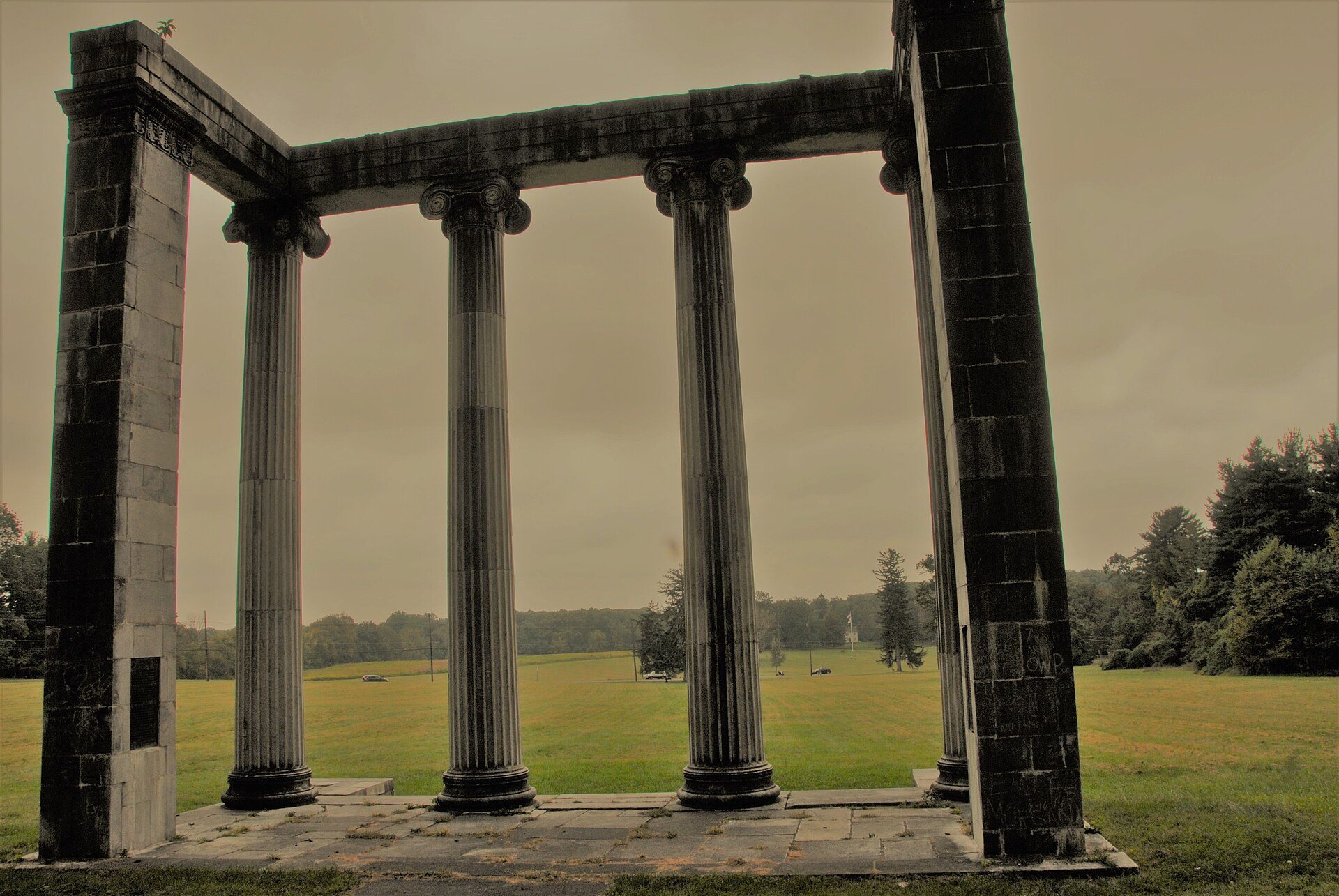
Near the Clarke House, the Ionic Colonnade marks the entrance to the common grave of soldiers killed in the battle. An Ionic colonnade is a row of columns with scroll-shaped capitals. The structure was originally the facade of a Philadelphia residence designed by the architect Thomas U. Walter in 1836. It was moved to Princeton and reerected in 1959. The grave contains 21 British and 15 American soldiers, and a poem by the English poet Alfred Noyes, written in 1916, is set in bronze above the site.
Princeton Battle Monument
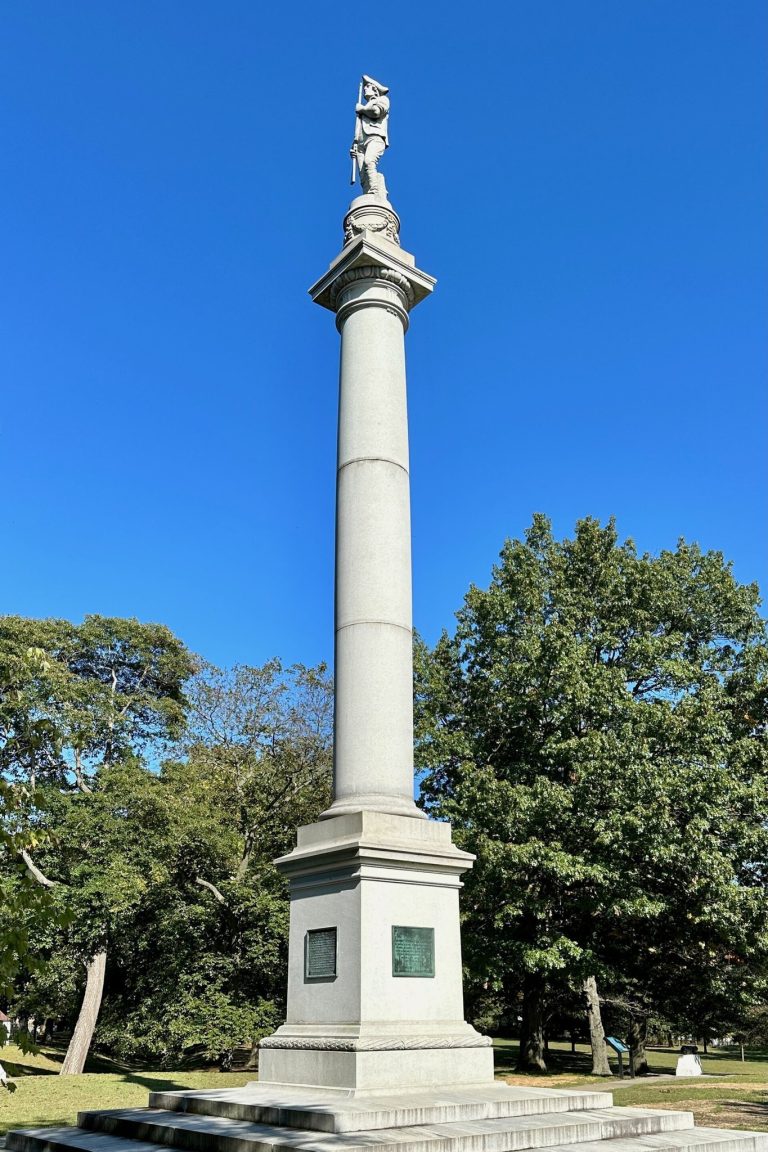
The Princeton Battle Monument stands on separate, non-adjacent park property in Princeton, near Princeton University. It forms part of the broader memorial landscape associated with the Battle of Princeton, while the battlefield itself and the Clarke House remain within the preserved historic area.