Prieuré de Lavoûte-Chilhac: A Cluniac Priory in France
Site at a Glance
- Popularity
- Medium
- Country
- France
- Primary era
- Medieval
- Eras represented
- Medieval, Early Modern
- Civilizations
- French
- Site type
- Religious
- Remains
- Fortified Monastery
On this page12 sections
History
The Prieuré de Lavoûte-Chilhac, formally the Prieuré Sainte-Croix, is a Roman Catholic priory in France, a dependent religious house governed by a prior. Odilon de Mercœur, abbot of the Benedictine Abbey of Cluny, founded it with members of his family on 14 September 1025. Cluny was an influential center of monastic reform. The priory’s buildings reflect Romanesque, Gothic and Neoclassical phases.
Foundation and growth
The foundation stood on Odilon’s native land, at the family property of La Volte. Its charter was signed on the Feast of the Exaltation of the Holy Cross, a Christian observance held on 14 September. Donors assigned about 300 hectares to the monastery. The charter placed it under Cluny’s authority and sought spiritual benefits for living and deceased members of the Mercœur family, including repose for Odilon’s father, grandfather and brothers.
The project had been delayed by the deaths of Odilon’s brothers: Béraud, a senior officer of the clergy at Le Puy who died before 1021, and Étienne, Ébon and Bertrand. Odilon renewed the undertaking with three nephews, Béraud, son of Ébon; Béraud, son of Bertrand; and Étienne II de Thiers. Étienne II became bishop of Le Puy, a church leader with authority over a diocese, between 1031 and 1053.
A consecrated oratory of Saint-Denys served people from the surrounding area while the monastic church was being built. Lavoûte then belonged to the parish of Saint-Cirgues, where Odilon had been born. Five dependent priories came under Lavoûte’s authority: Saint-Médard de Saugues, Saint-Martin d’Alleyras, Saint-Jean-Lachalm, Saint-Privat de Reilhac and Sainte-Marie de Rochefort near Saint-Poncy. A monk wrote a brief charter in 1040, and construction of the priory was complete by 1045. Étienne II was buried there in 1053.
Medieval authority and rebuilding
In 1192, the bishop of Clermont gave Èble, prior of Lavoûte, the right to appoint the chaplain of the Sainte-Marie-Madeleine leper house at Lavoûte-Chilhac. An agreement with the Mercœur family in 1288 reserved high justice, authority over the gravest cases, and guardianship of the monastery’s lands to the family. The prior exercised middle and low levels of judicial authority at Lavoûte and received income from properties beyond the town. In 1317, after new dioceses were established, the priory passed from the diocese of Clermont to that of Saint-Flour.
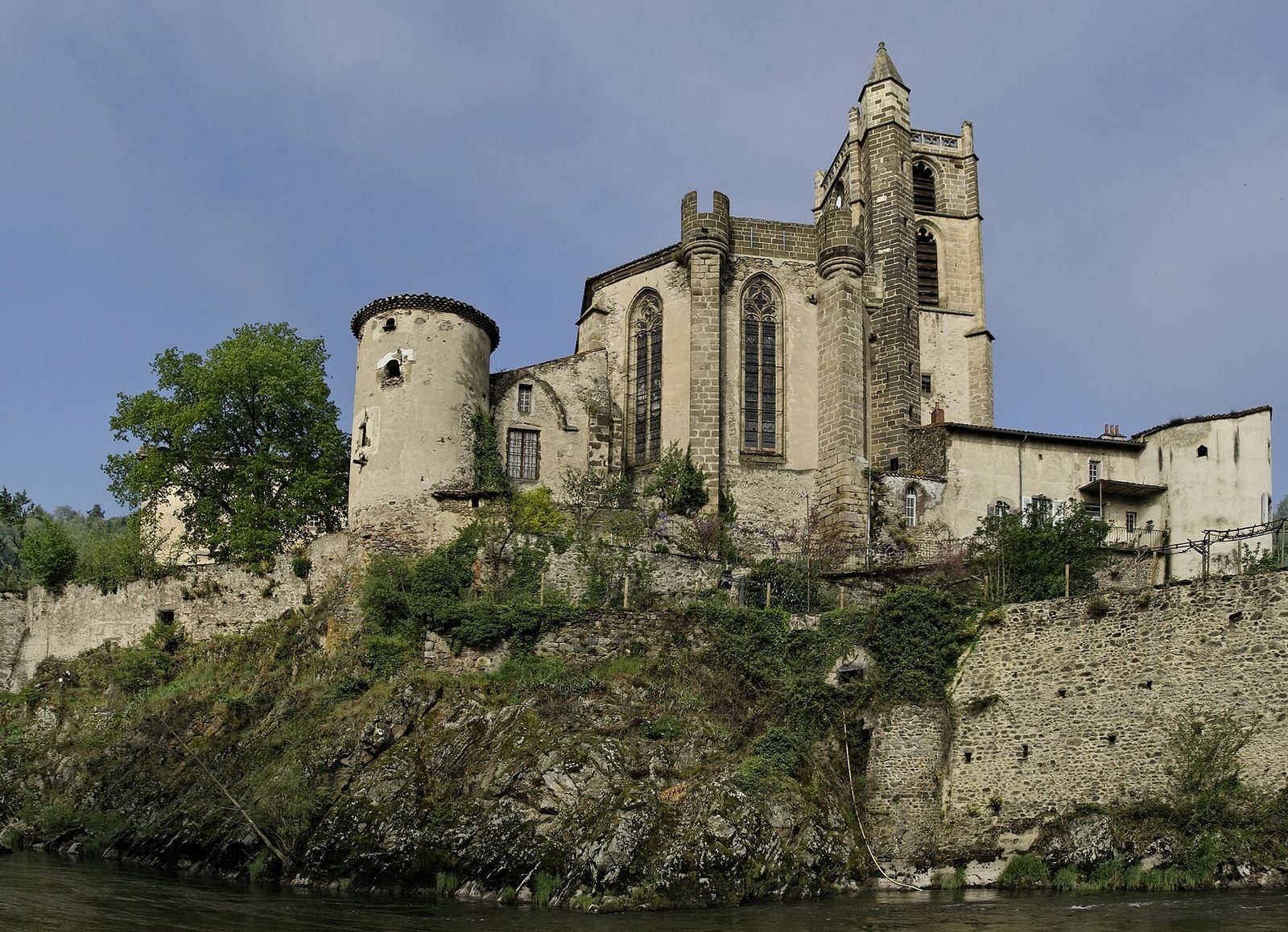
In 1365, about 2,000 armed mercenaries seized the Mercœur castle at Saint-Cirgues and plundered the surrounding region. The prior called on the Polignac family to expel them. The castle was destroyed and never rebuilt; afterward, the abbot of Cluny ordered three defensive towers for the monastery.
A general assembly of the order in 1411 called for urgent church repairs because one corner was in danger of collapse, but the priory lacked the means to act. Vénérand de la Fage, prior from 1419 to 1431, chose instead to rebuild the church. Despite substantial repair work, the building was again deteriorating and threatened with ruin in 1437.
Vénérand’s nephew Barthélemy de la Farge succeeded him, resigned after a dispute, then regained the office in 1449 and served until 1467. Between 1460 and 1472, Jean de Bourbon, abbot of Cluny and bishop of Le Puy, assigned Barthélemy and then his successor Jacques de Moussiac the task of replacing the Romanesque church. A general chapter held at Lavoûte in 1471 indicates that the rebuilding was probably complete by then.
Devotion and monastic reform
On 8 July 1496, two children found an image near the bridge over the Allier. The discovery became the focus of devotion under the title Notre-Dame Trouvée, meaning Our Lady Found. In 1671, the commendatory abbot, who held the abbacy and its associated benefits, François de Nesmond signed a reform agreement with Cluny. It aimed to renew monastic discipline and clarify the priory’s property, rights, income, use of its buildings and division of expenses between monks and prior. The community adopted the Strict Observance, a stricter form of monastic discipline.
Reconstruction and modern history
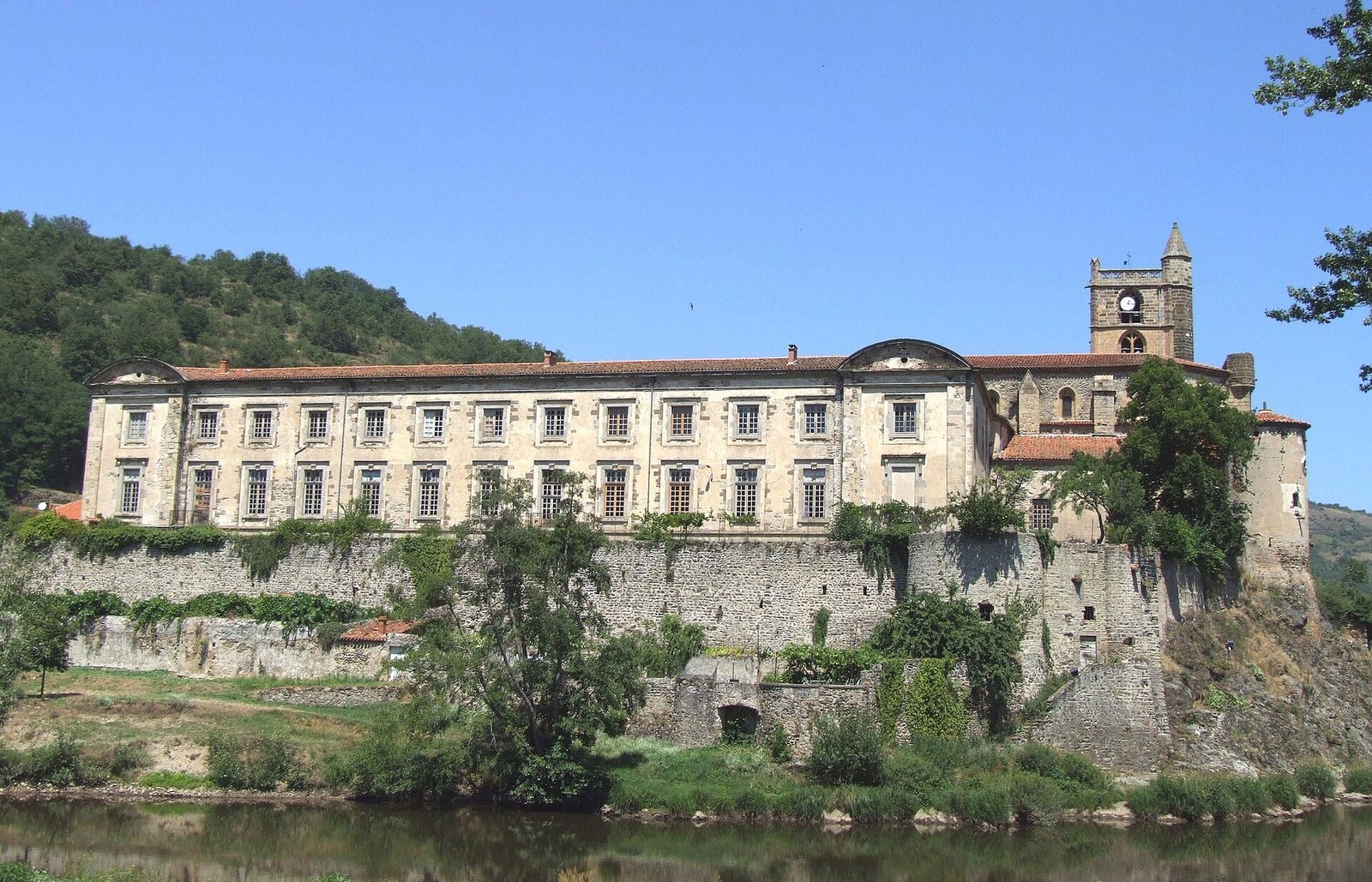
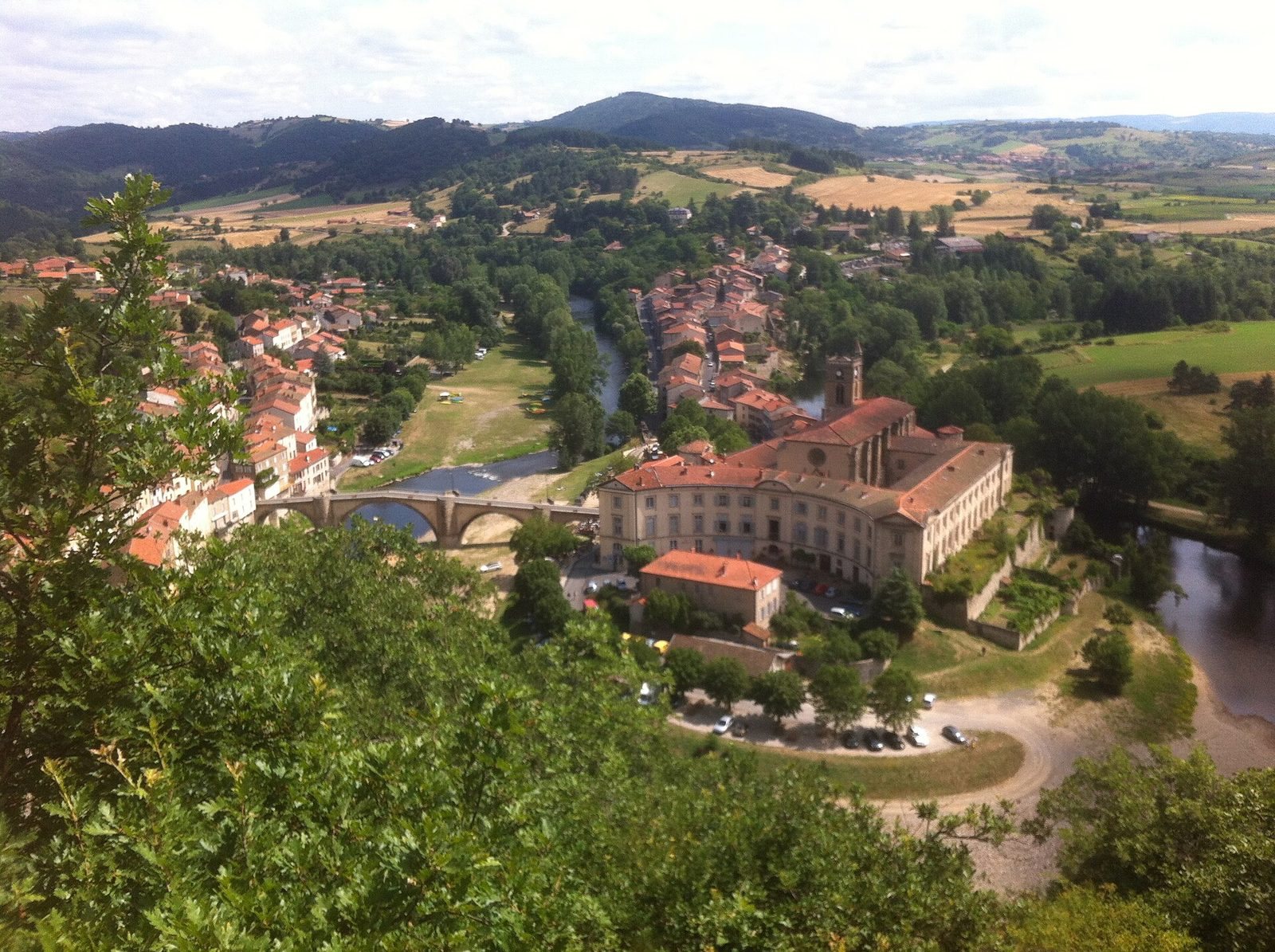
In 1747, the priory buildings were in poor condition, and Cluny commissioned Clermont architect Antoine Deval to design replacements. Work on Place du Fer à Cheval proceeded from 1778 to 1790, but the planned complex was not completed. In 1790, the National Assembly placed church property at the nation’s disposal under the Civil Constitution of the Clergy, and the monastery closed. On 14 May, nationalized property was sold to municipalities, which then resold it to private owners.
During a pilgrimage on 6 July 1913, Thomas-François Boutry, bishop of Le Puy, crowned a statue of Notre-Dame Trouvée. Restoration of the buildings began in 1965. The church was classified as a historic monument in 1862, the priory enclosure in 1889, and the priory buildings in 2001; the former Benedictine abbey was listed in 1937.
Remains
The surviving complex brings together church fabric from successive building phases and a later, unfinished group of priory buildings. Its principal architectural styles are Gothic and Neoclassical.
Church and devotional features
Monastic church
Remains of the monastic church are preserved in the rectory. The Romanesque church was replaced by a Gothic building, a medieval style associated with pointed arches and ribbed vaults. The replacement incorporated part of the earlier church’s southern walls.
Romanesque door leaf
One leaf from a door of the Romanesque church survives. Its inscription says that Odilon built the sanctuary for the King of Kings and that the ruler of the world joined him to the hosts of heaven.
Oratory of Saint-Denys
The consecrated oratory served worshippers from the surrounding area while construction of the monastic church was underway. It provided a place for local worship during that building phase.
Image of the Virgin
The object associated with the devotion to Notre-Dame Trouvée was an image of the Virgin formed within a pebble.
Later priory buildings
The buildings erected on Place du Fer à Cheval between 1778 and 1790 followed an elliptical plan. Their Neoclassical design drew on classical Greek and Roman forms, but the intended complex remained unfinished.