Porta Soprana: Genoa’s Medieval City Gate
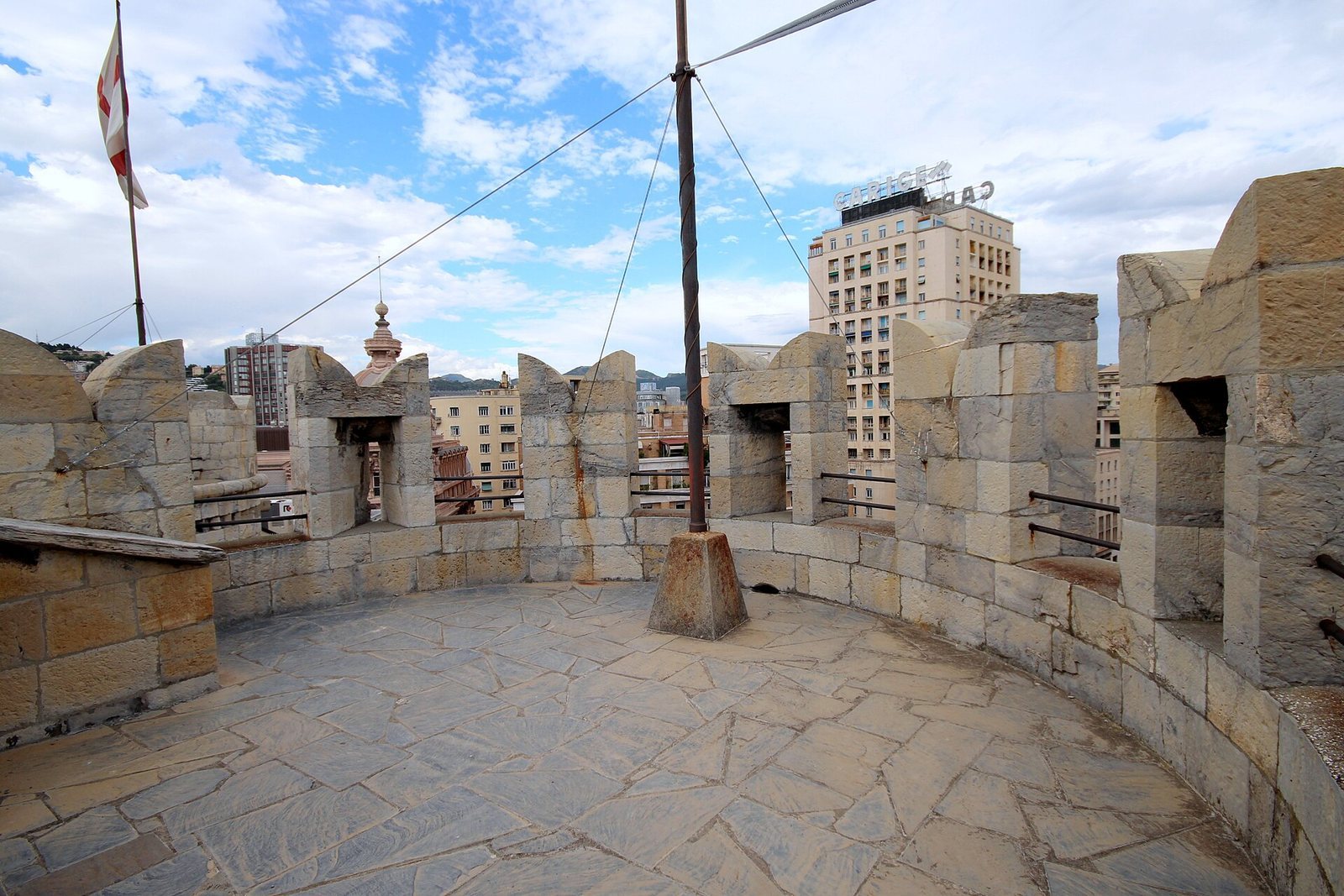
Site at a Glance
- Country
- Italy
- Primary era
- Medieval
- Eras represented
- Medieval
- Civilizations
- Genoese
- Site type
- Military
- Remains
- Gate
On this page8 sections
History
Porta Soprana, also called Porta di Sant’Andrea, is a Romanesque city gate in Genoa, Italy. It guarded the eastern approach and the route from Rome, first serving in the city’s second defensive circuit in the 9th and 10th centuries. It was later incorporated into the third circuit, the Walls of Barbarossa, built in 1155–1159 and named for Frederick I Barbarossa, the 12th-century Holy Roman Emperor.
Urban change and reuse
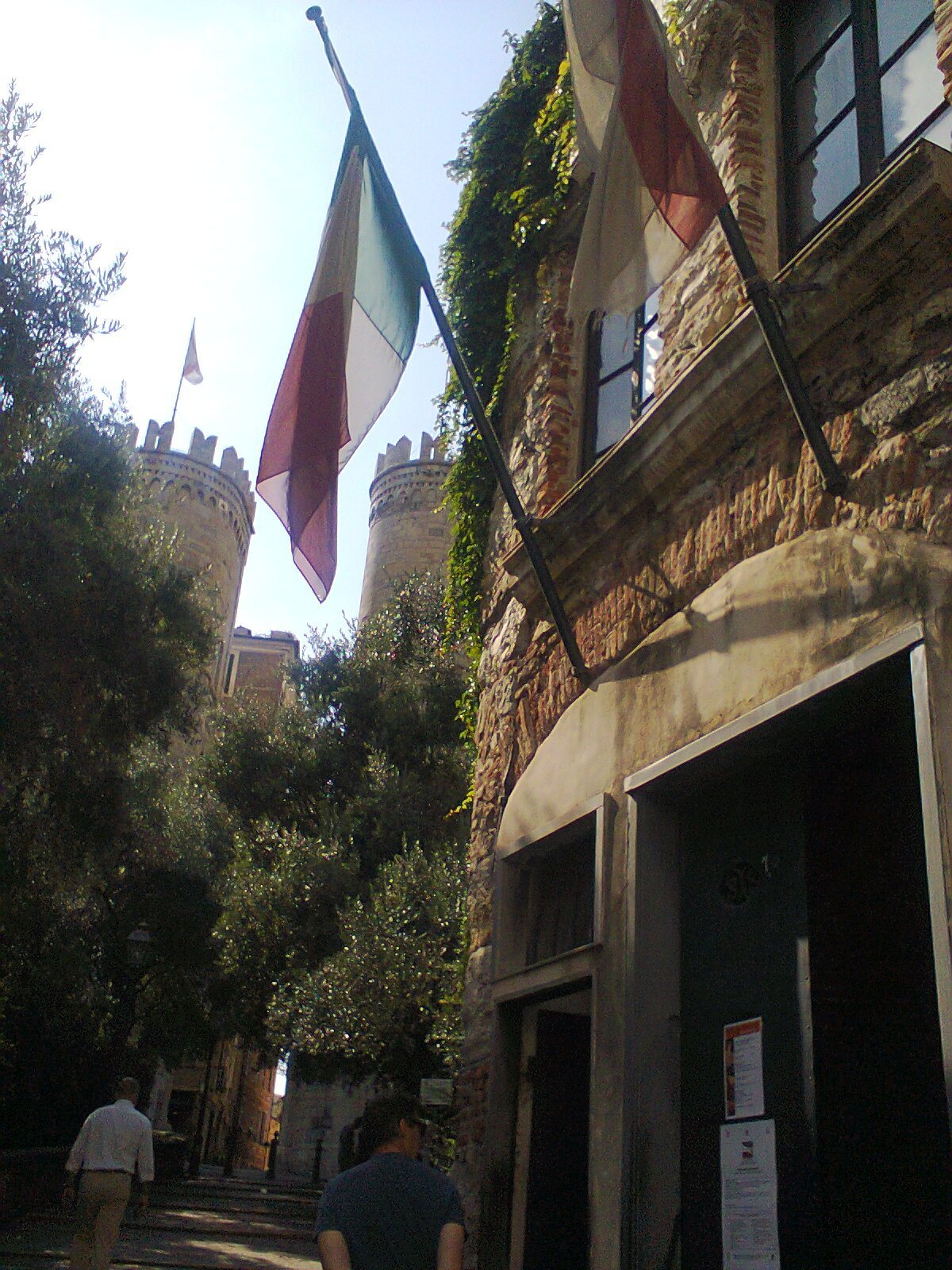
From the 14th century, after the city’s walls were extended and the gate lost its defensive role, urban growth absorbed it into the Ponticello district. A house was built above the entrance arch between the towers and gained another storey in the 19th century. The son of Sanson, the executioner who guillotined Louis XVI during the French Revolution, lived in the house.
During the 19th century, the towers served as a prison and included accommodation for the jailers. The nearby Sant’Andrea convent was also used as a prison.
Restoration and heritage status
By the late 19th century, buildings surrounded the gate and its battlements had disappeared. Alfredo d’Andrade directed restoration work from the 1880s until 1914. After the Ponticello district was demolished in the 1930s, Orlando Grosso oversaw restoration of the south tower. Porta Soprana is designated Italian national heritage.
Remains
Gate and towers
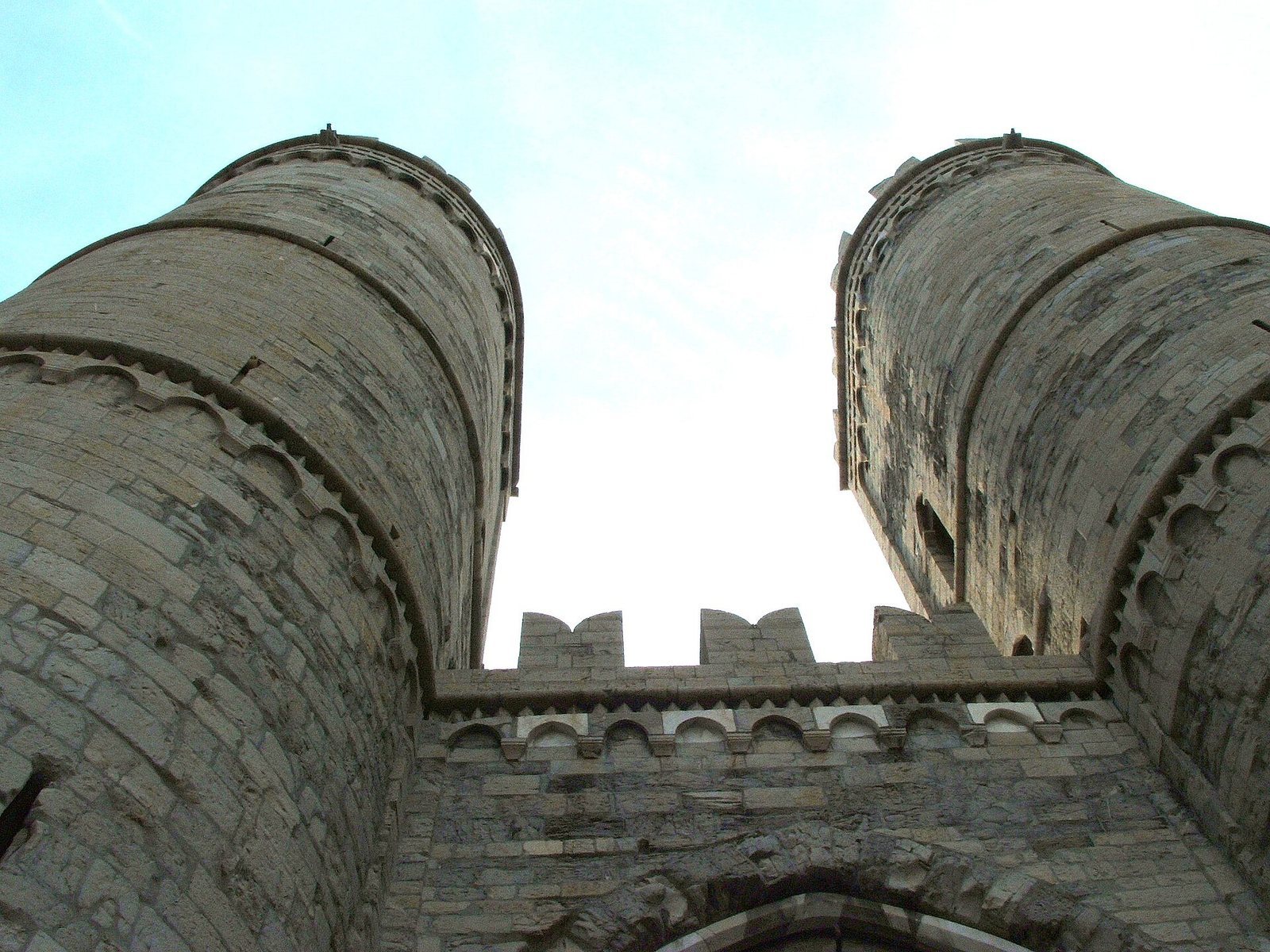
The Romanesque gate consists of an entrance arch between two towers. It stands at Piano di Sant’Andrea, on a hilltop levelled in the early 20th century. The name “Soprana” derives from Superana, referring to the gate’s elevated position relative to the city. Its restored form represents the appearance it is thought to have had in the 12th century, and the tower facing the sea has been partly reconstructed. Restoration reinstated the north tower and entrance arch, and restored carved column tops decorated with eagles in the Romanesque-Pisan style, a regional form of Romanesque art associated with Pisa. Porta Soprana is one of the few surviving gates in Genoa’s medieval walls, alongside Porta dei Vacca.
Inscriptions
Two Latin inscriptions are set on the gate’s inner faces, one on each side for someone entering from outside. They use leonine hexameters, Latin lines in a six-beat metre with a distinctive rhyme pattern, as well as assonance. Their closing verses name Genoa’s consuls and placiti, judicial officials, serving in 1155. The consuls listed are Guglielmo Porco, Oberto Cancelliere, Giovanni Malocello, and Guglielmo Lusio; the officials are Boiamonte di Odone, Buonvassallo di Castro, Guglielmo Stangone, Guglielmo Cigala, Nicola Roza, and Oberto Recalcato.
Left inscription
In the left-hand text, Genoa speaks in the first person. It says that the city’s men and walls defend it, welcomes peaceful entry, and warns that an attacker will depart defeated. The verse plays on Ianua, the Latin word for “gate” and a medieval name for Genoa, and declares that the cardinal directions know of the city’s many victories.
Right inscription
The right-hand text celebrates Genoese military campaigns in Africa, Asia, and Spain, and claims the capture of Almeria and the subjugation of Tortosa. It dates construction of the bulwark to 1155 and also describes it as the seventh year after one event and the eighth after another.