Arch of Dolabella and Silanus: A Roman Gate Recast as an Arch
Site at a Glance
- Rating
- 4.4
- Popularity
- Medium
- Country
- Italy
- Primary era
- Classical
- Eras represented
- Iron Age, Classical
- Civilizations
- Roman
- Site type
- Military
- Remains
- Gate
On this page8 sections
History
The Arch of Dolabella and Silanus stands in Rome, Italy, as the Augustan-period transformation of Porta Caelimontana, a gate in the city’s ancient Servian Wall. In AD 10, under Augustus, consuls Publius Cornelius Dolabella and Gaius Junius Silanus commissioned work on the gate. The surviving arch preserves the site’s changing role, from a defensive opening to a support for an aqueduct.
The Caelian gates
Porta Caelimontana and Porta Querquetulana belonged to Rome’s defensive circuit on the eastern side of the Caelian Hill. The Servian Wall is traditionally associated with King Servius Tullius, but the surviving circuit was built after his reign. The preferred identification places Porta Caelimontana west of Porta Querquetulana, although their positions remain uncertain. An earlier interpretation reversed them, partly because masonry from the fourth century BC was thought to belong to the oldest circuit on the hill. A revised chronology treats that wall as later than an earlier defensive line.
Scholars associate Porta Querquetulana, together with Porta Viminalis, Porta Esquilina and Porta Collina, with an enlargement of Rome under Servius Tullius, about two centuries before the Servian Wall. The gates’ names are understood to refer to the heights they served. Querquetulum, an old name for the Caelian meaning “oak-covered,” also informed the earlier proposed placement. Livy, a Roman historian, mentions Porta Caelimontana in connection with a lightning strike in 193 BC.
Augustan and imperial alterations
In AD 10, Dolabella and Silanus, who also served as a priest of Mars, commissioned and approved work on Porta Caelimontana by senatorial decree. It is uncertain whether the work restored the gate or rebuilt it. A further restoration took place in AD 211, during the reign of Emperor Caracalla.
Medieval association
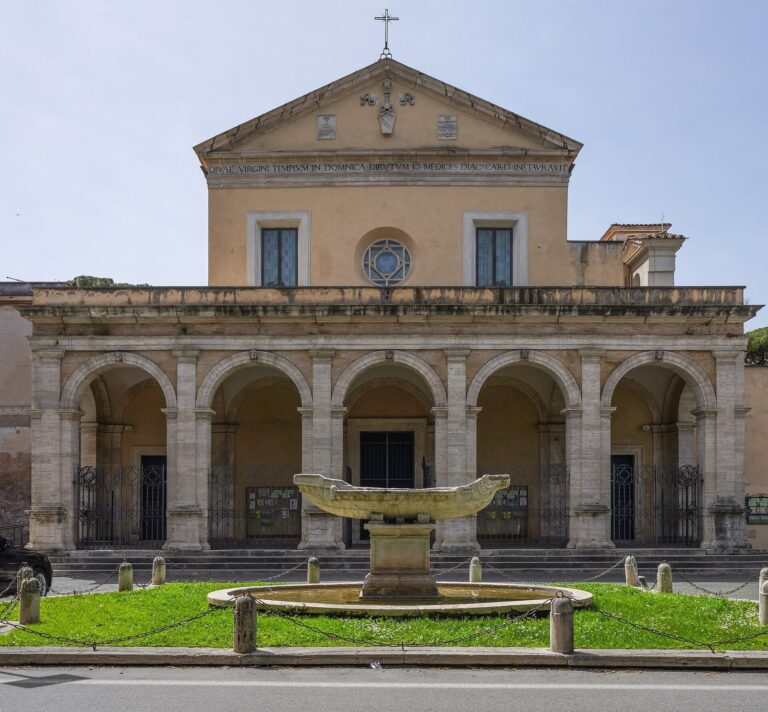
Tradition holds that Saint John of Matha, founder of the Trinitarian Order, lived in a room above the arch from 1209 until his death in 1213. The adjacent church of San Tommaso in Formis remains associated with the Order.
Remains
The gate opening and arch
Porta Caelimontana lies at the western end of the pair of gates, at the beginning of Via San Paolo della Croce, along the route of the former Clivus Scauri, an ancient road running along a slope. Porta Querquetulana is placed farther east, within the grounds of San Giovanni Hospital, near the junction of Via dei Santi Quattro and Via di Santo Stefano Rotondo.
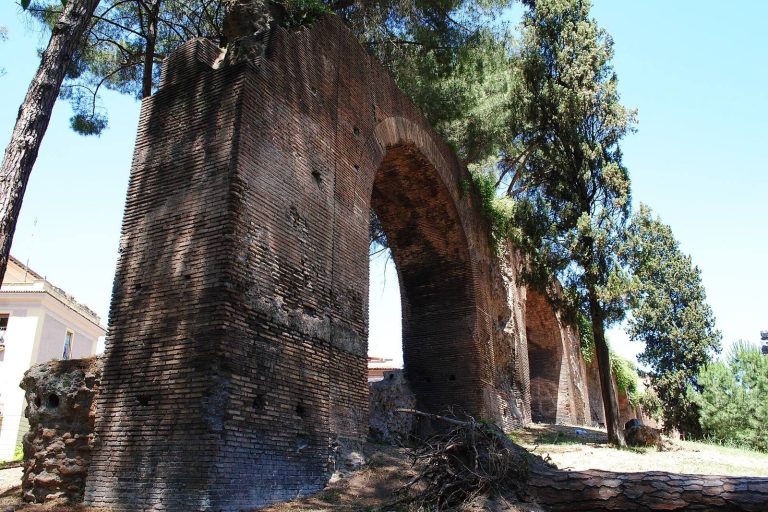
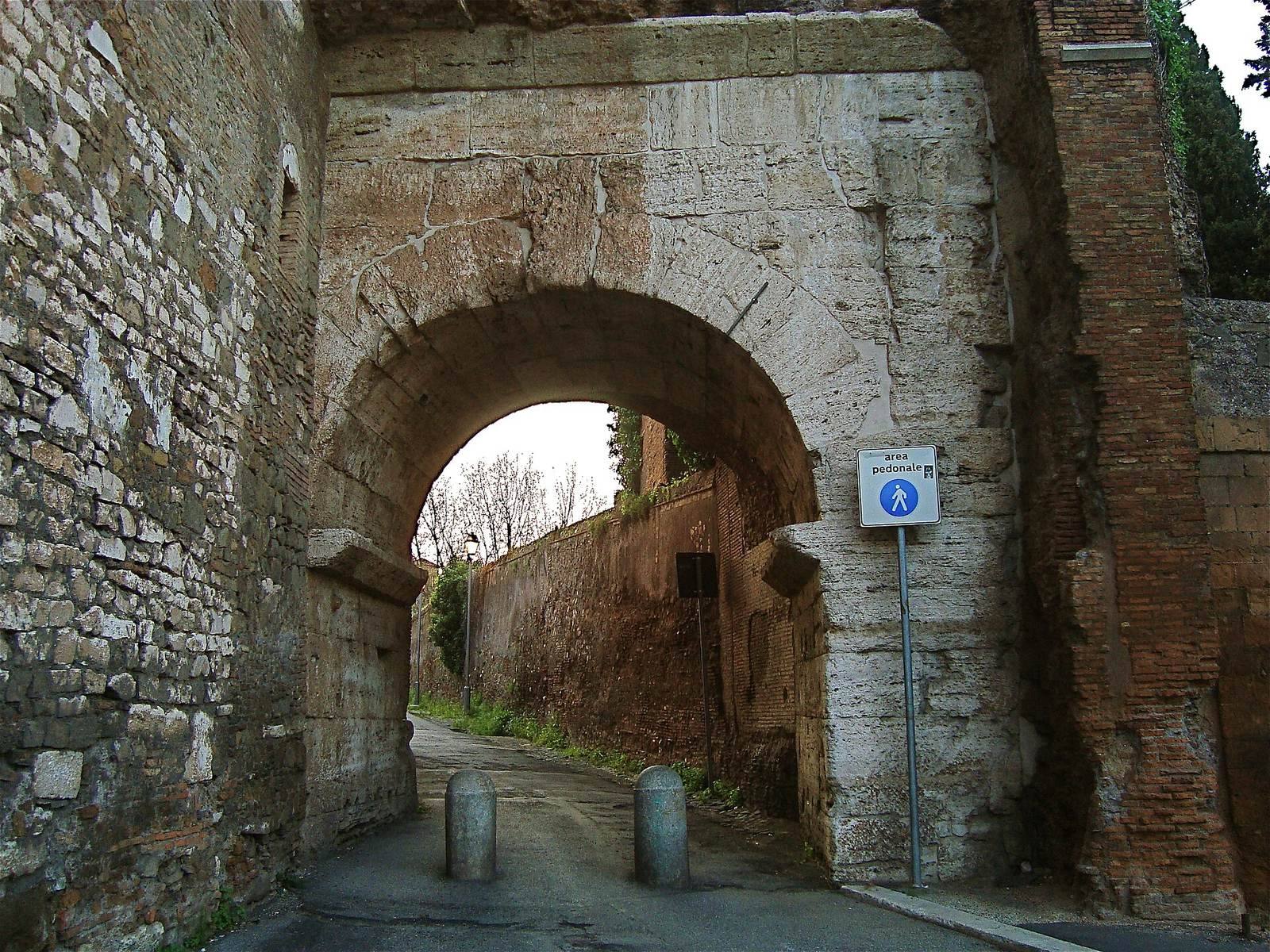
The surviving opening combines the later arch with traces of its earlier form. Its travertine arch replaced a gate made from tuff blocks, some of which remain visible on the right. An inscription on the outer attic names Dolabella and Silanus and records their work under senatorial decree.
Aqueduct arches
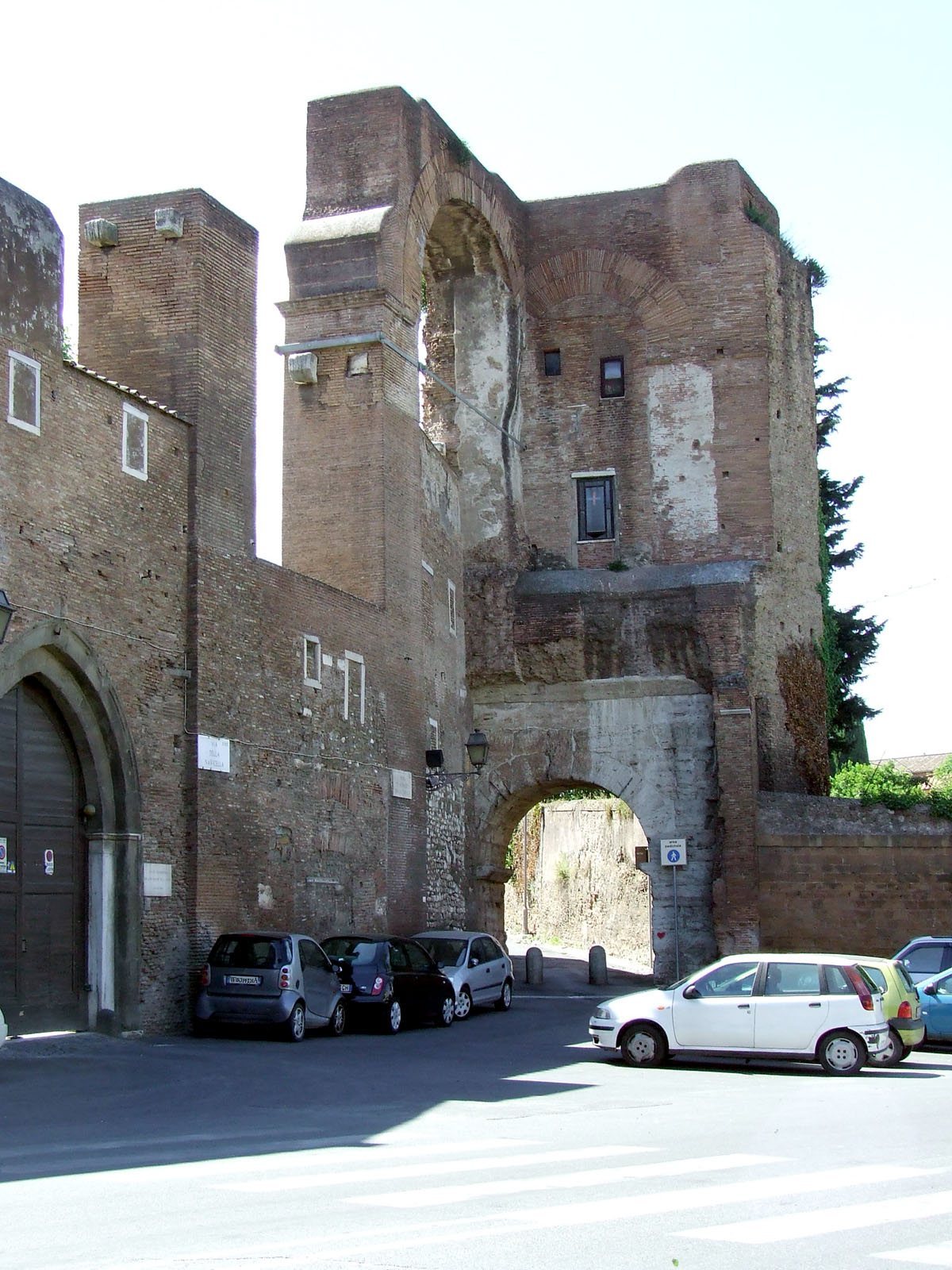
Large arches of the Neronian aqueduct remain above the gate. This aqueduct was a secondary branch of the Aqua Claudia, one of Rome’s major aqueducts, and the gate provided support for its arches.
Room and adjoining church
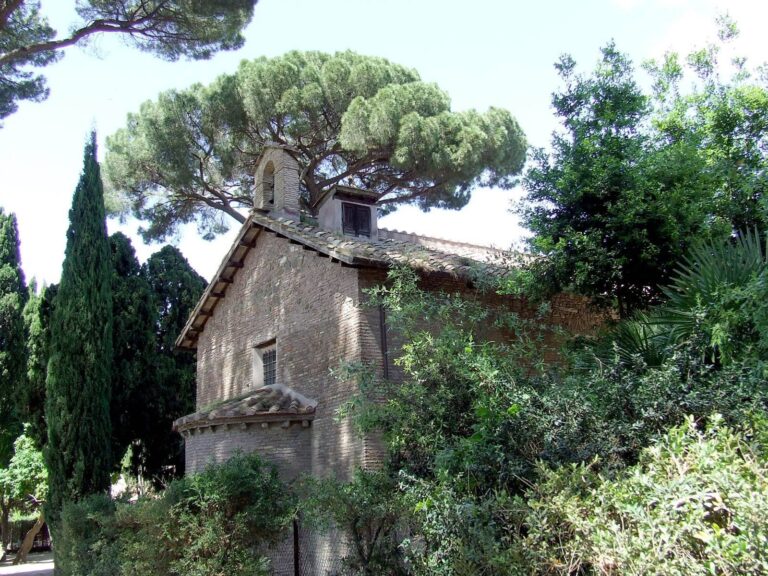
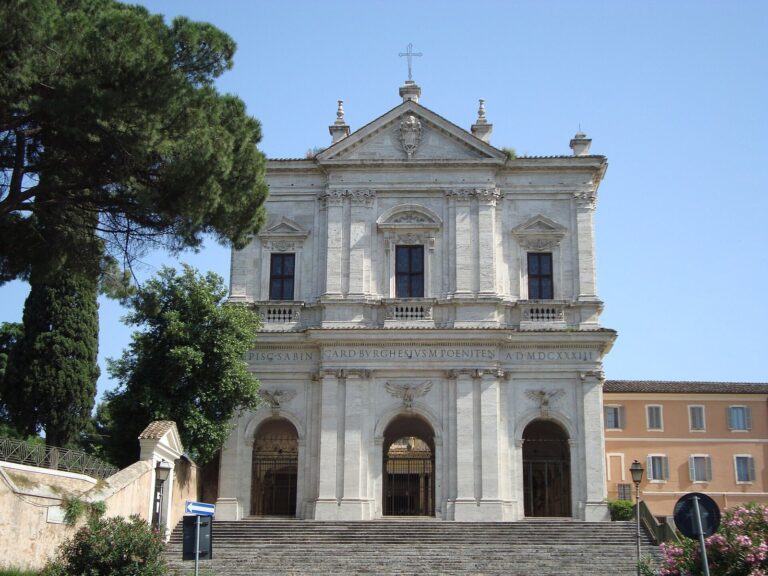
A window above the arch opens onto a small room traditionally linked with Saint John of Matha. San Tommaso in Formis stands beside the arch.