Kremnica Mint: A Medieval Coin-Making Institution in Slovakia
Site at a Glance
- Popularity
- High
- Country
- Slovakia
- Primary era
- Medieval
- Eras represented
- Medieval, Early Modern, Modern
- Civilizations
- Austria-Hungary, Austrian Empire, Habsburg, Hungarian
- Site type
- Economic
- Remains
- Production Complex
On this page10 sections
History
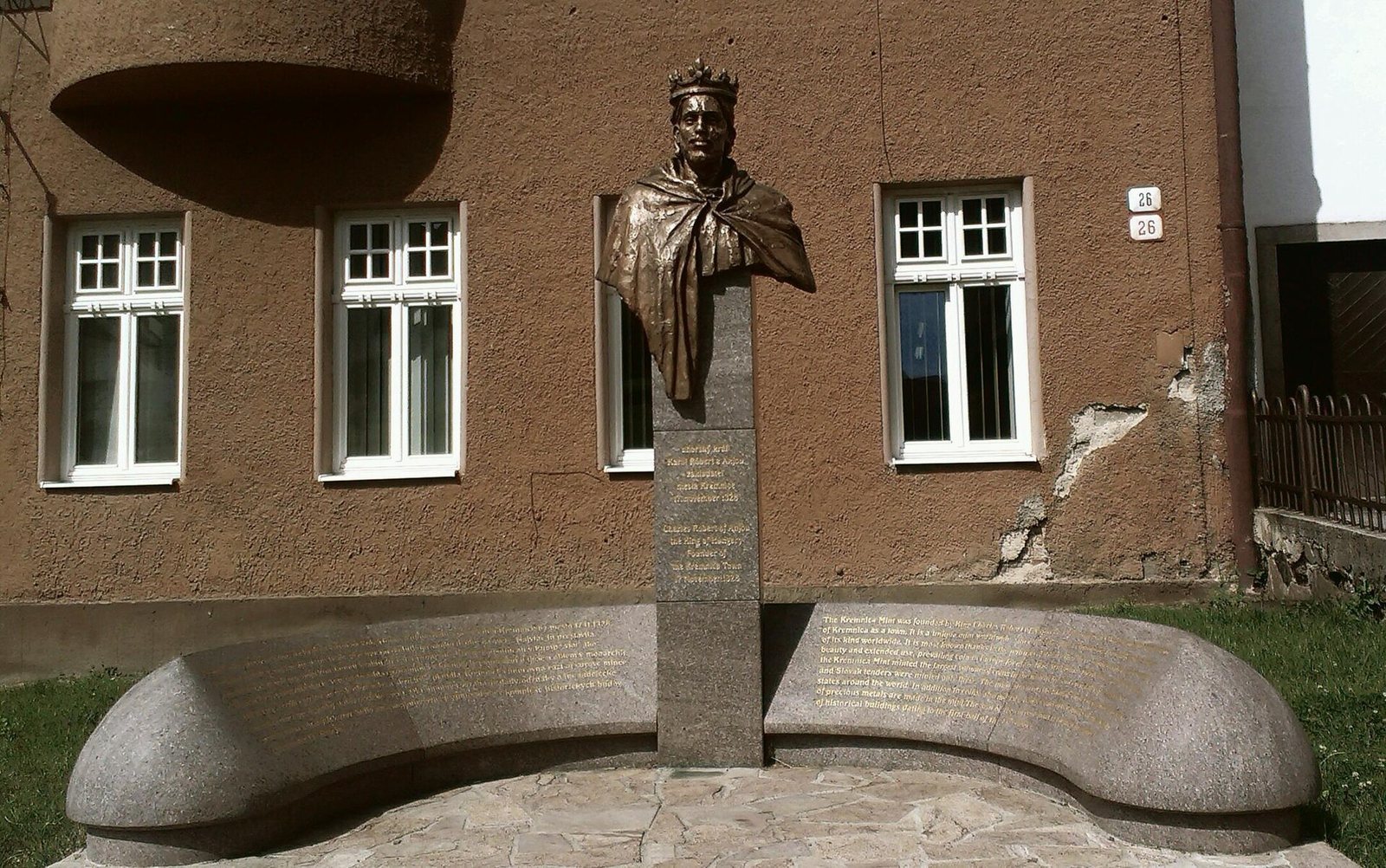
The Kremnica Mint is a coin-making institution in Kremnica, Slovakia, established on 17 November 1328, when King Charles I of Hungary granted the town free royal status and the right to operate a mint. Its historic buildings date from 1450, and the complex is classified in the Classicist style.
Medieval foundations and early coinage
Kremnica became known for its gold ducats, which were regarded as among Central Europe’s strongest currencies. The mint struck 21.5 million of these coins over its history. Their gold had a stated fineness of 0.990, equivalent to 23 carats and 9 grains. Early Kremnica ducats closely copied Florentine florins, gold coins associated with Florence. Under Louis I of Hungary, their designs changed to show Saint Ladislaus, a medieval Hungarian king later venerated as a saint, on the reverse and a Hungarian king on the obverse. The word “ducat” is linked to “iste ducatus,” words at the end of the inscription on a similar Venetian gold coin.
In the mid-fifteenth century, the mint moved from its original site to a location within Kremnica’s town walls. From the late fifteenth century into the sixteenth, it also gained a reputation for high-quality medals. Between 1499 and 1506, it struck seven variants of large silver coins associated with the Turzo family, a prominent noble family in the Kingdom of Hungary. These early coins were called guldiners or half-thalers. Regular production of thalers, large silver coins, began in 1553. Development of the mint’s building complex continued until 1880.
Habsburg-era production and machinery
Rebellions against Habsburg rule disrupted the mint’s work, especially its coin striking, but Kremnica developed into one of the Habsburg monarchy’s key minting centers. Its mint marks, the letters or symbols identifying where a coin was struck, changed over time. The mark began as C, for the Latin name Cremnicium, and became K under Sigismund of Luxembourg. Later, K-B abbreviated Hungarian and German forms of Kremnica’s name. A decree issued by Maria Theresa on 16 June 1766 standardized marks across the Austrian Empire: Kremnica received B, while Vienna and Prague received A and C. The mark became K.B. temporarily in 1848–49 and permanently in 1868. After minting equipment was transferred to Budapest, coins made there continued to carry Kremnica’s mark through 1922. The mint now uses MK.
In the eighteenth century, Kremnica introduced the balancier, a mechanical screw press for striking coins. Prague and Vienna adopted the machine on Kremnica’s model, and the mint’s presses were improved with a drive belt in 1785. Production reached its peak during Maria Theresa’s reign, when Kremnica’s output exceeded that of all the empire’s other mints combined. The introduction of the crown as Austria-Hungary’s monetary unit in 1892 brought a sharp rise in demand. Kremnica was the only mint in what is now Slovakia, and its technology was considered ahead of other Hungarian mints, including those in Bratislava and Alba Iulia. After the empire closed mints it considered unprofitable, Kremnica was the only one still operating by the end of the nineteenth century.
War, transfer, and recovery
After the First World War, as Czechoslovak troops entered northern Hungary, the government led by Hungarian political leader Mihály Károlyi ordered the mint’s machinery and precious-metal reserves moved to Budapest. The first coins struck with the equipment in Csepel, a district of Budapest, used faulty machines and worn dies. Coins made there in 1922 still carried Kremnica’s KB mark. By then, little more than the mint’s buildings remained. The Czechoslovak government began installing new machinery in Kremnica in 1921, and the mint resumed making coins for Czechoslovakia and Slovakia, as well as for 25 other countries.
Kremnica was the only mint in Czechoslovakia. During the Protectorate of Bohemia and Moravia, the German-controlled territory that existed from 1939 to 1945, Germany supplied its coins. At the end of the Second World War, the mint’s entire striking hall was hit, but the enterprise survived both world wars. The Czech Republic established its own mint in 1993.
Slovak and international production
A new plant was completed in 1986, and coin production moved there while medal striking continued in the historic building. In 1988, the mint took its present state-enterprise form under the Czechoslovak Socialist Republic’s federal ministry responsible for metallurgy, mechanical engineering, and electrical engineering. After 1989, it entered markets including Bangladesh, India, and several South American countries. Preparations for Slovak koruna coins began in October 1992, and production started on 23 January 1993, following the establishment of the Slovak Republic.
The mint received certification to strike euro coins, and production of Slovakia’s first euro coins began on 19 August 2008. It makes circulation, commemorative, and collector coins for the National Bank of Slovakia, as well as coins for other countries. In 2012, it produced 413 million circulation coins. Its other work includes medals, tokens, badges, decorations, orders, mayoral chains, jewelry, plaques, cards, custom manufacturing, and metal-surface finishing. In March 2013, it won a contract for 175 million Sri Lankan 10-rupee coins, opening competition in a market previously dominated by the United Kingdom’s Royal Mint. The historic buildings were renovated in 2006, when a permanent exhibition on coin production was established. On 24 February 2011, the mint joined the European Heritage Label program, which recognizes sites connected with European history and culture.
Remains
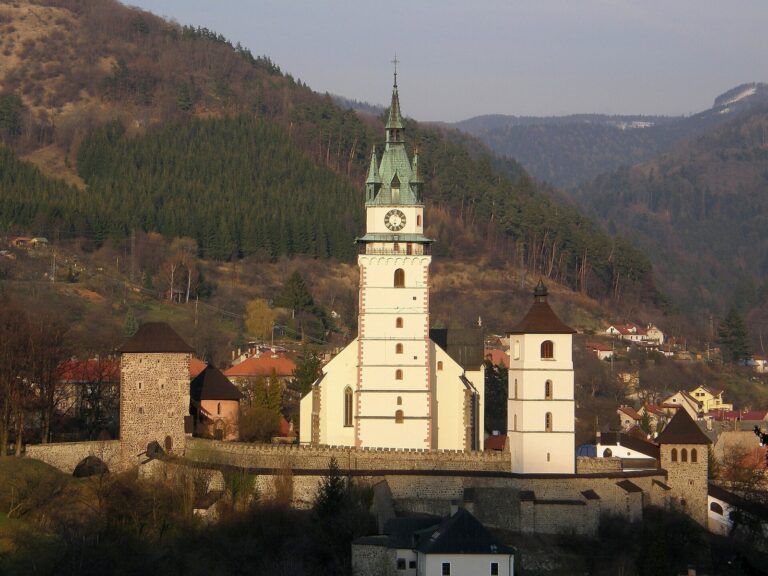
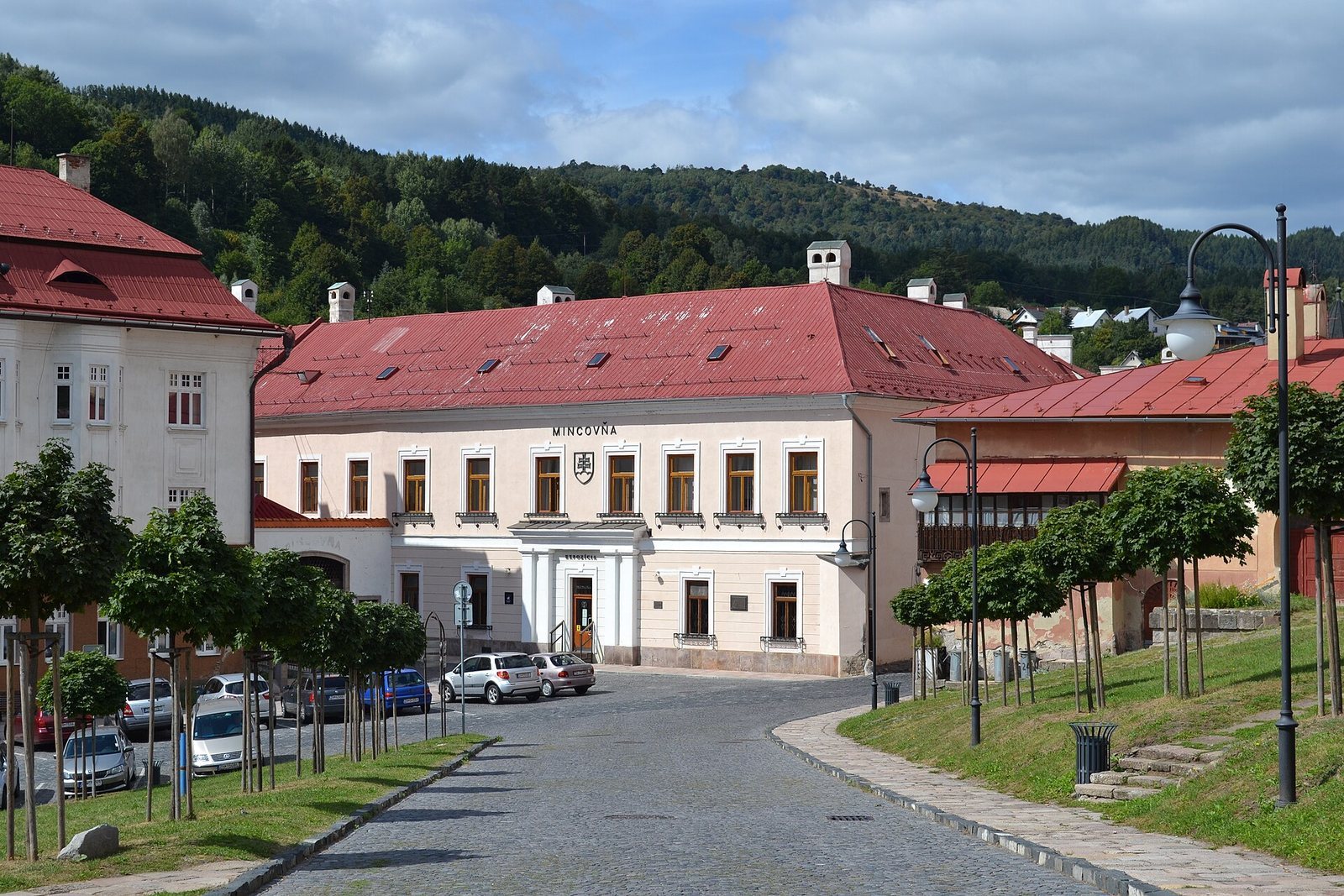
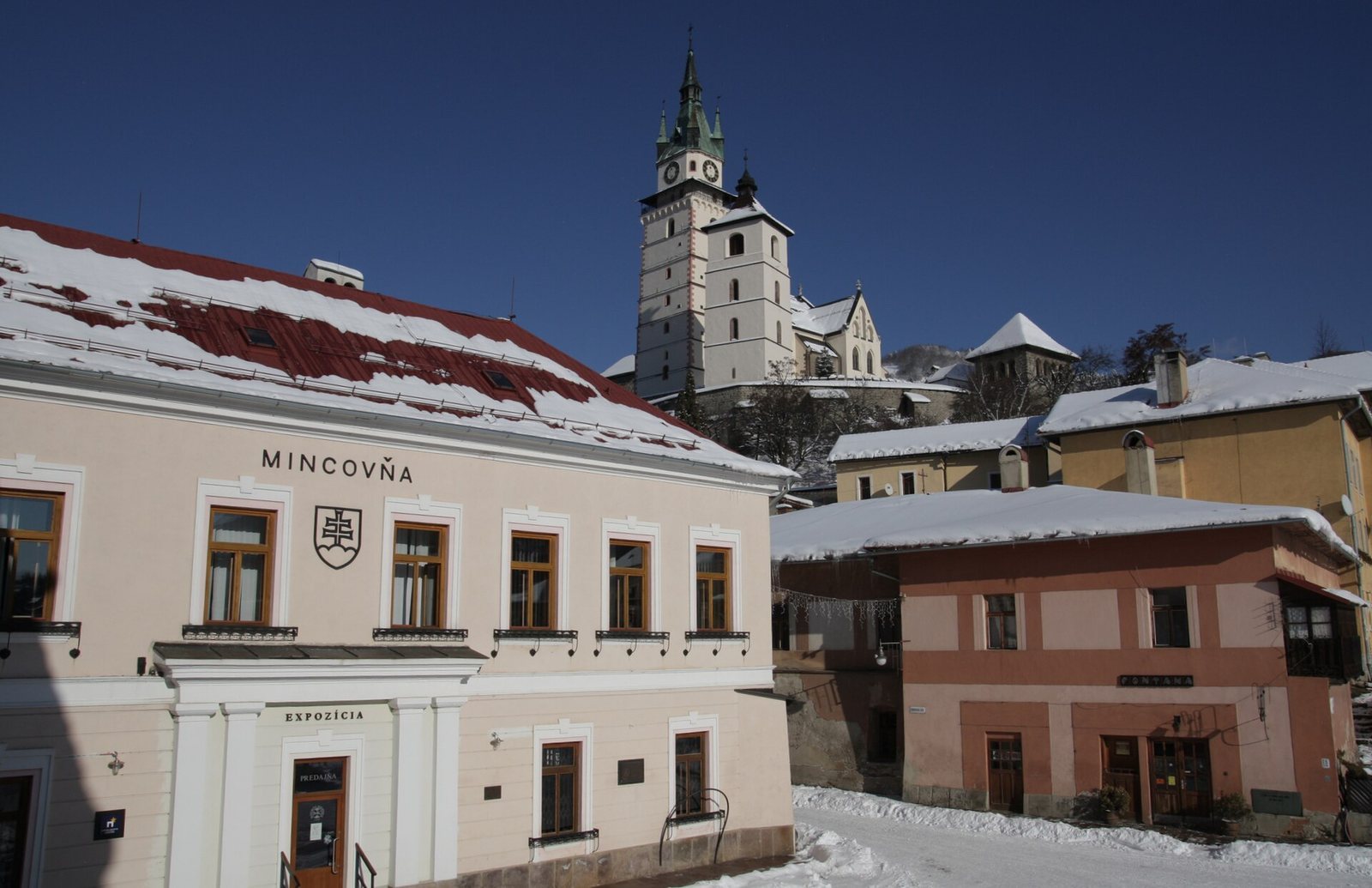
The historic mint complex stands within Kremnica’s town walls, near their northwestern section, while later production facilities occupy locations outside the city and in its center. The historic complex is classified in the Classicist style.
Historic mint complex
Historic buildings
The historic mint buildings date from 1450. They form the older part of the mint complex, whose development continued over subsequent centuries.
Coin-production exhibition
The permanent exhibition in the historic buildings includes surviving historical Vulkan-brand coin-striking machines and also presents modern coin striking.
Production facilities
The separate production plant stands outside the city. A coin-striking facility was also created by comprehensively reconstructing a building in central Kremnica.