Neumarkt Residence: A Former Palatine Castle and Court Complex
Site at a Glance
- Popularity
- Medium
- Country
- Germany
- Primary era
- Early Modern
- Eras represented
- Medieval, Early Modern
- Civilizations
- Electoral Palatinate, Holy Roman Empire
- Site type
- Civic
- Remains
- Palace
On this page12 sections
History
The Neumarkt Residence, also known as Pfalzgrafenschloss Neumarkt, is a castle complex in Neumarkt, Germany, whose earliest predecessor was probably built around 1200–1250. It later served as a Palatine seat of government and became the historic centre of the castle district, alongside the Court Church and the Reitstadel.
Early Castles and the First Fire
At least three predecessor castles are thought to have occupied the site, and all were destroyed. The first served as both home and workplace for Neumarkt’s chief magistrate. It burned during the pogrom of 12 July 1298, organized violence against the town’s Jewish community. The circumstances are uncertain: townspeople may have set the fire while Jewish residents were sheltering inside, or the Jewish residents may have started it in retaliation for the lord’s refusal to help them. A replacement castle was built soon afterward.
Palatine Government in Neumarkt
Ruprecht III, ruler of the Electoral Palatinate and an elected King of the Romans, died in 1410, after which his Palatine lands were divided among his heirs. John of Palatinate-Neumarkt received the Upper Palatinate, transferred his government seat to Neumarkt, and developed the town as a residence city. He built a Gothic castle close to the position of the present complex. Around 1418, the Marian chapel opposite it was enlarged into the Court Church. The Reitstadel was built to store military equipment and other supplies.
John’s son Christopher held the title of Count Palatine at Neumarkt and, from 1437, also ruled as king of Denmark, Sweden, and Norway. A governor therefore represented him in Neumarkt. When Christopher died without an heir in 1448, the territory passed to John’s brother Otto I, who made Neumarkt his seat of government. Otto I’s son Otto II later ruled there. In 1490, Otto II gave up his official duties to focus on astronomy and mathematics, pursuits he continued until his death in 1499.
Renaissance Rebuilding and a Changing Role
A major fire destroyed the castle and Reitstadel in 1520. Count Palatine Frederick II and master builder Erhard Reich of Eichstätt rebuilt them by 1539, giving the castle a Renaissance form. Frederick moved his seat of government to Amberg in 1543, reducing Neumarkt’s role. His relatives occupied the residence, and his widow Dorothea lived there after his death in 1556. From about 1560, the building again served as the headquarters of Neumarkt’s chief magistrates, while princes visited only from time to time.
Frederick V, a Palatine ruler who later became king of Bohemia and was nicknamed the Winter King, may have been in Neumarkt in the summer of 1619. A step toward his later acceptance of the Bohemian crown was associated with the Mathematician’s Tower.
Courts, Industry, and Conservation
Part of the residence was occupied by a tobacco factory from 1795, and the factory continued into the nineteenth century. Courts began operating in the castle in 1805. From 1862, it housed the Royal Bavarian district court and later the local court; the district office remained there until 1961. A prison in the east wing was used until the 1930s. Two side wings and the gate tower at the courtyard entrance were also demolished.
Neumarkt’s old town suffered heavy damage in the final days of the Second World War, but the residence escaped destruction. A comprehensive renovation followed, and the surviving parts of the east wing were rebuilt from 1990. The complex is also within an archaeological monument area covering medieval and early modern remains around the former castle and the Court Church.
Remains
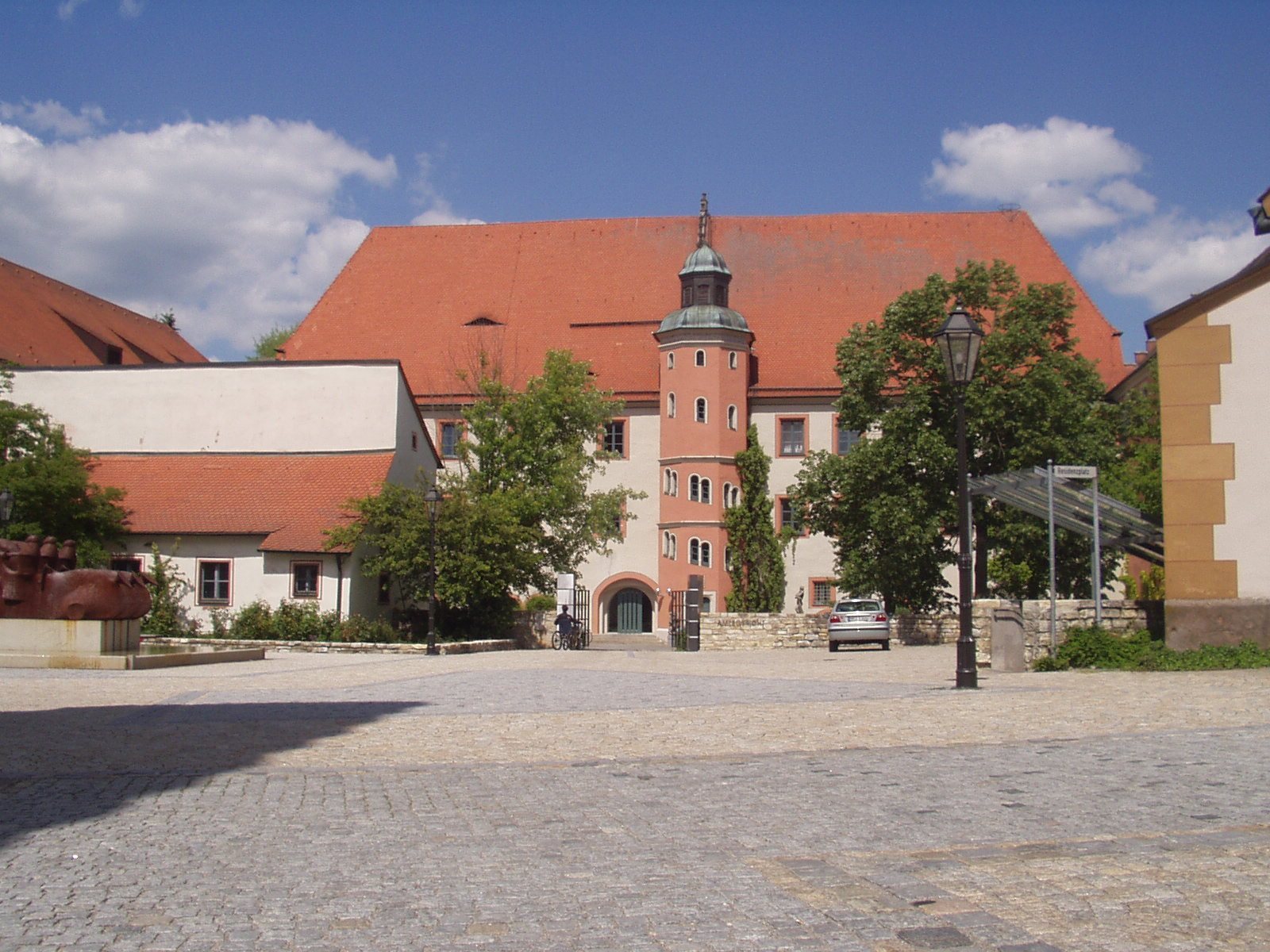
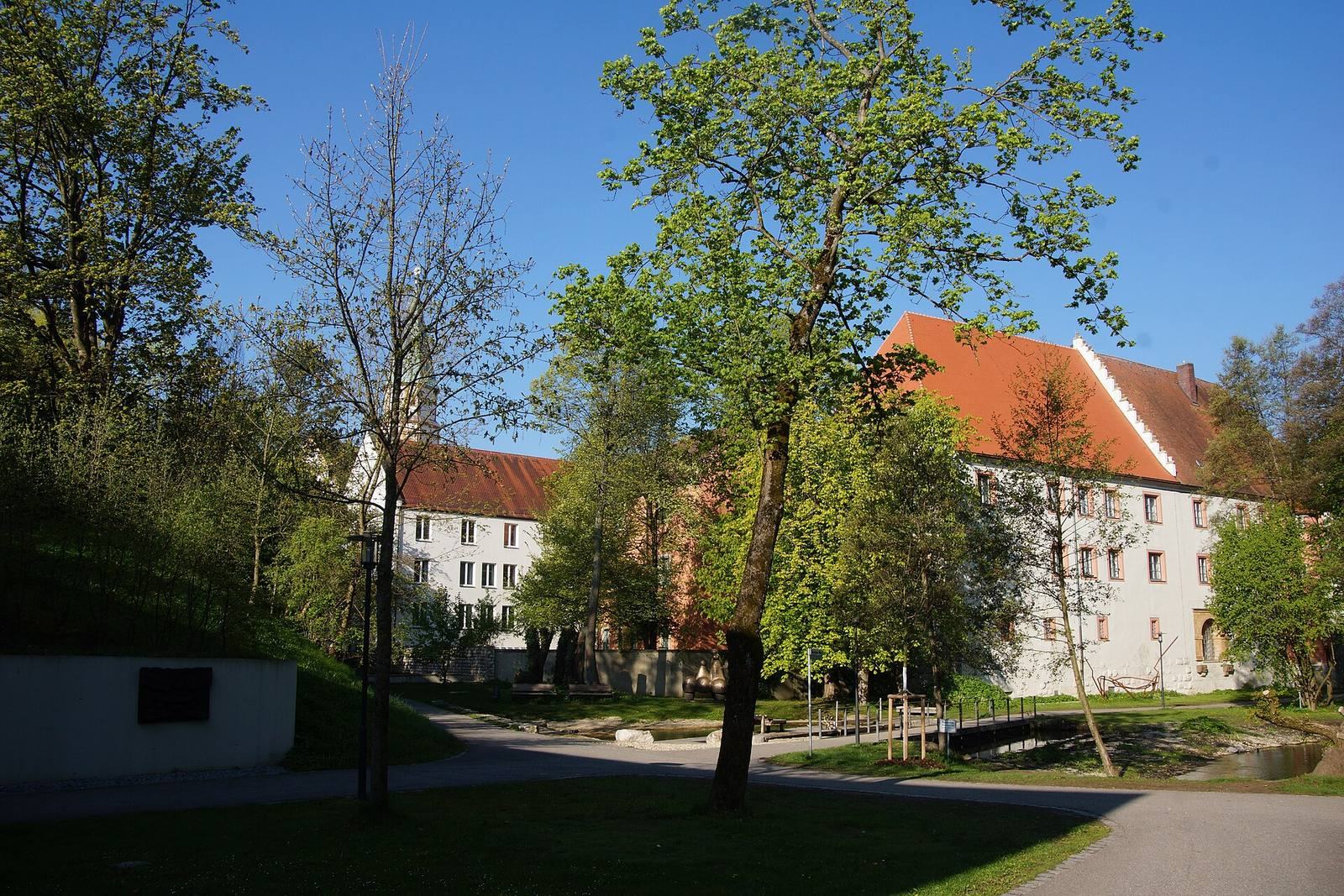
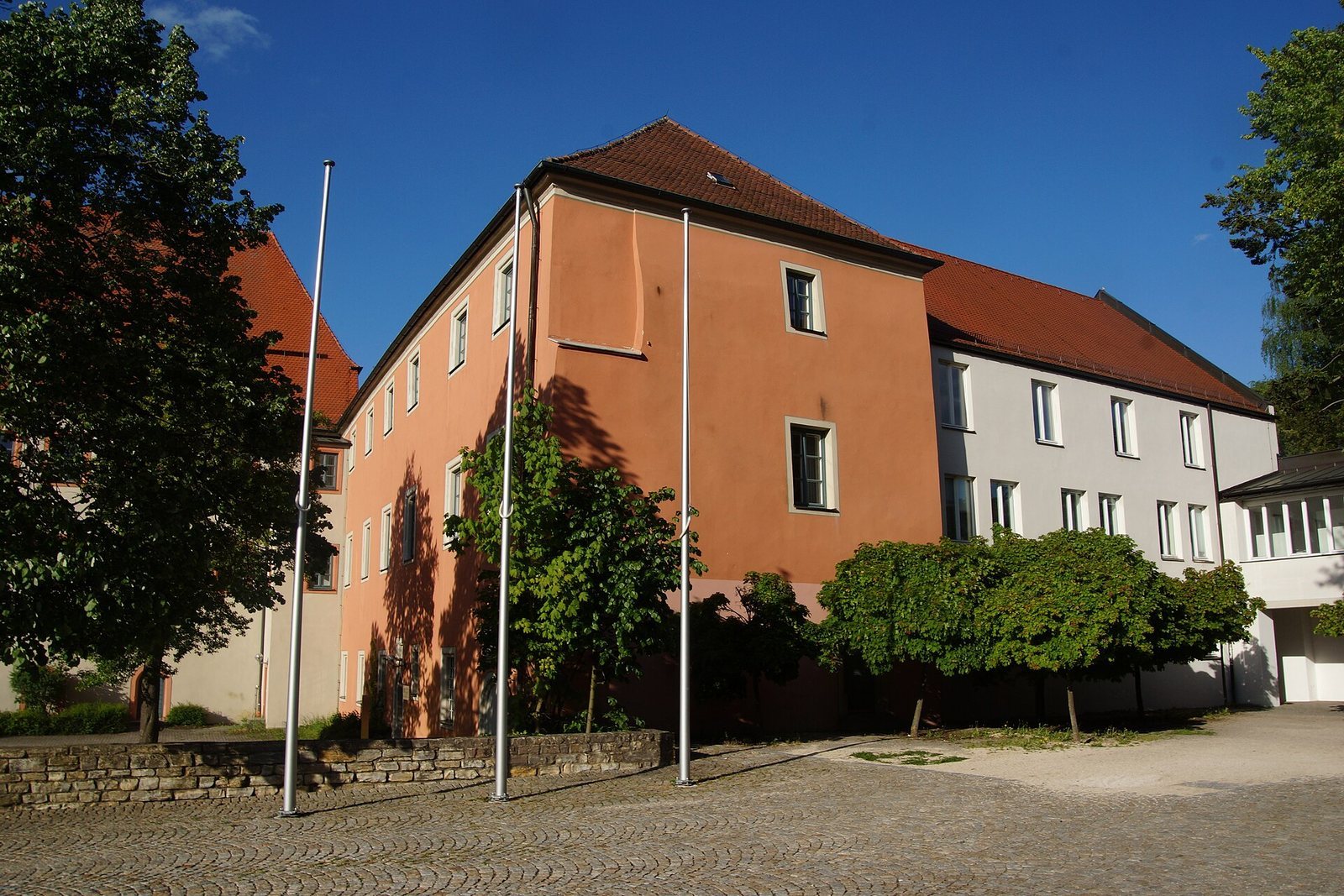
The surviving site combines a Renaissance residence arranged around a courtyard with archaeological traces of earlier, smaller castles. The historic complex had a moat, gardens, and an extensive park, while the main building and west wing form part of the surviving residence.
Earlier Castle Remains
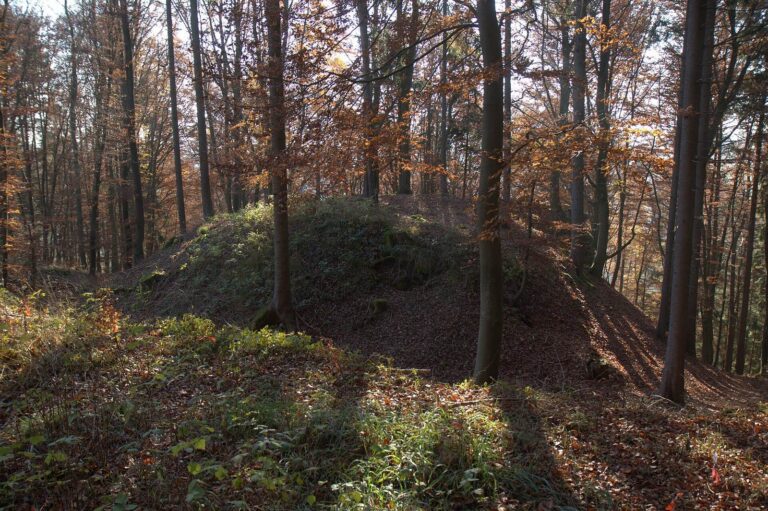
The earliest two castles were smaller than the later residence and probably stood beneath the area of the present east wing, nearer to the Court Church. In 1978, work for an underground car park at Residenzplatz uncovered several fire-damaged columns from one of these early buildings. The columns are now displayed in the park beside the residence, near the square.
Renaissance Residence
Moat and Courtyard
The Renaissance residence was built as a moated castle, with the water enclosing the complex. Two drawbridges crossed the moat, one toward Residenzplatz and the other toward the city park. The grounds included gardens and fountains, and the courtyard retains the Neptune Fountain, named for Neptune, the Roman god of the sea.
West Wing and Cellars
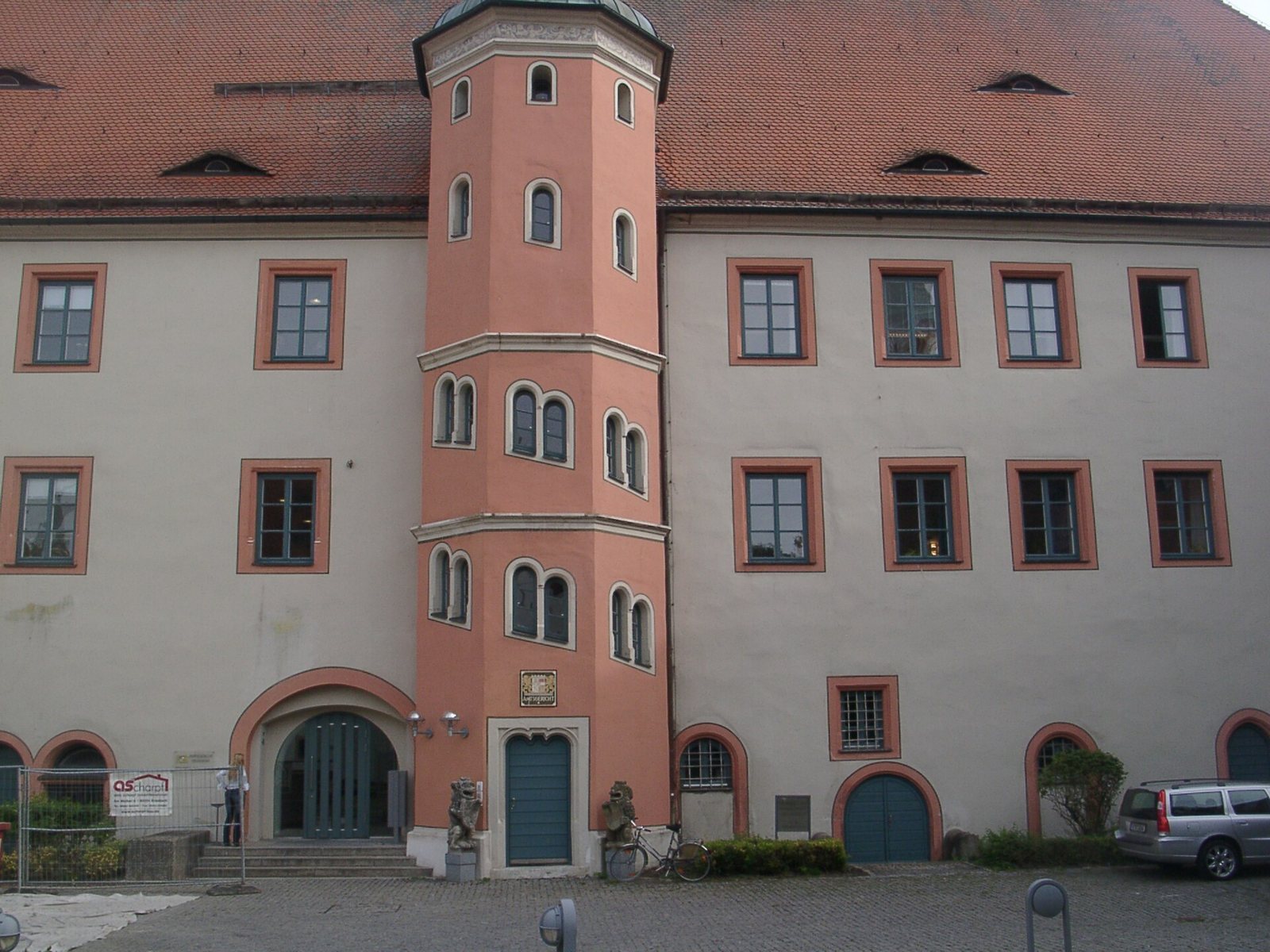
A large festival hall occupied the first floor of the west wing and could be reached from the courtyard by an exterior staircase. Cellars beneath the residence have arched ceilings, and some rooms served as court archives. The main building and west wing now house the local court and the town’s land registry office.
Mathematician’s Tower
A tower about 30 metres tall stood at the east wing, close to the Court Church. Otto II used its uppermost level as an observatory, a place for observing astronomical objects. The tower was demolished in 1695 because of serious structural defects.
Surviving Fittings and Artworks
The residence retains a fireplace with marble inlays carved by Renaissance sculptor Loy Hering and depicting Frederick II. Two heraldic stones also survive, including a large example bearing the chain of the Order of the Golden Fleece, a prestigious chivalric order founded in the fifteenth century. At the entrance, two stone lions hold shields. Carved wooden coffered ceilings, divided into recessed panels, remain in the present courtrooms and the director’s room. A painting of Frederick II is also preserved in the residence.