Haimburg Castle: A Medieval Hilltop Stronghold in Bavaria
Site at a Glance
- Popularity
- Low
- Country
- Germany
- Primary era
- Medieval
- Eras represented
- Medieval, Early Modern
- Civilizations
- Electoral Palatinate, Holy Roman Empire
- Site type
- Military
- Remains
- Castle
On this page11 sections
History
Haimburg Castle is a hilltop stronghold above Berg-Haimburg in Bavaria, Germany. Built by the Lords of Haimburg, it was associated with local nobles and imperial ministeriales, medieval retainers who served in military and administrative roles. Its construction is dated to the 12th century, although its earliest recorded mention is in a charter of Holy Roman Emperor Henry III, who ruled from 1039 to 1056.
Lords of Haimburg and Stein
After the Lords of Haimburg died out in 1262, the castle passed to the Lords of Stein. One branch of that family also adopted the Haimburg name. Heinrich II of Haimburg, its last sole owner, held it from 1333 to 1362. After his death, his nephew Heinrich III of Stein received one half, while the other went to Heinrich II’s brother, Konrad VI of Haimberg, bishop of Regensburg.
Palatine rule and hunting lodge
Following several changes of ownership, Haimburg passed in 1388 to Elector Ruprecht I, ruler of the Palatinate and an elector of the Holy Roman Empire. Its merger with the Troßberg administrative office led to the creation of the Bavarian Haimburg administrative district, overseen by an official. From 1410, Count Palatine Johann von Neumarkt owned the castle. In 1434, he developed it into a hunting lodge.
Wars and destruction
The War of the Landshut Succession, a conflict over who would inherit the Duchy of Bavaria-Landshut, brought Haimburg into military action. On 8 July 1504, troops from the Imperial City of Nuremberg captured and burned the castle. After the conflict, King Maximilian I, a Habsburg ruler who later became Holy Roman Emperor, granted Nuremberg the possessions at Gnadenberg and Haimburg under the Cologne arbitration award, in recognition of its assistance. Count Palatine Friedrich II recovered both possessions through an agreement with Nuremberg’s council in 1521 and arranged repairs to Haimburg.
During the Thirty Years’ War, the major European conflict fought from 1618 to 1648, imperial troops captured the castle on 3 October 1634. After repeated looting, Swedish troops burned it in 1648, following Nuremberg’s refusal to pay them 600 gulden in wages.
Remains
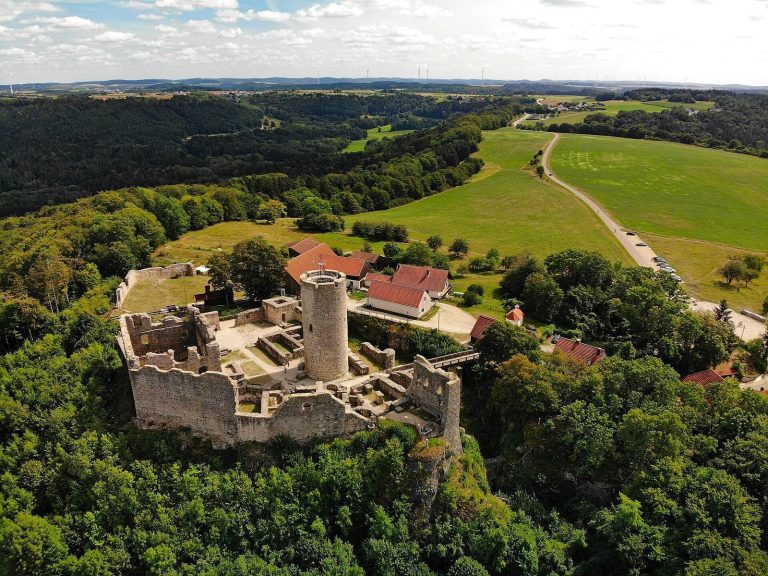
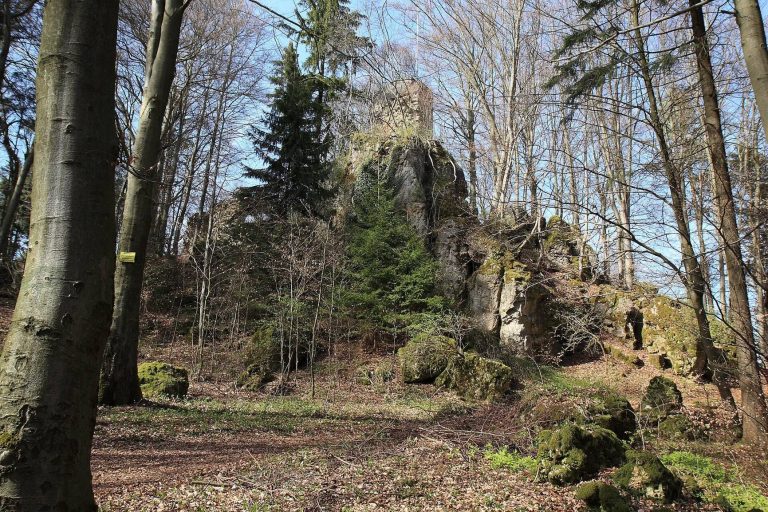
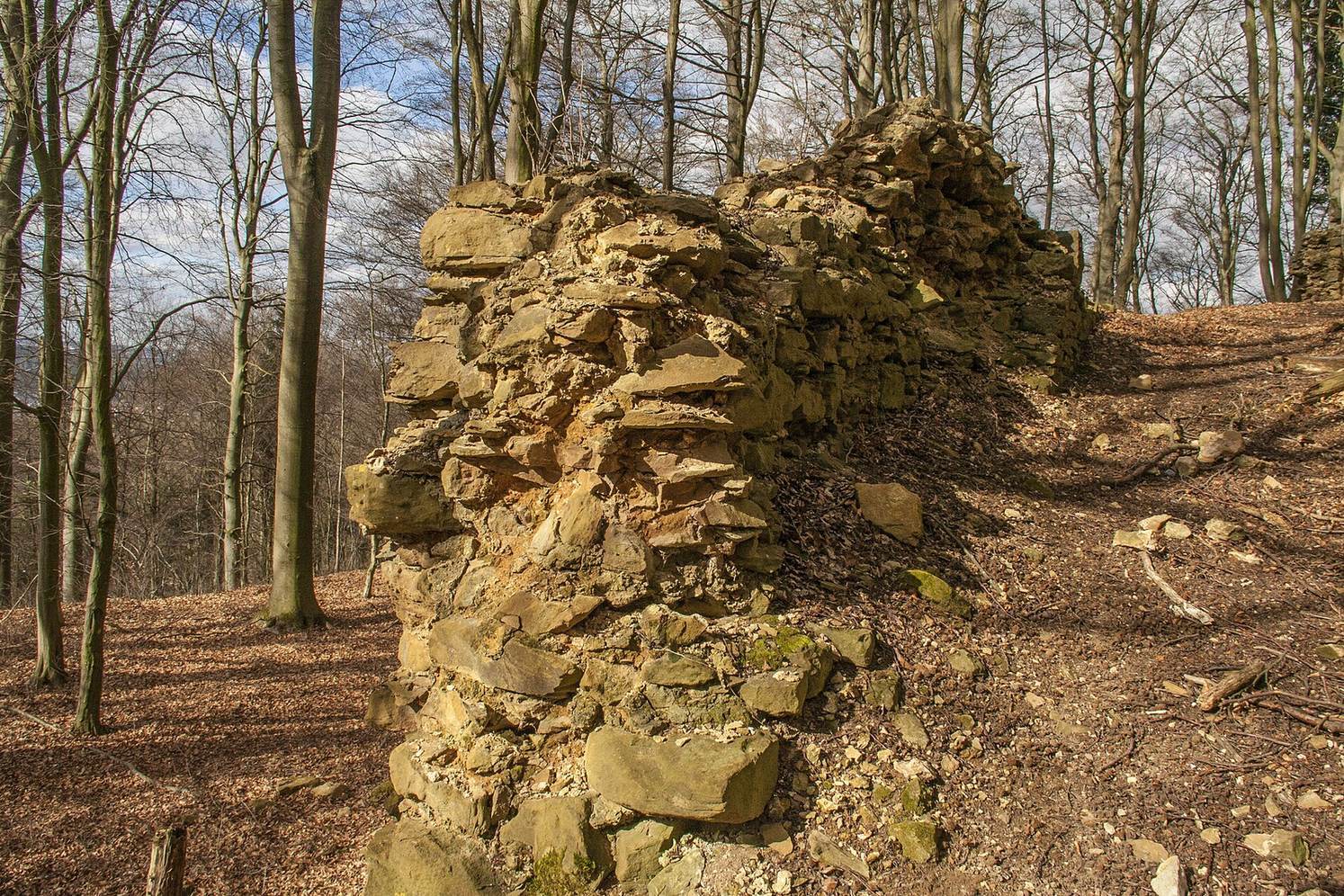
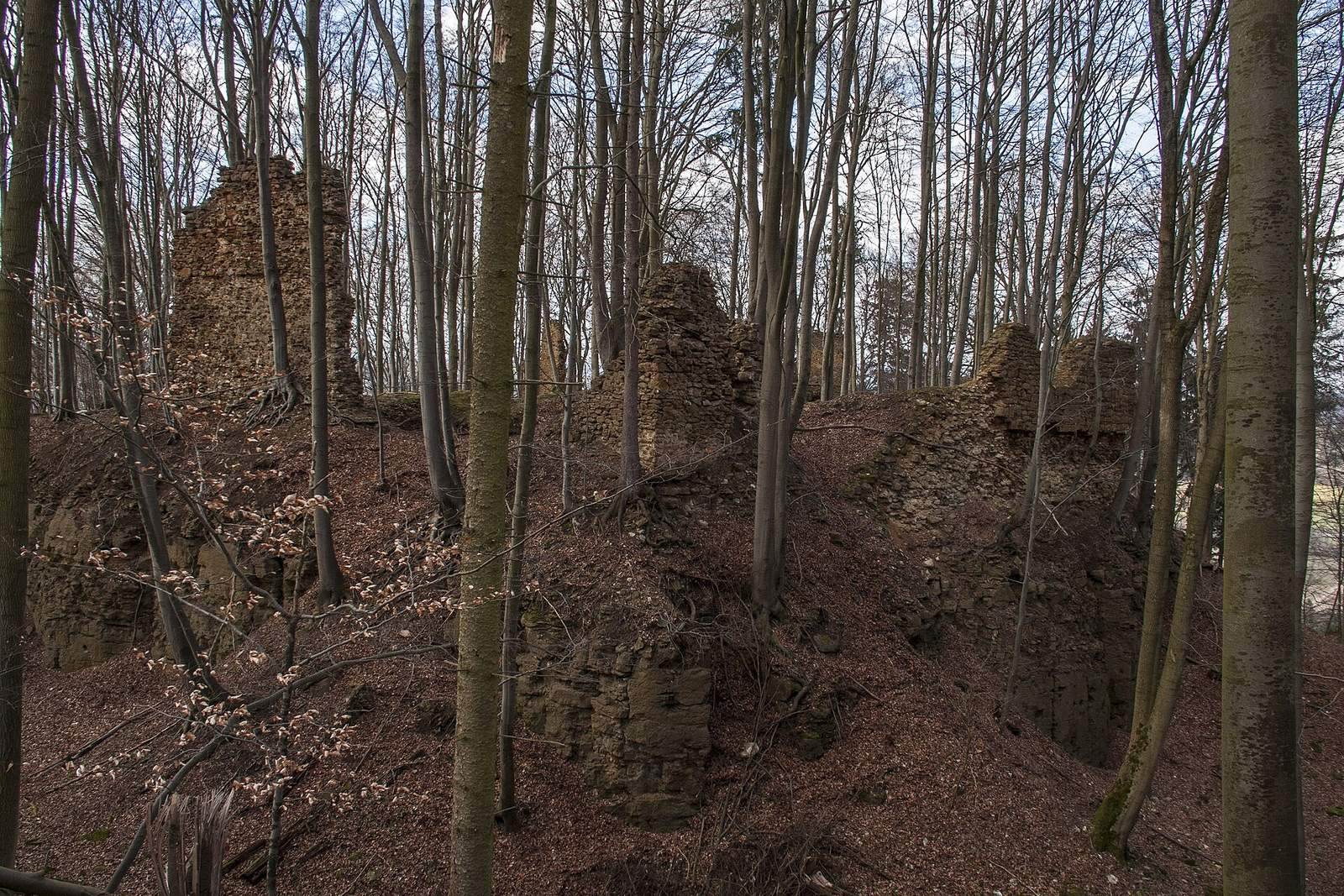
The ruins occupy a hill 550 metres above sea level. Their defensive layout includes a deep double neck ditch, cut across the narrow approach to the stronghold, and surviving sections of the castle enclosure. The lower ring wall is probably Romanesque, a medieval style that preceded Gothic architecture.
Enclosure and defenses
Ring wall
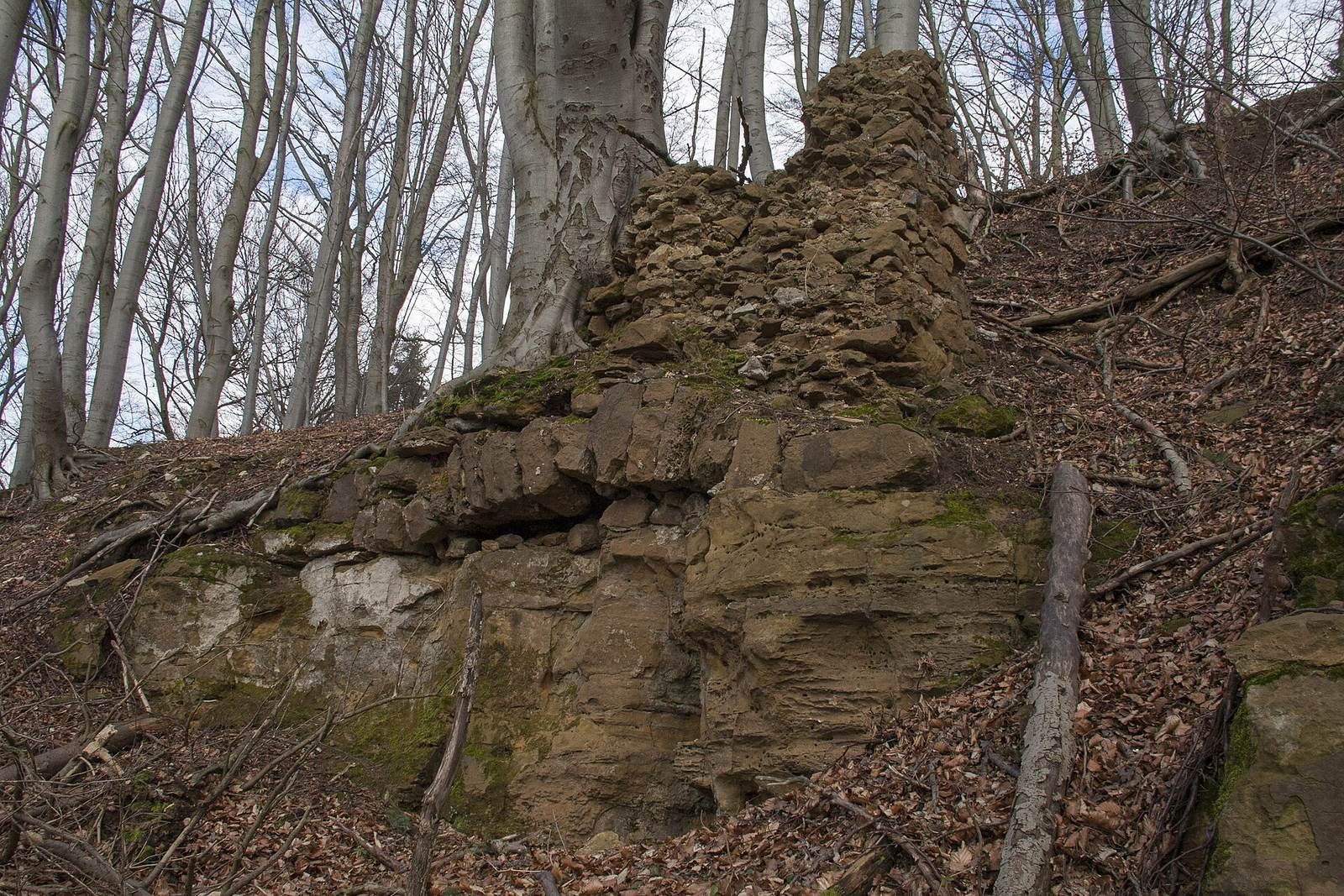
The lower sections of the ring wall survive and are thought to date to the Romanesque period.
Double neck ditch
A deep, double defensive ditch crosses the hilltop approach, forming part of the castle’s surviving defenses.
Castle structures
Keep and gates
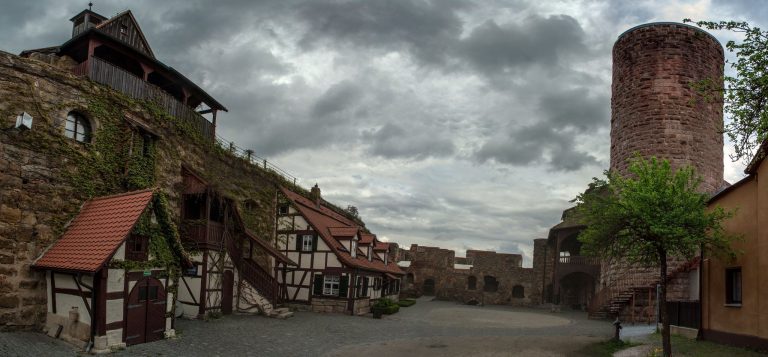
Remains of a round keep and two gate structures survive. These features date to the 15th and 16th centuries.
Foundations and cellars
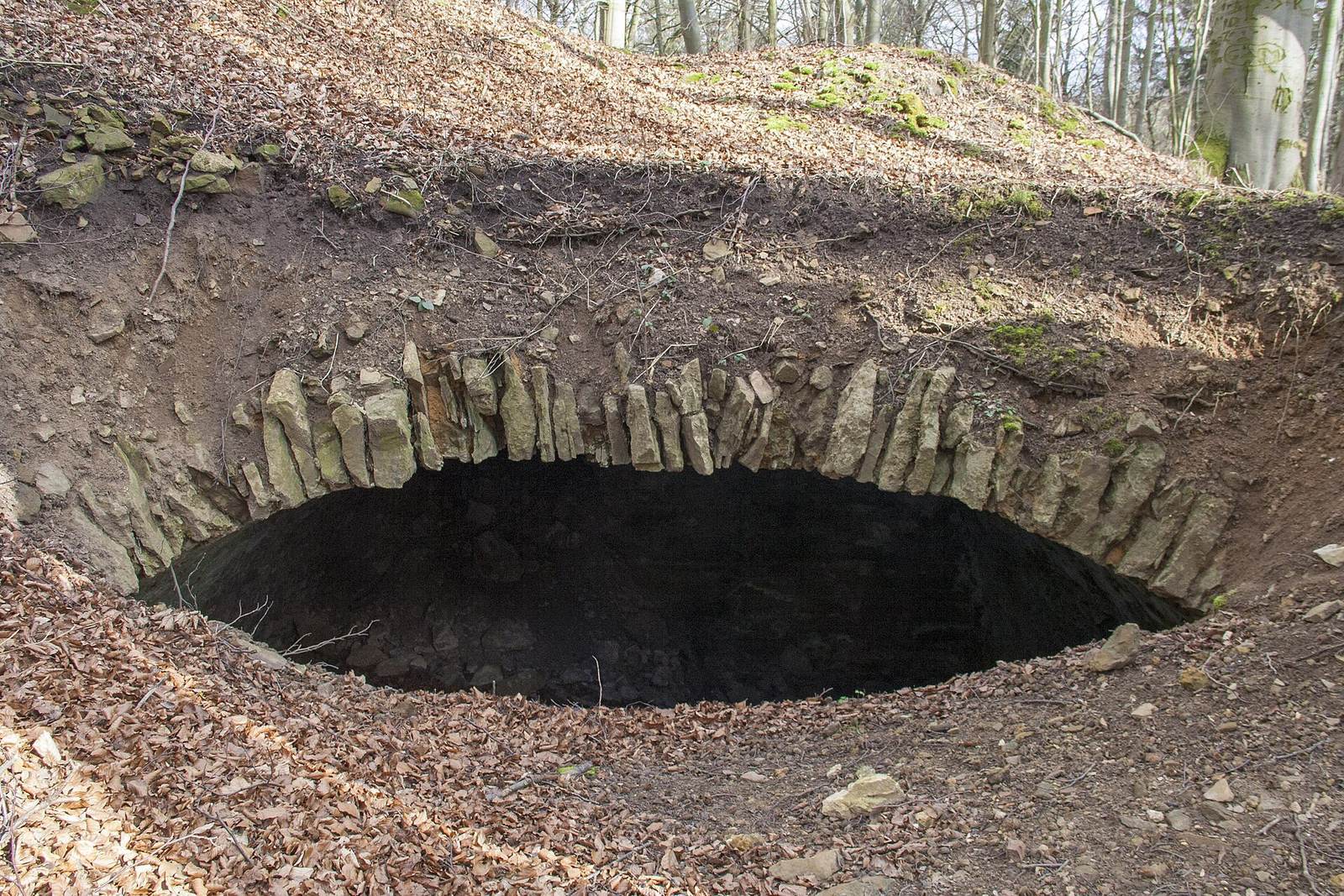
Foundation walls and vaulted cellars, also dating to the 15th and 16th centuries, remain at the site.