Passavas Castle: A Frankish Fortress in Laconian Mani
Site at a Glance
- Popularity
- Low
- Country
- Greece
- Primary era
- Medieval
- Eras represented
- Medieval, Early Modern
- Civilizations
- Crusader, Ottoman, Principality of Achaea
- Site type
- Military
- Remains
- Castle
On this page10 sections
History
Frankish foundation and Byzantine rule
Passavas Castle is a Frankish fortress in Laconian Mani, Greece, built by Jean de Neilly in 1254 on the ruins of the ancient acropolis of Las. De Neilly was a French knight and protostrator, a high-ranking military officer. The castle became the seat and residence of the barons of Passavas, whose feudal lordship was one of the twelve baronies of the Principality of Morea, a Latin-ruled state in the Peloponnese. The name Passavas comes from the French battle cry Passe-Avant, meaning “Go forward!” It was first used for the narrow pass and later for the castle.
In 1262, after the Battle of Pelagonia, a conflict between Byzantine and Latin forces, the castle passed to the Byzantines under an agreement for the release of Prince William II Villehardouin. The Despotate of Mystras, a Byzantine polity in the southern Peloponnese, held Passavas until the Ottoman conquest of the Peloponnese in 1460.
Ottoman conquest and Venetian rule
After Mystras fell, the Maniots repaired the castle and resisted the Ottoman invasion there. In 1481, following an Ottoman victory in a war with Venice, Ahmed, the Ottoman beylerbey (senior provincial governor) of Rumelia, captured Passavas after fierce Maniot resistance. It remained under Ottoman occupation for about two centuries, until the Maniots retook it in 1685 as allies of the Venetians.
Under Venetian rule, the Treaty of Karlowitz, a peace settlement between the Ottoman Empire and European powers, transferred the Peloponnese to Venice. Venice established the Kingdom of Morea, and Passavas became the name of one of Mani’s four provinces within the kingdom’s seven districts.
Ottoman return and Maniot control
The Ottomans reconquered the Peloponnese in 1715 and placed a Turkish garrison in the castle. Passavas marked the northeastern boundary of Free Mani, the relatively autonomous territory of the Maniots. During the Orlov Revolt, an uprising against Ottoman rule in Greece, the Maniots briefly regained control. The revolt’s defeat ended that recovery.
In 1780 the Maniots permanently retook Passavas in a forceful assault. They had already destroyed a large part of the castle, and held it until the Greek Revolution began in 1821, the struggle for Greek independence.
Remains
Setting and plan
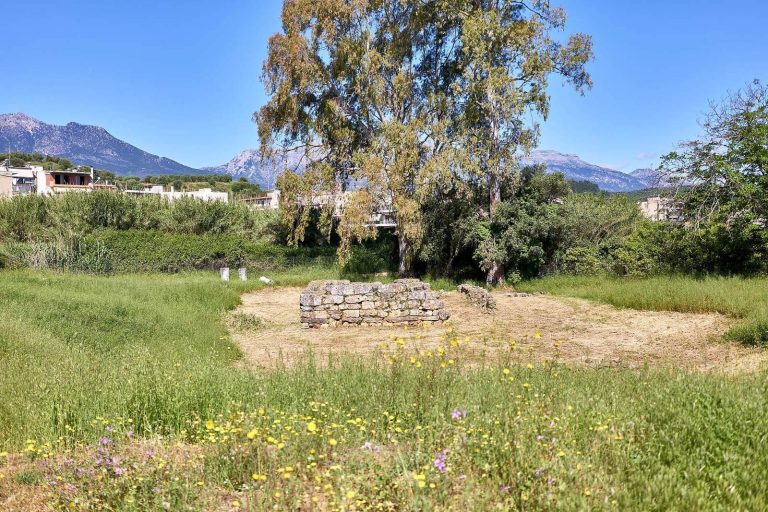
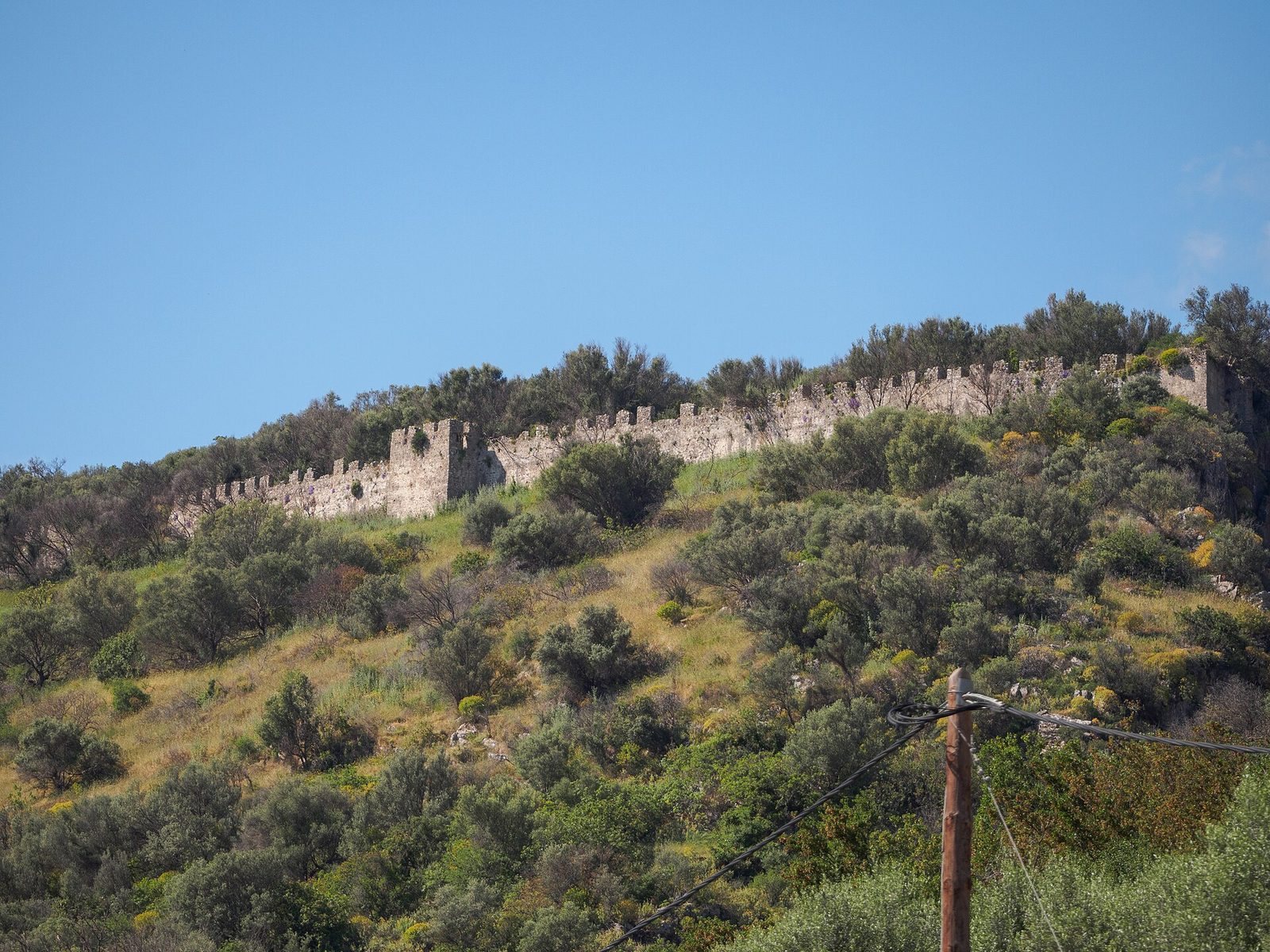
The ruins occupy the steep eastern hill of Asia beside the Passavas pass, about 10 km southwest of Gytheio and 2 km west of Mavrovouni’s beach. The castle was laid out on a northwest-to-southeast axis with a trapezoidal plan. Its strongest battlements faced northwest over the pass, while an eastern gate and a southern main gate served as entrances. The position controlled Mani’s only eastern passage. Views extend north toward Vathy, south toward the plain of Chosiari, and across the Laconian Gulf to Kythira.
Surviving structures
Northern and southern quarters
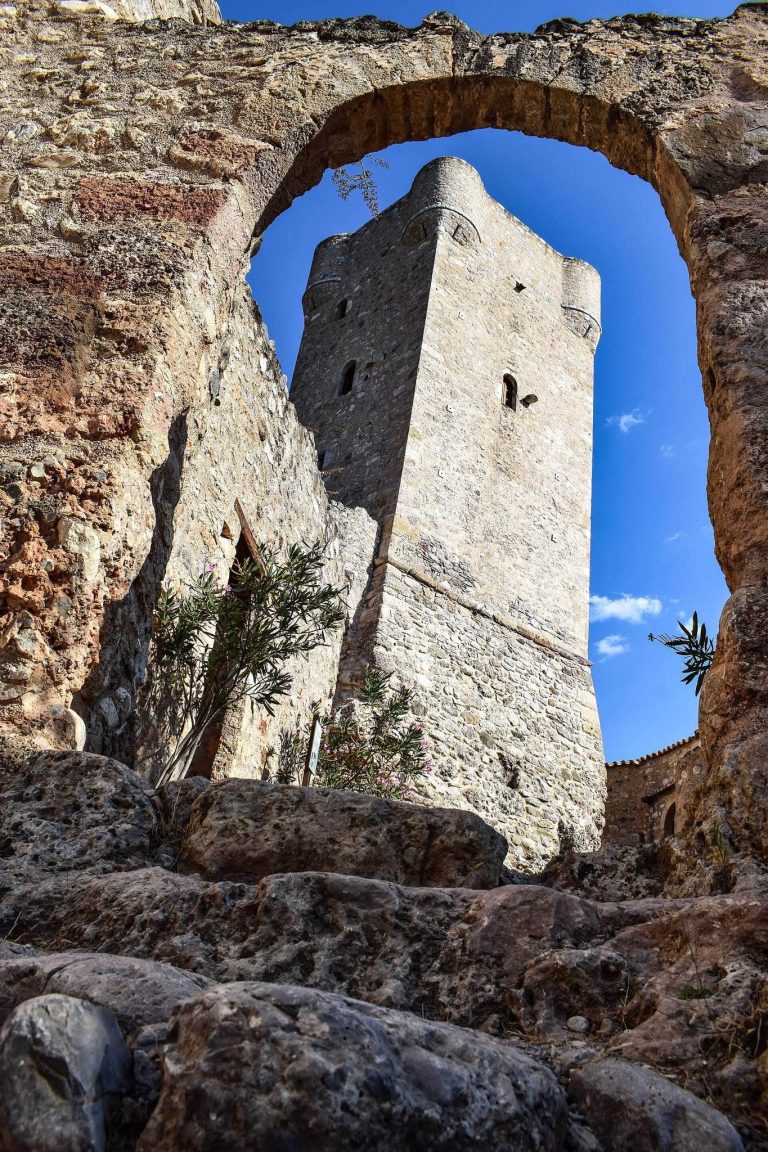
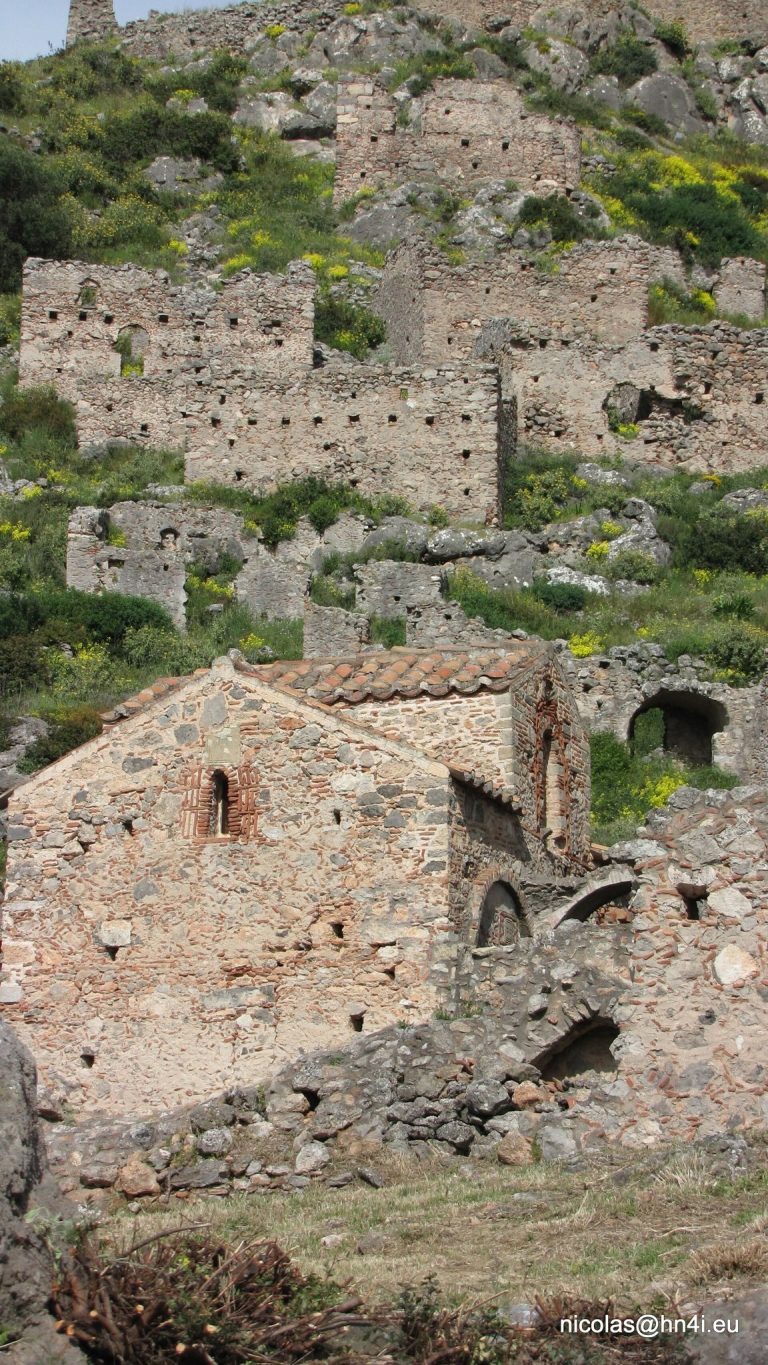
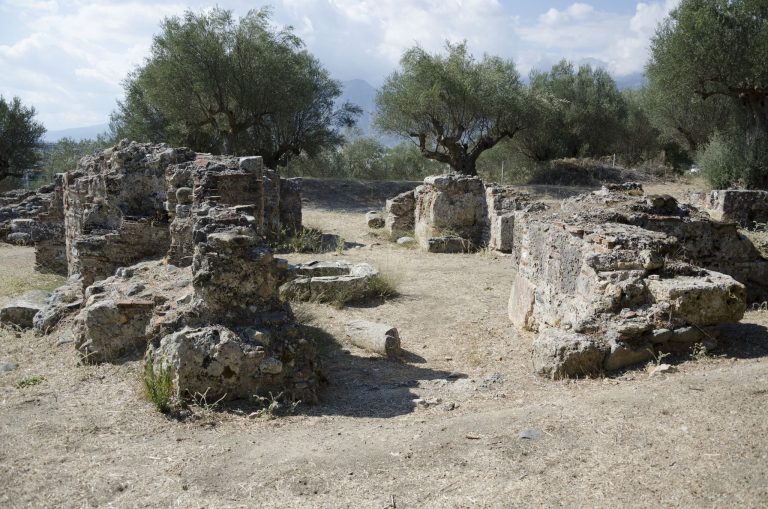
The higher northern part contained the original Frankish buildings, including towers and guesthouses, and surviving ruins there include sections of the battlements. The southern part was used for camp installations. Dense vegetation now covers most of the battlements, leaving only a small portion visible.
Water cistern
A surviving cistern incorporates ancient marble building material.
Mosque
The ruins also include a mosque built during Ottoman rule.