Gavà Mines Archaeological Park: A Neolithic Mining Complex in Spain
Site at a Glance
- Popularity
- Medium
- Country
- Spain
- Primary era
- Stone Age
- Eras represented
- Stone Age
- Civilizations
- Unclassified
- Site type
- Economic
- Remains
- Mine
On this page17 sections
History
The Gavà Mines Archaeological Park in Gavà, Barcelona, Spain, preserves a Neolithic complex of underground mines worked by prehistoric communities. Mining took place approximately 4200–3400 BCE, and the site is the most extensive and oldest known gallery-mine system in Europe, as well as the only known Neolithic mining complex devoted to variscite, a green aluminum phosphate used for personal ornaments.
Neolithic mining and exchange
The mines extend across the Can Tintorer, Ferreres and Rocabruna areas, covering about 200 hectares. More than 100 mines have been identified, with 110 extraction points counted. Radiocarbon dates from material in mine fills place the Postcardial phase, an evolved phase of the Early Neolithic, at 3350–2950 BCE in uncalibrated years, and the Middle Neolithic at 2950–2550 BCE. These dates correspond approximately to 4200–3400 BCE. Since the dated material accumulated in the mines after they were no longer in use, extraction had begun earlier.
Variscite was the principal product. People at Gavà worked it into beads for necklaces and bracelets, sometimes combining it with other minerals. Chemical analyses show that Gavà variscite circulated well beyond nearby communities, reaching Provence, the Ebro corridor and the Toulouse region. The largest numbers of identified pieces came from Vallès Occidental, Solsonès and Andorra. Proposed routes followed the Llobregat and its tributaries, the Catalan Pre-Coastal Depression and the coast. Finds of materials and pottery styles linked to distant regions further indicate contact beyond the local area.
Life, work and burial
Mining was part of a broader way of life. Plant, animal and tool remains point to farming, livestock raising, hunting, fishing and gathering. Cattle were the main livestock, alongside sheep, goats and some pigs. People hunted deer, wild boar and rabbits; caught seabream, pandora and school shark; and collected shellfish, other marine resources and land snails. Crops included barley, several kinds of wheat and legumes, while gathered foods included wild olives, fox grapes and hazelnuts.
The surrounding landscape combined mountains, plains and nearby coast, with scrub, oak woods, riverside vegetation and cultivated ground. Charcoal and other remains indicate the use of wood from alder, heather, Aleppo pine, strawberry tree, lentisk, holm oak and oak. Plant evidence also points to soils disturbed and enriched by human activity.
Some exhausted mines were later used for burials. Collective burials occupied entrance shafts, while richer individual or double burials were placed in small chambers deeper underground. Bodies could be laid in a fetal position with pottery, tools and ornaments; earlier remains were sometimes moved aside. Olive branches were occasionally burned, and stone slabs closed chambers and mine entrances. Differences between burial types may reflect social inequalities.
Human remains include children, adults and older people. Estimated average life expectancy was about 30 years, and average heights were 164 cm for men and 151 cm for women. Skeletal features in some individuals are consistent with strenuous work and may point to specialized mining roles. Healed fractures and evidence of successful medical treatment also show that people survived serious injuries and procedures.
Burial customs and grave goods have been interpreted as expressing beliefs about life after death and renewal. The fetal position may have represented rebirth, while the green colour of variscite may have connected the mineral with the regeneration of plants, animals and people. These practices have also been understood in relation to agricultural beliefs about a divinized earth. The Venus of Gavà has been linked to a proposed Mother Goddess, a female deity associated with fertility, and with the generative power attributed to the earth’s minerals. A rich deposit of objects in Mine 85, outside a burial, may have served as a cenotaph, a memorial tomb without the deceased, or as an offering returned to the earth.
Later mining and archaeological work
After Neolithic extraction ended, iron was mined in the area during the Iberian and Roman periods and the Middle Ages. The Iberians were ancient peoples of the eastern and southern Iberian Peninsula who lived before and during Roman rule. Iron extraction resumed in the contemporary period.
Construction work in Can Tintorer exposed mine openings in 1975, leading to archaeological investigation. Local residents already knew of openings in the ground, and some had used them in earlier times. In 1978, the Collective for the Investigation of Prehistory and Archaeology of Garraf-Ordal (CIPAG) began the first excavations. The Gavà Museum was established that year to study the site and care for and share its finds. Excavations continued until 1980, alongside mechanical lowering of the ground to locate further mines.
The Gavà Museum took over excavations in 1991 and began a wider programme of investigation. Surveys and excavations led to the presentation of part of the site as a museum area; the Venus of Gavà and the trepanned skull were discovered during this period. Conservation and restoration began with help from the Polytechnic University of Catalonia’s Department of Mining Engineering and Natural Resources. Excavation, restoration and consolidation resumed after a pause from 1998 to 2000.
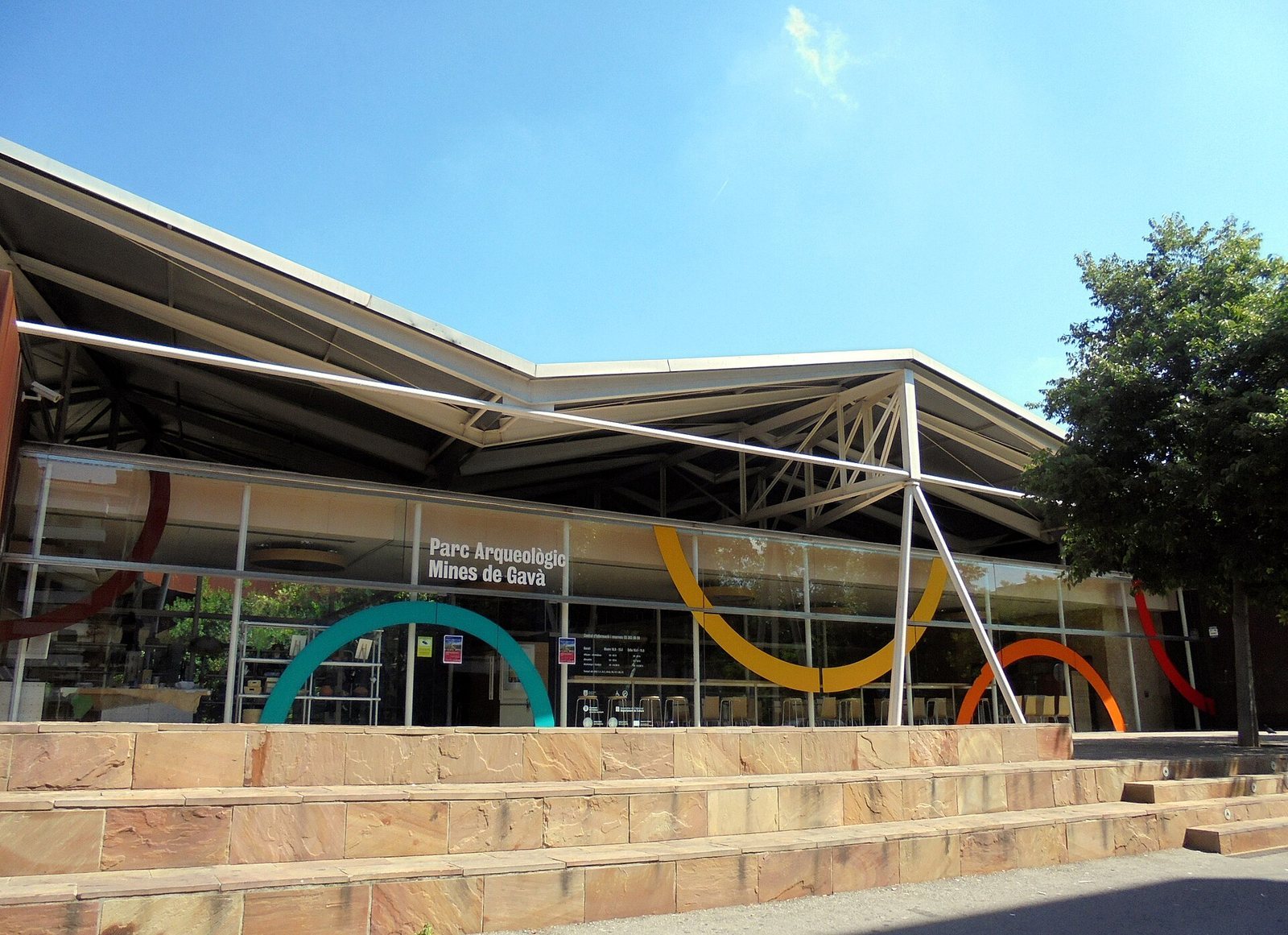
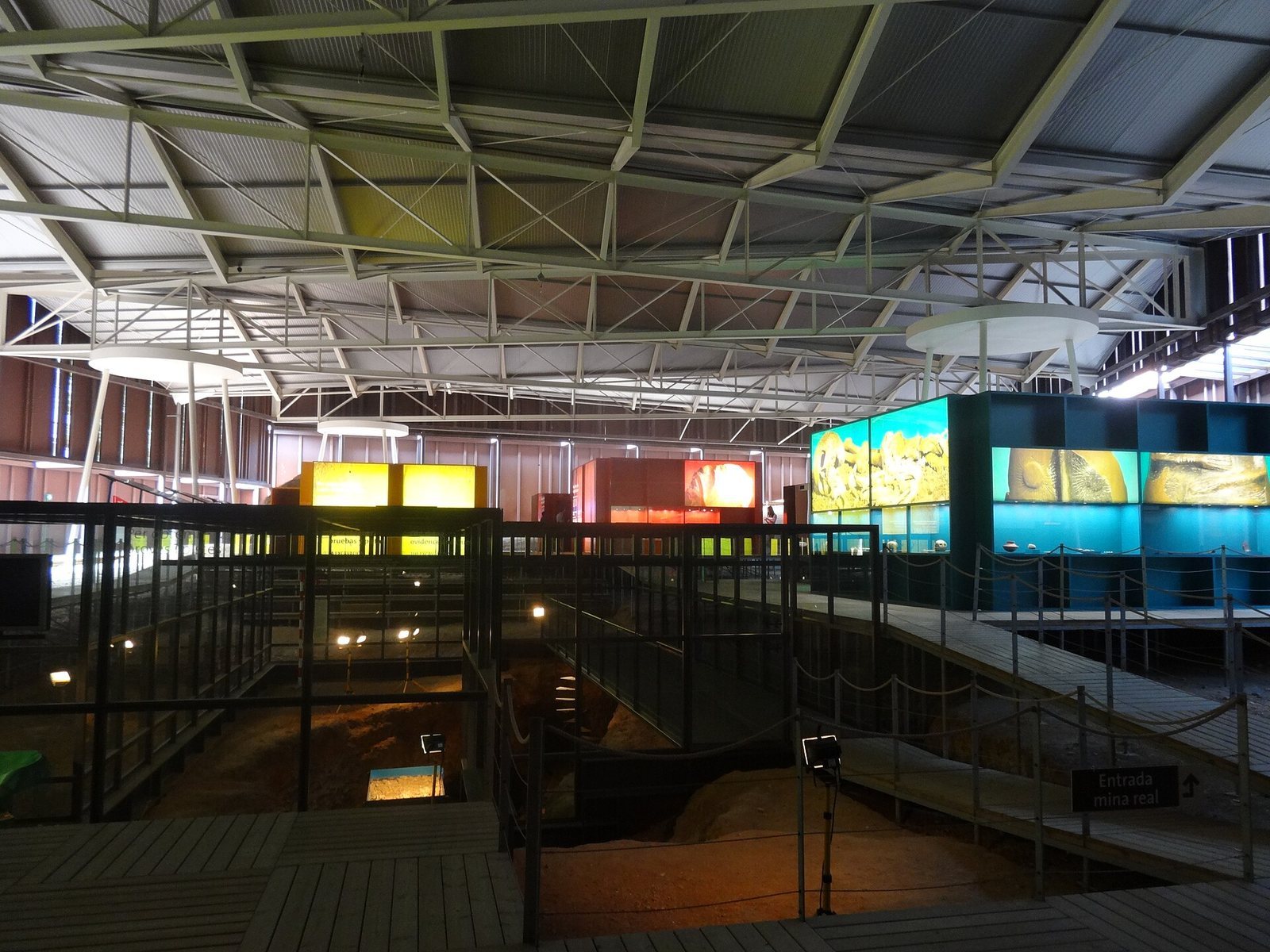
An urban development project revealed a further area in the Serra de les Ferreres in 1998. Work there continued until 2009 and identified and excavated Neolithic and Iberian-Roman mines. Excavations of Mines 83, 84 and 85 uncovered graves with notable objects. Later programmed, emergency and preventive work, research and consolidation involved the Gavà Museum, the University of Barcelona, the Autonomous University of Barcelona and other archaeological institutions. The archaeological area became a Cultural Asset of National Interest in 1996. The park includes a reconstructed mine based on features found in the actual workings, while the Gavà Museum displays finds from the site.
Remains
Geology and underground layout
Geological setting
The mines lie on the western, or right-hand, side of the Llobregat estuary, at the foot of the Garraf Massif’s eastern slopes. The bedrock consists of steeply inclined slate and limestone formed during the Silurian and Devonian periods, about 408 million years ago. Tectonic mountain-building episodes around 290 million and 65 million years ago folded, fractured and shifted the rocks. The resulting geological alignments run roughly WNW–ESE and W–E. A limestone crust and red clays formed in the early Quaternary cover the older rocks.
Underground workings
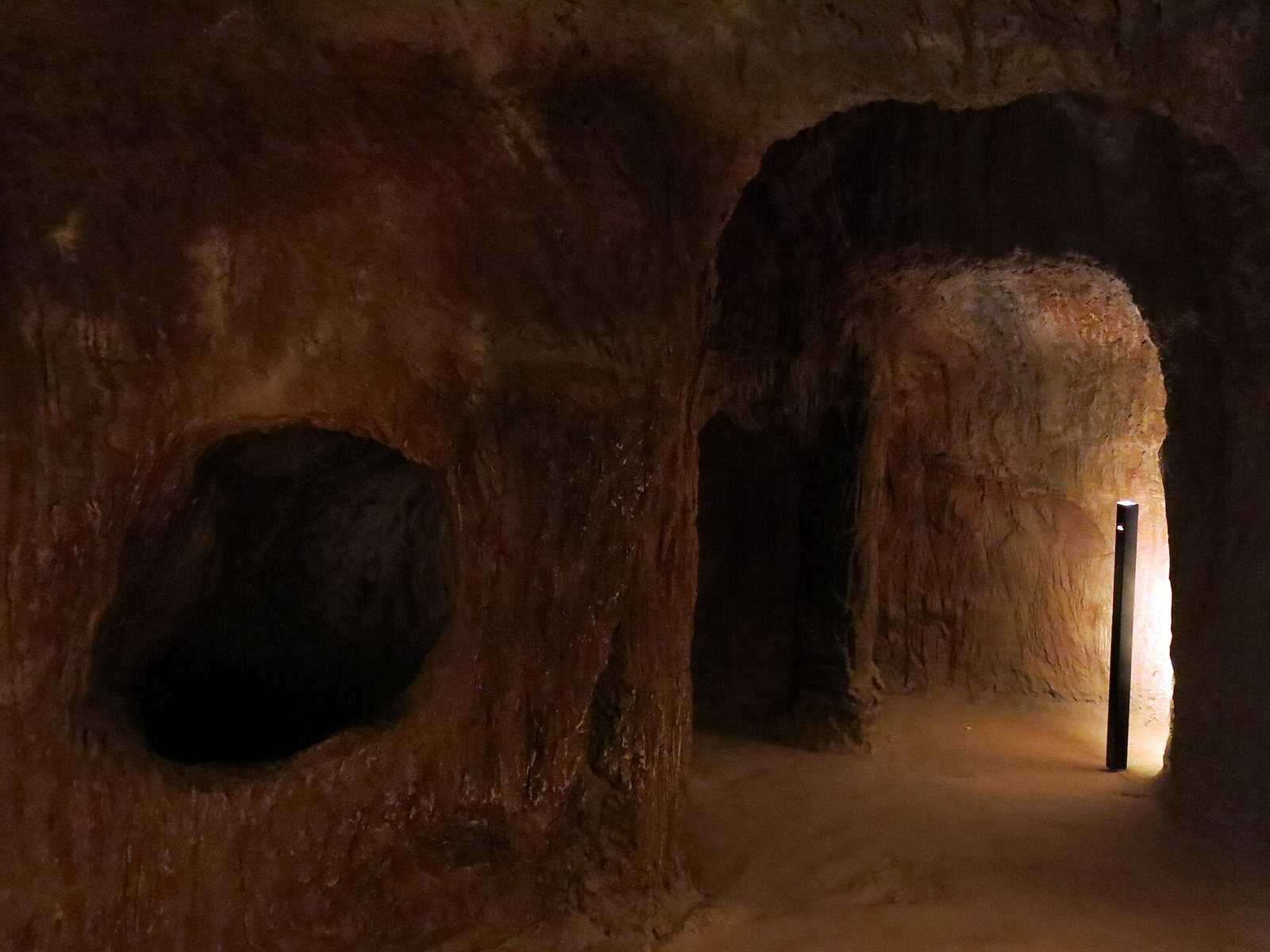
Mining followed the local rock layers and mineral deposits. Some workings comprise an access shaft and a sloping or level passage of varying length, occasionally branching. Elsewhere, galleries, internal shafts and chambers connect into larger systems at different levels. Some passages were exploratory routes into mineral-rich slate. The slate contained variscite and other phosphate minerals, including strengite and apatite; veins were chiefly variscite, with other iron-bearing phosphates.
Mining equipment and evidence of other activities
Tools and lighting
Tools recovered from mine fills include heavy picks and mauls made of hornfels, a hard, fine-grained rock altered by heat. Marks on some tools suggest wooden handles may have been fitted. Bone chisels made from cattle foot bones were used with quartz hammerstones to break the slate, while sandstone polishers helped make and repair tools. Small holes in mine walls may have held lighting devices, and charcoal from burned wood was abundant. Variscite ornaments were also made at the site: unfinished beads show that pieces were separated from slate, selected, shaped and polished, drilled by hand or with flint bits, then polished again.
Subsistence evidence
Other material from mine fills includes arrowheads, hand mills, axe blades, sickle teeth and ceramics, alongside plant and animal remains. Together, these finds provide physical evidence for activities beyond mineral extraction, including the farming, hunting and gathering that sustained the Neolithic community.
Burial mines
Mine 83
Excavated between 1999 and 2003, Mine 83 begins with a vertical shaft about 1 m wide and 1.5 m deep. Two galleries branch in roughly opposite directions at its base. Both are about 1 m wide and high: one runs straight and level for 2 m, while the other turns at a right angle, continues for 4 m and descends a further 1.5 m. After a long period out of use, a burial chamber about 1.5 by 2 m was cut beside the bend in the longer passage. Two limestone slabs closed the chamber. Soil and irregular stones 20–25 cm wide blocked the gallery entrances, while an egg-shaped boulder about 1.3 m high and 90 cm wide, with soil, sealed the shaft. Radiocarbon evidence indicates that the mine was dug before 4050 BCE and closed after that date, with uncertainty of a few centuries.
The chamber held highly fragmented remains of one adult whose sex could not be determined, along with stone axe heads, a bone tool, cylindrical flint cores, flint blades, variscite pieces and two necklaces. One necklace had polished oval variscite beads; the other was made of red coral. The coral necklace, dated to 6200–5900 years before present, the archaeological convention that sets present at 1950, comprised 241 small polished cylindrical beads: 232 complete and nine fragmented. They measure 3.8–5.5 mm long, with holes 1.5–2 mm across and walls no more than 2 mm thick. A ceramic plate and animal remains were also found from the mine’s period of use.
A square-mouthed ceramic vessel from the burial assemblage has the same date range of 6200–5900 years before present. Its mouth measures 19.5 by 15 cm, its maximum width is 21 cm, its preserved height is 8.6 cm and its walls are 7.8 mm thick. The vessel has a flat base, slightly bulging sides, raised reinforcements at its corners and a tongue-shaped grip with a small circular hole. Made from local clay, it was polished on both surfaces and fired first in an oxygen-rich setting, then with limited oxygen to create a smoked finish. Its shape may reflect northern Italian influence. Residue analysis identified terrestrial mammal fat, perhaps from preserved fatty food or a rich broth.
The burial also contained a complete obsidian blade measuring 78 by 11 by 4 mm. It has a trapezoidal cross-section, a flat striking surface set slightly off the blade’s axis, and straight, regular edges without later shaping. It was briefly used to cut soft, non-woody plant material, possibly cereals. The obsidian came from Monte Arci in Sardinia.
Mine 84
Mine 84 has an entrance shaft about 1 m wide and 1.5 m deep. A straight passage descends about 2.5 m over a length of roughly 10 m. A second access shaft, possibly created accidentally, lies about 2 m away. The main gallery ends in a chamber about 3 m wide and high, from which two passages, each 7–8 m long, branch in opposing directions at roughly right angles. A shorter passage about 2 m long begins 1–2 m higher and ends above part of one of the longer galleries. Most passages have rounded cross-sections and are about 1–1.5 m wide. One longer gallery expands into a chamber about 2 m wide; short side passages and a few shallow pits occur along the main routes.
Compacted gravel, probably produced by mining, remains on the floor, and the walls bear pick marks and niches that may have held lamps. After a long period of disuse, the mine became a burial place. Two people were deposited at different times at the end of one passage. Limestone slabs 50–100 cm wide, blocks 20–30 cm wide and soil closed the passage and another gallery. These barriers may have been temporary, allowing later burials, while the first entrance shaft was blocked more substantially. Radiocarbon estimates of 3900 and 3750 BCE are uncertain by several decades; mining and both burials appear to have occurred within a few decades.
The highly fragmented human remains were placed on the floor. Natural and human-inflicted breaks, as well as damage from animals and water entering the mine, affected the bones. Fragments of a mature adult man were spread across a couple of metres and appear to have been moved from a chamber to make room for a mature adult woman, who was taller but more slender. Their preserved teeth were heavily worn. The man’s skull has marks consistent with the removal of the face at death and apparent traces of two fully healed blows. The woman’s bones indicate heavy work, particularly involving her right arm, and carrying heavy loads on her head. Grave goods included two ceramic urns, a rectangular bowl, bone tools, an ox bone, a Glycymeris shell, flint blades and boar tusks.
Notable finds
Venus of Gavà
The Venus of Gavà is a ceramic representation of a human female figure, dated to 4000–3750 BCE. It was found in the shaft of Mine 16. Its possible association with fertility forms part of the wider interpretation of Neolithic beliefs at the site.
Trepanned skull
The skull belonged to an adult man estimated to have been 30–40 years old and was found in the collective tomb of Mine 28. It is dated to 5600–5400 years before present. Two holes in the left parietal bone were made by abrading the skull at different times during his life. Bone regrowth shows that he survived both trepanations, deliberate openings made in the skull.