Panagia Chrysopodaritissa Monastery: A Greek Orthodox Monastery in Achaea
Site at a Glance
- Popularity
- Medium
- Country
- Greece
- Primary era
- Medieval
- Eras represented
- Medieval, Modern
- Civilizations
- Byzantine
- Site type
- Religious
- Remains
- Monastery
On this page8 sections
History
Origins and religious identity
Panagia Chrysopodaritissa Monastery is a Greek Orthodox male communal monastery in the Erymanthos area of Achaea, Greece. Considered one of Achaea’s oldest monasteries, it is believed to have been founded in the late 12th century, although its exact foundation date is unknown. Hermitages existed in the area before the monastery, and a 14th-century manuscript associated with it links its history to the late Byzantine period (AD 1204–1453), possibly earlier.
Panagia is a Greek title for the Virgin Mary. The monastery is dedicated to the Dormition of the Theotokos, the Orthodox observance of the Virgin Mary’s death and passage from earthly life. Its annual feast is held on August 23, the Apodosis, or concluding observance, of the Dormition, popularly called the Nine Days of the Virgin. The monastery belongs to the Orthodox diocese of Patras and is regarded as a patron of the Municipality of Erymanthos.
Local tradition gives three explanations for the monastery’s name. One connects it with a gold offering made in gratitude after a worshipper’s leg or feet were healed. Another tells of the Virgin’s miraculous golden foot, said to hurry to help those who call upon her. A third says an icon was moved from the cave where it had been found after a different site was proposed for construction.
Ottoman rule and patriarchal privileges
Under Ottoman rule, the monastery’s church administration was connected to the diocese of Patras, although Nezera belonged administratively to the district of Kalavryta. The monastery held property in surrounding villages and had dependent establishments farther away, including near Patras and Kertezi.
The dates of its patriarchal privileges are not entirely consistent. Its patriarchal standing is associated with 1635 under Patriarch Cyril, while its elevation to stavropegic status, meaning direct authority under the patriarch rather than the local bishop, is dated either to 1635 or to 1786. In 1786, Patriarch Procopius issued a decree through the efforts of Theophanes I Floria, Metropolitan of Patras, who came from Dimitsana. A further renewal is associated with 1798. Official lead seals from 1786 and February 1798, the latter issued under Gregory V, affirmed its patriarchal standing.
In 1707, the monastery’s finances were better than those of Girokomeio and Omplou, and it had to advance 100 zecchini, gold coins, toward fortifying Rio. Pachomios was its abbot in 1715. After 1770, the abbot was Ananias, who came from Kompigadi.
Revolt, war, and rebuilding
During the Orlov uprising, a Greek revolt against Ottoman rule in 1770, Suleiman Tziapari and his Turco-Albanian troops burned the monastery along with the wider Nezera area. Ananias rebuilt it in 1812.
During the Greek War of Independence, which began in 1821, the monastery served as a supply depot for the Achaean camp during the spring siege of Patras. Food gathered from the province and surrounding villages was stored there and regularly distributed to the troops. The abbot, Nikephoros, was appointed steward. Germanos of Old Patras, the Orthodox Metropolitan of Patras and a prominent cleric in the revolution, often visited and took refuge at the monastery while pursued by Kolettis and his associates. He later set out for Patras with other military leaders to bless the fighters’ weapons at Saint George’s Square.
N. Sofianopoulos, appointed commandant of Chlemoutsi and also referred to as Nikolettos, was ordered to arrest Germanos. His force seized monks Nektarios and Nikephoros by deception, tortured them, and took their valuables and pistols. Germanos was stripped, robbed, and humiliated, then taken on foot through snowy mountains to Gastouni, which was held by Gkouras. He was released after G. Drakos intervened.
In May 1826, Ibrahim Pasha and his troops destroyed the monastery and surrounding villages while suppressing the Greek Revolution. A French expedition led by General Maison referred to it as Our Lady of Nezera in 1829–1830. The monastery was rebuilt in 1879, after the Revolution had ended.
Twentieth-century status
A description from 1903 gave the monastery an annual income of 7,337 drachmas and identified its dedication as the Nativity of the Theotokos, rather than the Dormition. Six monks were recorded in 1906.
From the 1950s onward, the monastery was no longer counted as active, although a figure of eight monks is associated with 2009. It was not included in the 2001 national census. The Greek Ministry of Culture has declared it a protected monument.
Remains
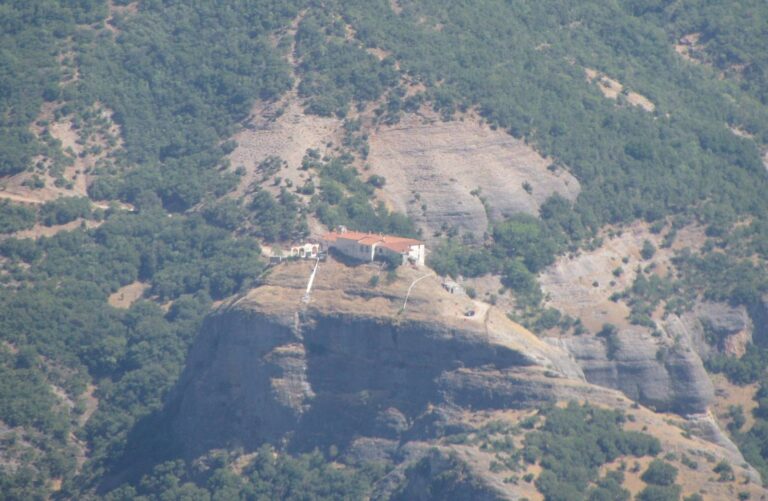
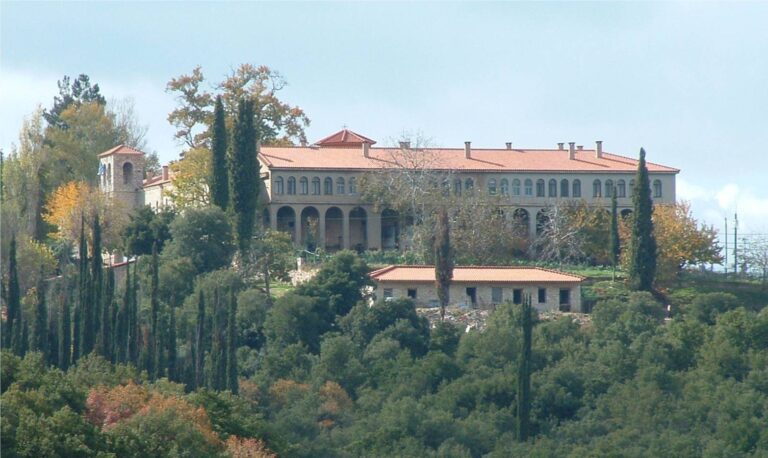
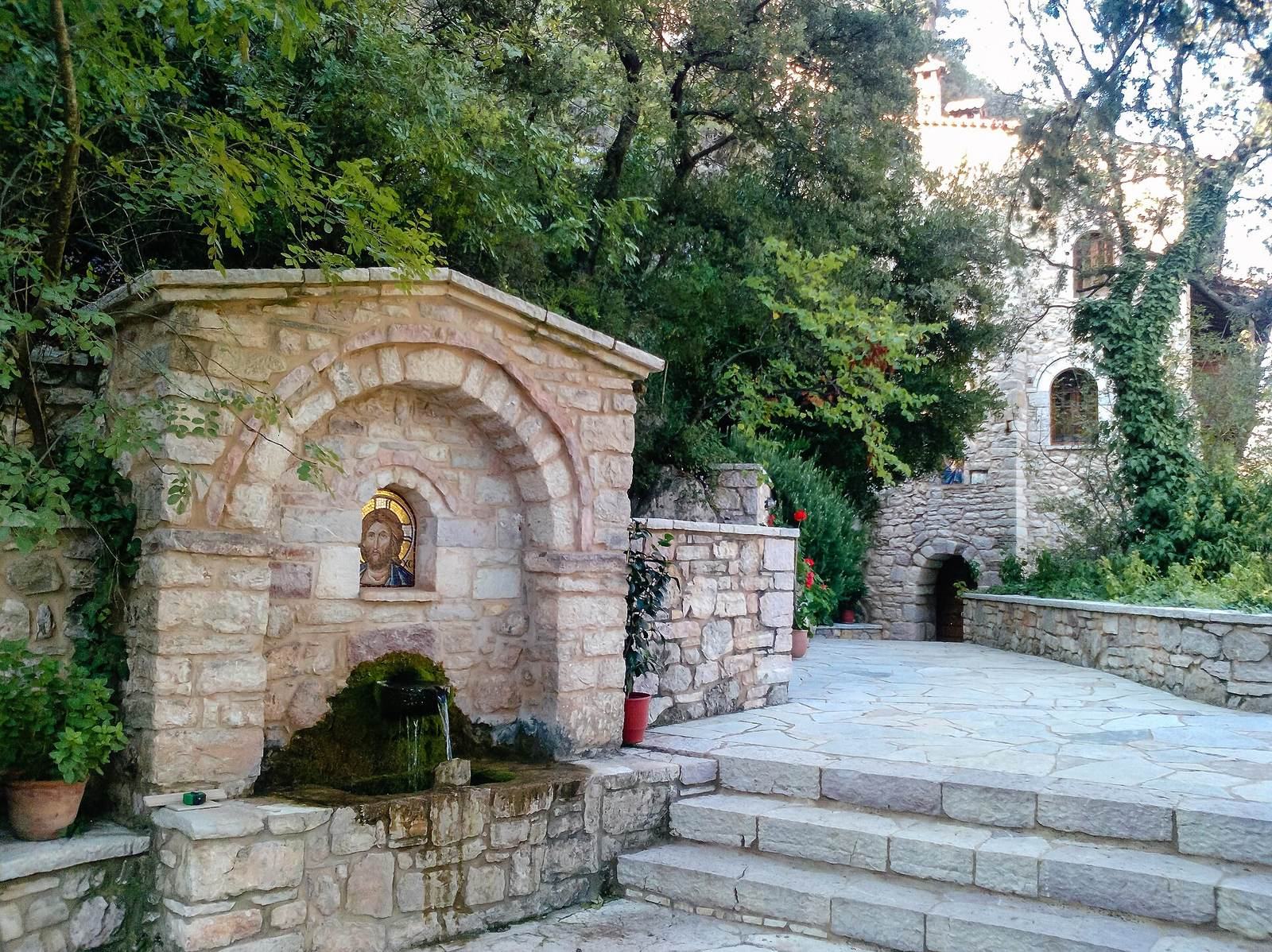
The monastery stands over a cave in the Erymanthos area, near the lower end of the Piros River valley and close to the riverbanks. It lies in the historic Nezera area of mountainous Achaea, within the Chrysopigi local community of the Municipality of Erymanthos. Gardens and very old trees surround the monastery.
Cave church and paintings
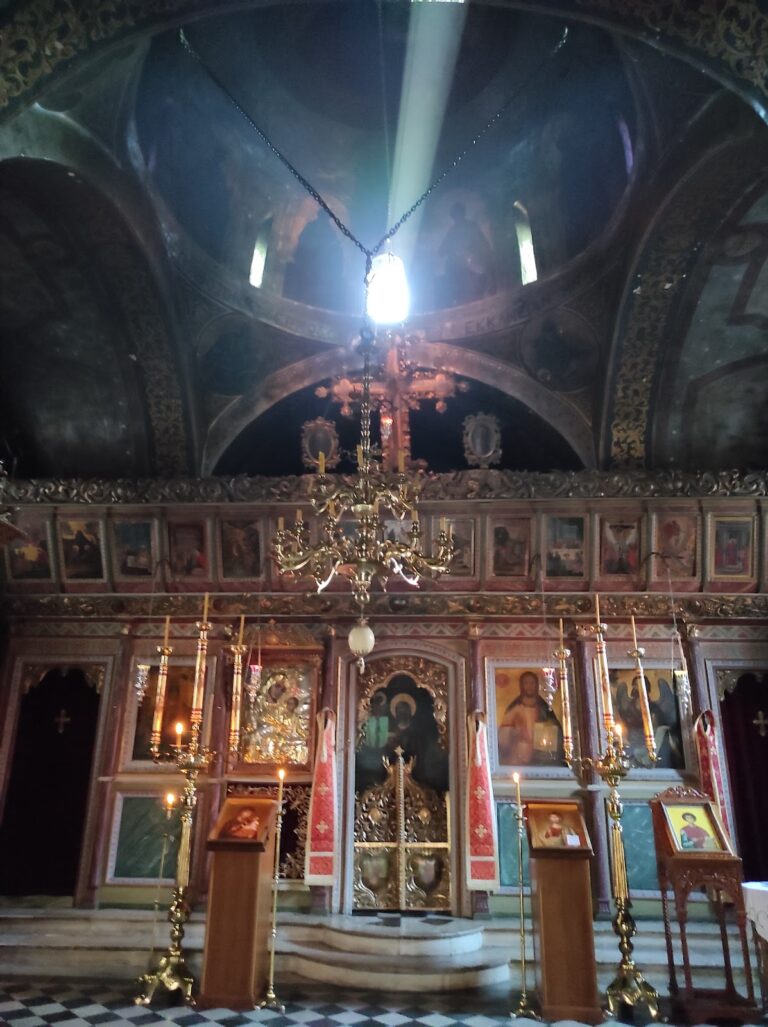
The monastery’s first church was inside a cave. Stalagmites form part of the cave walls, which preserve religious paintings. Fifteenth-century frescoes have also been found at the monastery.
Ovens
Ovens were built at the monastery in 1821 to prepare food for the troops during the siege of Patras. They are a surviving physical detail associated with the site’s wartime role as a supply base.