Castle of Oreja: A Medieval Fortress in Ontígola, Spain
Site at a Glance
- Rating
- 4.5
- Popularity
- Medium
- Country
- Spain
- Primary era
- Medieval
- Eras represented
- Medieval
- Civilizations
- Unclassified
- Site type
- Military
- Remains
- Castle
On this page9 sections
History
Castle of Oreja is a ruined fortress in the former settlement of Oreja, in the municipality of Ontígola, Spain. Its position by a ford across the Tagus gave it a military role in conflicts over access to Toledo.
Early control and the conflicts of 1108–1132
During the reign of Alfonso VI, king of León, Muslims held a castle at Aurelia, a former Roman site whose name preceded Oreja. Alfonso acquired the castle as part of the dowry of his wife, Zaida. After the Castilian defeat at the Battle of Uclés in 1108, the castle was lost. Its control of the Tagus ford allowed forces to advance along the river’s right bank toward Toledo and threatened the bridgehead held by the Castle of San Servando.
In 1113, Mazdalí, an Almoravid military commander, seized the castle and used it as a base for attacks on Castilian forces. Those forces suffered a major defeat nearby in 1132.
The siege of 1139 and later military use
Alfonso VII, king of León and Castile and styled emperor, led a six-month siege with troops from Toledo, Extremadura, Galicia, and León. The castle surrendered in 1139 after hunger and thirst weakened its defenders. Christians repopulated the town and received a fuero, a charter setting out a town’s rights and rules. After the siege, the old castle was restored and substantially altered.
Alfonso VIII of Castile later granted the castle to the Order of Santiago, a medieval military-religious order. The order used it against the Almohads, a Muslim dynasty and movement that ruled parts of North Africa and Iberia.
Later ownership and decline
In the 15th century, the castle passed to Gutierre de Cárdenas, a Castilian nobleman and royal official. It later belonged to the Counts of Colmenar de Oreja and then the Dukes of Frías. After the fortress lost its military purpose, the difficulty of living at the site led most residents to move to Ontígola and Aranjuez. A small neighborhood remained beside the castle. The ruined fortress is designated an Asset of Cultural Interest and is included on the Heritage Red List.
Remains
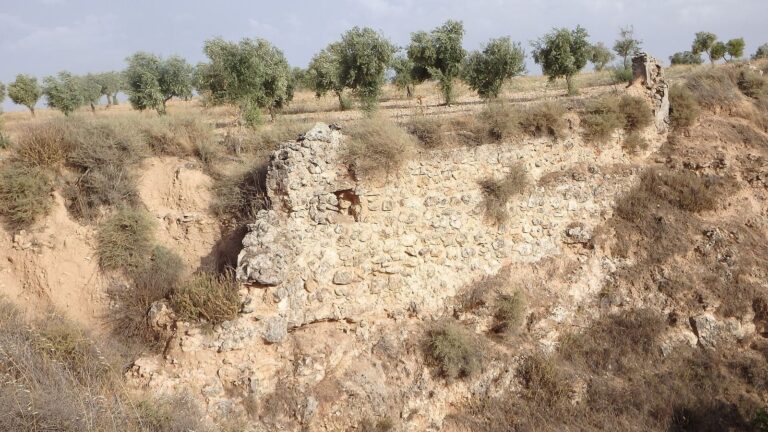
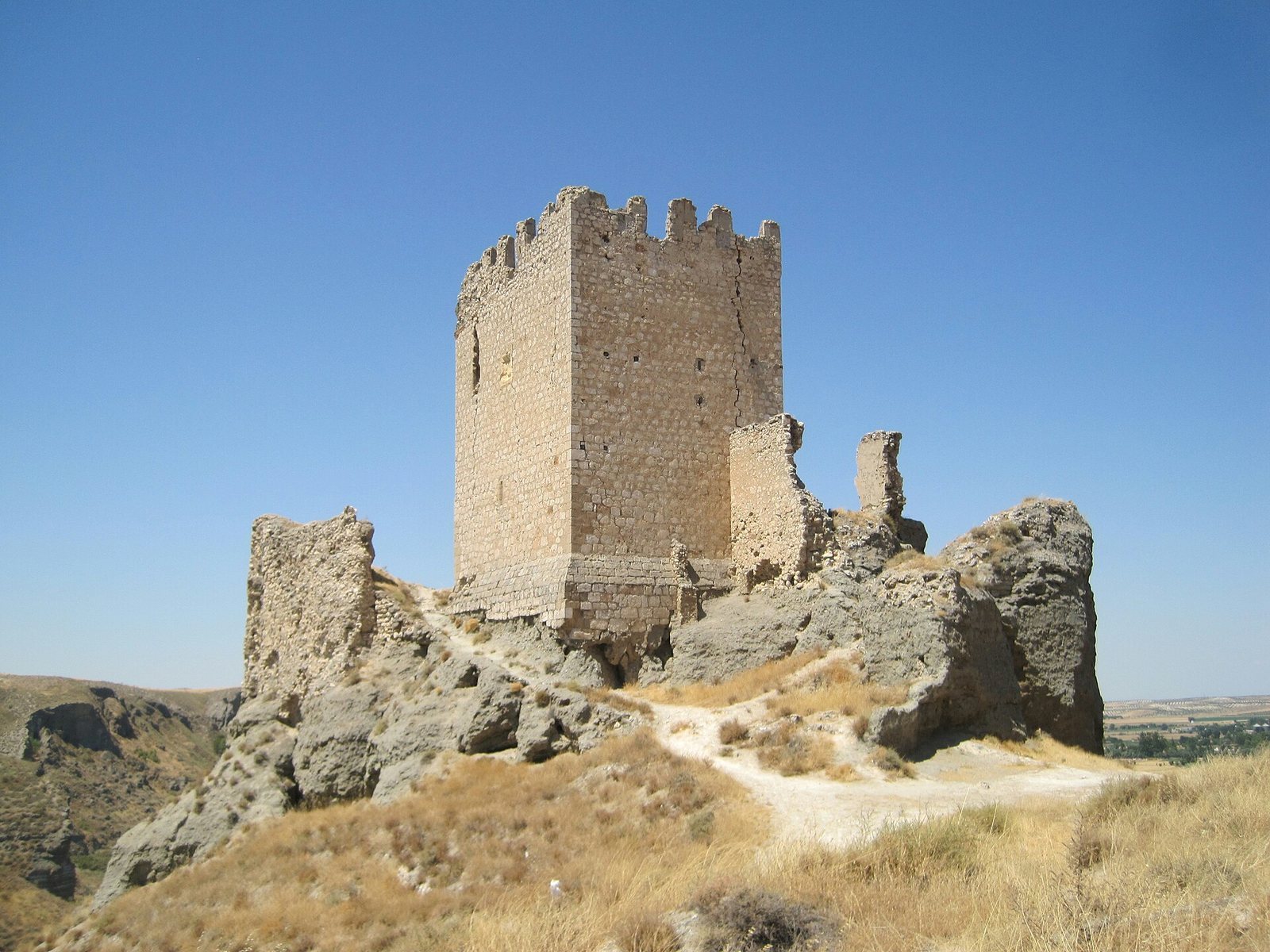
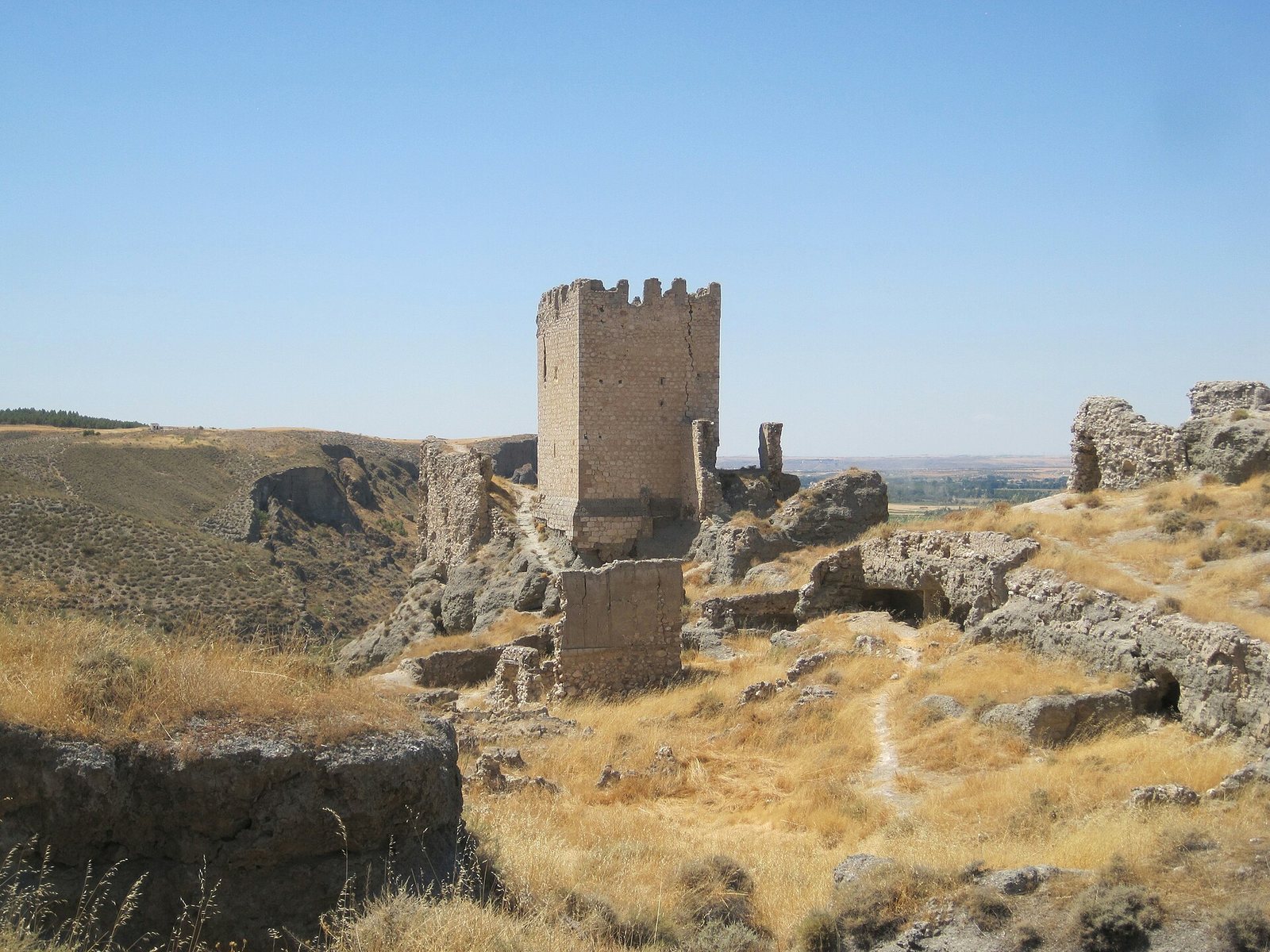
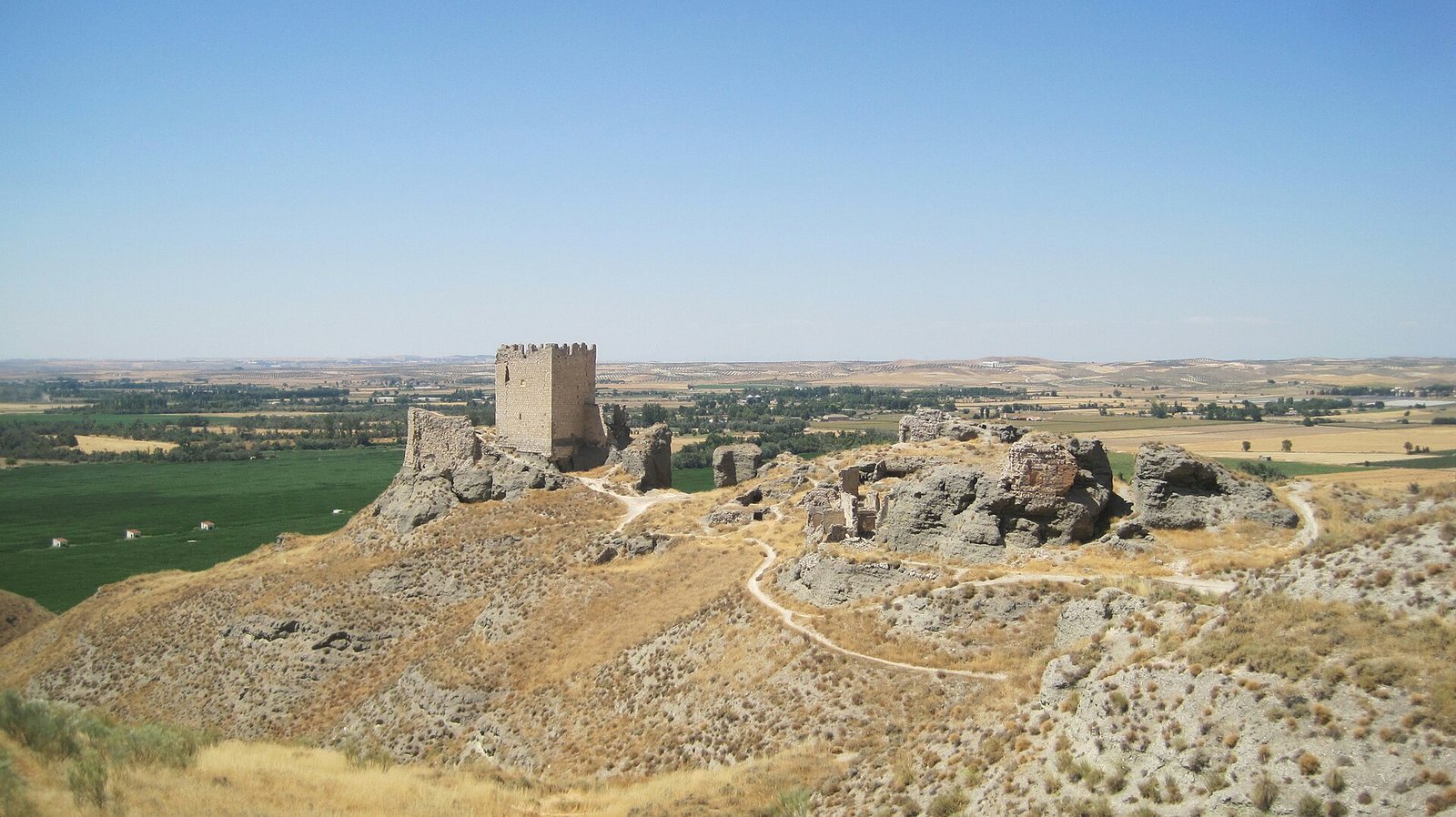
The castle stands in the ruins of the former settlement on the edge of the Mesa de Ocaña plateau, with the Tagus to the north. Its main structure is a tall, robust rectangular tower enclosed by a wall that follows the irregular line of the rocky escarpment.
Fortifications
Tower and enclosing wall
The rectangular tower forms the castle’s principal structure. A surrounding wall follows the rocky edge of the plateau, and the enclosure has a single entrance. Cut stone blocks form the corners, which are rounded at mid-height.
Defensive features
Round, narrow openings in the walls served as arrow slits for shooting through. Traces of projecting wooden structures used to defend the wall’s base also survive. Large, roughly formed raised blocks crown the towers.
Interior remains
Within the castle are the remains of a church, two vaults, and a cistern, a tank for storing water. The fortress is in an advanced state of ruin.