Palazzo Turati: A Neo-Renaissance Palace in Milan
Site at a Glance
- Rating
- 4.6
- Popularity
- Medium
- Country
- Italy
- Primary era
- Modern
- Eras represented
- Classical, Modern
- Civilizations
- Italian, Roman
- Site type
- Domestic
- Remains
- Elite Residence
On this page8 sections
History
Palazzo Turati is a Neo-Renaissance palace in Milan, Italy, a nineteenth-century revival of Renaissance architectural forms. Lombard cotton merchants Francesco Antonio and Emilio Turati commissioned the building, which was designed by Enrico Combi and completed in 1876.
Throughout the twentieth century, the palace housed the headquarters of Famiglia Meneghina, a prominent private Milanese club. An Azerbaijani fund purchased the building in 2016, and it remains in use.
Remains
Exterior and courtyard
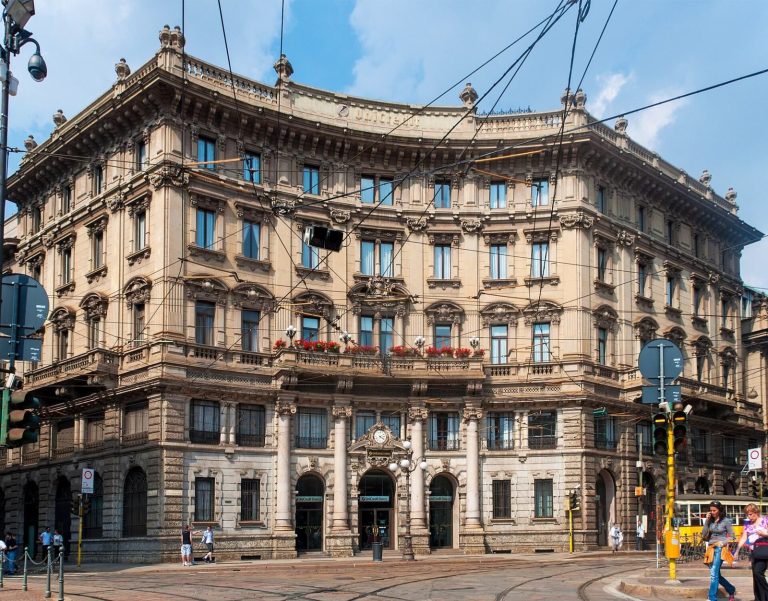
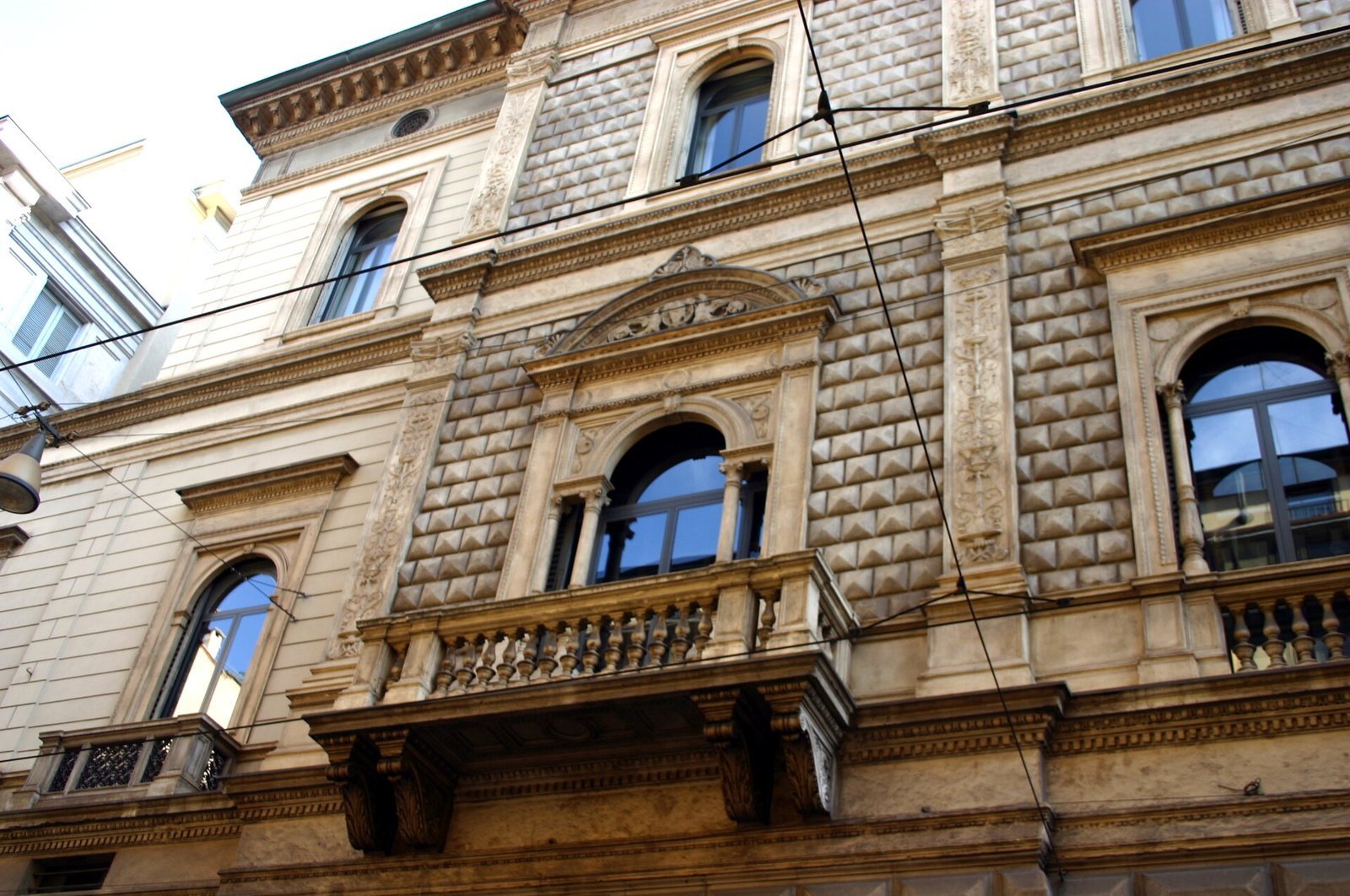
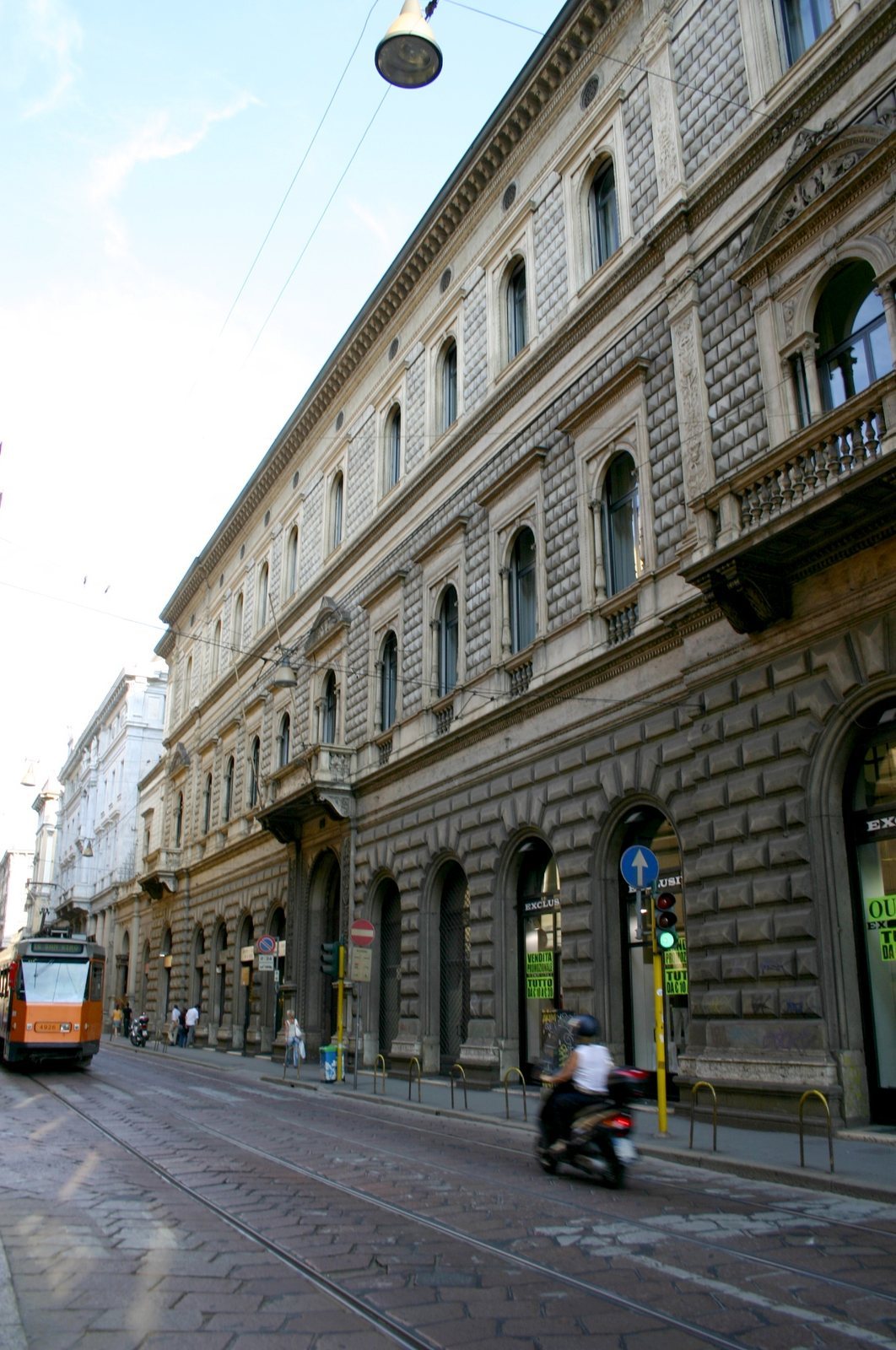
The palace’s façade is defined by diamond-shaped rustication, masonry finished in projecting diamond-shaped blocks. This treatment draws on Ferrara’s Palazzo dei Diamanti and imitates the distinctive rustication associated with its architect, Biagio Rossetti. The façade also includes Serlian windows, each with a central arched opening flanked by narrower openings, and pilasters, flat column-like elements attached to a wall. Large Serlian windows and balconies are crowned by a decorated pediment, a feature that caps the building’s architectural composition. Two candelabra flank the entrance portal.
Within the palace, a courtyard surrounded by a covered gallery draws on forms of the Lombard Renaissance.
Interior rooms
Flora Room
Also known as the Blue Sitting Room, the Flora Room is upholstered in silk velvet and decorated with mirrors and ornamental work. Sculptures by Lodovico Pogliaghi and frescoes painted by Mosè Bianchi contribute to its interior decoration.
Prometheus Room
The Prometheus Room takes its name from a large Neo-Renaissance fireplace topped by Pogliaghi’s sculpture of Prometheus, the mythic figure associated with bringing fire to humanity.
Ballroom
The ballroom’s walls feature Giuseppe Bertini’s frescoes depicting The Dance, while Luigi Cavenaghi painted the ceiling fresco.
Roman theatre foundations
Foundations of Milan’s Roman theatre are accessible in the palace basement, within the city’s Chamber of Commerce.