Palazzo Orsini Pio Righetti: A Renaissance Palace in Rome
Site at a Glance
- Rating
- 5
- Popularity
- Very Low
- Country
- Italy
- Primary era
- Early Modern
- Eras represented
- Classical, Medieval, Early Modern, Modern
- Civilizations
- Italian, Papal States, Roman
- Site type
- Domestic
- Remains
- Elite Residence
On this page11 sections
History
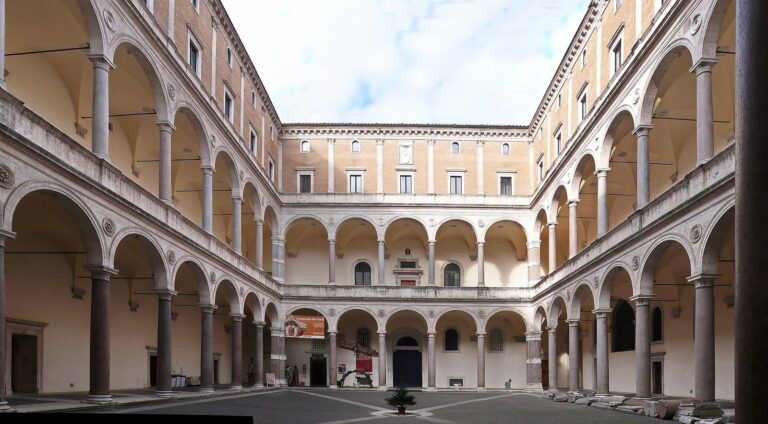
Palazzo Orsini Pio Righetti is a Renaissance palace in Rome, Italy, brought into its present form around 1450 by Cardinal Francesco Condulmer, incorporating an earlier fortified Orsini residence. Its history reflects successive periods of noble ownership, remodelling, and institutional use.
Medieval stronghold
The Orsini acquired the area around 1150 and fortified it. At the center stood a residence inherited from their Boveschi ancestors. The defenses included the Arpacata and the Arpacatella, which became the seat of the Orsini branch of Tagliacozzo. The name Piazza del Biscione is uncertain. The likeliest explanation connects it to the serpent in the Orsini family arms, since the family owned the area. Another proposal links it to a Visconti serpent emblem used by a local inn owned or managed by a Milanese person. This explanation is less persuasive because inns commonly took symbols from their locations.
In the first half of the thirteenth century, supporters of Charles I of Anjou, who fought for control of southern Italy and Sicily, demolished the towers. Their owners had supported Giacomo Orsini’s backing of Conradin, a Hohenstaufen prince claiming the same kingdom. After rebuilding, the Orsini demolished and reconstructed the Arpacata again in 1296.
Renaissance palace and Orsini residence
Around 1450, Cardinal Francesco Condulmer formed the palace in its present arrangement by incorporating the earlier fortified residence. Most of the building was constructed for the Orsini. The palace returned to the family late in the fifteenth century. In 1494, Virginio Orsini began a renovation and placed a clock on the Arpacata tower, giving the building the name Palazzo dell’Orologio. It later served as a regular residence for Virginio and Paolo Giordano II and was often rented out.
Pio di Savoia and later owners
Paolo Giordano II transferred the palace to the Pio di Savoia, lords of Carpi, in 1651. In 1667, Carlo Pio di Savoia the younger commissioned Camillo Arcucci to remodel it. The work comprehensively restructured the building and gave it a new monumental front; the clock was removed. In the mid-eighteenth century, the palace was sold jointly to Prince Lancellotti, Monsignor Ottaviano Bufalini, and the Santacroce family. Pope Benedict XIV acquired the Pio family’s extensive art collection for the Capitoline art gallery. Most of it went there, including works by Titian, Caravaggio, and the Carracci.
Modern institutions and archaeology
Banker Pietro Righetti acquired the palace in the early nineteenth century. Excavations to strengthen its foundations uncovered a statue of Hercules in 1864. Hercules is the Roman name for the Greek hero Heracles, famed for his strength and legendary labors. The building became the seat of the lottery in 1866, then the headquarters of the Tata Giovanni Institute from 1887 until 1926. Founded by Giovanni Borgi to care for orphans, the institute left the palace after nearly four decades of use.
By 1919, new construction had filled the palace’s large internal courtyard. In the 1930s, proposals for extensive excavation and urban clearance around the Theatre of Pompey would have required the demolition of all post-antique buildings in the area. After the institute moved out, the palace’s third and fourth floors were closed and deteriorated. The University of Washington later undertook restoration and now occupies the principal floor as well as the third and fourth floors. Excavations also took place in the palace atrium during the 2010s, in the area of the Temple of Venus Victrix’s foundations.
Remains
The Renaissance palace stands chiefly on Piazza del Biscione and partly on Campo de’ Fiori, in Rome’s Parione district. It occupies part of the remains of the ancient Roman Theatre of Pompey, especially the base of the Temple of Venus Victrix, meaning “Victorious Venus.” The theatre ruins were popularly called the “trullo.” The palace’s surviving fabric includes its monumental front and elements of the medieval fortified complex.
Palace and fortified complex
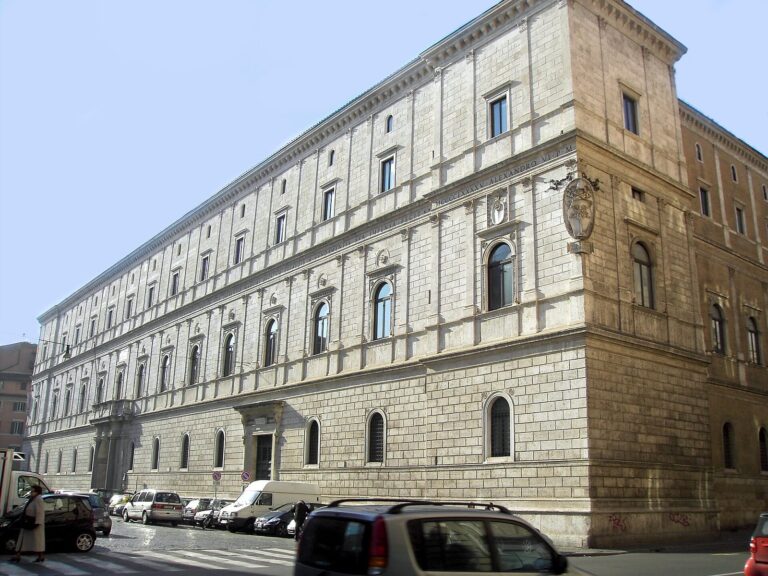
Monumental façade
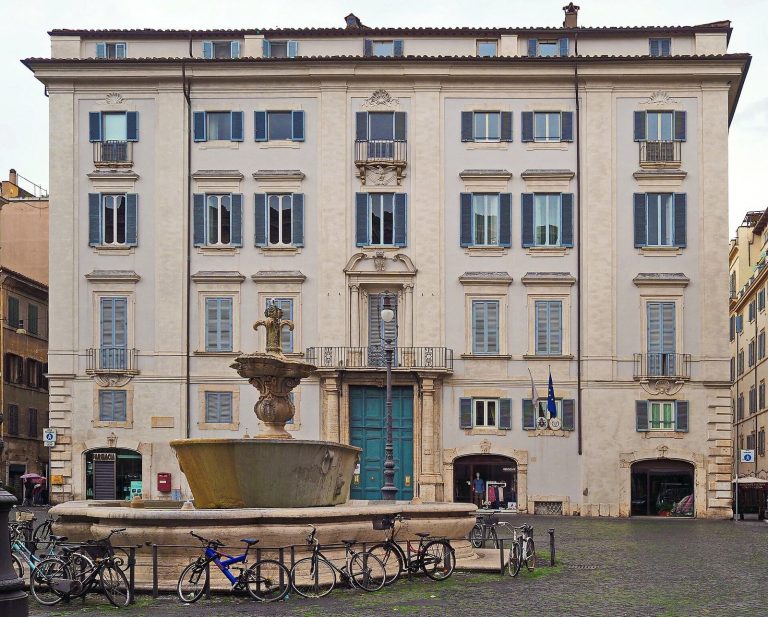
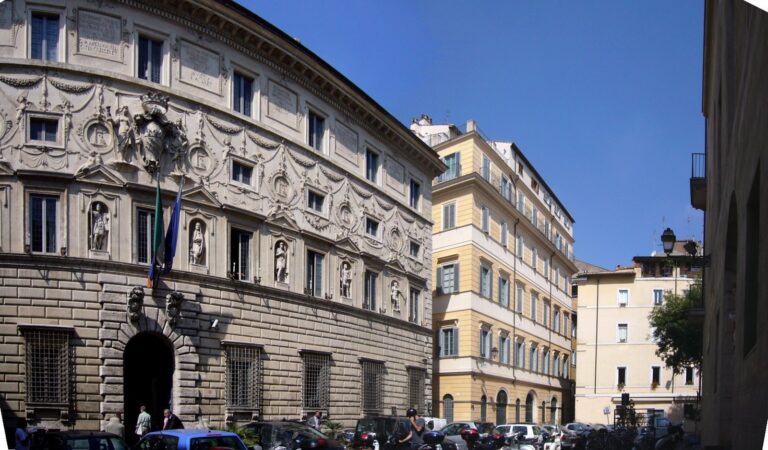
The palace front has two levels, each with eight windows, framed by pilasters, shallow wall columns. On the lower level, the windows have decorative pediments, gable-shaped tops, with lion heads and pinecones. Those above have triangular pediments bearing crowned eagles. The projecting upper ledge rests on supports decorated with lion heads and roses. The pinecones, eagles, and other emblems belong to the Pio di Savoia heraldry; the lions and roses are Orsini emblems.
Medieval towers
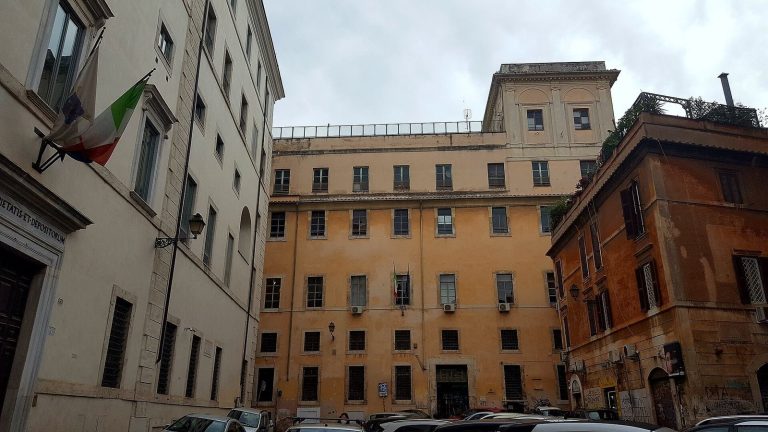
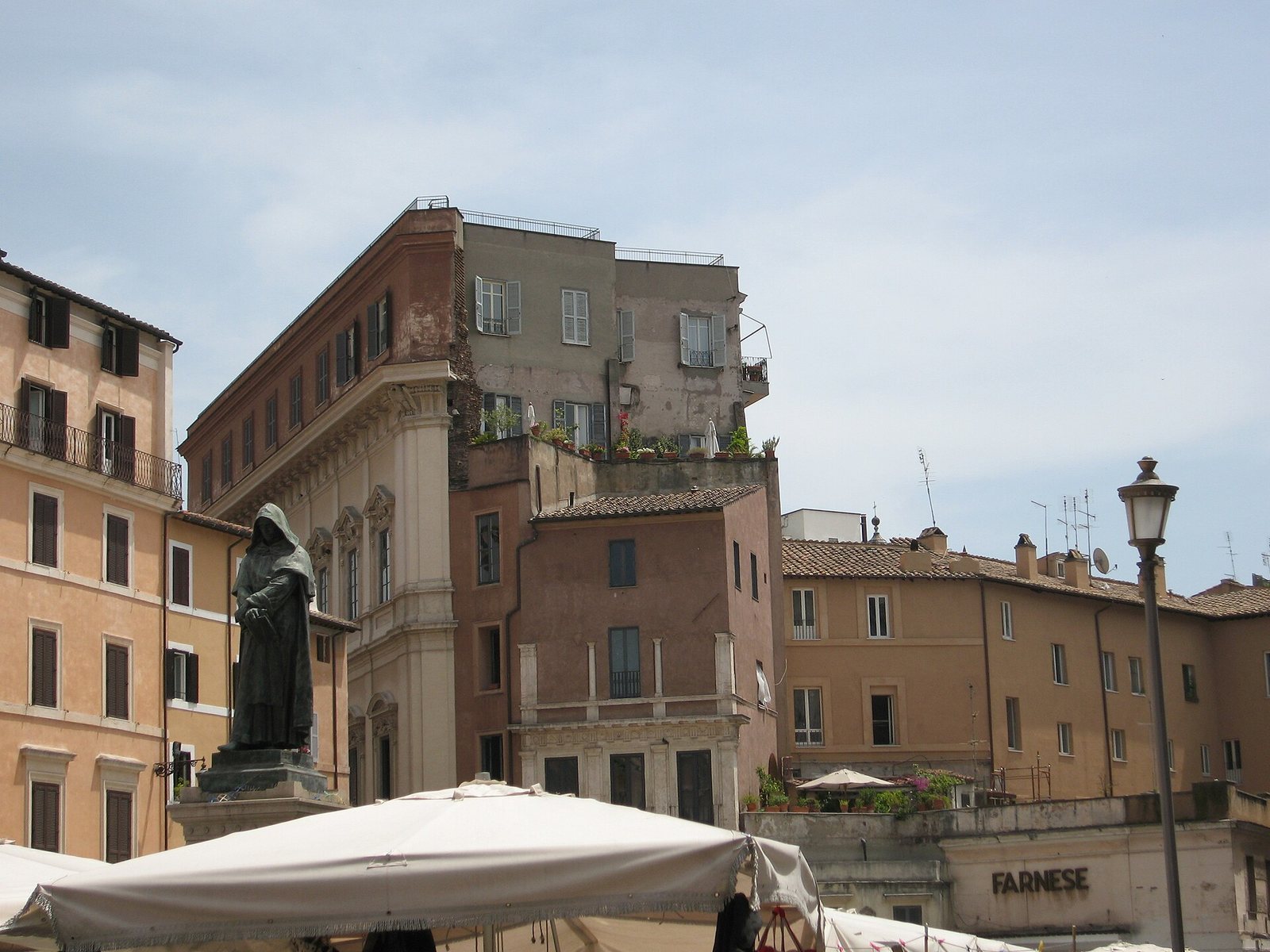
The Arpacata tower was built over the remains of the Temple of Venus Victrix and is incorporated into the palace. It may be identifiable with the narrow, square building to the left of Cinema Farnese, visible from Campo de’ Fiori. The medieval complex also included the Arpacatella.
Courtyard statue
The gilded-bronze Hercules stands 3.83 metres tall and dates to the second century AD. It was in excellent condition when found beneath the courtyard. The statue was sold or given to Pope Pius IX in 1865 and is now displayed in the Round Hall of the Vatican Museums’ Pio-Clementino Museum. It is also known as the Hercules Righetti and the Hercules Mastai. The statue was supposedly buried at a spot struck by lightning, in keeping with Roman and Etruscan custom.
Small building opposite the palace
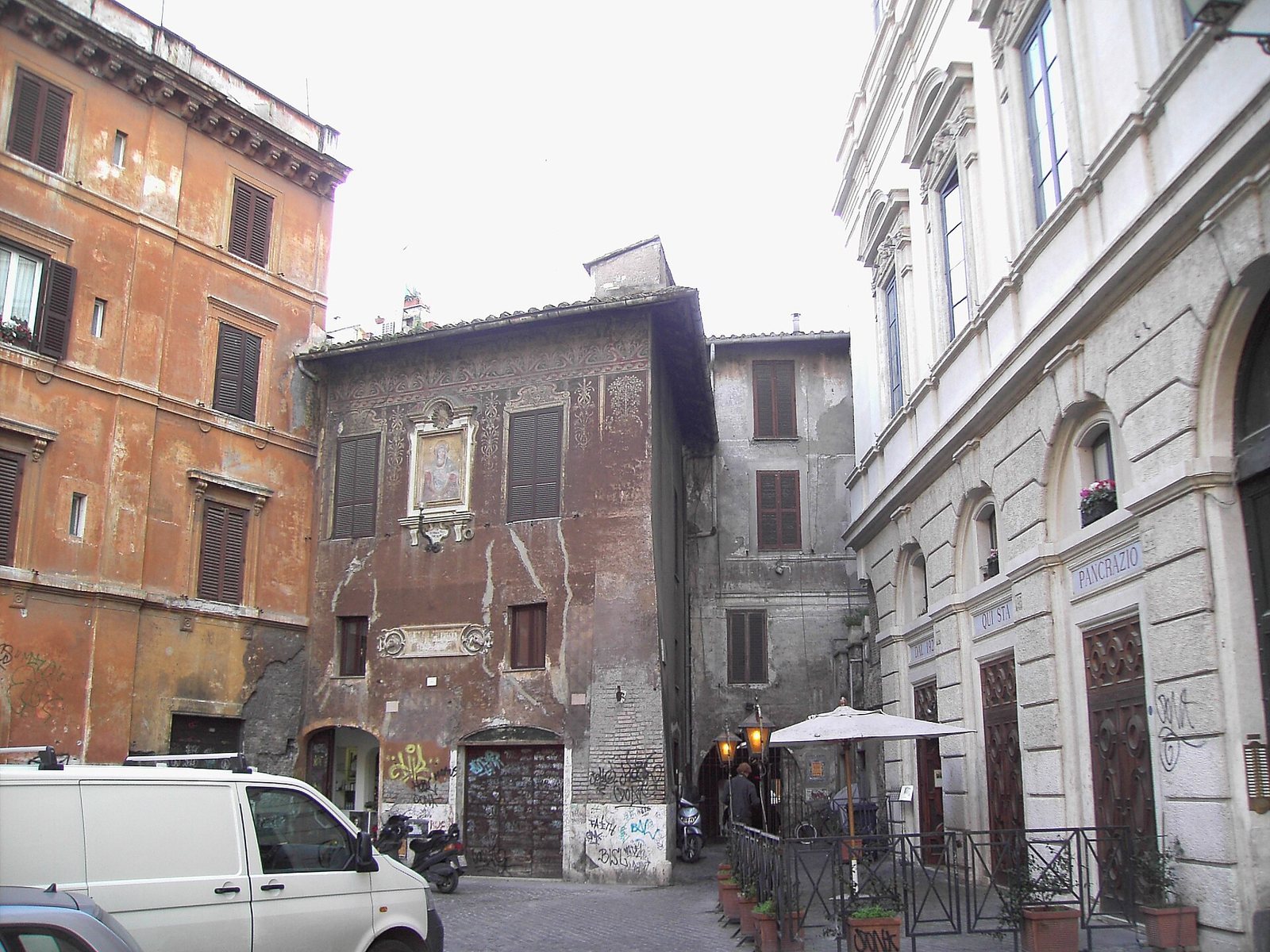
A small building facing the palace, probably a former stable, has brightly coloured graffiti that includes a decorative pattern of horse heads. It also contains a Madonna fresco known as the Madonna del Latte, a traditional image of Mary nursing the infant Jesus. The name may refer to the figure’s left hand, positioned over her breast. The fresco sits within a rectangular stucco frame with scrolls above it and a pediment combining curved and straight lines. A radiant crown bearing Mary’s monogram tops the pediment. Below the image are a corbel, a curved iron lamp, and the inscription In manibus tuis sortes meae, meaning “My fate is in your hands.”