Palazzo Firmian: A Renaissance Family Residence in Trento
Site at a Glance
- Popularity
- Very Low
- Country
- Italy
- Primary era
- Early Modern
- Eras represented
- Medieval, Early Modern
- Civilizations
- Holy Roman Empire
- Site type
- Domestic
- Remains
- Elite Residence
On this page7 sections
History
Palazzo Firmian is a Renaissance palace in Trento, Italy, commissioned by Nicolò Firmian between the late fifteenth and early sixteenth centuries as the representative residence of his Tyrolean noble family.
The Council of Trent and later residents
During the Council of Trent, an ecumenical meeting of the Catholic Church associated with its response to the Protestant Reformation, the palace served as the residence of Portugal’s ambassador, Fernando Mascarenhas. This was during the council’s third and final phase, in the second half of the sixteenth century. The palace later became a residence of the Madruzzo, a noble family prominent in Trentino’s political history. Members of the seventeenth-century cultural milieu probably frequented it during this period.
The Firmian family and later uses
Carlo Giuseppe di Firmian was born in the palace in 1716. He later served as plenipotentiary minister, a diplomatic official empowered to act for a government, and governor general of the Duchy of Milan, a historical state in northern Italy, under Austrian rule. The Firmian family owned the palace until the eighteenth century.
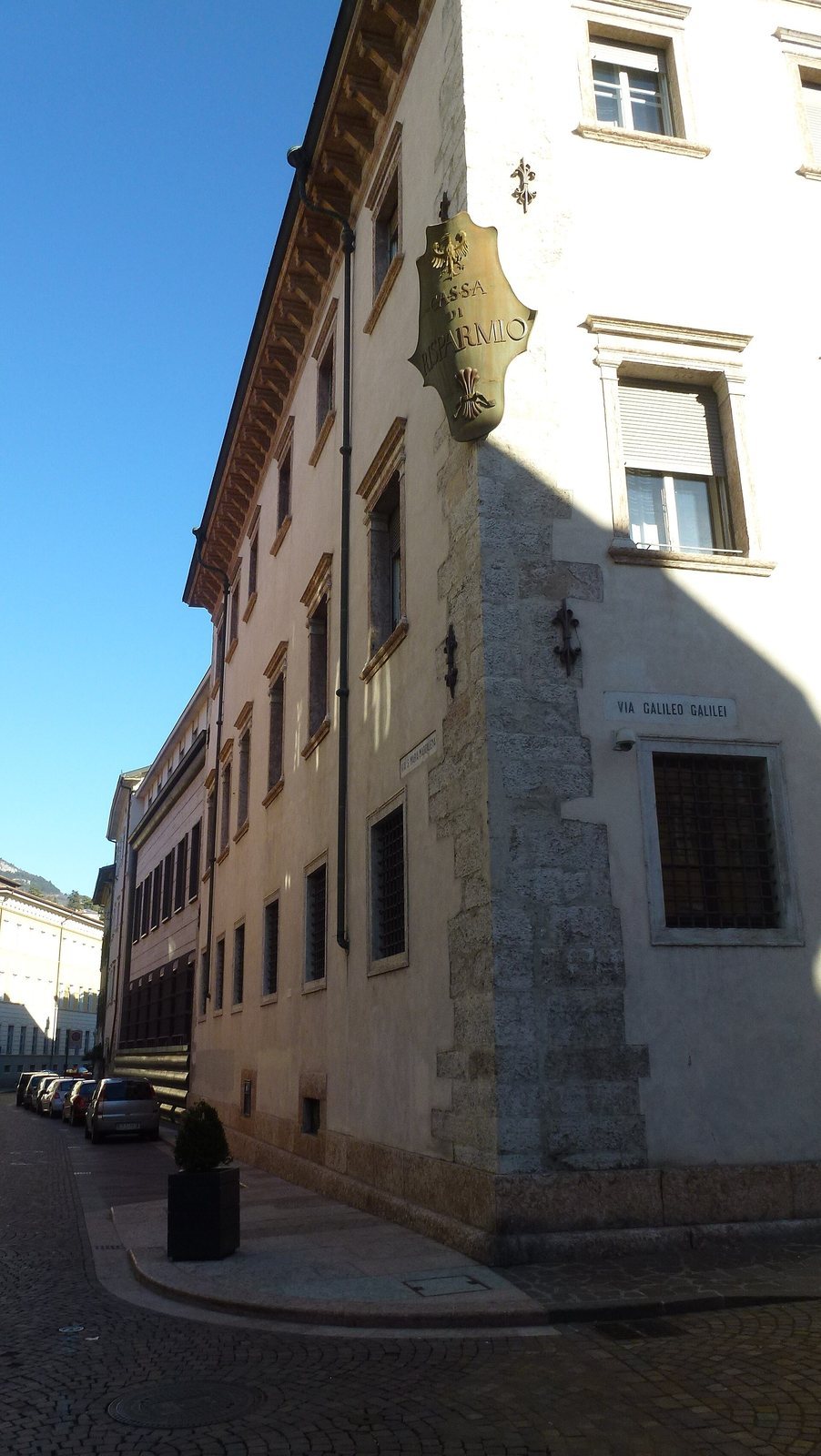
In 1899, the Italian painter and architect Augusto Sezanne worked on the palace’s decorations. The building later housed the Trento and Rovereto Savings Bank (Cassa di Risparmio di Trento e Rovereto) and subsequently UniCredit.
Remains
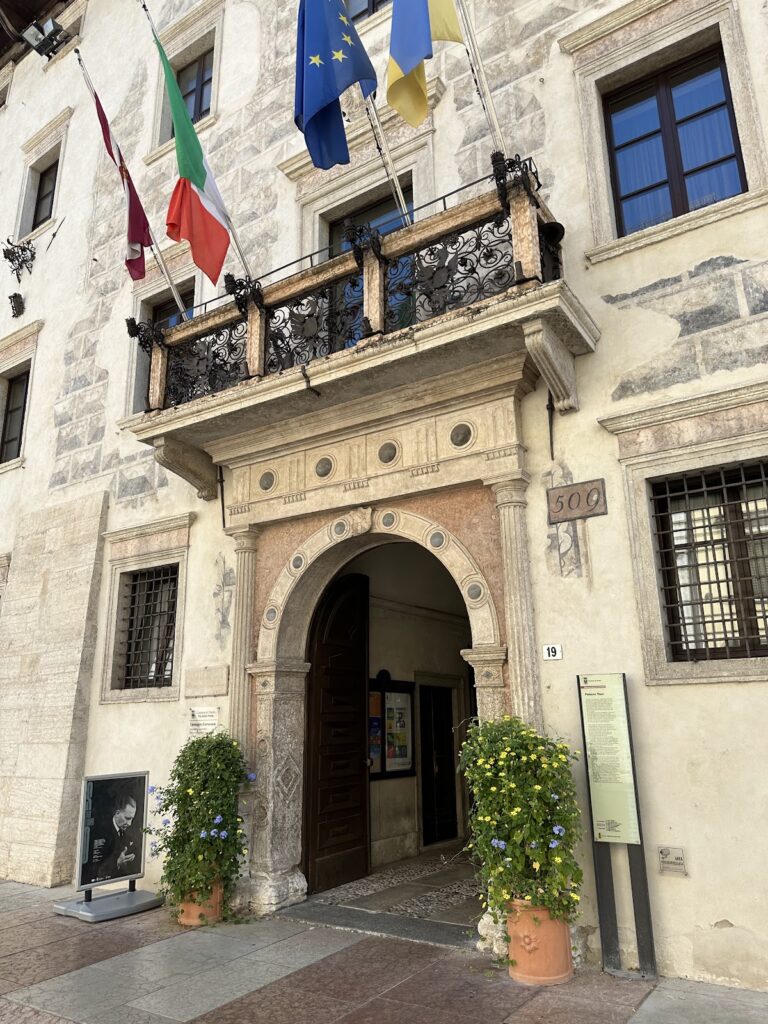
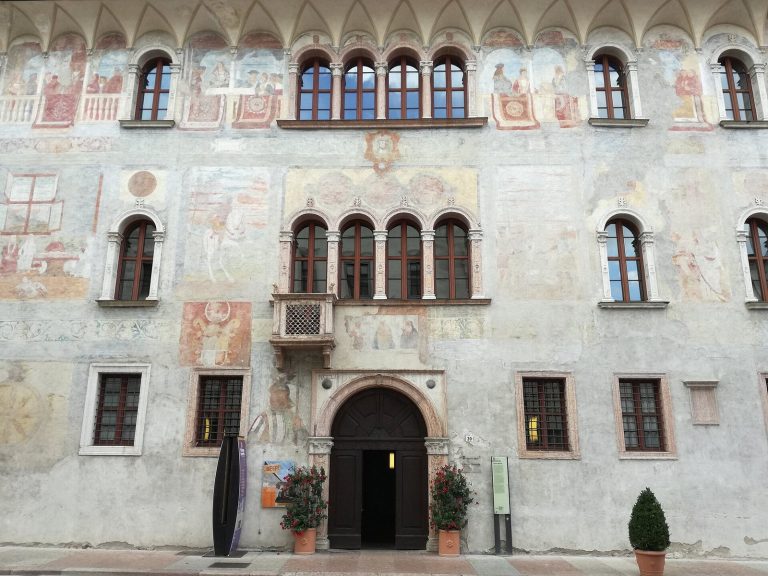
Located in Trento’s historic centre, Palazzo Firmian is a monumental Renaissance building. Its main façade has a simple, elegant design and is arranged across three storeys.
Architectural features
Façade and entrance
The entrance portal is arranged in two sections. Inside, two pillars support a slightly flattened arch; outside, columns carry a curved classical pediment, the crowning feature above the doorway.
Interior decoration
Many rooms have friezes and notable wooden ceilings. The walls bear stuccoes and frescoes dating to the fifteenth century and relating to the history of the Firmian family. A fresco cycle, a related series of wall paintings, on the principal floor is attributed to Marcello Fogolino, an Italian Renaissance painter active in Trento during the sixteenth century.