Palazzo dei Celestini: Baroque Monastery-Palace in Lecce
Site at a Glance
- Rating
- 4.6
- Popularity
- Medium
- Country
- Italy
- Primary era
- Early Modern
- Eras represented
- Early Modern
- Civilizations
- Habsburg, Habsburg Spain, Kingdom of Naples, Spanish
- Site type
- Religious
- Remains
- Monastery
On this page7 sections
History
Palazzo dei Celestini is a Baroque monastery-palace in Lecce, Italy. Its construction began after the monks’ earlier monastery was demolished to make room for expanded city defenses and a new fortress.
Monastic origins and relocation
The Celestines, a Catholic monastic order separate from the Benedictines, established their Lecce monastery in 1352. Walter VI of Brienne, Count of Lecce and Duke of Athens, founded it on land later occupied by Lecce Castle. The order was known for its austere way of life and commitment to poverty.
In 1549, Charles V, Holy Roman Emperor and king of Naples, ordered the monastery’s demolition as part of plans to enlarge Lecce’s walls and build a new fortress. The monks moved to the site of the present palace, and construction of their new monastery began that year. Work continued through the seventeenth century.
Monastic use and civic administration
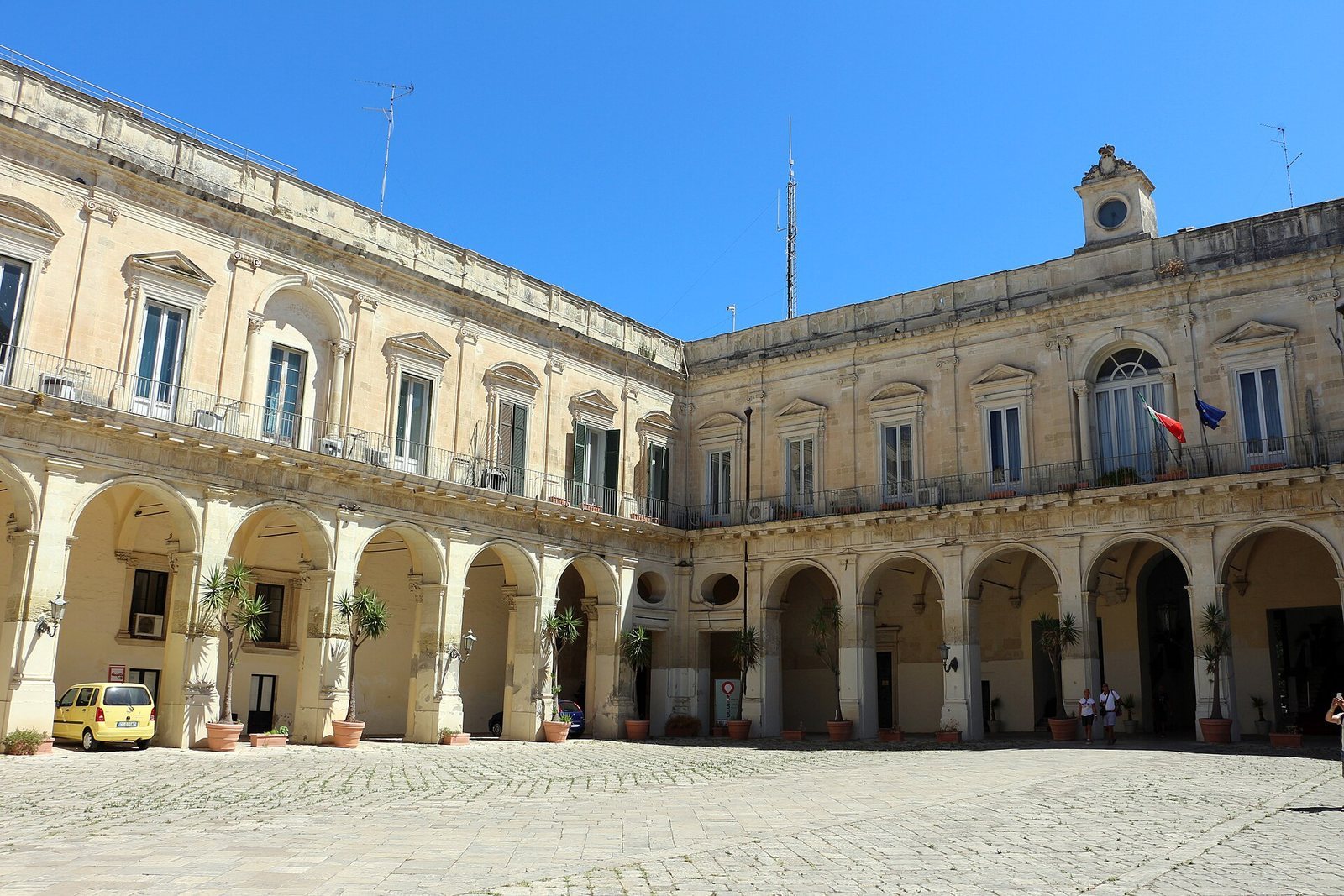
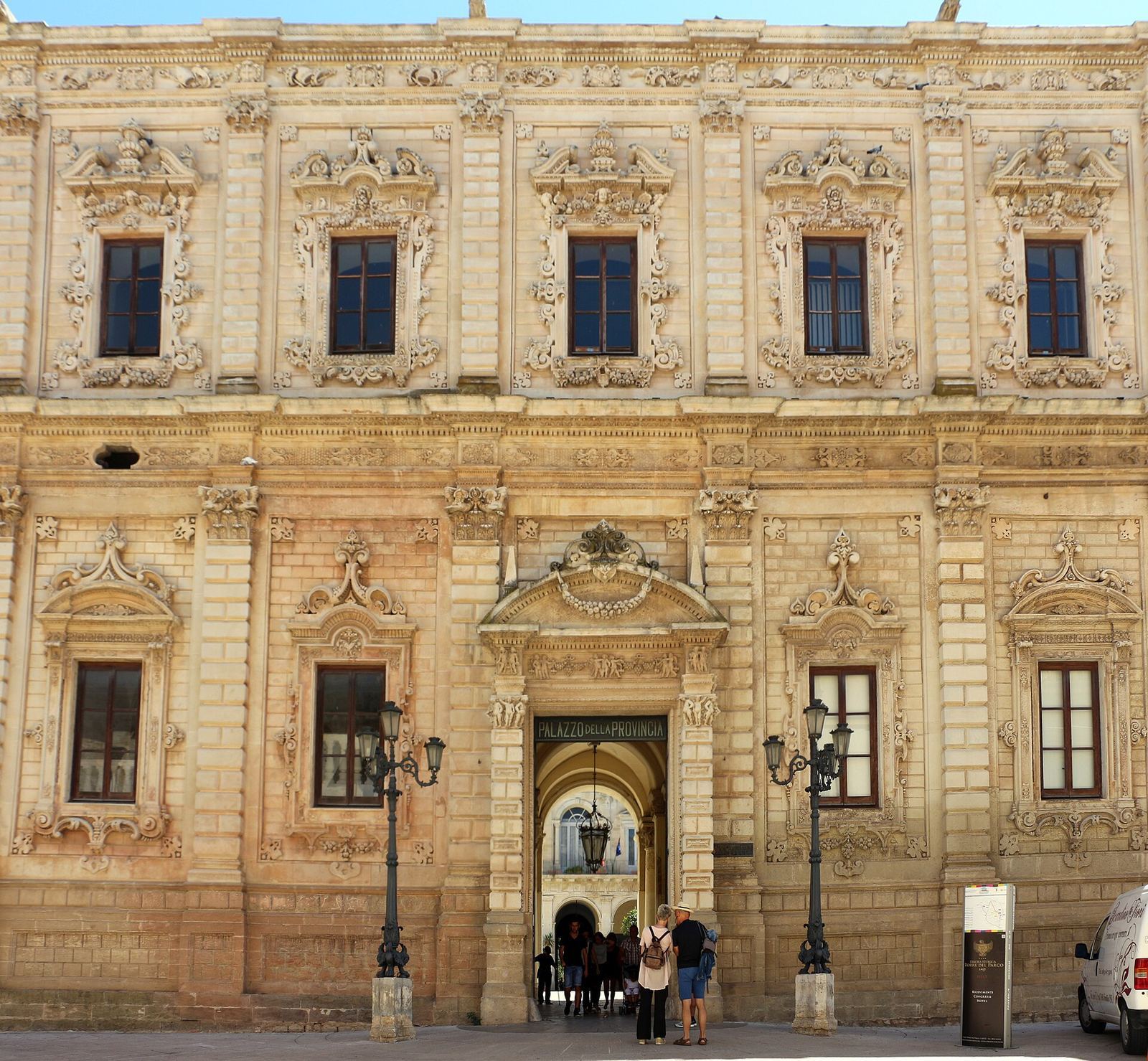
The Celestines remained at the monastery until their order was suppressed in 1807. Joseph Bonaparte, brother of Napoleon, then put the palace to use for the French administration in Lecce. It later served as a government building under the Kingdom of the Two Sicilies, the monarchy that preceded Italian unification. After the Italian states were unified, the palace became the seat of the Province of Lecce and the local office of its prefect, a senior government official. It is also called Palazzo della Provincia.
Porta San Martino, one of Lecce’s four city gates, was attached to the palace. The gate was demolished in 1826 because its austere appearance was considered ill-suited to the palace.
The 1945 massacre
On 25 September 1945, about 10,000 people protested outside the palace against hunger, unemployment, and the high cost of living. Clashes took place at the entrance, and police fired on the crowd. Nicola Fatano, a 44-year-old street vendor, Francesco Schifa, a 42-year-old mason, and Oronzo Zingarelli, a 34-year-old food-shopkeeper, were killed. Several other demonstrators were injured. The shootings are known as the Palazzo dei Celestini massacre.
Remains
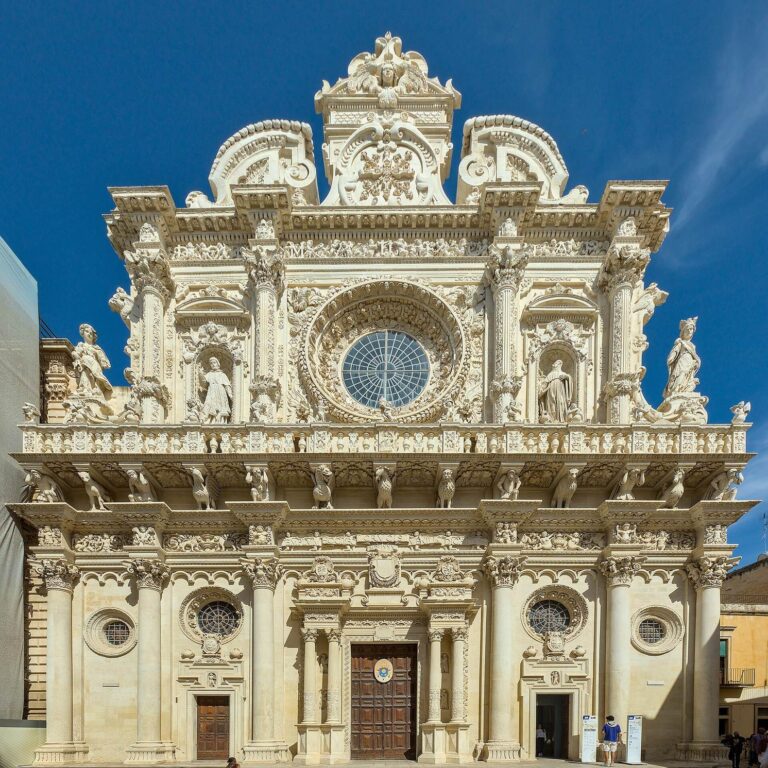
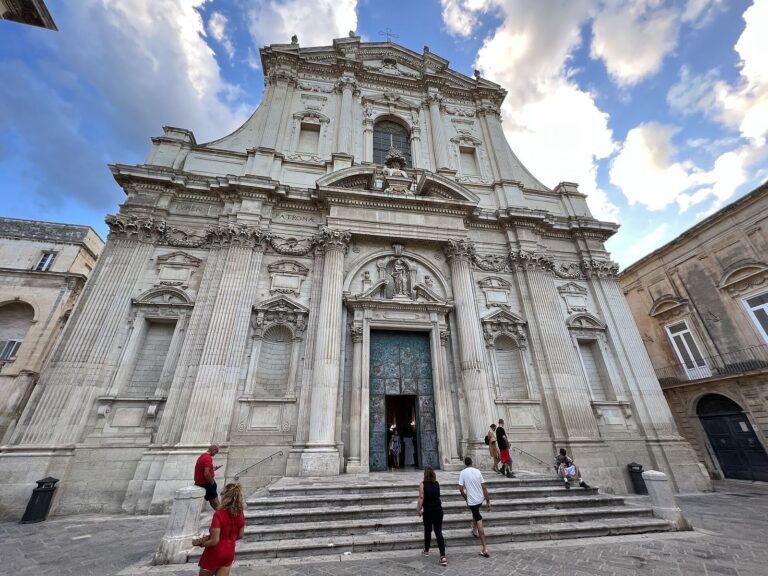
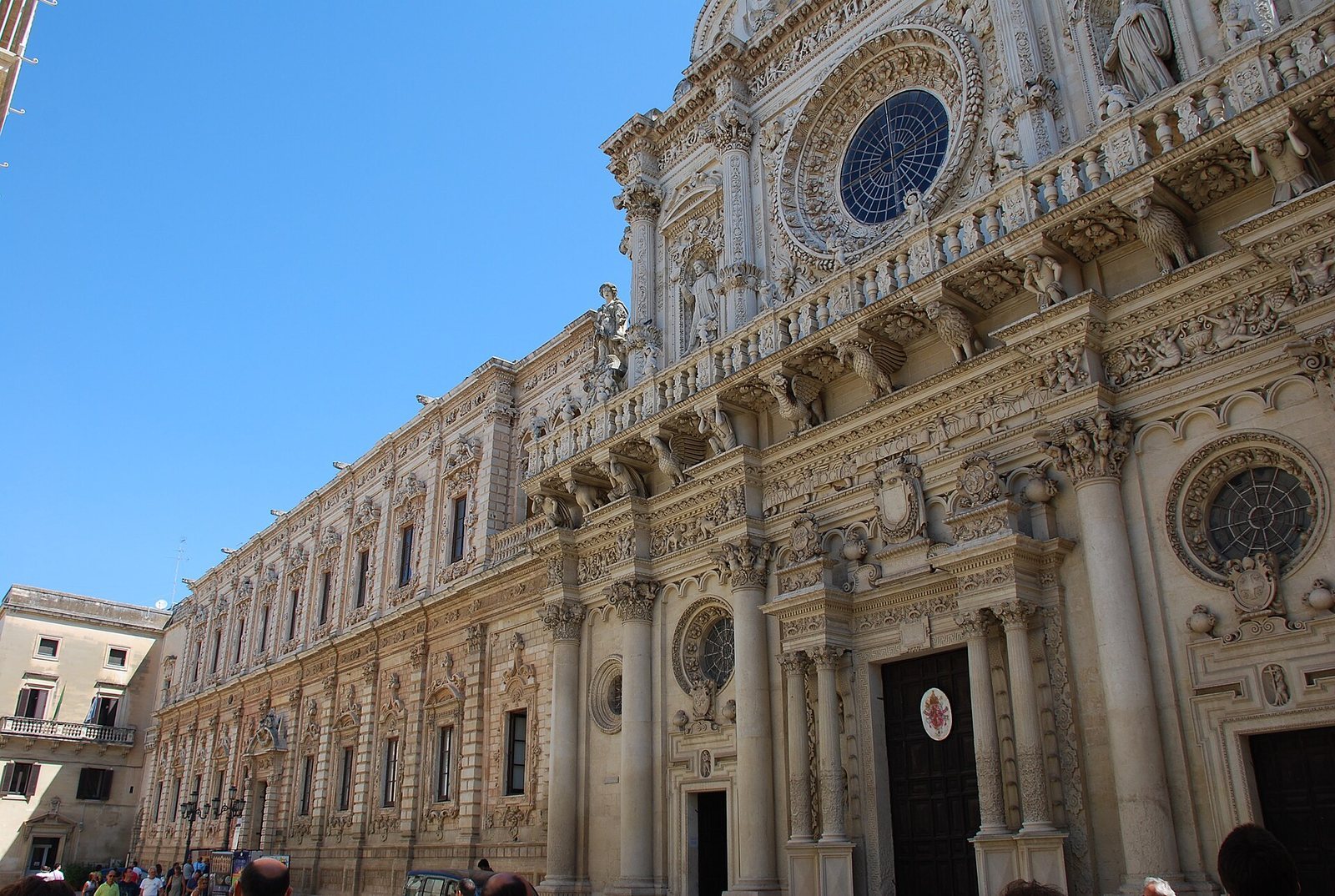
The palace and the adjoining Basilica of Santa Croce form a single complex. The buildings stand on Via Umberto I in Lecce’s former Jewish quarter, with the palace in front of a synagogue.
Monastic and church connections
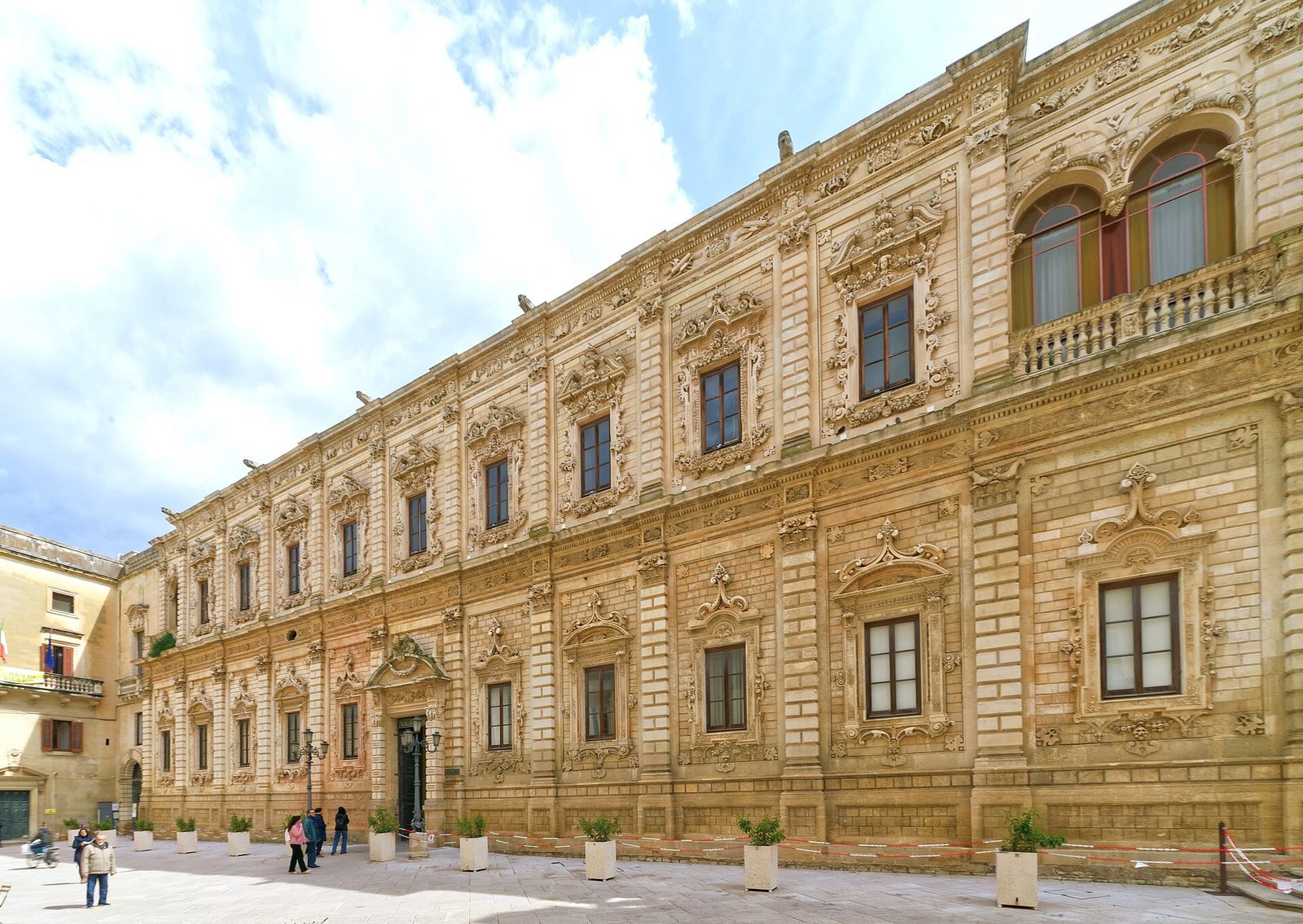
Architect Riccardi is credited with the design of the monastery’s original cloister, a covered walkway around a courtyard, and the portal of the adjoining basilica. The palace’s long exterior façade was constructed between 1659 and 1695, with Giuseppe Zimbalo responsible for its first level and Giuseppe Cino for the second.
Façade and entrance
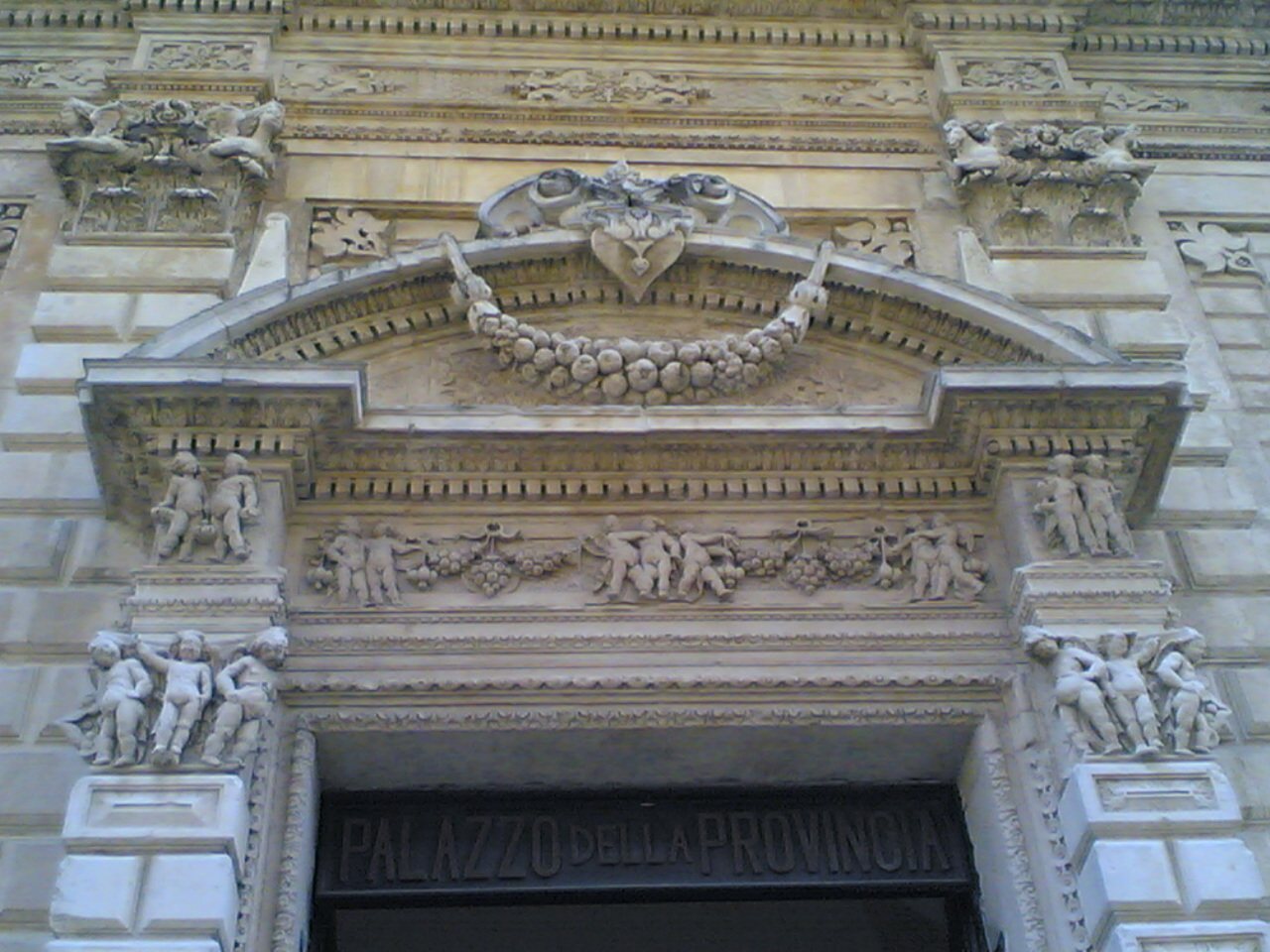
The façade has two levels, divided vertically by pilasters, shallow columns attached to a wall. Roofed, open-sided galleries called loggias occupy its ends, while elaborately framed windows extend along its length. A frieze bears heraldic shields displaying coats of arms. At the centre, the entrance portal is decorated with child figures and clusters of fruit. Its exuberant ornament is characteristic of the Lecce variant of the Baroque style.